

A Kia Telluride can feel composed on pavement, then fill with buzzes and rattles as soon as it reaches a washboard dirt road. The closely spaced ridges keep disturbing the tires and suspension, and some of that motion reaches the cabin. A rattle heard only on the corrugations does not, by itself, mean something has failed.
The distinction is what happens next. A new, localized knock, handling that feels less secure, or vibration that continues onto smooth pavement deserves attention. Those changes give you more useful information than the loudness of the cabin rattle alone.
- Why washboard roads make a Telluride rattle
- What to do while the road is still rattling the vehicle
- Match the symptom to the first checks
- Check the vehicle after the dirt road, not just the tire balance
- When rough-road noise is no longer just a comfort issue
- Frequently asked questions
- How can I help a mechanic find a rattle that only happens on dirt roads?
- Why is my Kia making a rattling noise?
- What is the most common problem with Kia Telluride?
- What is the lawsuit against the Kia Telluride?
- Why does my car make a rattling noise when I drive on bumpy roads?
Why washboard roads make a Telluride rattle
Washboard ridges repeatedly excite the tires, suspension, and body. Each tire can meet another rise before the vehicle has fully settled from the last one, so small movements can become a steady cabin buzz. Interior items and trim may make the vibration more audible even when the vehicle tracks normally.
A Telluride’s ground clearance helps it pass over some obstacles, but it does not isolate the vehicle from closely spaced ridges. The tires and suspension still have to manage each impact. A large SUV can therefore feel unsettled on corrugations despite riding comfortably on a smooth road.
Pay attention to whether the sound is broad and surface-dependent or newly concentrated in one spot. A general rattle that ends when the road smooths out can be a response to the surface. A distinct knock near a wheel, especially one that appeared after an impact or remains on pavement, warrants a closer look.
Repeated washboard vibration can contribute to wear in suspension components and fasteners over time. That does not mean one rough-road trip damaged your Telluride. It does mean a recurring route is a reason to notice changes in noise, tire wear, and control rather than treating every new symptom as ordinary road noise.
What to do while the road is still rattling the vehicle
Ease off the throttle and reduce speed smoothly when the Telluride begins to shake across corrugations. Avoid abrupt steering or braking, particularly if the tires feel as though they are skipping over the surface. Leave more space ahead so you can respond gradually to deeper ruts or loose material.
At some speeds, washboard vibration may feel less noticeable even though the tires and suspension are still working over the ridges. Speeding up to quiet the cabin can leave less time and room to correct the vehicle’s path. Use the speed that lets you maintain predictable steering and control under the conditions you can see.
Keep your attention on how the vehicle responds, rather than on every interior buzz. If it starts wandering, becomes difficult to steer accurately, or makes a new noise after a hard impact, find a safe place to stop. Check for obvious tire or wheel damage before deciding whether to continue.
There is no single speed that suits every washboard road. Ridge spacing, loose gravel, visibility, and the vehicle’s load can all change how it behaves. If the road remains rough, continue cautiously and reassess if the sound or handling changes.
Match the symptom to the first checks
Where and when a vibration appears helps narrow the first checks, but it does not identify a failed part. Compare the pattern you notice with the conditions below.
| When it happens | Where it is felt or heard | Plausible first checks | When to seek inspection |
|---|---|---|---|
| Only on washboard corrugations | Broad cabin buzz or rattle that stops on smooth pavement | Secure loose items and note whether the sound comes from one location. | Arrange an inspection if a localized knock develops, grows louder, or continues after the rough surface ends. |
| At roughly 80–110 km/h on a smooth road | Steering-wheel or body shake at a fairly steady speed | Check tires and wheels for damage, uneven wear, and balance issues; the speed range is a clue, not a diagnostic rule. | Seek inspection if the shake persists, worsens, or follows an impact. |
| Specifically under acceleration | Vibration through the body or steering that changes with load | Have tires and wheels checked alongside relevant driveline components. | Arrange inspection rather than assuming the vibration is normal rough-road behavior. |
| After rough-road travel | New knocks, wandering, or worsening vibration | Check for visible tire or wheel damage, then have suspension, steering, and alignment assessed as appropriate. | Seek prompt inspection; if control feels compromised, stop safely rather than continuing the trip. |
Check the vehicle after the dirt road, not just the tire balance
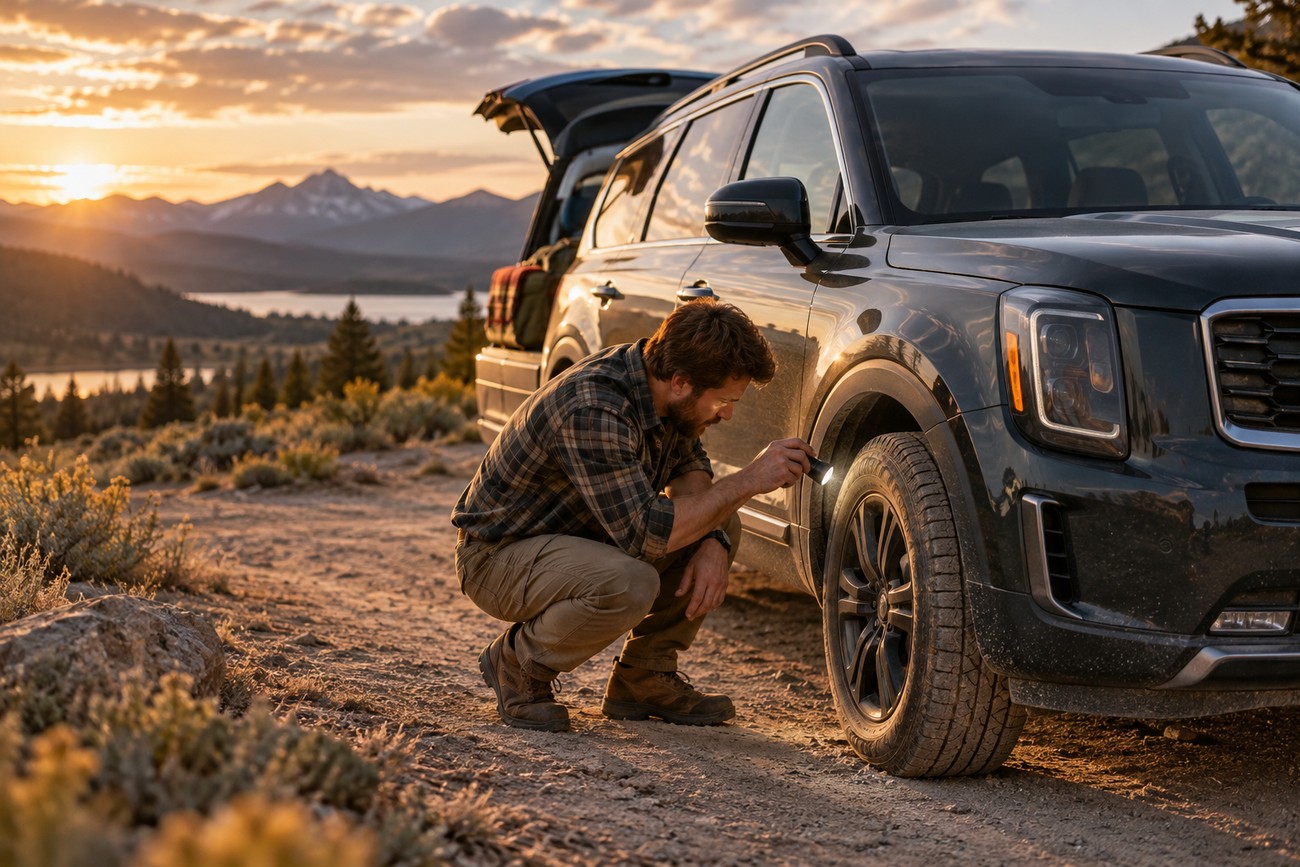
Once parked safely, look for visible tire damage, unusual wear, and wheel damage. Check the tread as well as the sidewalls, and compare the tires for wear that looks markedly different from side to side. These observations cannot replace an inspection, but they can help you describe what changed after the drive.
Before attributing every sound to the suspension, remove or secure loose cargo and cabin items. A small object can rattle continuously on washboard ridges and fall silent on pavement. If the sound remains, note where you hear it and whether it changes during braking, turning, or acceleration.
A technician can assess tire and wheel condition and balance, then inspect suspension and shock absorbers, steering components, and alignment where the symptoms point that way. Vibration specifically under acceleration also calls for checks of relevant driveline components alongside tires and wheels. A symptom pattern guides that work; it does not establish a diagnosis from the driver’s seat.
Buying new tires or requesting balancing alone may miss the reason for a new knock, uneven wear, or changed handling. For example, balancing may address a steady-speed shake while leaving a separate suspension concern untouched. Repeated washboard travel can contribute to wear in components and fasteners, so tell the shop about the road conditions as well as the pavement symptoms.
When rough-road noise is no longer just a comfort issue
A rattle confined to corrugations is different from a noise that follows you onto smooth pavement. The same is true of a vibration that appears during braking, acceleration, or turns rather than only over the ridges. Note the change in conditions and have it checked instead of assuming the dirt road simply made the cabin noisy.
New clunks, worsening vibration, uneven tire wear, or a Telluride that wanders after rough-road travel warrant inspection. If steering or directional control feels compromised, stop somewhere safe rather than pressing on to finish the route. Visible tire damage after an impact is another reason to assess the vehicle before continuing.
A quiet drive on pavement cannot prove every suspension component is sound; some faults become noticeable only when the wheels move repeatedly over uneven ground. Equally, a noisy dirt-road drive does not prove that damage occurred. The useful test is whether the behavior is new, localized, persistent, or accompanied by a change in how the vehicle drives.
Frequently asked questions
Details that seem minor can make a dirt-road rattle easier to investigate. These answers focus on what you can observe and what still requires vehicle-specific inspection or verification.
How can I help a mechanic find a rattle that only happens on dirt roads?
Note the road surface, approximate speed range, whether you were accelerating or coasting, and where the sound seemed to come from. If a passenger can safely make a short recording, bring it along; do not try to record while driving. Tell the mechanic whether the rattle disappears immediately on pavement and whether it began after a particular impact.
Why is my Kia making a rattling noise?
A rattle can come from a loose item in the cabin, interior trim responding to vibration, or a vehicle component that needs inspection. Start by securing cargo and observing whether the noise occurs only on washboard ridges. A new sound from one location, especially with a knock or handling change, deserves a vehicle-specific check.
What is the most common problem with Kia Telluride?
There is no reliable single “most common problem” that identifies the cause of a particular Telluride’s rattle. Reports and service concerns vary by model year and vehicle history. For your vehicle, check its maintenance records and any applicable manufacturer notices, then describe the actual driving conditions and symptoms to a qualified technician.
What is the lawsuit against the Kia Telluride?
That wording does not identify a specific case, and a lawsuit would not establish the cause of a rattle in your vehicle. If you have seen a claim about your Telluride, verify the case name, model years, and allegations through the relevant court documents. Check recalls and service information separately using your vehicle identification number; legal claims and recalls are different matters.
Why does my car make a rattling noise when I drive on bumpy roads?
Bumps repeatedly move the tires, suspension, and body, which can shake loose objects or reveal a noise that smooth pavement does not provoke. First check items you can secure without working beneath the vehicle. If the noise is a new, localized knock or comes with wandering, worsening vibration, or uneven tire wear, arrange an inspection.







