
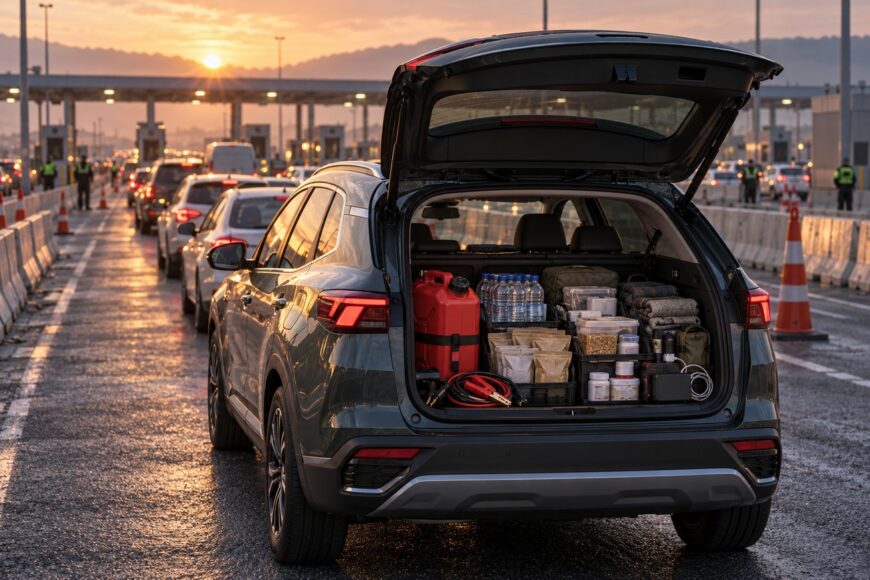
A border queue can move often enough to keep you in the Kia Sportage, yet slowly enough that its end remains impossible to predict. A 12-hour wait is a possible exceptional scenario, not a typical crossing or a guaranteed maximum. The central choice is uncomfortable: keep the cabin warm or cool while accepting exhaust, fuel, and battery risks, or switch off and manage the changing temperature.
Preparation matters because checkpoint facilities may be inaccessible before entry, and a small delay can become a long stop. Plan for limited movement, scarce toilet access, and short advances rather than assuming you can leave the vehicle whenever needed.
- Prepare for a queue that outlasts your supplies
- Treat exhaust as the first safety decision
- Manage fuel, climate, and the 12-volt battery
- Stay functional when the line barely moves
- Frequently asked questions
- How can I check current border waiting times before joining the queue?
- What makes a Kia Sportage suggest that the driver take a break?
- What should I do if I need a toilet but cannot leave the car in line?
Prepare for a queue that outlasts your supplies
Refuel before joining the queue, leaving a reserve for slow movement and the road beyond the checkpoint. Low fuel can cause a breakdown, and Kia warns that running with insufficient fuel may damage the catalytic converter. Do not base the plan on an assumed idle fuel rate: the engine still consumes fuel, and climate demand can increase consumption.
Keep water, ready-to-eat food, essential medicines, toilet paper, and other hygiene supplies inside the cabin. Add warm layers, a blanket, an external power bank, charging cables, and jump leads. These items help when shops, toilets, and other facilities are inaccessible before entry or when leaving the line is impractical.
Place essentials where the driver can reach them without searching around the footwell. If children, older passengers, or anyone with regular medication is traveling, pack their needs separately and keep them available. Treat the possible 12-hour wait as a contingency: supplies should support the people in the car without encouraging unsafe roadside stops.
Treat exhaust as the first safety decision
Continuous idling is not a safe default in a dense line of vehicles. Carbon monoxide is colorless and odorless, and prolonged sitting in a stationary vehicle with its engine running is dangerous. Closed windows do not create a reliable seal; exhaust can enter through ventilation or a vehicle fault.
Recirculation does not protect occupants from nearby exhaust and does not replace fresh-air ventilation. If idling is unavoidable, Kia specifies an open area, fresh-air intake, and a higher fan speed. These precautions reduce exposure risk in the circumstances described by the vehicle guidance, but they do not make prolonged idling risk-free.
A noticeable exhaust smell demands immediate action, while carbon monoxide may have no smell at all. Before relying on ventilation, check that snow, ice, leaves, or other debris are not blocking the exterior air intake at the base of the windshield.
If exhaust smells enter the cabin, open the windows, leave the unsafe area when it can be done safely, and have the vehicle checked. Do not remain in a heavy-exhaust zone simply because the windows are closed or the climate system is running. Avoid stopping over dry grass, paper, or other combustible material because the exhaust system can become hot.
Manage fuel, climate, and the 12-volt battery
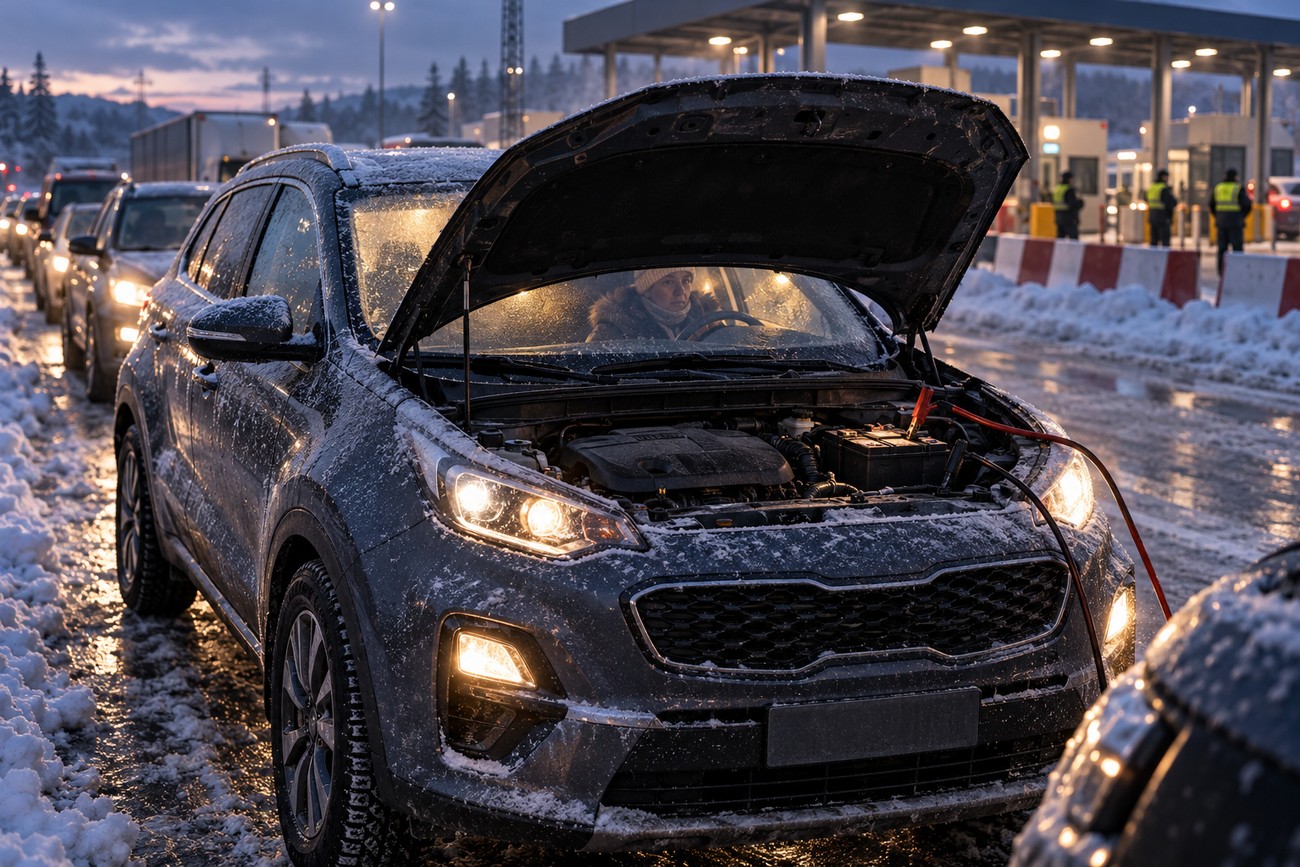
Switching off the engine saves fuel, but heating and cooling then fade quickly, especially in extreme temperatures. Demisting, climate control, heated seats, lights, media, and charging devices add demands. With the engine off, electrical loads can drain the 12-volt battery and leave the Sportage unable to start.
Idle-stop, or ISG, may save fuel when it activates, but it is not guaranteed to stop the engine in every queue. Its operation depends on battery charge, engine and air temperatures, and climate settings. Cold weather, a weak battery, or strong heating and cooling demand can prevent the system from working as expected.
ISG is not a backup power source. Plan short periods of climate use and limit accessories when the engine is off, while keeping the cabin safe for the conditions. Repeated tiny advances can combine long idling with little useful movement, so fuel and battery reserves deserve more attention than the dashboard’s advertised range.
Stay functional when the line barely moves
Keep water, medicines, food, and a phone power source within reach. During each small advance, remain ready to move the vehicle and use the parking position required by the queue. A slowly advancing line can make a toilet visit or longer break impossible, particularly where leaving an unattended car is prohibited or unsafe.
Prolonged sitting can cause back pain, stiff legs, and worsening discomfort. Make brief posture changes while secured in the vehicle, adjust the seat, move your ankles, and use each safe pause to reduce stiffness. Do not assume there is room to walk around, and do not leave children or other dependents unattended.
Manage clothing in layers so the cabin can remain tolerable when the engine is off. Published border-processing targets, including those provided by CBP where relevant, are not a guaranteed maximum wait. A 12-hour wait remains a possible exceptional scenario, so supplies and comfort plans should allow for uncertainty rather than depend on a posted estimate.
Frequently asked questions
Border conditions and Sportage equipment vary by crossing, direction, model year, and specification. Use official information for decisions, and treat vehicle alerts as assistance rather than as a safety monitor.
How can I check current border waiting times before joining the queue?
Use the relevant border authority’s live crossing information and check the specific crossing, travel direction, and time of the latest update. A posted estimate can change before you arrive because traffic and processing conditions are dynamic. Published processing targets are not a guaranteed maximum wait, so keep a basic contingency kit even after checking.
What makes a Kia Sportage suggest that the driver take a break?
Where fitted, a Sportage driver-attention feature may suggest a rest based on driving-related criteria. Availability and behavior vary by model year and equipment. The alert does not measure carbon monoxide, detect exhaust exposure, or assess fatigue caused by waiting in a border queue, so it cannot replace breaks and safety decisions made by the occupants.
What should I do if I need a toilet but cannot leave the car in line?
If possible, ask another adult to remain with the vehicle while you use an official facility when permitted. Ask checkpoint staff for directions and follow their instructions. Do not leave an unattended Sportage in an active lane or walk away without confirming that the queue rules allow it; facilities may be unavailable before the checkpoint.







