
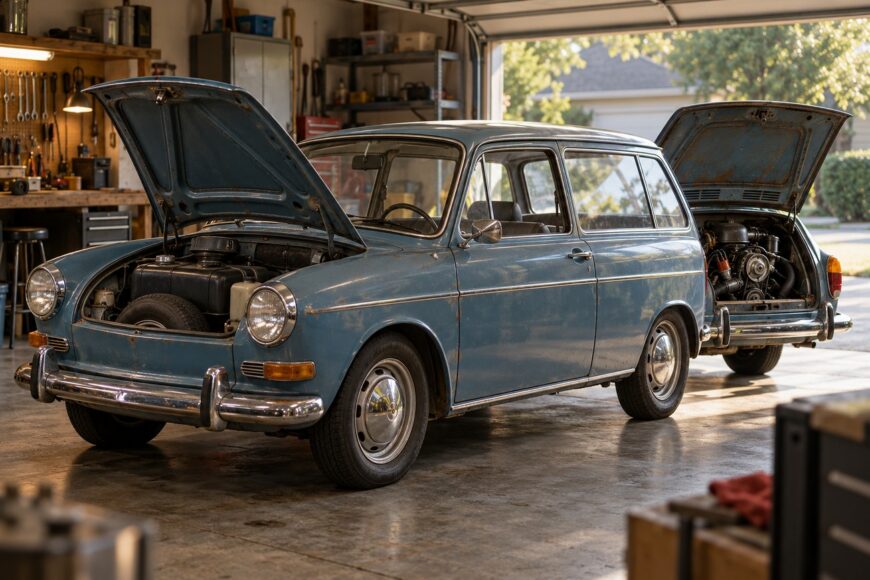
The VW Type 3 Squareback combined wagon practicality with an unusual mechanical layout: a rear-mounted, air-cooled flat-four, luggage space at both ends, and, on later cars, Bosch electronic fuel injection. Officially called the Variant in most markets, it offered more carrying ability than a Beetle while retaining the compact dimensions and distinctive engineering of the Type 3 family.
That combination can make a properly maintained Squareback remarkably usable. Neglected wiring, aged fuel plumbing, missing cooling hardware, or structural rust can overwhelm its appeal just as quickly. The important distinction is between a car with an understandable maintenance history and one that has accumulated decades of improvised repairs.
- What the VW Squareback Actually Was
- Why D-Jetronic Is the Squareback’s Real Dividing Line
- The Hard-Starting Problems Owners Keep Chasing
- A Better D-Jetronic Diagnostic Order
- Buying a Squareback: Rust Before Romance
- Air Cooling, Maintenance, and the Myths That Cost Money
- Frequently asked questions
- What fuel economy can a 1971 VW Type 3 Squareback realistically deliver?
- Which air-cooled VW engine is generally considered the most reliable?
- Which VW should buyers stay away from?
What the VW Squareback Actually Was
The VW Type 3 Squareback was produced from 1961 through 1973, with the wagon officially called the Variant in most markets. Its rear-mounted, air-cooled flat-four left the front of the body available for a fuel tank and luggage compartment. A second luggage area sat behind the rear seat and above the engine compartment, giving the car useful carrying capacity without a conventional front-engine layout.
The engine has no liquid-cooling radiator. Cooling air is directed around the cylinders and heads by a system of tinwork, seals, and guide plates. That arrangement is mechanically straightforward, yet it makes missing or poorly fitted cooling pieces important inspection findings rather than cosmetic omissions.
Early Type 3 cars used carburetors. Bosch D-Jetronic appeared for the 1968 model year, creating a major dividing line among Squarebacks. A 1971 car therefore belongs to the later period in which equipment can vary with market and specification; its actual fuel system should be verified from the car, engine number, wiring, and component numbers.
The front fuel tank preserves rear luggage space, though it also changes how you inspect the car. The area around the tank, its hoses, drainage paths, and nearby wiring deserves attention. Access to some fuel and electrical components is less direct than the exterior styling suggests, so a clean-looking luggage compartment does not prove that the underlying systems are sound.
Why D-Jetronic Is the Squareback’s Real Dividing Line
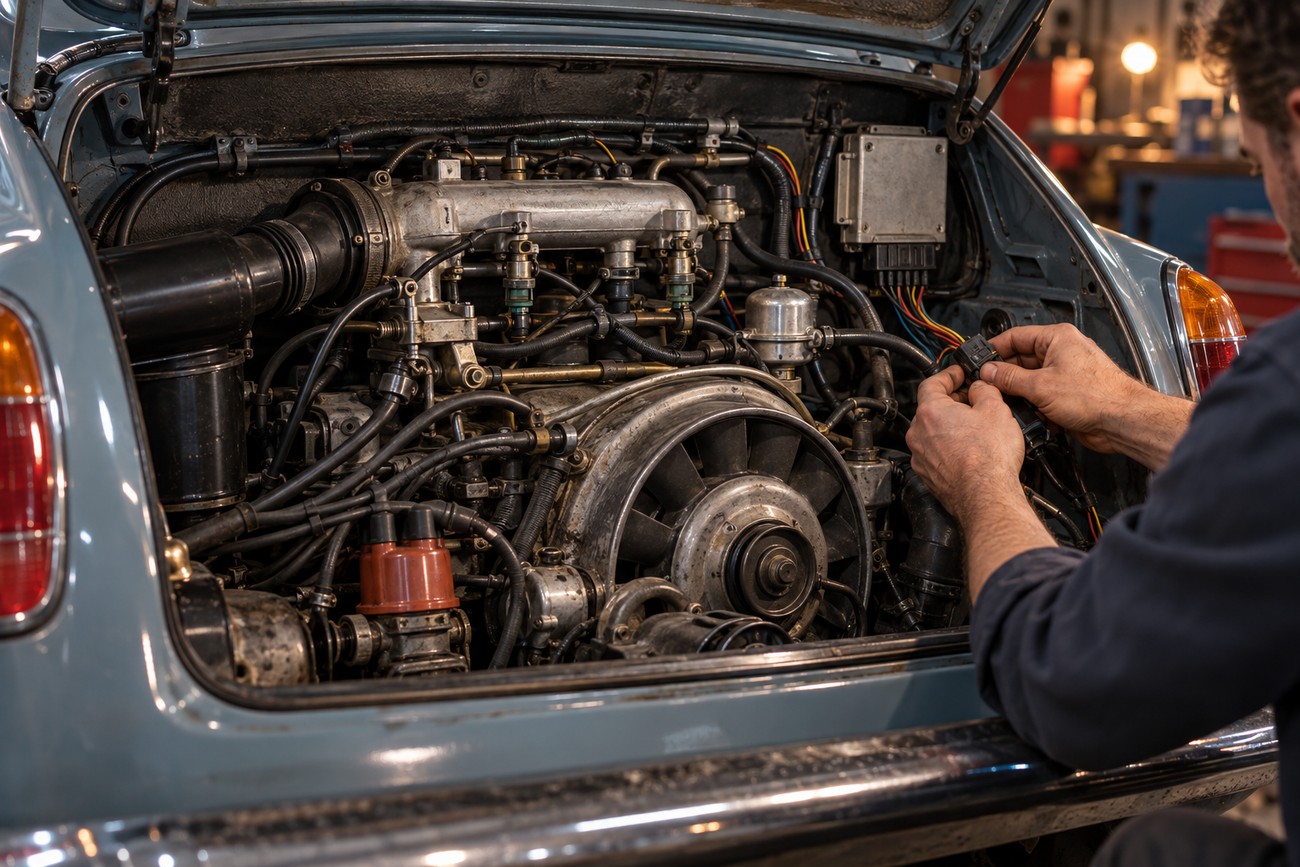
D-Jetronic is an electronically controlled, pulse-type fuel-injection system. The control unit determines injector pulse duration from signals including manifold pressure, temperature, engine speed, and throttle position. The injectors then deliver fuel in pulses rather than relying on carburetor venturi flow.
The system is precise for its period, although it is not a modern self-learning fuel-injection system. It does not continuously correct every fault through adaptive software. Its behavior depends on correct sensor signals, sound wiring and grounds, appropriate fuel-pressure regulation, and a sealed intake system.
This explains why two apparently similar Squarebacks can have very different ownership experiences. A complete, correctly connected D-Jetronic system can run consistently and start cleanly. A car with oxidized connectors, damaged harness sections, incorrect parts, or intake leaks may develop hard starting, hesitation, and unstable idle that owners wrongly attribute to the entire design.
Late Type 3 engines used 1,679 cm³ displacement. Stated power varies by market, model year, and measurement method, so period specifications should be treated as market-specific information rather than a universal comparison figure. The practical buying issue is system condition: an original, documented injection system is usually easier to diagnose than a car assembled from visually similar parts.
The Hard-Starting Problems Owners Keep Chasing
Difficult starting often begins with electrical basics. Poor grounds, oxidized connectors, weak power supply, and damaged sections of the original harness can prevent the control unit or sensors from receiving dependable signals. Replacing injectors before checking those items can leave the real fault untouched.
Hesitation and unstable idle also point toward air leaks and incorrect vacuum routing. Cracked hoses, leaking intake gaskets, or a vacuum line connected to the wrong location can create a lean condition. A replacement hose fitted by approximate length or appearance may change the system’s behavior, especially after an earlier owner has altered the air cleaner or intake plumbing.
Hot-weather fuel-delivery problems deserve a separate inspection. Aged hoses, incorrect routing, vapor-lock conditions, and excessive engine-bay heat can interrupt fuel flow or make restarting difficult. Long storage adds further risk because fuel hoses, injector seals, membranes, and the tank itself deteriorate while the vehicle sits.
D-Jetronic components are not universally interchangeable across model years. A sensor or regulator advertised as universal may have the wrong characteristics for the particular engine and control system. The engine number, model year, market, catalog number, and electrical characteristics provide safer references than a component’s shape or connector alone.
A Better D-Jetronic Diagnostic Order
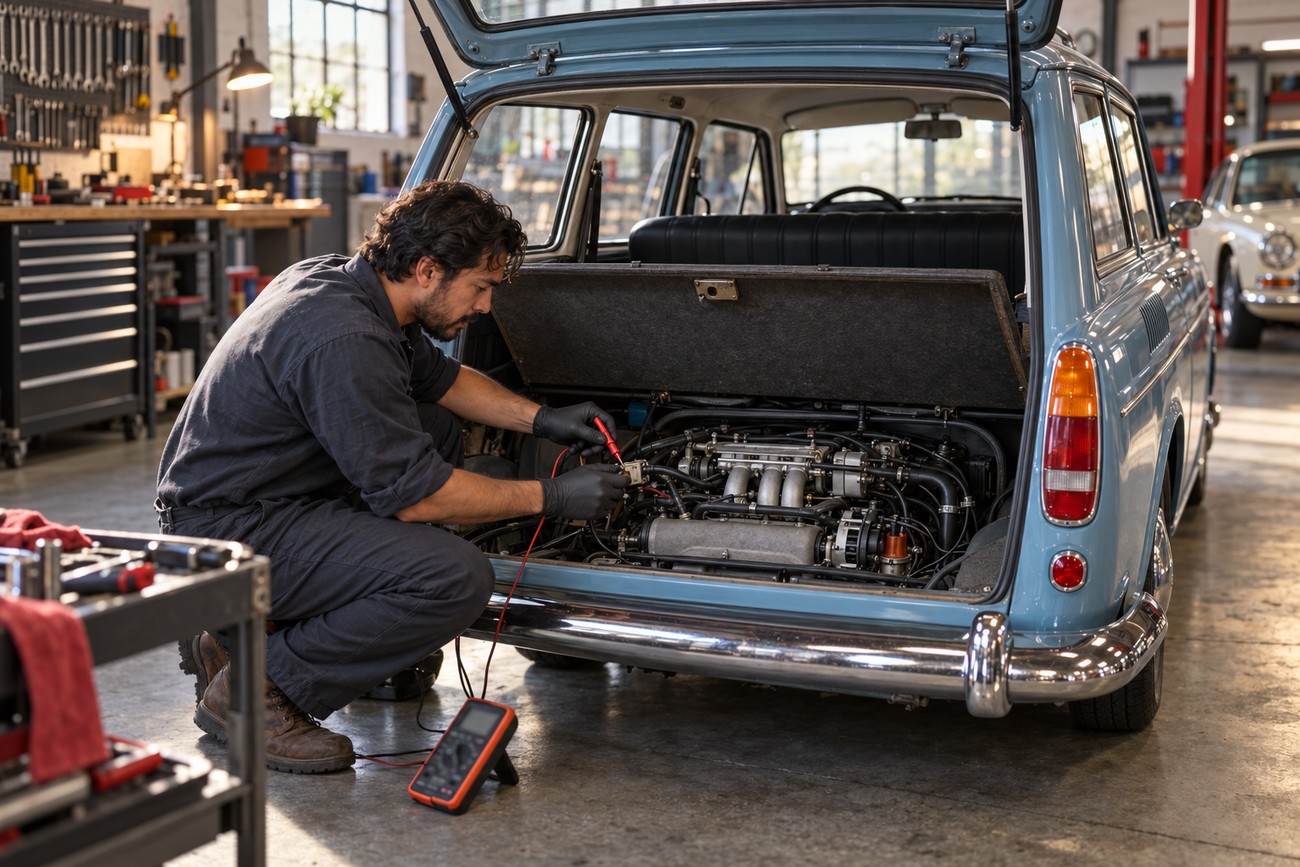
Begin by restoring the stock configuration. The factory vacuum-line layout and air cleaner should be in place before aftermarket improvements or experimental hose routing are evaluated. A modified intake can create symptoms that obscure the original fault, while a missing air-cleaner connection can introduce unmetered air or alter the intended pressure signals.
The first checks should cover battery power, grounds, harness condition, fuel pressure, and intake sealing. A multimeter helps verify electrical continuity and sensor circuits, while a fuel-pressure gauge establishes whether the pump, regulator, lines, and supply are behaving as required. Intake-leak checks should include hoses, gaskets, and connections that may look sound from above.
Grounds, harness continuity, fuel pressure, and intake sealing deserve confirmation before an expensive sensor or control unit is condemned. This order separates a system fault from a failed component and prevents parts replacement from becoming the diagnostic method.
Sensor operation can then be checked against the factory information for the specific model year and engine. The relevant values and wiring paths are configuration-dependent, so a generic online diagram can mislead if the car contains parts from another market or year. Record what is fitted before changing it.
A D-Jetronic Squareback has no carburetor mixture screws to adjust. Turning an imagined mixture screw, fitting random vacuum hoses, or substituting a visually similar sensor cannot correct an injection fault. The correct sequence is evidence-led: verify the basic electrical and fuel conditions, confirm the intake is sealed, test the sensors and harness, and replace only parts that fail those checks.
Buying a Squareback: Rust Before Romance
On a purchase inspection, structural condition should outrank engine enthusiasm. Corrosion in the floor, rockers, suspension mounts, drainage zones, and hidden cavities can cost more than engine repairs and can compromise the vehicle’s safety. Fresh paint or a tidy interior may conceal earlier repairs, so inspect seams, edges, drain paths, and attachment points rather than judging the car by its presentation.
Check the front luggage area around the fuel tank, including the surrounding metal, hose routing, and areas where water may collect. Continue through the floors and rockers, then examine rear-suspension mounting areas and other structural points from below. An endoscope is useful for hidden cavities where practical, particularly when access is restricted or repairs appear freshly coated.
The braking and steering systems require the same skepticism. Weak brakes, worn steering elements, or damaged suspension mounts can make a running car unsafe to drive. A healthy-sounding engine does not compensate for corroded structural points or suspension attachments that have lost sound metal.
Inspect the engine’s cooling hardware before accepting a test drive as proof of health. Missing cooling shrouds, seals, or guide plates can allow overheating even when the engine starts easily and runs smoothly for a short period. Look for evidence of incomplete tinwork, blocked cooling passages, and improvised repairs around the engine bay.
Fuel-system completeness matters as well. Confirm that the tank, hoses, injector seals, wiring, sensors, regulator, and intake components belong together and match the car’s engine number and model year. A Squareback with an honest cosmetic flaw and complete systems can be a better project than a glossy example with mixed injection parts and concealed corrosion.
Air Cooling, Maintenance, and the Myths That Cost Money
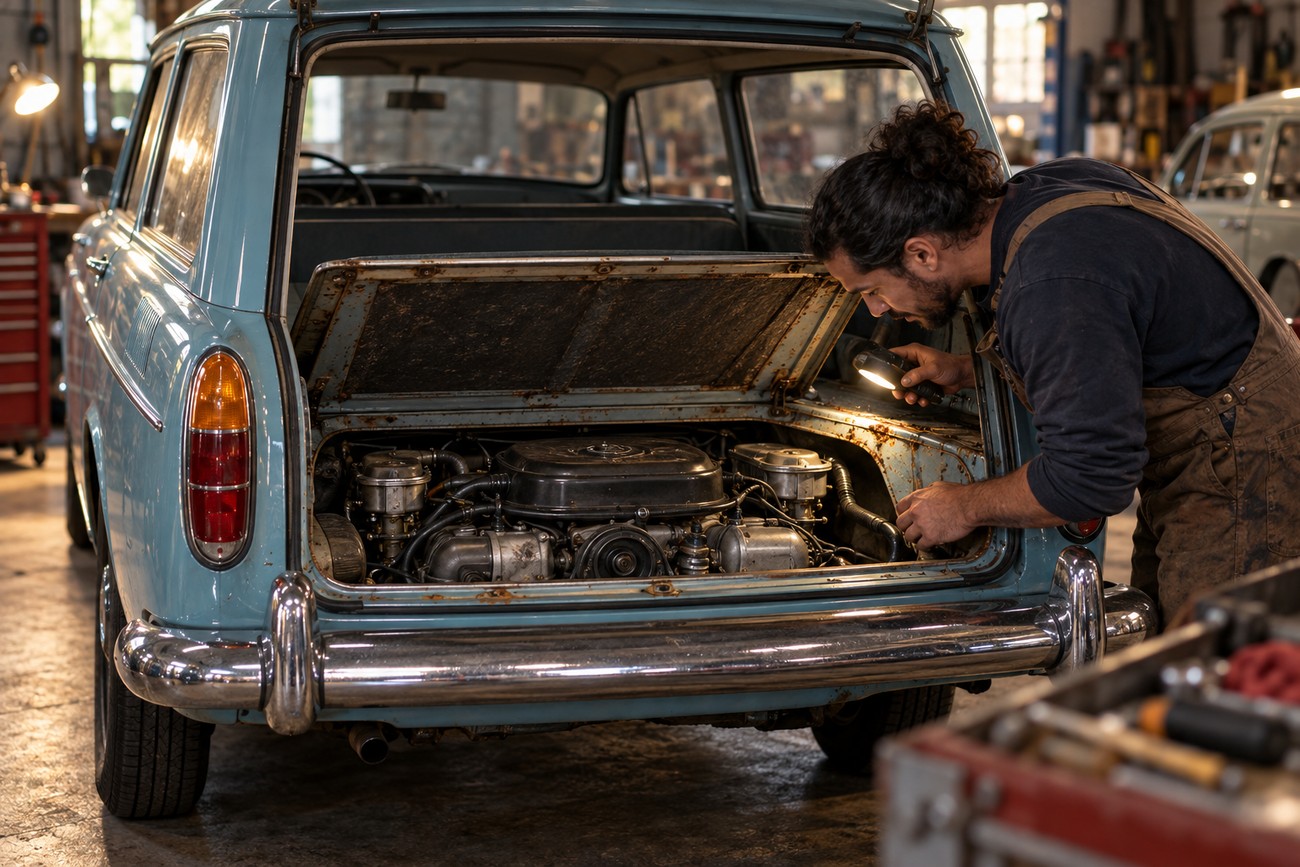
Air cooling does not eliminate overheating risk. Temperature control depends on the cooling tin, seals, guide plates, oil, ignition, mixture, and clean cooling passages working together. Removing a seal or leaving a shroud off may appear harmless during a repair, yet it can disturb the intended airflow and raise operating temperatures.
D-Jetronic is not automatically worse than a carburetor. A correctly maintained system can run consistently, provide reliable starting, and avoid the repeated adjustment that a worn carburetor may require. Its weaknesses emerge when owners treat it as mysterious electronics instead of testing its wiring, grounds, sensors, fuel-pressure regulation, and intake sealing in a logical order.
The absence of a modern-style oil filter does not remove the need for regular oil changes and factory filtration maintenance. Oil condition, correct service intervals, and attention to the original filtration arrangement remain part of basic engine care. Skipping those tasks because the engine lacks a familiar spin-on filter is a costly misunderstanding.
Factory advertising may present injection as trouble-free, while service reliability depends on the complete fuel, electrical, sensor, and intake system. The same principle applies to air cooling: the design is durable when its supporting parts are present and maintained. Claims based on a single component rarely describe the condition of the whole car.
Frequently asked questions
What fuel economy can a 1971 VW Type 3 Squareback realistically deliver?
There is no single responsible figure for every 1971 Squareback. Factory or owner-reported fuel-economy figures must be separated from the effects of engine condition, injection calibration, gearing, traffic, tire setup, and driving style.
For a buyer, consistency matters more than a favorable anecdote. Check for correct fuel pressure, intake sealing, sensor operation, ignition condition, and brake drag before judging consumption. A car that uses more fuel because of a fault should be diagnosed; a car driven in heavy traffic or carrying a poorly tuned engine should not be compared directly with a carefully maintained example on an open road.
Which air-cooled VW engine is generally considered the most reliable?
No universal engine ranking is reliable enough to guide a Squareback purchase. Reliability depends heavily on stock configuration, complete cooling hardware, parts support, and maintenance history, along with the quality of previous repairs.
For this model, the better choice is usually the complete, documented engine and fuel system rather than the engine with the strongest reputation in enthusiast discussions. Verify cooling tin, seals, oil service, ignition, mixture, and compatible injection components. A familiar engine type with missing hardware can be a poorer ownership proposition than a less fashionable example that has been maintained correctly.
Which VW should buyers stay away from?
Buyers should avoid cars with serious structural corrosion, unsafe brakes, incomplete wiring, or a fuel-injection system assembled from mixed and unidentified parts. That rule targets condition rather than condemning an entire model or year.
Rarity and desirability are separate issues. Before paying for a running engine or attractive paint, inspect the floors, rockers, suspension mounts, tank area, drainage zones, hidden cavities, and cooling system. A complete Squareback with repairable cosmetics may justify careful work; a cosmetically restored car with concealed structural rust and incomplete systems can absorb substantially more money and time.







