
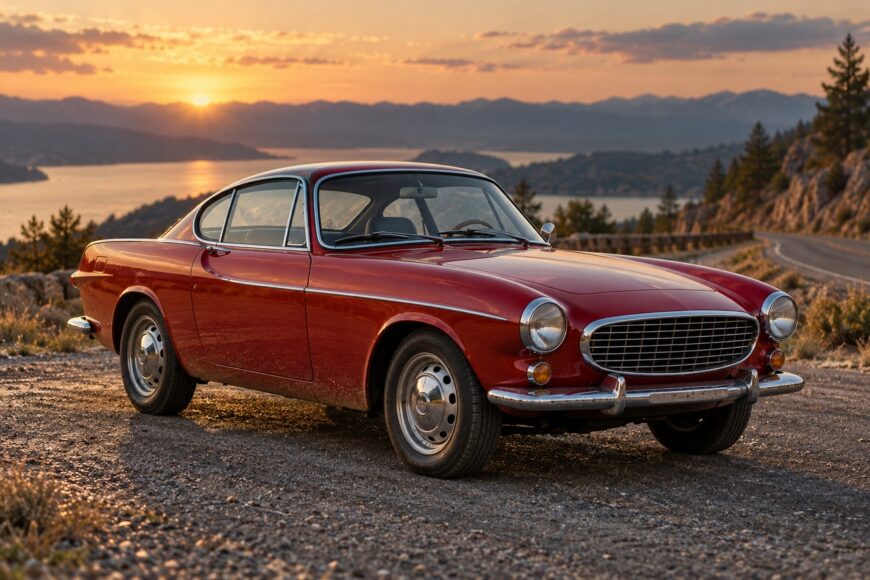
Irv Gordon’s 1966 Volvo P1800 became the car associated with more than three million miles. For anyone considering a P1800, that extraordinary distance raises a practical question: what does one car’s record tell you about another one offered for sale?
Volvo reported more than 2.8 million miles on Gordon’s car by 2010 and 2.9 million by 2011. Those figures document exceptional use. They do not establish that the car covered the distance without major engine, transmission, or body repairs, and they offer no reason to treat three million miles as a normal life expectancy for the model.
- The P1800 That Went Beyond Three Million Miles
- What Made the P1800 a Car Worth Keeping
- P1800 Versions: Why Model Year Changes the Answer
- The Maintenance Behind a High-Mileage Reputation
- Where P1800 Ownership Gets Complicated
- How to Inspect a P1800 Without Being Distracted by Its Mileage
- Frequently asked questions
- How much is a Volvo P1800 worth?
- What is the typical mileage of a Volvo 1800S?
- How can I check whether a P1800 still has its original engine and gearbox specification?
The P1800 That Went Beyond Three Million Miles
Irv Gordon bought his 1966 P1800 new for $4,150. He kept driving it long enough for its accumulated mileage to become inseparable from the car’s identity. The purchase price records where that ownership began; it says nothing about what a P1800 costs to buy now.
Volvo reported more than 2.8 million miles by 2010 and 2.9 million by 2011. The later more-than-three-million-mile claim concerns Gordon’s individual car. It is evidence of unusually sustained use, rather than a mileage benchmark that other surviving P1800s should be expected to reach.
A distance record also leaves important mechanical questions open. The supplied official mileage reports do not establish a complete history of major engine, transmission, or body repairs. Describing the car as having covered the distance “without repairs” goes further than those reports support.
Gordon’s achievement still matters. A car cannot accumulate that kind of mileage if its owner stops using it, maintaining it, and dealing with faults as they arise. For a buyer, the useful lesson is to examine the condition and care behind a P1800’s odometer reading, rather than borrowing certainty from someone else’s record.
What Made the P1800 a Car Worth Keeping
The P1800 series was produced from 1961 to 1973, with 39,414 cars built, including 5,078 1800 ES estates. Its long production run leaves today’s buyers with cars that share a family name but differ in important mechanical details. Identifying the particular version is the starting point for sensible maintenance or a purchase inspection.
Early P1800s used a 1,778 cc B18 four-cylinder rated at about 100 SAE horsepower. The appeal for an owner planning regular use lay partly in a straightforward mechanical layout that could be serviced and adjusted. Straightforward does not mean attention-free: the engine still depended on routine checks, sound cooling, and properly maintained supporting components.
Transmission choices included a four-speed manual, a manual with overdrive, and a three-speed automatic; the equipment on any particular car needs verification. Overdrive gave a manual car a taller cruising gear, a useful feature on long journeys. It also introduced another assembly whose condition and correct operation matter when buying an older example.
Gordon’s mileage reflects a combination of a car he kept using and the upkeep that continued use requires. A strong basic design can make long ownership worthwhile, yet it cannot promise a particular lifespan for every engine, gearbox, or body. The relevant distinction is between a car with a durable reputation and a specific car with evidence that it has been cared for.
P1800 Versions: Why Model Year Changes the Answer
Use the car’s year and installed equipment together when identifying its specification. The groups below show the main changes, while brake and transmission details still need checking on the individual car.
| Configuration | Engine and stated output | Brakes | Transmission considerations |
|---|---|---|---|
| Early B18 cars | 1,778 cc B18 four-cylinder; about 100 SAE horsepower. A 108-horsepower rating was stated from 1968. | Early cars had front discs and rear drums. | Check whether the car has a four-speed manual, manual with overdrive, or three-speed automatic; verify its actual equipment. |
| Later carbureted 2.0-liter cars | A 1,986 cc carbureted version appeared from 1968. Confirm the stated output for the specific year and configuration. | Later cars gained discs on all four wheels; verify the car’s brake specification. | Transmission equipment depends on the car. Check the installed gearbox before selecting parts. |
| Fuel-injected cars | A fuel-injected version rated at 120 horsepower appeared from 1969. | Check the particular year and installed brake system rather than assuming every car has the same arrangement. | Identify the installed gearbox and any overdrive components; do not assume interchangeability with earlier cars. |
The Maintenance Behind a High-Mileage Reputation
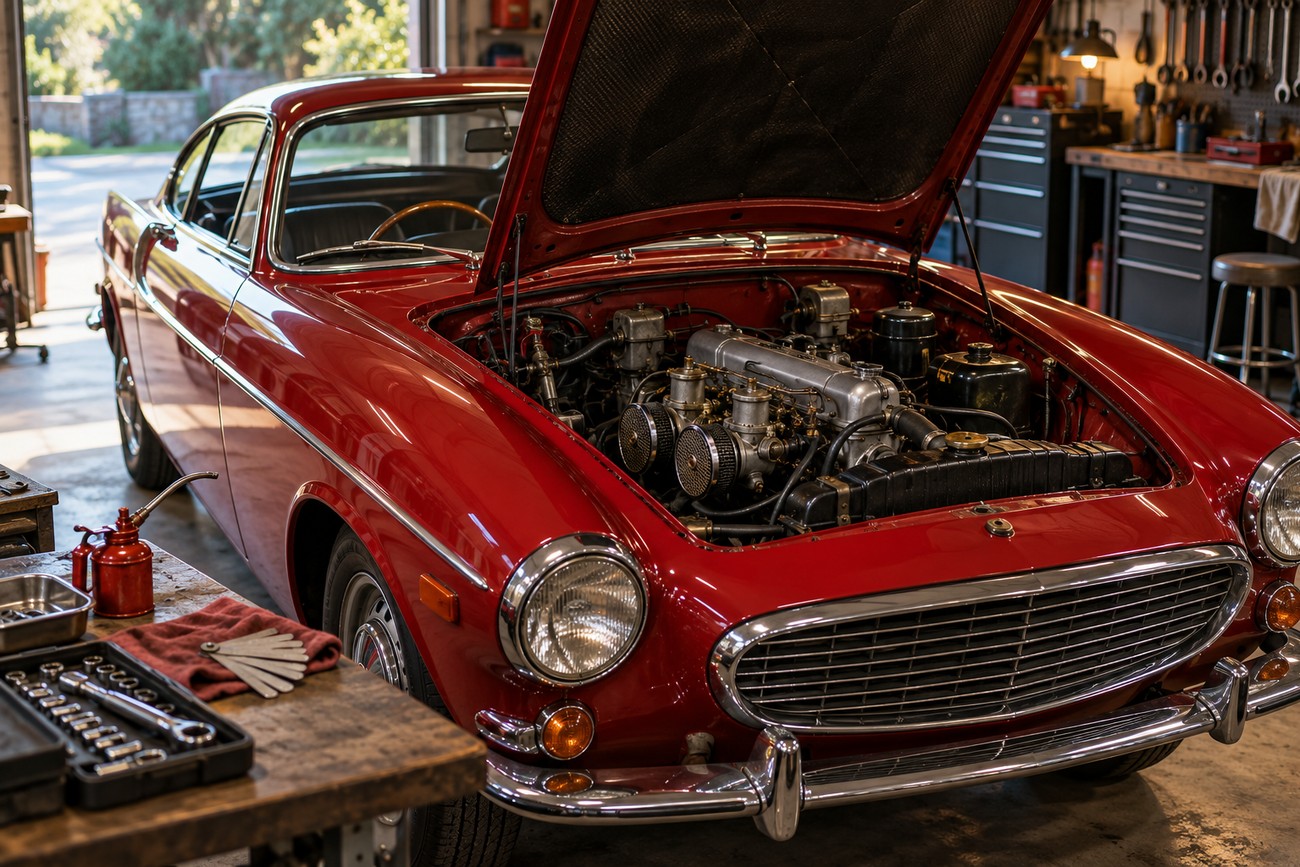
The factory service schedule called for maintenance every 10,000 km, or about 6,000 miles. That interval described recurring work, not a promise that the car could be driven indefinitely between oil changes alone. Its reputation for durability becomes misleading when routine attention disappears from the story.
Scheduled work included checks of the engine, valve clearances, carburetors, ignition, and lubrication. These tasks affect how the car starts, runs, and wears over time. If an engine runs poorly, replacing parts before checking its basic adjustments can leave the underlying problem untouched.
Lubrication deserves particular attention on a car used regularly. Neglected universal joints and chassis joints can develop wear even while the engine seems healthy. Records showing what was lubricated and adjusted tell a buyer more than a general claim that the car was “serviced.”
Mileage-based servicing also cannot account fully for age. Rubber parts, seals, brake hoses, and structural metal can deteriorate while a car covers little distance. A long-stored P1800 therefore needs an age-related inspection alongside any review of its 10,000 km service history.
Where P1800 Ownership Gets Complicated
Overdrive can separate a pleasant long-distance P1800 from a potentially expensive project. Owners report intermittent engagement, including cases where the switch must be operated again before the unit responds. Selecting reverse while overdrive remains engaged can damage its planetary mechanism, making correct disengagement and reverse-gear lockout more important than a switch that merely appears to work.
Engine-related complaints tend to involve particular components rather than proof that every P1800 engine is fragile. Owners report SU carburetor flooding and water-pump leaks, both of which call for diagnosis before routine driving continues. The fiber timing gear can also fail and stop the engine; replacement requires careful work around the camshaft.
Wear farther down the driveline can be easy to overlook during a short test drive. Reports include rear-axle whine, clutch-linkage wear that increases pedal free play, and universal joints that need replacement after missed lubrication. Each has a different repair path, so a seller’s description of a vague “old-car noise” is no substitute for locating its source.
Instruments and other electrical equipment warrant a check as well. Owners describe erratic gauges and dashboard faults, which can make it harder to judge how the car is operating on a journey. A working engine does not make unreliable temperature or fuel information harmless.
None of these faults means every P1800 has them. They show why a reliability reputation cannot replace a component-by-component assessment. The ownership question is less whether the model has weak points than whether the particular car’s weak points have been inspected and addressed competently.
How to Inspect a P1800 Without Being Distracted by Its Mileage
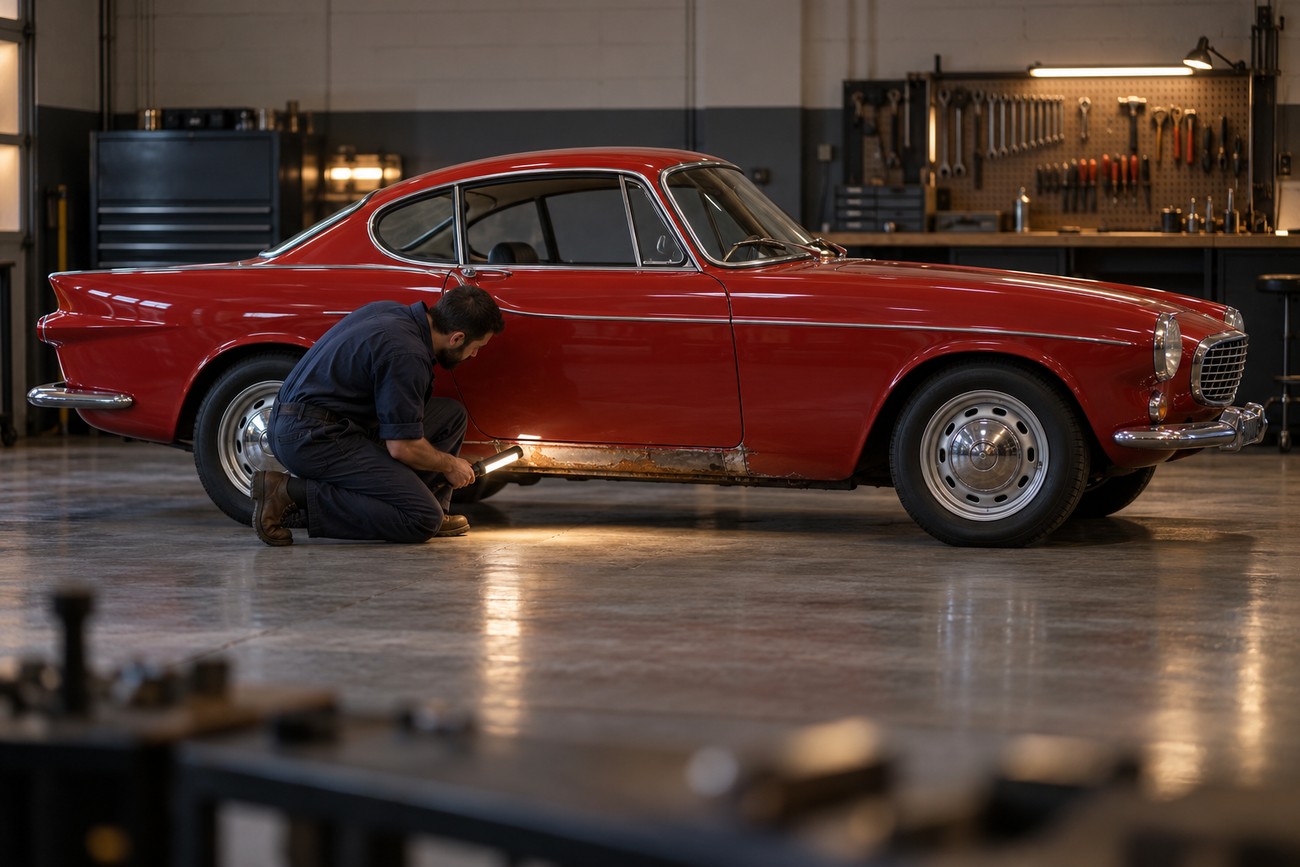
Begin with structural corrosion and the quality of earlier body repairs, before judging the paint or odometer. Look closely at load-bearing areas and repair seams, and seek a knowledgeable inspection if their condition is unclear. A tidy exterior can conceal metalwork that is far more consequential to ownership than a worn interior or a high reading.
Next, establish which engine, brakes, and gearbox are actually installed. A long-lived car may have acquired replacement components, so its model badge and advertised year cannot settle every parts question. Compare the car itself with its documents before treating a claimed specification as fact.
A click from the overdrive switch proves little about the gearbox beneath it. Have engagement, disengagement, and the reverse-gear lockout checked safely; never select reverse deliberately while overdrive remains engaged to test the mechanism.
On a road test, note whether overdrive engages consistently and releases as intended, alongside any axle whine, clutch-pedal free play, or irregular gauge behavior. Confirming the lockout may require a mechanic familiar with the installation, particularly if the gearbox, solenoid, or wiring has been changed. Uncertainty here belongs in the inspection findings, rather than being dismissed because overdrive worked once.
Finish by reviewing dated evidence of mechanical checks, adjustments, and lubrication, including attention to universal joints. The factory’s 10,000 km, or about 6,000-mile, schedule is a useful reference, while old rubber, seals, brake hoses, and corrosion require separate scrutiny. For any proposed replacement, confirm compatibility by year, engine, brake system, and gearbox rather than accepting a listing that simply says “for Volvo P1800.”
Frequently asked questions
Common buying questions concern value, mileage, and whether a car retains its original specification. Gordon’s purchase price and distance record cannot answer the first two for another car. Documents and an inspection of the installed parts help answer the third.
How much is a Volvo P1800 worth?
A P1800’s asking price should be judged against its structural condition, restoration quality, specification, and documented work. Compare cars with similar body and mechanical needs, and account for any repairs an inspection identifies. Irv Gordon’s $4,150 purchase price was the new-car price of his 1966 P1800, not an indicator of present-day market value.
What is the typical mileage of a Volvo 1800S?
Gordon’s more-than-three-million-mile car does not establish typical mileage for a Volvo 1800S, and an unsupported model-wide average is of little help when assessing one. Read the individual odometer alongside ownership records and dated service evidence. That combination can help explain how much use a car has seen, while its condition shows what that use has left behind.
How can I check whether a P1800 still has its original engine and gearbox specification?
Start with the car’s identity and any available factory or ownership documentation, then compare those records with identifiers on the installed engine and gearbox. Review invoices and other evidence for later swaps. A replacement may be compatible and work well while still differing from the car’s original specification; check parts against the actual year, engine, brake system, and transmission before ordering.







