
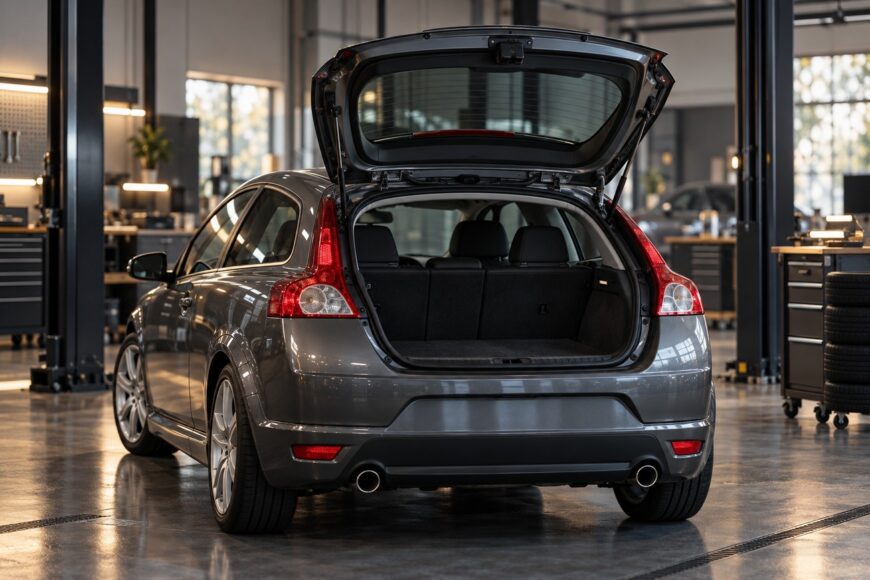
The Volvo C30’s glass tailgate is distinctive, light, and compatible with the car’s safety structure. It is also awkward to load, vulnerable to concentrated impacts, and potentially expensive to replace. That combination explains why the design still divides owners: the glass itself is not the obvious failure, while the compromises around it are real.
The central issue is therefore not whether the tailgate makes the C30 inherently unsafe. Its metal rear structure manages crash loads, and the tempered glass is designed to break in a controlled way. The harder question is whether a narrow, tall luggage opening and specialist glass repair suit the way you use a car.
For an owner who values the C30’s compact, coupe-like character and loads lightly, the tailgate can remain trouble-free for many years. For someone expecting the flexibility of a conventional family hatchback, Volvo’s practical-hatchback positioning can feel optimistic once a pushchair, bicycle, dog, or bulky box reaches the rear bumper.
- What the Volvo C30’s Glass Tailgate Actually Is
- Why Volvo Chose It—and What the Design Gave Away
- The Everyday Pain: Loading, Visibility, and Winter Use
- How the Glass Gets Damaged—and Why Repairs Hurt
- Safety: Is the Glass Tailgate a Structural Mistake?
- Glass vs Metal Tailgate: Where the Trade-Off Lands
- How to Live With a C30 Tailgate Without Creating a Problem
- So, Was the Glass Tailgate a Mistake?
- Frequently asked questions
- What are the most common problems with a Volvo C30?
- Why was the Volvo C30 discontinued?
- Which year of the Volvo C30 is considered the best?
- Why do Volvo C30s not hold their value well?
What the Volvo C30’s Glass Tailgate Actually Is
The C30 uses a glass hatch with an integrated metal frame and hinges. The glass is therefore part of a complete rear door assembly, rather than unsupported glazing carrying the entire rear of the car. Its approximate thickness is 4–5 mm, while the complete hatch weighs approximately 12–15 kg.
The surrounding metalwork provides the relevant attachment and body structure. At the rear of the vehicle, the metal side structures and lower rear crossmember manage the important crash loads. The glass is not the primary structural crash element, and the rear body was designed around that separation.
Original replacement glass came from Saint-Gobain or Pilkington, depending on the market. The specification matters because automotive glazing is manufactured for controlled fit, bonding, and breakage behavior; ordinary flat glass or an improvised panel cannot replicate those requirements.
The lighter hatch also reduces the load carried by the gas struts and hinges during opening. That can help those components last longer than hardware supporting a heavy conventional metal door, although age, alignment, and seal condition still determine how the assembly behaves in service.
Why Volvo Chose It—and What the Design Gave Away

The glass tailgate helped give the C30 its distinctive rear design and supported the model’s compact, coupe-like character. A lighter hatch also reduces the mass moving through its hinges and gas struts. Those are sensible engineering benefits for a small car designed around style and a relatively short rear body.
The trade-off appears at the loading aperture. Compared with Golf- and Focus-era hatchbacks, the C30 opening is noticeably narrower and taller. The external hatch shape can suggest conventional hatchback access, but the usable opening determines whether a large object can enter without being tilted, forced, or scraped against the bumper.
Owners and road tests commonly describe the luggage area as closer to a coupe than to a conventional family hatchback. Smaller shopping loads and soft bags are manageable; rigid, wide, or tall items expose the limitation quickly. The rear seats add flexibility, yet they do not change the basic shape of the opening.
That difference matters more than a brochure description of the body style. A buyer who mainly carries a laptop, weekend bags, or compact equipment may see the design as a reasonable compromise. A buyer choosing the C30 for family-hatchback versatility may discover that the glass is only one part of a more fundamental access problem.
The Everyday Pain: Loading, Visibility, and Winter Use
The high, narrow threshold makes bulky cargo awkward to load. You often need to lean farther into the car, lift an object over a relatively restrictive lower edge, and control its movement near the glass. Heavy or rigid items can also contact the bumper because there is less room to change their angle at the opening.
Pushchairs, dog crates, and sports equipment are the clearest examples. They may fit once folded or rotated, but the process is less forgiving than in a typical family hatchback. A dog may have adequate space inside while still being inconvenient to load, and a bicycle or long board can leave the glass exposed to point pressure.
Rear visibility brings a separate compromise. Road grime, salt, and slush can cover the rear glass quickly in winter, reducing the view through it before the rest of the car appears especially dirty. Regular washing and a functioning rear wiper help, but they do not remove the need for more frequent cleaning in heavily salted or wet conditions.
The design is therefore usable rather than universally practical. Owners who carry soft, moderate-sized loads can adapt without much frustration. Those who routinely transport bulky equipment should inspect the actual opening with their own cargo before buying, because the listed body style gives a poor impression of the usable space.
How the Glass Gets Damaged—and Why Repairs Hurt
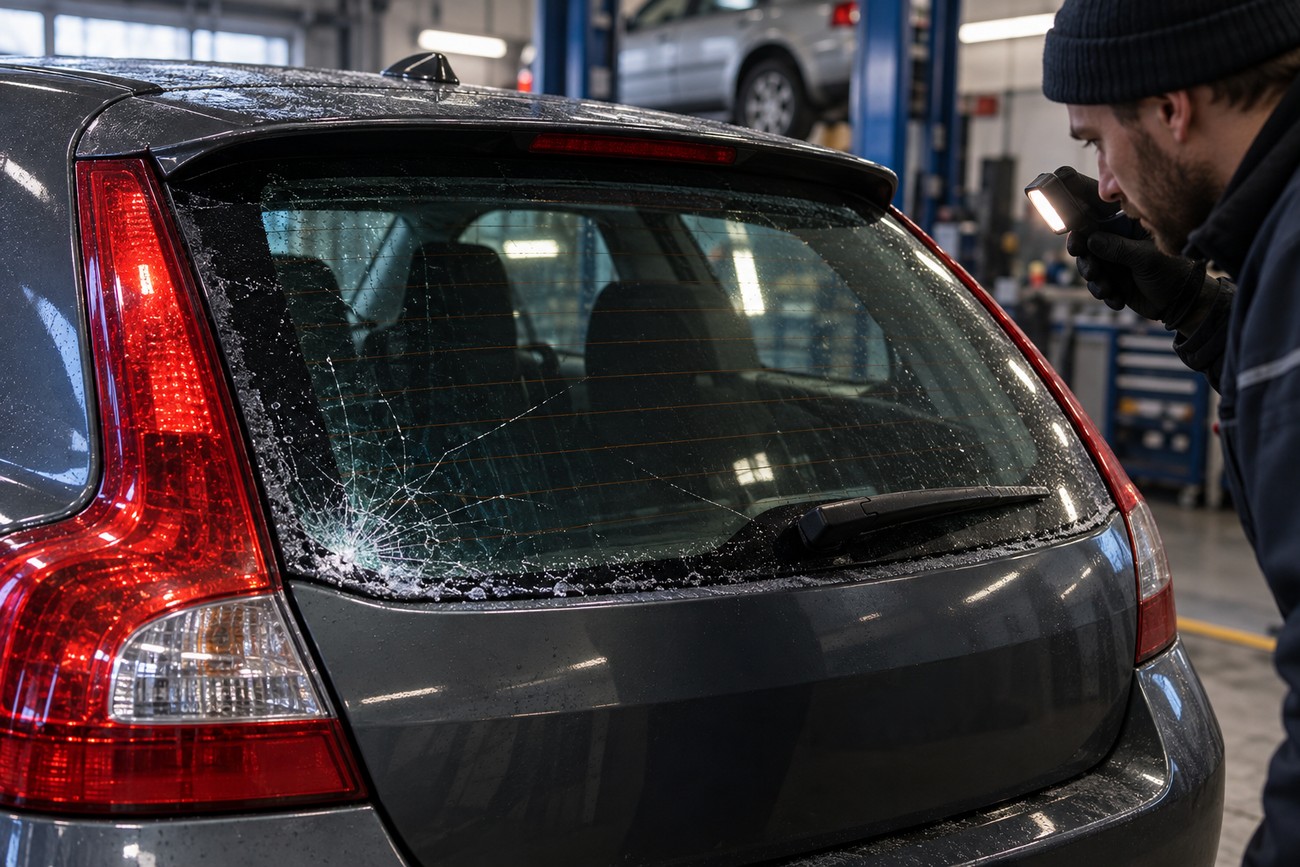
Reported damage is commonly associated with impacts, aggressive ice removal, point loading from cargo, and misalignment after body repairs. A bicycle handlebar, loading equipment, fallen branch, or hard lump of ice can create a concentrated force that tempered glass may not tolerate. Long items pressing directly against one corner can produce a similar problem over time.
Winter habits are especially important. Striking frozen ice or attacking it with a hard scraper can create chips and microscopic damage that later develops into a crack. Closing the hatch by pulling on the glass edge also places unnecessary stress on the perimeter; the proper handhold is the handle or designated closing area.
Before bonding replacement glass, installers need to check body alignment and corner loading rather than judging the fit by appearance alone. A hatch that looks acceptable can still place delayed stress into the glass, seals, latch, or hinges.
Replacement requires specialist adhesive, accurate positioning, and proper curing time. The work avoids painting a metal panel, yet the total cost can still exceed repair and painting of a moderately damaged conventional metal hatch because the bill combines glass, bonding materials, skilled labor, and fitting time.
Poor installation can create wind noise, water leaks, squeaks, or a latch that needs adjustment. Incorrect hinge or body alignment may also load the glass corners unevenly, allowing a crack to appear months after the repair. A visual inspection alone is insufficient; the gaps, seals, latch engagement, and glass seating all need checking.
Complete breakage creates an additional inconvenience. The luggage compartment cannot be cheaply restored with a temporary metal sheet or improvised panel in the way an owner might cover a damaged older steel door. The car generally needs proper glazing before the rear compartment can be used securely, and broken fragments may spread through the luggage area and cabin.
Safety: Is the Glass Tailgate a Structural Mistake?
The glass tailgate is not, by itself, evidence of a structural safety mistake. Its tempered glazing meets European ECE R43 requirements covering impact behavior, fragmentation, and thermal resistance. If it breaks, the material is designed to fragment into small pieces rather than forming the large sharp shards associated with ordinary untreated glass.
Rear-impact energy is managed primarily by the metal side structures and lower rear crossmember. The glass is not the primary load-bearing path in a rear collision, so the idea that the rear of the C30 depends on one large pane to protect occupants misunderstands the body design.
Euro NCAP results do not show that the glass hatch reduces the C30’s overall passive-safety assessment. That does not make broken glass harmless: cleanup can be extensive, and fragments can remain in trim, carpet, and seat seams. It does establish that the safety objection is different from the usability and repair objections.
The sensible conclusion is narrow. The glass does not inherently make the C30 unsafe in a rear collision, while its breakage behavior can make accident recovery unpleasant and time-consuming. Those are practical consequences of the material, rather than proof that the car’s crash structure was inadequately designed.
Glass vs Metal Tailgate: Where the Trade-Off Lands
The comparison is clearest when it focuses on ownership consequences rather than styling. A conventional metal hatch is usually more tolerant of minor contact and easier to repair locally, while the C30’s glass assembly brings lower moving mass and a distinctive rear design.
| Ownership area | Volvo C30 glass hatch | Conventional metal hatch |
|---|---|---|
| Weight | Approximately 12–15 kg for the complete hatch, making it lighter than a conventional metal door. | Usually heavier, placing more load on hinges and gas struts during opening. |
| Crash role | The glass is not the primary crash-load path; the metal rear structure manages rear-impact energy. | The metal door is part of the rear assembly, while the surrounding body structure still carries the main crash loads. |
| Loading access | The C30 opening is narrower and taller, making bulky cargo less accommodating than in a typical family hatchback. | A conventional hatch often provides a broader and more versatile opening, depending on the vehicle. |
| Rear visibility | Glass provides the viewing area, but salt, slush, and road grime can quickly obscure it. | Visibility depends on the window design, though the glass is generally less visually distinctive. |
| Typical damage | Impacts, hard ice removal, point loading, and post-repair misalignment can lead to cracking or breakage. | Dents, creases, and paint damage are common after moderate contact and may be repairable without replacing the whole door. |
| Repair process | Replacement avoids paintwork but requires specialist adhesive, accurate fitting, and curing time. | Repair may involve panel work and paint; replacement hardware and paint matching can still add cost. |
| Temporary repair after severe damage | Complete glass loss leaves the luggage compartment difficult to secure until proper glazing is installed. | A damaged metal panel can sometimes be covered or repaired temporarily, depending on the extent of the damage. |
| Long-term sealing | Ageing seals can increase the likelihood of leaks, wind noise, and squeaks, particularly after approximately 8–10 years. | Door seals also age, but a conventional panel does not introduce a bonded glass perimeter into the same repair process. |
The table also explains why the design can feel good in daily opening and closing while still being costly when something goes wrong. Low moving mass is a permanent benefit; specialist glazing work is an occasional but more serious liability.
Seal condition deserves attention on older C30s. Water marks, damp trim, a musty smell, or wind noise from the rear should prompt checks of the glass perimeter, hinges, latch, and surrounding body alignment. Repair quality can matter as much as the original design once a tailgate has been removed and rebounded.
How to Live With a C30 Tailgate Without Creating a Problem

Close the hatch using its handle and guide it into position rather than pulling on the glass edge or allowing it to slam. A controlled closing motion reduces shock at the latch and avoids the repeated edge loading that can contribute to chips and microdamage.
In freezing weather, thaw ice before opening or closing the hatch. Use gentle de-icing methods and avoid striking the glass or attacking bonded ice with a hard scraper. A thin layer of ice may seem harmless, yet the combination of cold glass, a sharp point, and sudden force is a poor one.
Long cargo should have soft protection wherever it approaches the rear glass. Padding should prevent direct contact with corners and should remain in place when the vehicle moves. Loading an item so that it can slide backward under braking defeats the purpose of the initial protection.
After any rear-end collision or body repair, ask for measured checks of the hatch gaps, hinges, latch, seals, and glass seating. A panel may appear straight while the body places excessive stress at a glass corner. Many carefully used examples have operated for more than 10 years without a cracked hatch, which shows that handling and repair quality strongly influence durability.
So, Was the Glass Tailgate a Mistake?
As a safety decision, the glass tailgate was not a proven mistake. The C30’s metal rear structure manages rear-impact loads, and the available crash evidence does not support the claim that the glass inherently makes the car unsafe.
As a usability decision, the criticism is legitimate. The narrow, tall aperture and coupe-like luggage area are less versatile than those of comparable family hatchbacks. Volvo’s practical-hatchback positioning can therefore conflict with the daily experience of owners carrying bulky or awkward loads.
The design can also be durable when treated carefully. Its weakness is the consequence of damage: cracks can turn into full breakage, replacement needs specialist installation, and poor alignment can create delayed leaks, noise, or stress at the corners. A conventional metal hatch is generally more forgiving in those situations.
The buyer-fit test is straightforward. Choose the C30 if your cargo is usually compact, you value its distinctive design, and you accept specialist tailgate repairs. Look elsewhere if you regularly carry pushchairs, dogs, bicycles, or large sports equipment, or if winter grime and higher repair complexity would become a constant irritation.
Frequently asked questions
The questions below address the C30’s tailgate, practicality, safety, and ownership considerations. They also place the glass design in the wider context of buying and maintaining an older C30.
What are the most common problems with a Volvo C30?
Beyond the glass hatch, age-related seals, hatch hardware, hinges, and interior trim noises deserve inspection. A used example should be checked for water ingress, rear wind noise, loose trim, squeaks, and a hatch that does not close or release smoothly. Service history is especially important because documented repairs can reveal whether previous bodywork was aligned and sealed correctly.
Why was the Volvo C30 discontinued?
The C30 was discontinued because of its market position and product lifecycle, rather than because the glass tailgate was proven unsafe. It occupied a relatively narrow three-door niche, and its coupe-like practicality limited its appeal to buyers seeking a conventional family hatchback. Discontinuation should therefore be treated as a commercial and lifecycle decision, not as evidence of a safety defect.
Which year of the Volvo C30 is considered the best?
No single model year can be declared the best solely from the tailgate design. Condition, engine and gearbox history, completed recalls, documented servicing, body alignment, and the quality of any glass replacement are more useful buying criteria. A well-maintained car with sound seals and verified repairs can be a better purchase than a newer example with neglected hardware or poorly fitted glazing.
Why do Volvo C30s not hold their value well?
Resale value is influenced by niche three-door demand, vehicle age, running costs, parts availability, and the possibility of specialist tailgate repairs. Those factors operate independently of crash safety. A well-kept C30 may still appeal to buyers who want its compact, distinctive character, while the smaller audience and higher perceived repair risk can limit demand in the wider used-car market.







