
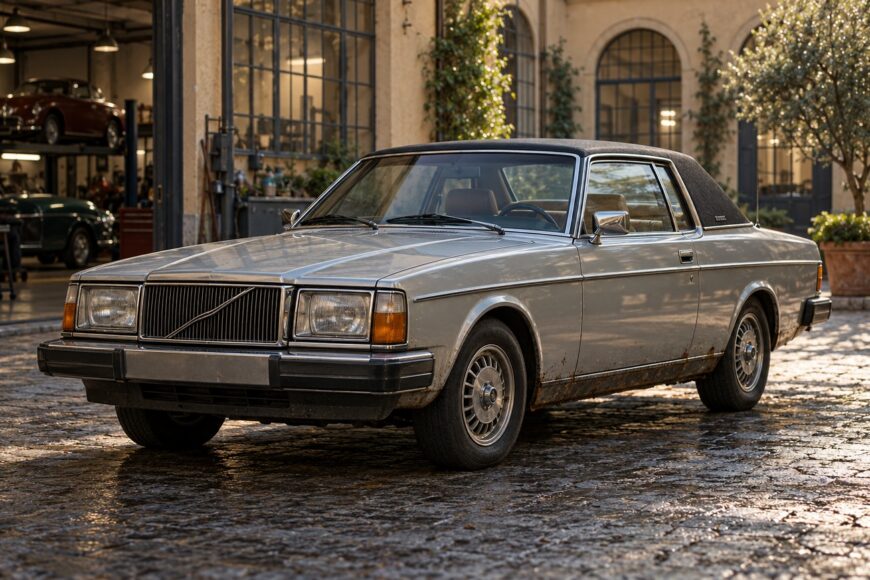
The Volvo 262C begins with a visual contradiction: the upright, formal Volvo 200-series body becomes a low-roof Bertone coupe, yet much of the familiar Volvo structure remains underneath. Its chopped roof, broad pillars, and vinyl covering give it the presence of a grand touring car, while the PRV V6 and long-wheelbase chassis deliver a more measured experience.
That tension defines the buying decision. The 262C offers genuine rarity and distinctive design, alongside restricted rear access, modest performance, and body repairs that can cost far more than ordinary 240-series work. It is also frequently misunderstood: the car is not a shortened Volvo 264. Its wheelbase remains intact, while Bertone transformed the upper body and converted it to two doors.
- What the Volvo 262C Actually Is
- Volvo 262C Specifications at a Glance
- The Chopped Roof: Design, Space, and Visibility
- PRV V6 Performance: Smooth, Heavy, and Often Misunderstood
- Rust Is the Inspection That Matters Most
- Living With a Rare Bertone Volvo
- The Biggest 262C Myths—and What Buyers Should Verify
- Frequently Asked Questions
- What fuel should a US-market Volvo 262C use?
- Why is the Volvo 262C considered a rare Volvo model?
- What other cars did Bertone design?
What the Volvo 262C Actually Is
The Volvo 262C was produced from 1977 to 1981, with 6,622 cars built. Bertone completed the body’s final assembly in Turin, making the coupe a more specialized product than a conventional Volvo 260 assembled through the company’s normal production process. That limited run is central to its appeal and to its parts-supply problems today.
Underneath, the relationship with the Volvo 264 is close. The wheelbase is approximately 2,640 mm, the same basic dimension used by the 264 sedan. Bertone altered the roofline, side structure, glass, and access points rather than creating a short sports platform.
On paper, the result is a two-door, nominally four-seat coupe. The retained wheelbase provides useful space between the axles, so the cabin does not feel as cramped as the low roof initially suggests. Entry through two long doors and the rear headroom remain practical limitations, especially when the front seats are positioned for taller occupants.
This construction explains the car’s character. It has the solid, deliberate feel associated with the 200 series, yet the proportions promise more agility than the chassis and powertrain usually provide. Buyers should value the unusual design and sound structure on their own terms rather than expect a purpose-built sports car.
Volvo 262C Specifications at a Glance
The main specifications changed during the short production run, particularly with the engine. Dimensions and equipment also need to be read alongside the car’s market and model year.
| Item | Volvo 262C specification |
|---|---|
| Production | 1977–1981; 6,622 cars |
| Body | Two-door, nominally four-seat coupe |
| Wheelbase | Approximately 2,640 mm, shared with Volvo 264 sedans |
| Roof | Approximately 60 mm lower than the standard model |
| Overall height | Approximately 1,360 mm |
| Early engine | 2.7-liter PRV V6 |
| Later engine | 2.85-liter PRV V6 from 1980 |
| Transmissions | Four-speed manual with electric overdrive or three-speed automatic |
| Brakes | Disc brakes on all four wheels |
The engine description in a sales listing matters. Early cars used the 2.7-liter PRV V6, while the 2.85-liter version arrived from 1980. A statement that every 262C has a 2.8-liter engine therefore loses an important distinction between earlier and later examples.
Power figures vary by market and measurement method. Volvo material cites 141 hp, while a US-market specification gives 125 hp SAE net. These figures should be matched to the car’s year, market, engine identification, and documentation before comparing cars or ordering replacement components.
Disc brakes on all four wheels and the familiar Volvo rear architecture provide a reassuring mechanical foundation. The available three-speed automatic suits relaxed cruising and reduces the coupe’s sporting feel. The four-speed manual uses electric overdrive; its operation depends on a relay, solenoid, and wiring, so a failed overdrive deserves diagnosis rather than a casual assumption that it is a minor switch fault.
The Chopped Roof: Design, Space, and Visibility
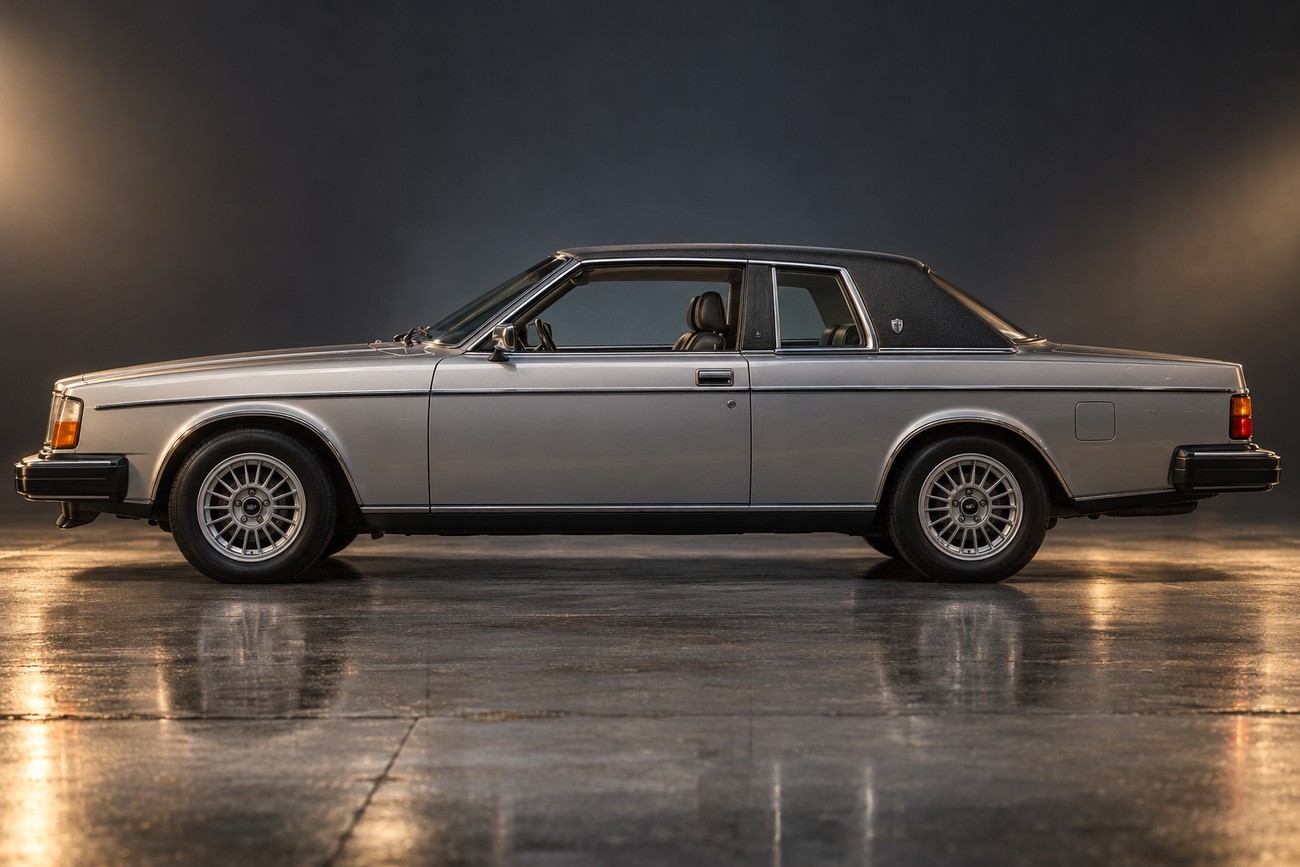
The roof is approximately 60 mm lower than the standard model, producing the 262C’s defining stance. The early visual identity paired a silver body with a black vinyl roof, while later cars included gold and two-tone combinations. Paint and roof color help identify the period and specification, yet they say little about the condition of the metal beneath.
Inside, the lower roof changes the way the car is used. Front occupants may need to lower themselves into the seat, and rear passengers face reduced headroom. The substantial central pillar also interrupts the view over the shoulder, while the two-door layout makes access to the rear seats slower than in a sedan.
The unchanged wheelbase preserves useful longitudinal space, which is the coupe’s less obvious strength. Legroom can be acceptable when the front seats are set sensibly, but the car still lacks the everyday flexibility of the 264. Rear-seat usability depends on passenger height, front-seat position, and tolerance for climbing through a narrow opening.
That compromise is part of the design’s honesty. Bertone integrated a dramatic upper body with an existing four-door structure, rather than removing the length that supports the sedan’s cabin. The result looks compact from some angles while retaining a long, formal profile—an effect that makes the car distinctive and limits its practicality at the same time.
PRV V6 Performance: Smooth, Heavy, and Often Misunderstood
The PRV V6 gives the 262C a smooth, cultured tone, though its weight and power delivery do not create the urgency suggested by the low roof. The early 2.7-liter engine is the correct unit for earlier cars, while the 2.85-liter PRV V6 was used from 1980. Engine size alone does not establish the exact output or equipment of a particular example.
Volvo material lists 141 hp, whereas a US-market specification lists 125 hp SAE net. The difference reflects market and test method rather than a simple contradiction between two identical cars. A buyer evaluating performance should verify the market specification instead of treating one brochure figure as universal.
On the road, the coupe’s appearance can set expectations that the drivetrain cannot fully meet. The V6 is better suited to steady touring than repeated hard acceleration, and the long-wheelbase Volvo architecture favors stability over nimble responses. A three-speed automatic makes that character more pronounced, especially on grades or during passing.
A manual car deserves a careful overdrive test at operating temperature. The unit should engage consistently, and the inspection should include its relay, solenoid, wiring, and control circuit. Repair may be straightforward when the fault is electrical, but a non-functioning system should be investigated before the car is priced as though the transmission were fully operational.
Rust Is the Inspection That Matters Most
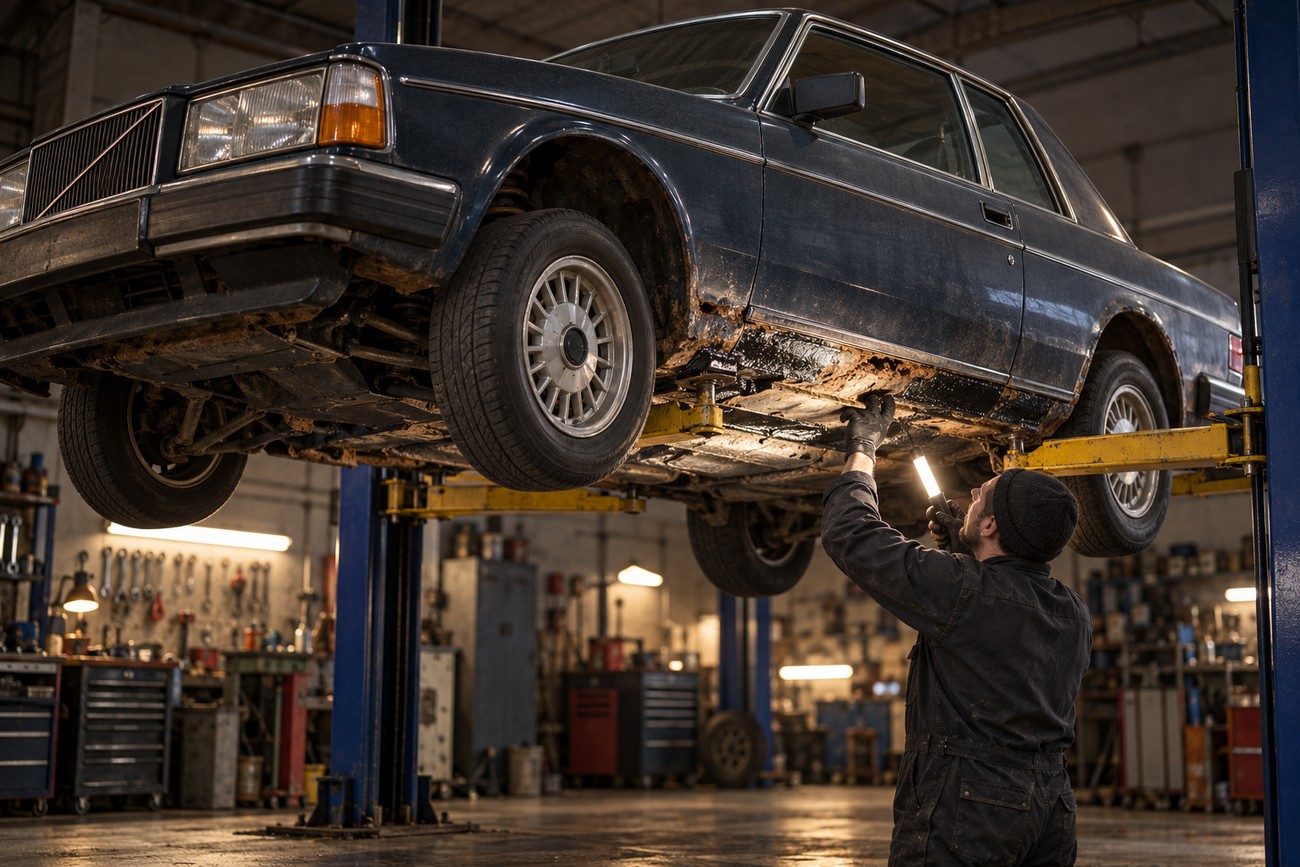
Corrosion deserves more attention than polished paint on a 262C. Some road descriptions characterize the body as partially galvanized or well protected, while owner experience identifies the sills, floors, rear-arch areas, and inner wings as recurring rust zones. Both observations can coexist: protection reduces risk, but it does not make an old car rust-proof.
Inspect the car on a lift, with particular attention to the jacking points, underside, inner cavities, floor edges, and metal around the rear arches. Fresh undercoating can conceal repairs or active corrosion, so a clean-looking underside should be examined for texture, seams, and suspiciously uniform coverage.
The metal beneath the vinyl roof and around the rear inner arches should be judged before the visible paint or roof covering. Those areas can reveal moisture damage that a cosmetic refurbishment leaves untouched.
The vinyl roof creates a second inspection problem. Moisture and corrosion may develop around the pillars, gutters, and attachment areas, then remain hidden beneath an apparently original covering. Replacing the vinyl before checking the substrate can preserve the appearance while carrying a much larger structural repair into the next stage of ownership.
A seller’s claim that a 262C has “good Volvo steel” is not an inspection result. The body-specific shape makes welding and finishing more involved, particularly where roof edges, coupe panels, glass seals, and trim must be removed and refitted. Structural soundness should therefore determine the purchase decision before color, equipment, or price.
Living With a Rare Bertone Volvo
Mechanical parts shared with the Volvo 240 and 260 family are generally easier to source than parts made for the Bertone body. This helps with routine suspension, braking, and drivetrain work. It does not make a damaged 262C equivalent to an ordinary 240 when the repair involves the cabin or outer shell.
Bertone-specific body panels, glass, seals, vinyl-roof components, and interior trim can be difficult to locate. The small production run created a narrow donor-parts market, and an incomplete car may require substantial searching before restoration can begin. A missing coupe-specific item can delay a project even when the underlying Volvo mechanical hardware is available.
Age-related electrical faults appear in the overdrive, instrument panel, power-window mechanisms, and their contacts. These systems should be tested individually rather than judged from a brief drive. Slow windows, intermittent gauges, or an overdrive that works only after moving the selector can indicate work that extends beyond a simple fuse replacement.
Completeness is usually worth more than a low purchase price. A sound car with intact trim, usable glass, and an honest roof can provide a manageable ownership path, while a cheap project with attractive paint may conceal corrosion and missing Bertone parts. The best example is the one with the strongest body and the fewest absent pieces, even if its engine bay needs routine mechanical attention.
The Biggest 262C Myths—and What Buyers Should Verify
The first myth is that the 262C is a shortened 264. Its approximately 2,640 mm wheelbase remains shared with the 264 sedan; Bertone changed the roof, side structure, and access arrangement. This explains why the car can have a long, stable cabin area while still offering awkward rear entry.
The second myth is that every example has the later 2.85-liter PRV V6. Early cars used the 2.7-liter engine, and the larger version appeared from 1980. Confirm the production year, engine code, market specification, and installed equipment before using an advertisement’s “2.8” description as evidence.
Power claims also require restraint. Volvo material cites 141 hp, while US-market data lists 125 hp SAE net. Volvo’s durability reputation provides useful confidence in the mechanical design, yet it does not remove corrosion risk from sills, floors, arches, inner wings, or the metal beneath the vinyl roof.
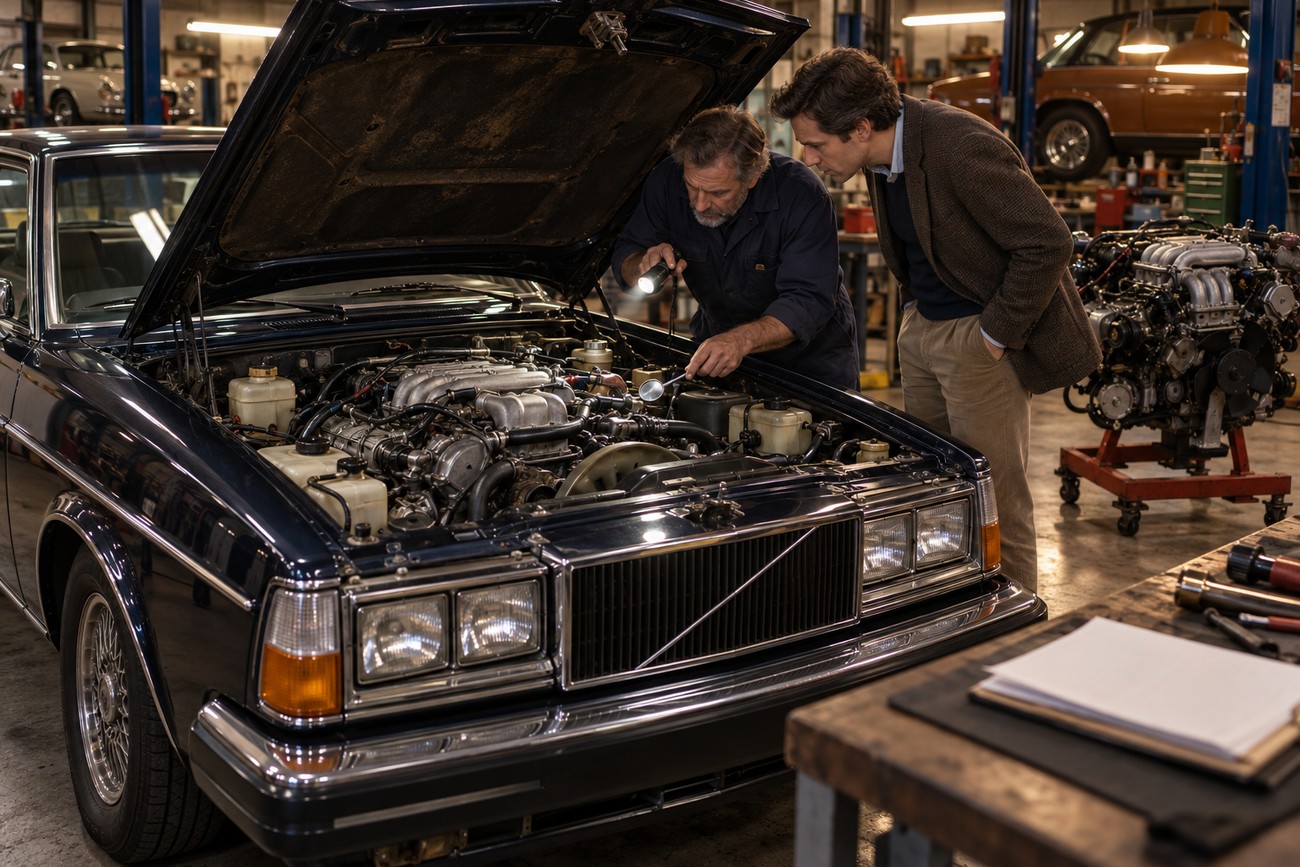
Before negotiating, verify the transmission operation, especially manual overdrive, and inspect the coupe-specific glass, seals, roof, interior trim, and body panels. Standard Volvo 240 parts should not be assumed to fit Bertone-specific areas. Year, engine, market, body condition, and completeness form the real specification of a used 262C.
Frequently Asked Questions
What fuel should a US-market Volvo 262C use?
One supplied US-market source specifies 91 RON unleaded fuel for the Volvo 262C. Fuel requirements should still be verified against the car’s market, model year, engine specification, and available documentation, particularly when a car has changed countries or received engine work.
Why is the Volvo 262C considered a rare Volvo model?
Only 6,622 cars were produced between 1977 and 1981, with body final assembly by Bertone in Turin. That limited volume places the 262C among rare Volvo models and helps explain why its coupe-specific glass, trim, roof components, and body panels are harder to source than ordinary 240/260 mechanical parts.
What other cars did Bertone design?
Bertone worked across a wide range of automotive projects, from small production cars to high-performance and luxury models. The 262C belongs to the studio’s broader tradition of reshaping familiar mechanical platforms into distinctive bodies, rather than representing Bertone as a manufacturer of a single Volvo model.







