
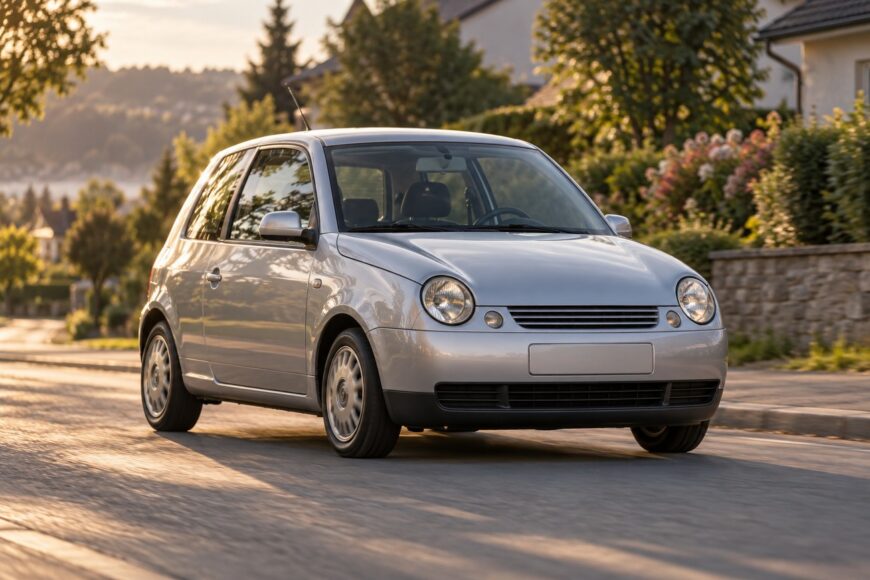
Fuel consumption around 3 L/100 km is the Volkswagen Lupo 3L’s enduring attraction. Its official figure remains striking for a car you can buy used, and its small diesel can still make long journeys on little fuel.
That economy comes with conditions. An unusual automated gearbox, version-specific lightweight parts, and the age of surviving cars can turn a cheap fill-up into an expensive repair. The Lupo 3L makes most sense for an owner who can assess its condition carefully, drive with its mechanical limits in mind, and budget for specialist work.
- Why the Lupo 3L was more than a small diesel
- What 2.99 L/100 km means on the road
- How the ASG changes everyday driving
- The gearbox faults that can erase the savings
- Servicing a lightweight car with specialist needs
- How to judge a used Lupo 3L before buying
- Frequently asked questions
- What car is the VW Lupo equivalent to?
- How can I measure my Lupo 3L’s actual fuel consumption?
- What should I do if the ASG stays in neutral?
Why the Lupo 3L was more than a small diesel
Produced from 1999 to 2005, the Volkswagen Lupo 1.2 TDI 3L was built around a specific economy target. Its three-cylinder, 1.191 L diesel produces 45 kW (61 hp). Modest power was only part of the plan: the car also had to use less energy to move and less fuel during the drive.
Curb weight is about 830 kg. Lightweight construction elements reduce the load on the engine, while narrow tires help limit rolling resistance. Together with the powertrain, those choices explain the low consumption more convincingly than engine size alone.
They also matter once the car needs work. A used 3L should not be treated as an ordinary Lupo with a frugal diesel fitted: some of the components that made it economical are specific to this version. Checking part compatibility before authorizing a repair can prevent a seemingly simple job from stalling while the correct item is sourced.
Low weight has everyday consequences, too. The small cabin and limited sound insulation are part of the car’s character, rather than defects that a routine service will remove. A buyer attracted by the fuel figure should establish whether the whole package suits regular use.
What 2.99 L/100 km means on the road
Volkswagen’s official combined figure is 2.99 L/100 km under the MVEG cycle. It is a standardized laboratory result intended to compare vehicles, not a promise that every Lupo 3L will achieve the same consumption on every trip. Treat it as evidence of the design’s potential.
Owners often report roughly 3–4 L/100 km in use, though those accounts are estimates from differing cars and routes, not a measured average for the fleet. A warm diesel on a steady run has a more favorable task than one repeatedly started for short urban trips. Temperature, traffic, load, and mechanical condition all influence the result.
Tires deserve attention before blaming the engine for disappointing economy. Incorrect pressure increases rolling resistance; wider replacement wheels can also compromise the narrow-tire setup that helped the original car. Hard acceleration and repeated low-speed gear changes may further reduce the advantage of an otherwise efficient powertrain.
The tank holds 34 L, and Volkswagen stated a range of at least 1,000 km. That claim follows from a full tank and the official consumption figure; it is not a dependable interval between fuel stops. For a particular car, recorded fill-ups over several journeys provide a sounder basis for planning than the brochure range.
How the ASG changes everyday driving
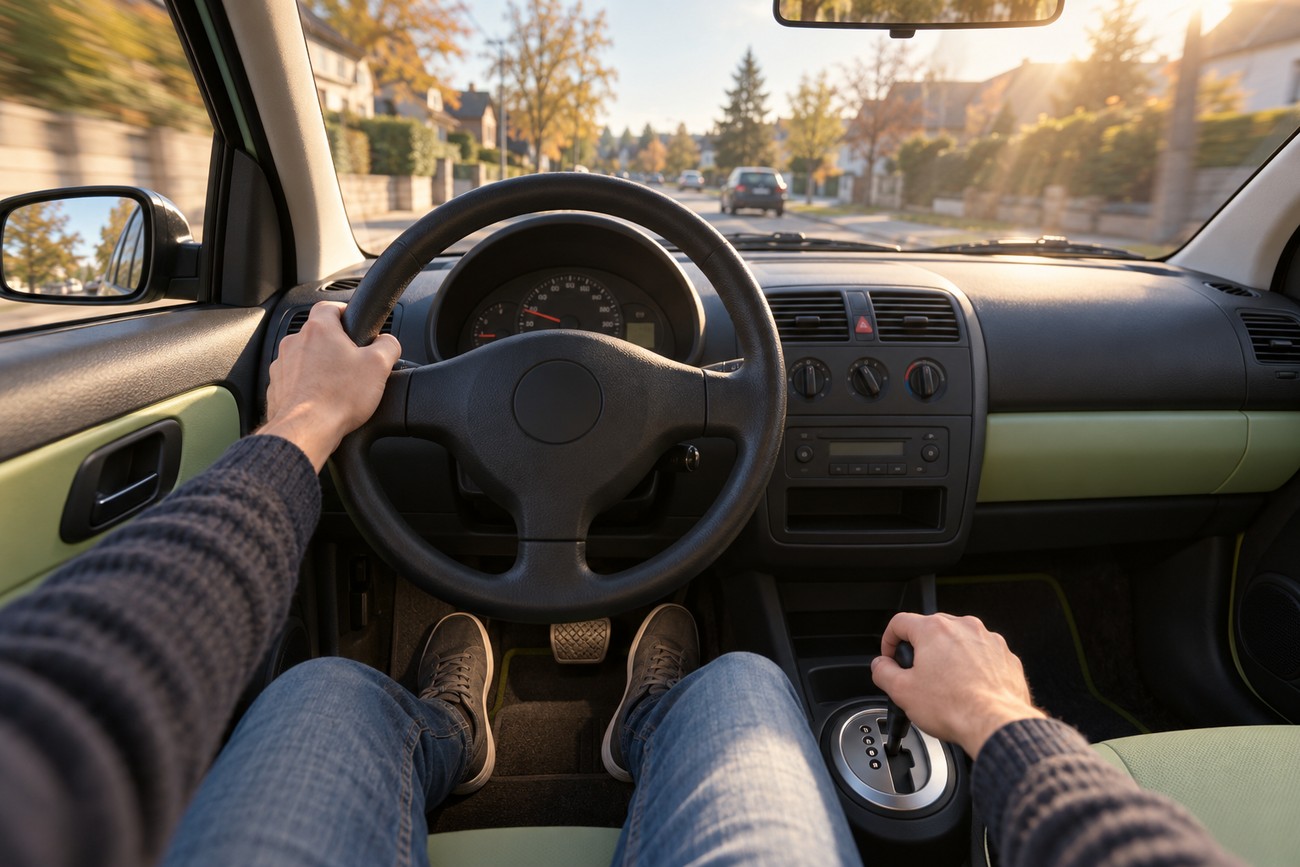
The ASG is an automated manual gearbox with electrohydraulic actuation. It selects gears and operates a clutch without requiring a clutch pedal, but it is not a conventional torque-converter automatic. You may feel a pause as the clutch disengages and the next gear engages, especially if you expect the uninterrupted response of a traditional automatic.
The car also has Start/Stop. Along with the gearbox’s economy-oriented operation, it favors a smooth, anticipatory driving style. The diesel’s peak torque is 140 Nm at 1,800–2,400 rpm, so the driver need not chase high engine speeds to make ordinary progress. Top speed is about 165 km/h, although that figure says little about its best use.
Holding the car on an incline with the accelerator asks the clutch to do work better handled by the brake. Continual creeping in traffic likewise means repeated clutch engagement and gear selection. Neither habit guarantees a particular failure, but both add wear to a system whose condition matters greatly on a used example.
A test drive should therefore allow time for the ASG to show its behavior at a gentle pace as well as under acceleration. A brief run on an open road may feel acceptable while missing delays that appear during stops, takeoffs, or parking maneuvers.
The gearbox faults that can erase the savings
Owner reports describe delayed gear engagement, jerky shifts, frequent hydraulic-pump operation, and cars that unexpectedly remain in or return to neutral. Those are reasons to investigate, rather than proof that every Lupo 3L develops the same faults. There are no independent failure-rate figures here from which to estimate an individual car’s risk.
Diagnosis should follow the system: hydraulic pump, pressure accumulator, actuator, clutch, and ASG adaptation. Falling hydraulic pressure can make the pump run often and delay a shift. A worn clutch or problems elsewhere in the chain can produce overlapping symptoms, so replacing the first part that appears suspect may waste money.
Clutch adaptation results that change after the car has been sitting warrant a closer check of the guide sleeve and hydraulic pressure before an actuator is condemned. An adaptation reading is a clue to investigate, not a parts order.
Age-related sensors, wiring, and electrical connections can complicate the picture even when the engine runs well. A workshop familiar with the ASG can inspect pressure behavior, read faults, assess clutch operation, and verify basic settings together. That is more useful than interpreting a neutral warning or a hesitant shift in isolation.
The financial risk is the gap between the car’s low fuel use and the work needed to restore dependable shifting. A gearbox fault that prevents selecting a gear can leave an otherwise running car unusable. Evidence of competent diagnosis and completed repairs is consequently worth more than an assurance that the gearbox “usually works.”
Servicing a lightweight car with specialist needs
Low fuel spending does not automatically mean low ownership cost. ASG-specific parts and qualified diagnosis can be expensive relative to the value of an old Lupo 3L. Set a maintenance budget around the condition of the individual car, rather than projecting the official fuel savings as money available for repairs.
Factory documentation specifies engine oil meeting VW 506 00 with 0W-30 viscosity. The viscosity printed on a bottle does not, by itself, establish that it meets the required approval. Before an oil change, confirm the specification of the actual product and check the requirements for the particular vehicle.
Service records are useful when they identify what was fitted and which procedures were completed, especially after clutch or hydraulic work. Check exact maintenance intervals and special procedures against original service documentation for the vehicle’s VIN. A generic schedule is a poor substitute where version-specific requirements matter.
Keep the lightweight design in view during routine inspections. Tire size, type, condition, and pressure affect both how the car drives and how much fuel it uses; aging wiring can demand attention even if consumption remains low. An economical engine is only one part of a roadworthy, dependable used car.
How to judge a used Lupo 3L before buying
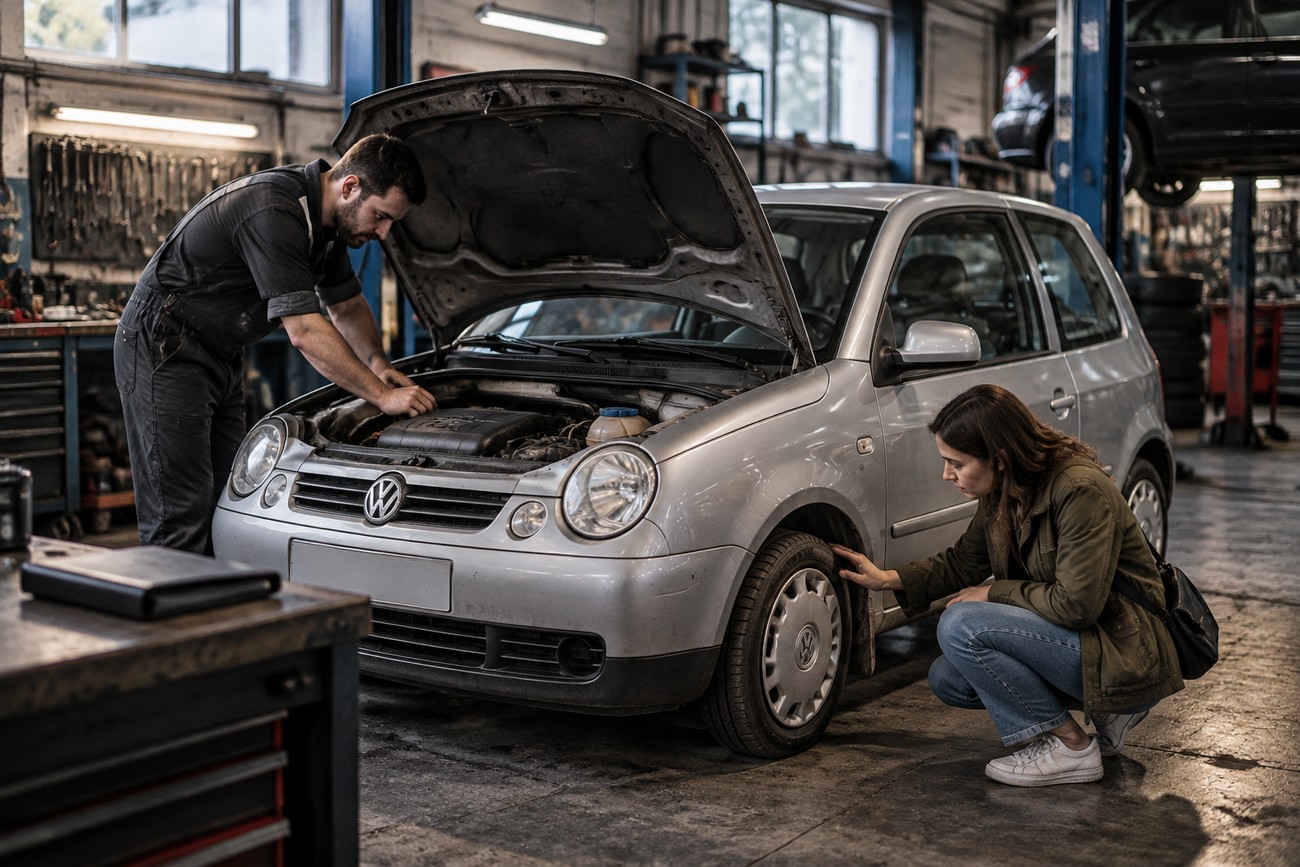
Begin with the paperwork and the car’s overall condition. Look for evidence of appropriate oil, documented transmission work, and maintenance that matches the vehicle. Inspect the body, tires, cabin, and general signs of age; a low fuel figure cannot compensate for neglected suspension, leaks, or electrical faults.
Then arrange a drive that starts with a cold engine and gearbox. Check reverse, pull away several times, come to a full stop, and include urban-speed driving with frequent shifts. Note delays, harsh engagement, unexpected neutral selection, or a pump that appears to run repeatedly. A warmed-up demonstration alone can miss behavior relevant to daily use.
Follow the drive with ASG-focused diagnosis. Ask for a check of hydraulic pressure, clutch condition, fault records, and confirmation of basic settings. The aim is to understand how the pump, accumulator, actuator, and clutch work together, not to obtain a single reassuring scan result.
Finally, sit in the rear seat and drive on the sort of road you use regularly. Rear space is tight, and limited sound insulation may matter more over a long commute than during a short viewing. A sound, documented example can suit a driver who values low fuel use and has access to suitable repair expertise; a cheap car with unexplained shifting faults is a different proposition.
Frequently asked questions
These answers address points that can be easy to miss when comparing cars or assessing one test drive. For any purchase, the condition and documentation of the individual vehicle remain decisive.
What car is the VW Lupo equivalent to?
The SEAT Arosa is a close relative of the regular Volkswagen Lupo. That relationship does not make its parts interchangeable with the Lupo 3L’s distinctive lightweight and transmission components. Confirm compatibility using the specific part and vehicle details before buying a replacement.
How can I measure my Lupo 3L’s actual fuel consumption?
Fill the tank consistently, record the distance driven, then note the amount needed to refill it. Divide the liters added by the kilometers traveled and multiply by 100 to obtain L/100 km. Repeat across several fill-ups, recording whether the driving was mainly urban or on open roads; one dashboard reading or short journey can be misleading.
What should I do if the ASG stays in neutral?
Move to a safe stopping place if possible, secure the car, and do not try to force it into gear. If it will not engage a drive gear normally, arrange appropriate diagnosis or recovery rather than continuing to cycle the controls. The cause could lie in several parts of the ASG system and needs to be established on the vehicle.







