
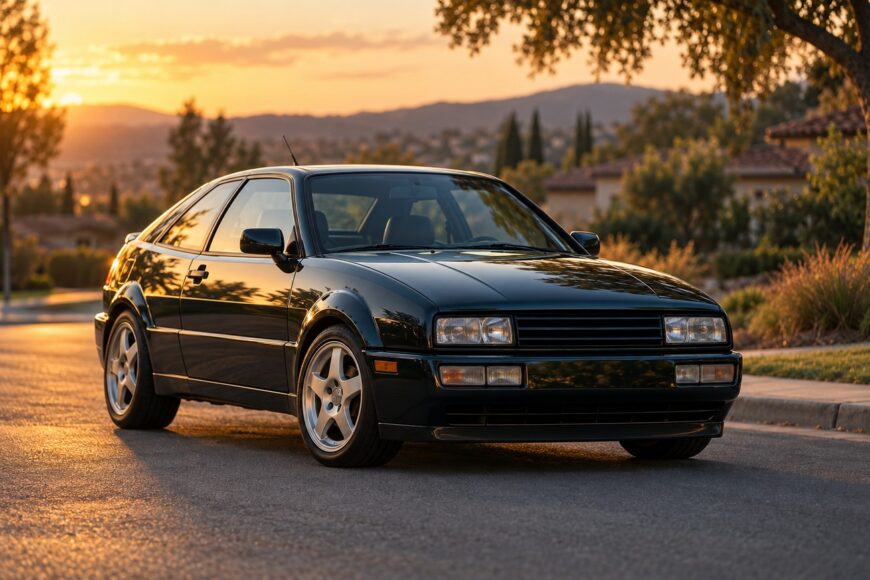
The Volkswagen Corrado VR6 combines a dramatic pop-up spoiler with compact dimensions and serious period performance. That combination still attracts buyers, although ownership has become increasingly demanding as cooling plastics, wiring, seals, and interior hardware age together.
This car cannot be judged from a specification sheet or a clean photograph. Its value depends on the engine’s identity, the condition of the cooling system, the sound of the timing-chain drive, the behavior of the electrical systems, and the complete operation of the spoiler. A cheap Corrado can become an expensive project before its first serious drive.
- Why the VR6 Corrado Still Has a Point
- The Pop-Up Spoiler Is More Than a Party Trick
- Where Ownership Gets Expensive
- The Inspection Mistakes That Turn a Good Car Into a Project
- 2.9-Liter Corrado or 2.8-Liter SLC? Resolve the Badge Confusion
- The Honest Ownership Verdict
- Frequently asked questions
- What is the average price of a Volkswagen Corrado VR6?
- Why can a Corrado VR6 lose coolant without leaving a puddle?
- How much horsepower does a VR6 Corrado have?
Why the VR6 Corrado Still Has a Point
The European VR6 uses a transverse 2.861-liter VR6 with a 15-degree angle between the cylinder banks, a cast-iron block, and an aluminum cylinder head. Its narrow-angle layout allowed Volkswagen to install six cylinders across the front of a relatively compact front-wheel-drive coupe. The result is a distinctive exhaust note and strong mid-range torque without the dimensions of a conventional wide-angle V6.
European output is approximately 190 hp at 5,800 rpm and 245 Nm at 4,200 rpm. The drivetrain is front-wheel drive with a five-speed manual transmission, so the car’s character comes from mechanical directness, weight transfer, and the driver’s ability to manage the front tires. It feels like a compact driver’s coupe rather than a fragile museum object.
Period figures cite approximately 0–60 mph in 6.2 seconds and a top speed near 232 km/h. Results vary by market, condition, and test method, and an old example rarely delivers its original performance without careful maintenance. A tired engine, dragging brakes, poor alignment, worn bushings, or unsuitable tires can substantially change the experience.
That is why the numbers still matter without defining the whole car. At approximately 1,240 kg, the Corrado offers useful mechanical simplicity on the road, while the naturally aspirated VR6 supplies enough torque to make ordinary corners and overtaking feel purposeful. Its appeal lies in the combination of sound, visibility, compact size, and front-wheel-drive balance rather than in a single acceleration figure.
The Pop-Up Spoiler Is More Than a Party Trick
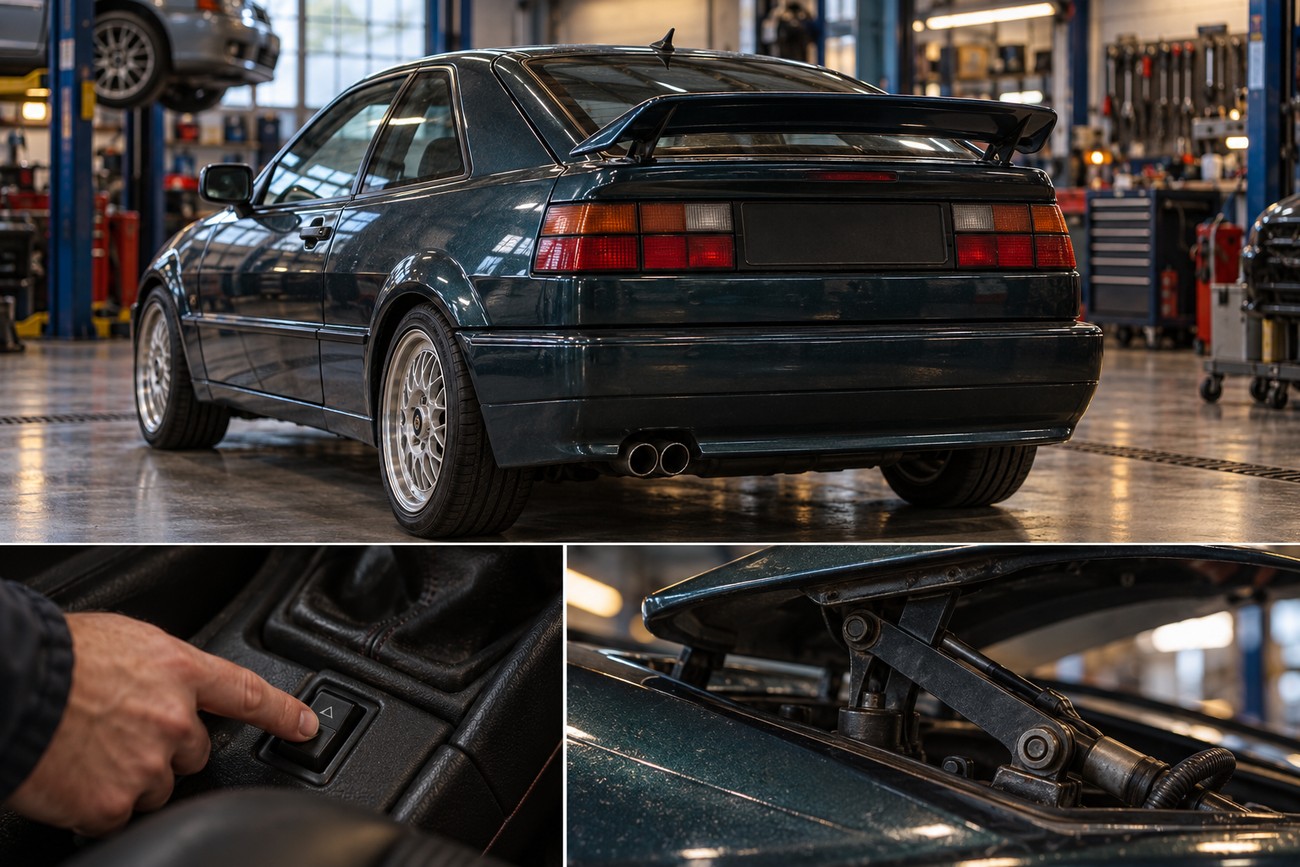
The retractable rear spoiler is the Corrado’s visual signature, yet it also creates a specific inspection obligation. It is designed to deploy automatically through the vehicle’s speed-control system and should also respond to a manual switch. A car that looks complete with the spoiler lowered may still have a failed system hidden beneath the bodywork.
Test the manual control first, then verify the automatic, speed-based operation during a proper road test where conditions allow it. The mechanism should rise and retract cleanly, without hesitation, scraping, or uneven movement from one side. A motor that runs while the car is stationary does not prove that the automatic control works correctly.
Possible failure points include the electric motor, control unit, wiring, switch, and a jammed mechanism. Moisture, corrosion, previous repairs, and hardened grease can complicate diagnosis. Replacing the motor immediately can waste money if the real fault lies in the control electronics or a mechanical restriction.
The spoiler also reveals how the car has been treated. A seller who has never checked both operating modes may have overlooked other age-related systems. A functioning spoiler does not certify the car’s condition, but an inoperative one should be treated as a repair item requiring diagnosis rather than as a minor cosmetic defect.
Where Ownership Gets Expensive
The cooling system is one of the clearest examples of age turning a sound design into a costly ownership problem. Common failures include the thermostat housing, radiator, hoses, plastic water pipe, and expansion-tank fittings. Heat in the compact engine bay places additional stress on old plastic and rubber components.
Small leaks may leave dried coolant traces or a sweet coolant odor around the affected area without producing an obvious puddle. The engine may lose coolant only after it reaches operating temperature, allowing the fluid to evaporate or spread across nearby components. A clean driveway therefore says little about the health of the cooling system.
Dried coolant residue and odor deserve attention before a visible leak appears. Replacing only the part that has already cracked can leave another age-weakened plastic component ready to fail soon afterward.
The timing-chain drive requires similar skepticism. Metallic chain noise may indicate worn tensioners or guides and is not automatically normal VR6 character. The chain itself is only part of the system; the condition of the tensioners and guides, together with the noise pattern on a cold and warm engine, matters more than a simple mileage assumption.
Electrical faults can affect connectors, power windows, the ignition switch, heater, headlights, and wiring looms. Large multi-pin connections are especially worth inspecting for moisture and corrosion because they can create intermittent faults that disappear during a brief inspection. The sunroof has its own weakness: fragile plastic or cast components can allow the mechanism to leave its guides, turning a simple operation into a labor-intensive repair.
Water ingress creates a second cluster of problems. Blocked drains can wet the cabin, especially around the passenger-side floor, while a leaking heater core can require extensive dashboard disassembly. Damp carpeting, a musty smell, corrosion on connectors, and unexplained electrical behavior often belong to the same story rather than separate coincidences.
The Inspection Mistakes That Turn a Good Car Into a Project
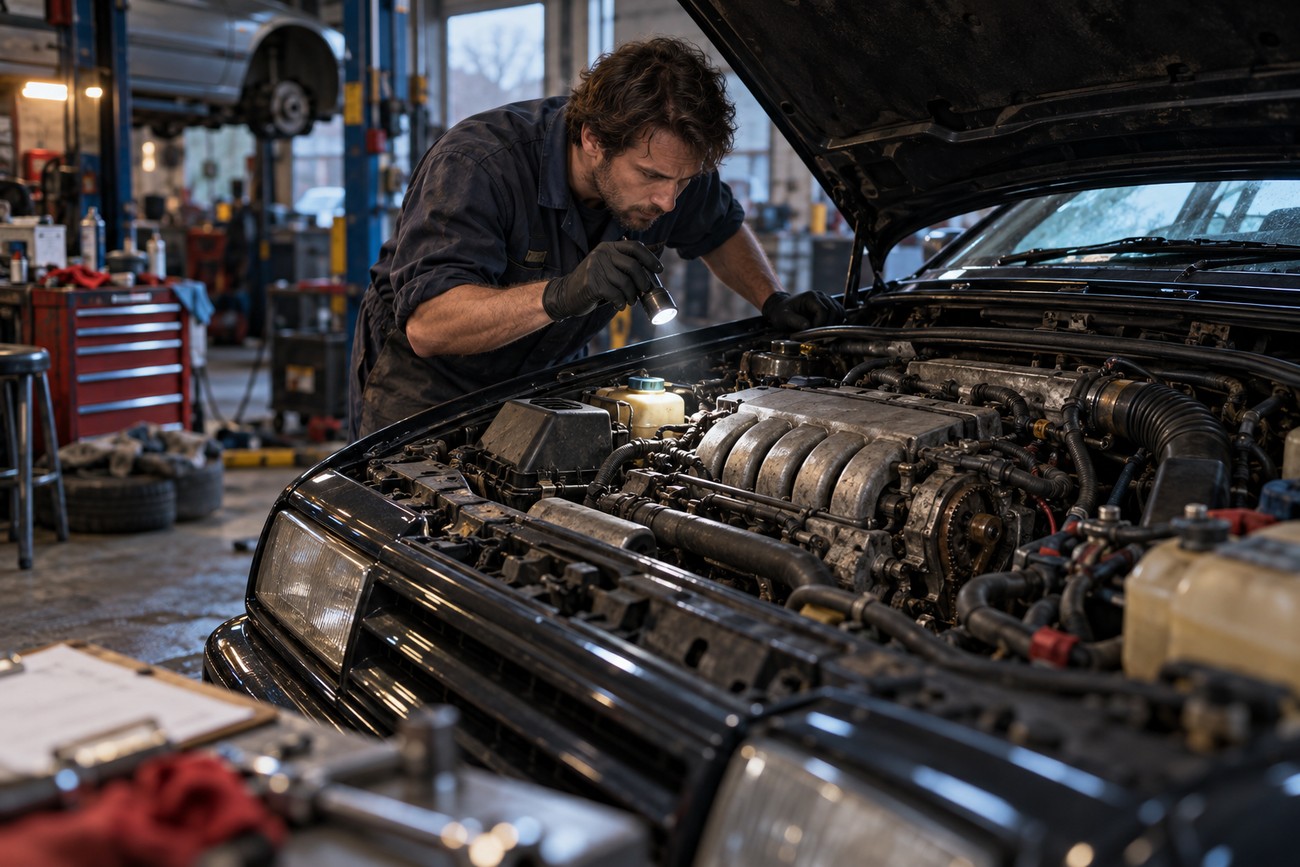
Begin with documentation and engine identity before evaluating the driving experience. The engine number should be checked because a 2.8-liter Golf VR6 can be mistaken for the factory Corrado engine. Confirm the number against supporting records, then inspect whether the car’s equipment, repairs, and market specification make sense as a complete package.
Arrange to see the car fully cold, and allow enough time for it to become fully warm. A short start-up can hide chain noise, temperature-related cooling leaks, and electrical faults that appear only after extended operation. Listen for metallic rattle, monitor the temperature behavior, and inspect the engine bay afterward for dried coolant traces, odor, or fresh staining.
Inspect the body beyond its first impression. Galvanization reduces corrosion risk, but crash damage, poor repairs, and damage to the original protective coating can still produce rust. Examine panel edges, seams, repaired areas, and places where underseal may conceal uneven work. A glossy respray can make a repaired car appear healthier than an untouched but honest example.
Test the gearbox while the car is warm and use second gear repeatedly under different loads. A worn second-gear synchronize may not reveal itself during a short drive, particularly when the transmission has not reached operating temperature. Check clutch engagement, reverse selection, braking, steering assistance, and any driveline vibration instead of focusing solely on acceleration.
Finish with the cabin and the complete spoiler system. Lift the carpets, check the passenger-side floor, inspect drains, operate the sunroof through its full range, and look for moisture or corrosion around electrical connectors. Then verify both the manual and automatic spoiler modes. A clean body and a strong engine cannot compensate for hidden water damage and a long list of unresolved systems.
2.9-Liter Corrado or 2.8-Liter SLC? Resolve the Badge Confusion
Technical references identify the European Corrado VR6 displacement as 2.861 liters. Advertisements commonly round 2.861 liters to 2.9 liters, which explains much of the familiar “2.9-liter Corrado” wording. The rounded description can be harmless shorthand when the underlying engine and documents are correct.
The American SLC is often confused with a 2.8-liter Golf-related VR6 specification. Market differences, engine swaps, incomplete records, and casual listing language can blur those distinctions. A badge, an advertisement, or a seller’s memory cannot establish the engine’s identity on its own.
The practical check is the engine number, supported by documentation and the car’s market history. Record the number before agreeing on value, especially if the car has been modified or imported. This step can prevent a buyer from paying for a claimed specification that the installed engine does not support.
The Honest Ownership Verdict
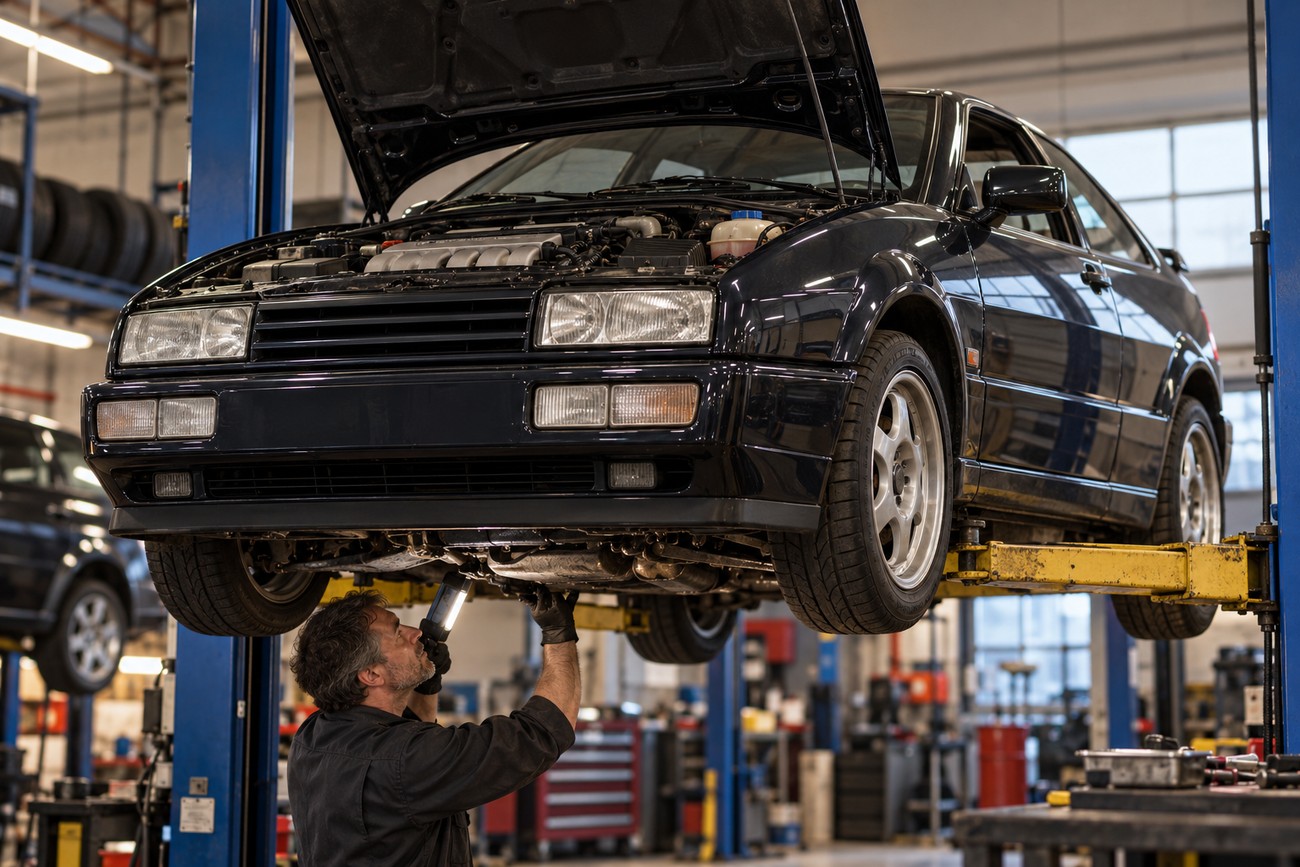
The Corrado VR6 remains appealing because its hardware is compact and its road manners are immediate. Technical specifications list mass at approximately 1,240 kg, while the standard VR6 tire size is 205/50 VR15. ABS, power steering, and disc brakes on all four wheels give the car equipment that still makes sense during fast road driving.
Its age changes the ownership calculation. Cooling plastics, wiring, sunroof hardware, water leaks, and chain components can fail independently or aggravate one another. Parts scarcity and the amount of disassembly required can make individual repairs expensive even when the underlying design is not unusually complex.
A well-maintained Corrado can be dependable, but it should not be judged by the expectations of a modern daily driver. Preventive replacement of age-sensitive parts, regular inspection for moisture, and evidence of careful chain and cooling-system work matter more than a recently detailed engine bay.
Buy condition, maintenance evidence, and correct specification. The spoiler provides the theater, and the VR6 provides the character, but neither should distract from corrosion, water damage, chain noise, or an unidentified engine. A low asking price is useful only when it reflects a known repair plan rather than an unknown mechanical backlog.
Frequently asked questions
What is the average price of a Volkswagen Corrado VR6?
A single average price is misleading because Corrado VR6 values vary sharply with condition, originality, market, and documentation. A car with rust repairs, interior water damage, an inoperative spoiler, and unknown chain or cooling-system history belongs in a different valuation category from an original example with documented mechanical work.
Assess the car in layers: verify the engine specification, inspect corrosion and previous repairs, confirm documented chain and cooling work, test both spoiler modes, and check the interior for dampness. The asking price should reflect the cost and uncertainty of unresolved work, including the possibility that parts scarcity will extend the repair.
Why can a Corrado VR6 lose coolant without leaving a puddle?
A small leak from a heat-soaked plastic component may appear only when the engine is hot and pressurized. Coolant can spread across the engine bay, evaporate on warm surfaces, or leave a dried residue before enough fluid reaches the ground to form a puddle.
Inspect the thermostat housing, radiator, hoses, plastic water pipe, and expansion-tank fittings for crusted deposits and staining. A sweet coolant odor after a drive is also significant. Passenger-side dampness or persistent misting can point toward a heater-core leak, which may require extensive dashboard disassembly.
How much horsepower does a VR6 Corrado have?
The European specification produces approximately 190 hp at 5,800 rpm, with approximately 245 Nm at 4,200 rpm. Advertisements may describe the engine as 2.9 liters because they round the technical 2.861-liter displacement.
Published figures and listings can differ because the American SLC is often associated with a 2.8-liter Golf-related VR6 specification. Confirm the engine number and documentation before treating a horsepower claim or displacement badge as proof of the car’s identity.







