
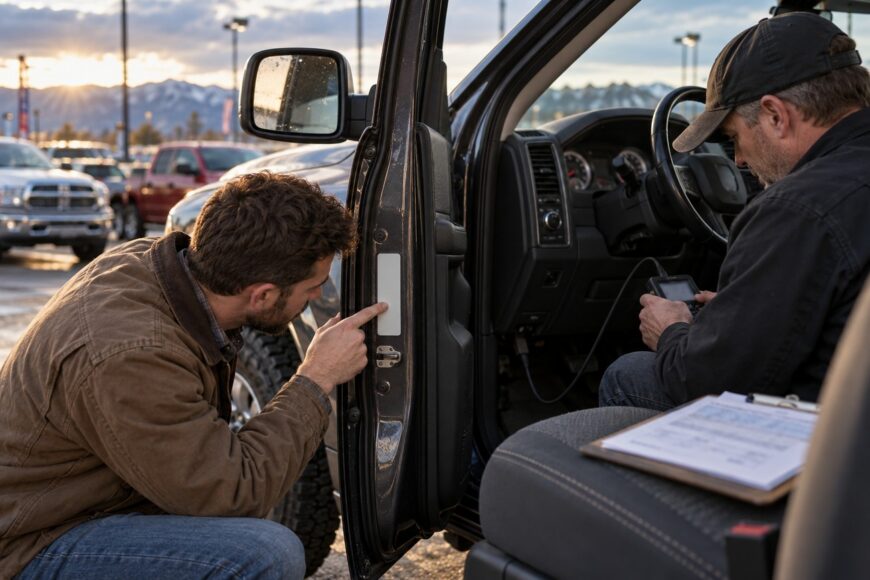
A used Dodge Ram can appear correctly identified while actually being stolen, salvaged, flood-damaged, or severely damaged. A criminal may copy the 17-character vehicle identification number from a legitimate truck and place that identity on another vehicle.
A clean-looking history report and a matching windshield VIN do not prove the Ram is legitimate. Before paying, compare every available identifier, review the title and registration, inspect the VIN areas, and obtain an independent inspection with an OBD2 scan.
- What VIN cloning means for a used Dodge Ram
- How to verify a Ram before you buy
- Red flags sellers and reports cannot explain away
- What to do if you already bought a cloned Ram
- Frequently asked questions
- Why would someone photograph my VIN?
- What should I do if a seller refuses an independent VIN inspection?
What VIN cloning means for a used Dodge Ram
VIN cloning is the copying of a legitimate vehicle’s 17-character VIN onto another vehicle, often one that is stolen, salvaged, or flood-damaged. The copied number may come from a real Ram that is properly registered and has no suspicious history.
The scheme commonly includes fake VIN plates and false documents, not just a replaced dashboard VIN plate. A cloned Ram may match the donor vehicle’s make, model, and color, which helps it pass a quick visual check. Its trim level, factory markings, registration details, or hidden identifiers may still reveal the problem.
The main danger is that a clean report may describe the legitimate donor vehicle. It may therefore fail to expose the truck standing in front of you. If authorities establish the true identity, the vehicle may be confiscated even when you bought it in good faith.
Discovery can also create title, registration, and insurance disputes. A lender may continue to expect payment while ownership is being investigated, leaving you with financial obligations and no usable truck. Treat the identity of the vehicle as a separate issue from its appearance, price, and seller’s promises.
How to verify a Ram before you buy
Start with a physical comparison in good daylight. Match the VIN on the dashboard with the driver-door label, title, registration, and any available frame or hidden manufacturer markings. Write the numbers down rather than relying on a quick glance.
Inspect the VIN areas for disturbed fasteners, uneven plate edges, fresh adhesive, scratches, paint differences, or marks suggesting replacement. Check whether the truck’s trim level, color, mileage, and registration region agree with the documents. A mismatch does not prove cloning by itself, but it requires an explanation and further checking.
Arrange an independent inspection before signing or paying. Ask for an OBD2 scan that checks the electronic VIN, since it may differ from the visible identifiers. Consider the scan alongside the vehicle’s configuration and physical markings, rather than treating it as a standalone clearance.
Use a history report as supporting evidence only. It can show title events, damage, registration activity, or mileage concerns, but a real VIN from a clean legitimate vehicle can allow a clone to appear clean. Physical, documentary, and electronic identifiers must agree before the transaction proceeds.
Red flags sellers and reports cannot explain away
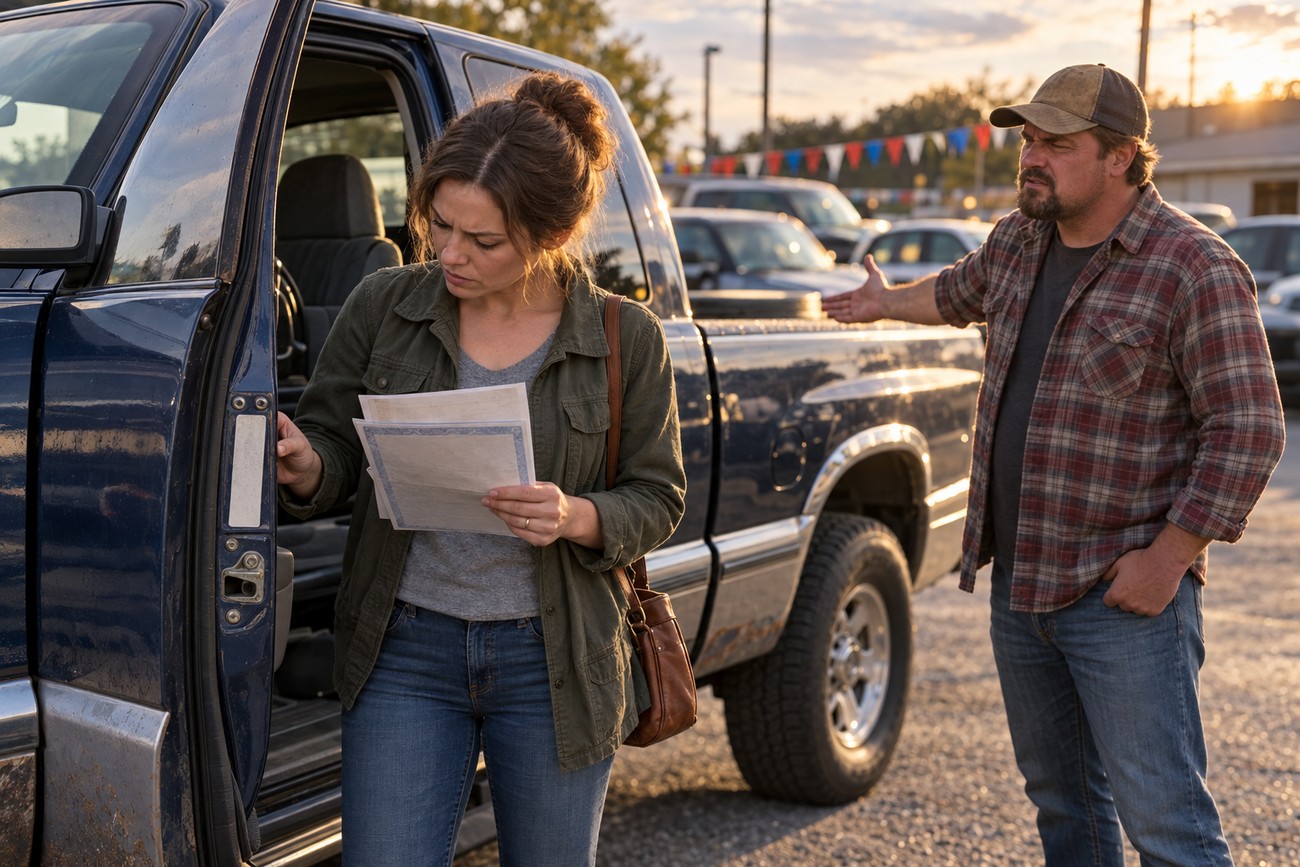
Several buyer habits make cloning easier to miss: checking only the windshield VIN, trusting one report, skipping the door label, or accepting a seller’s explanation without checking the ownership chain. Urgent sales pressure and an unusually low price add risk, especially when the seller cannot clearly explain where the Ram came from.
Matching paperwork is useful, yet paperwork can be fabricated to support the copied identity. An aftermarket key fob, unusual replacement hardware, or other nonstandard details may be supporting clues. None proves cloning alone, but several small inconsistencies justify stopping the deal until an independent inspection is complete.
NICB says criminals may copy VINs from legitimate vehicles parked on streets, in parking lots, or at dealerships. AARP cites a Carfax Canada estimate that about 127,000 vehicles in Ontario may have cloned VINs. Houston police have reportedly encountered VIN-cloning cases approximately once a week.
Do not let a seller turn caution into a deadline. A legitimate seller should allow reasonable access to the truck, its documents, and an independent scan. If the source, ownership history, trim, or identifiers remain unclear, do not pay a deposit or commit to financing until the identity is verified.
What to do if you already bought a cloned Ram
Stop treating the matter as an ordinary warranty complaint. Preserve the listing, seller messages, payment records, title, registration, inspection results, and photographs of every VIN location. Do not remove, clean, replace, or alter suspicious plates, labels, fasteners, or markings.
Contact the relevant vehicle authority and law enforcement promptly, then notify the insurer, lender, and seller. Ask for written confirmation of each report and keep a dated record of calls, case numbers, and documents provided. A qualified attorney may also help with title, payment, and recovery issues under local law.
Authorities may seize the Ram after its true identity is established, even if you acted in good faith. Registration, insurance, title, and loan obligations can remain unresolved while the investigation continues. Do not assume that you will retain possession or receive a refund automatically.
Give investigators the complete transaction history, including who advertised the truck, where it was inspected, how payment was made, and whether the seller refused any checks. Early, organized evidence can make it easier to distinguish your conduct from the acts of the person who supplied the cloned vehicle.
Frequently asked questions
These checks help separate an explainable irregularity from evidence that the Ram’s identity has been copied.
Why would someone photograph my VIN?
There are legitimate reasons to photograph a VIN. A repair shop, insurer, buyer, vehicle authority, or parts supplier may need the number to identify the vehicle, confirm equipment, prepare paperwork, or order compatible components.
The risk arises when a real VIN from a clean vehicle is copied and used as the identity of a stolen or salvaged truck. A photograph alone does not prove criminal intent. Avoid publishing unnecessary VIN images with other identifying details. If your VIN appears on an unrelated vehicle or document, save evidence and report the discrepancy.
What should I do if a seller refuses an independent VIN inspection?
Walk away from the transaction and do not pay a deposit or make a financing commitment before the identity checks are complete. A refusal is a warning sign, not proof of cloning, but it removes an important buyer safeguard that a legitimate seller should normally accept.
Document the refusal, the listing, the seller’s messages, and any pressure to close quickly. Do not rely on a seller-selected report or a photograph of one VIN location. A vehicle history report may remain clean when the copied VIN belongs to a legitimate donor vehicle.







