
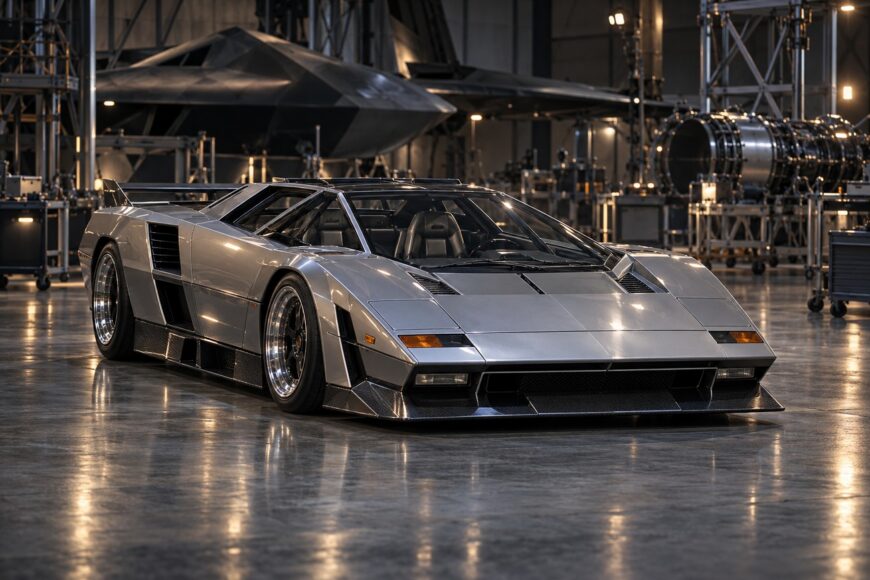
The Vector W8 looked as if it had escaped an aerospace design studio. Its sharp body, composite panels, and aircraft-inspired cockpit helped sell an extraordinary claim: promotional maximum-speed figures reached approximately 242–257 mph (389–414 km/h). Reported period magazine test figures were roughly 190–220 mph (305–354 km/h), under differing conditions and with differing documentation. An independently established 240-plus-mph W8 record remains elusive.
The harder question begins after the speed claim. A W8 owner must keep a hand-built, twin-turbocharged machine running with scarce documentation, unusual bodywork, and few direct replacements for its specialized parts. That challenge is inseparable from the car’s appeal: the W8 preserves an unusually ambitious American vision of what a supercar could be, along with the compromises made to build it.
- The American supercar built on an aerospace vision
- What the aerospace construction actually meant
- Twin-turbo V8 power and a three-speed reality check
- How fast was the Vector W8, really?
- Vector W8 performance claims versus available evidence
- Why the specification depends on the individual car
- The GM parts-bin myth and the cost of keeping one running
- An engineering artifact, not a turnkey investment
- Frequently asked questions
- How much is a Vector W8 worth today?
- Why did the Vector W8 production program end?
- How can an owner arrange insurance for a Vector W8?
The American supercar built on an aerospace vision
The W8 was an American-built, mid-engine supercar conceived to look and feel unlike the established European exotics of its era. Its broad, low shape and cockpit presentation made aerospace references part of the car’s identity. Beneath that styling lay construction choices that gave the comparison some substance.
Its production run was exceptionally small: approximately 17–22 cars, including prototypes. Counts vary with the definition of a chassis and with later modifications, so a single, definitive production number can mislead. The short run matters because changes made during assembly could appear on only a handful of cars, or even one.
The period launch price was approximately $400,000–$450,000 in the early 1990s, before individual options and changes. That placed the W8 well above many familiar exotic-car purchases of the time. Buyers were paying for an ambitious engineering project built in tiny numbers, without the consistency or support network that a larger production program could offer.
Judging the W8 solely as an American answer to an Italian supercar misses its peculiar ambition. It attempted to combine a lightweight structure, unusual materials, immense quoted power, and an aircraft-like presentation in a usable road car. How completely any individual example fulfilled that ambition depends on the car itself.
What the aerospace construction actually meant
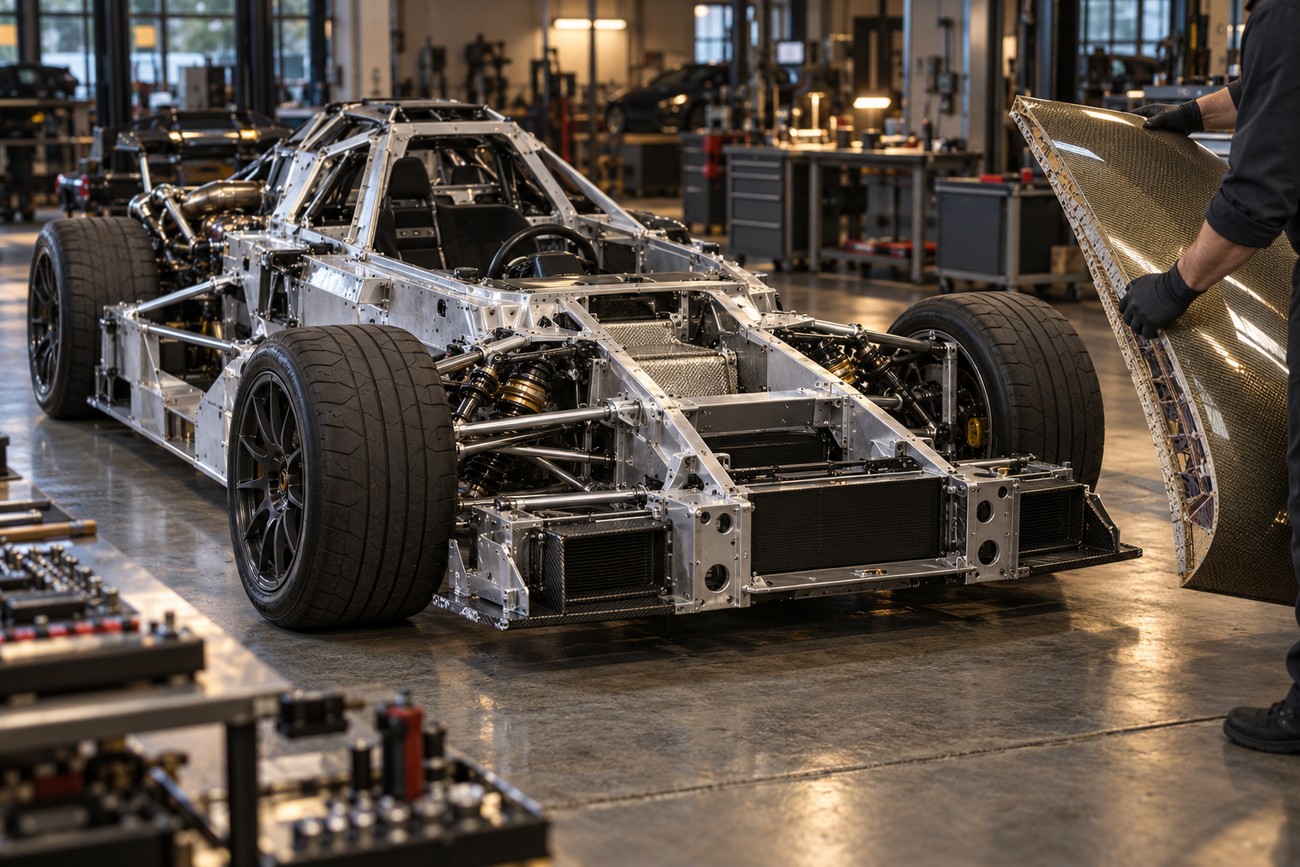
The W8 used an aluminum monocoque with Kevlar, carbon-fiber, and other composite body panels. The monocoque formed the car’s primary structure; the panels gave designers considerable freedom to shape the exterior. These were real engineering choices, rather than a claim supported only by the cockpit’s appearance.
Aerodynamics formed another part of the pitch. The quoted drag coefficient was approximately 0.32–0.34, though comprehensive independent verification is limited. A drag figure describes one aspect of aerodynamic resistance; by itself, it cannot establish a maximum speed without accounting for power, gearing, stability, and test conditions.
The same construction that makes the W8 distinctive complicates damage assessment. Repairing an unusual composite panel may require identifying its materials and layup before choosing a method; replacing it may be harder still when original parts and forms are scarce. A clean-looking repair deserves scrutiny if the underlying structure or panel fit cannot be documented.
Aerospace influence, then, has a practical meaning for an owner. Aluminum and composites call for knowledge beyond routine steel-body repair, while the rarity of each panel limits the usefulness of a standard parts search. The materials are part of the W8’s historical importance and part of its maintenance burden.
Twin-turbo V8 power and a three-speed reality check
The W8’s engine was a twin-turbocharged, Chevrolet small-block-derived Rodeck V8 of approximately 6.0–6.3 liters. Period specification sheets quoted approximately 625–650 hp and 650–720 N·m, depending on the specification. Those figures describe quoted configurations, not a measured output guaranteed across every surviving car.
Power went through an adapted three-speed GM Turbo-Hydramatic 425 automatic. It was neither a sequential gearbox nor an automated manual. In a car with the W8’s price and aggressive image, three forward ratios and conventional automatic shifts could feel unexpectedly old-fashioned, even if the transmission served the packaging brief.
The mechanical ancestry is easy to recognize; the complete installation is harder to generalize. Twin turbos, engine-bay packaging, cooling hardware, and individual tuning all affect how a particular W8 responds. Raising boost without considering heat and transmission load risks turning a performance adjustment into a difficult repair.
Reported concerns about heat buildup in the engine bay and cabin make thermal management more than a comfort issue. Sustained hard use places demands on cooling and drivetrain components, while a car’s later modifications may have changed its limits. For a W8, knowing the setup and service history is more useful than assuming that one quoted power figure describes the whole run.
How fast was the Vector W8, really?
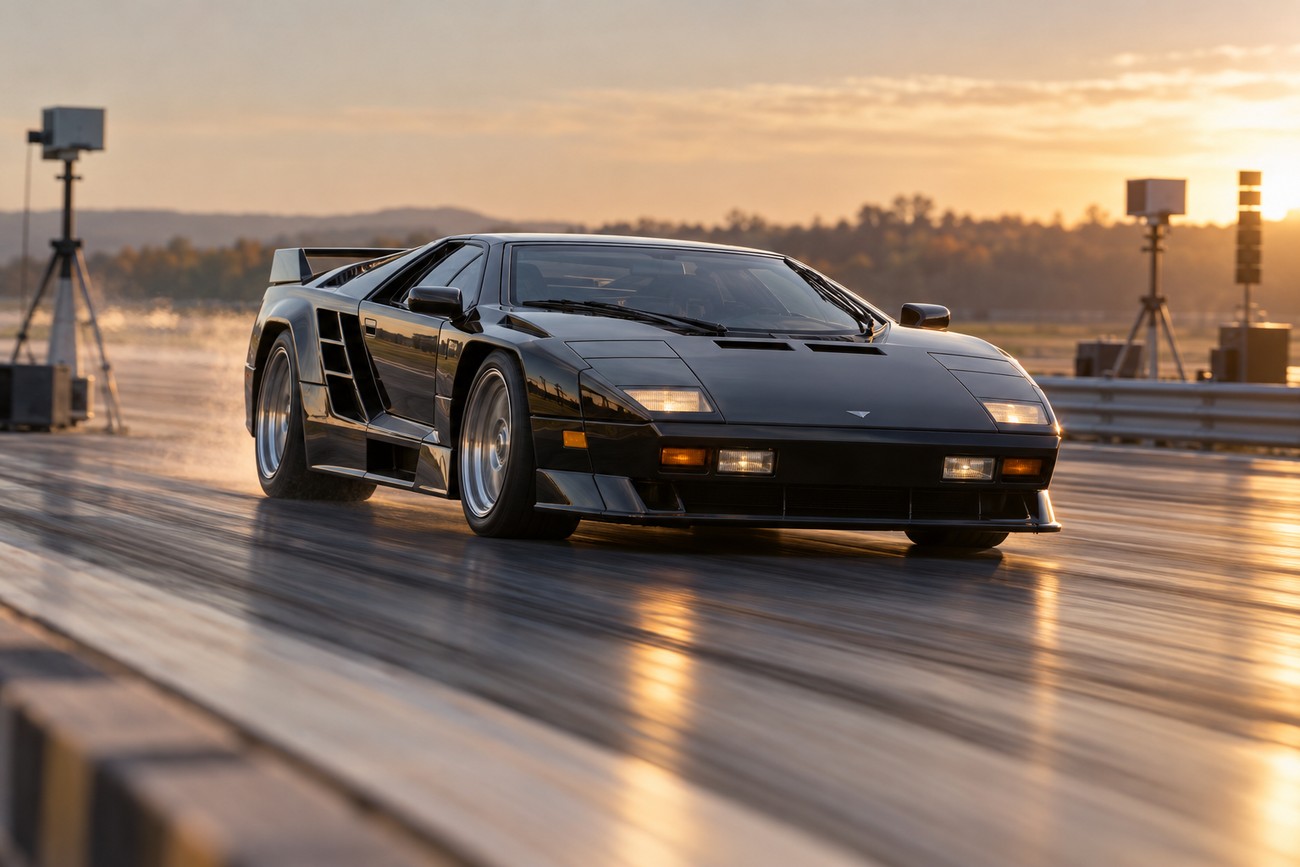
Promotional maximum-speed figures reached approximately 242–257 mph (389–414 km/h). Reported period magazine test figures were roughly 190–220 mph (305–354 km/h), with differing conditions and documentation. The ranges convey two kinds of evidence: an advertised capability and reported test results, rather than one continuous set of verified runs.
A theoretical speed estimate may use power, gearing, and an assumed aerodynamic resistance. A promotional figure may reflect such an estimate or a particular development goal. Neither should be treated as equivalent to a documented independent run in a specified car, on a specified course, under recorded conditions.
The magazine figures also need care. Different cars, setups, and testing circumstances make it unwise to select the highest reported number as the W8’s universal top speed. The available evidence supports describing the car as exceptionally quick for its period; it does not establish a 240-plus-mph independent record.
Acceleration claims deserve the same discipline. Turbo response, transmission behavior, traction, and the condition of an individual car can all alter a run, so a single definitive time would imply more consistency than this tiny production program provides. The most useful performance account identifies the chassis and explains how the result was obtained.
Vector W8 performance claims versus available evidence
These figures are best read alongside the limits of the evidence behind them.
| Measure | Advertised or quoted figure | Available evidence and limitation |
|---|---|---|
| Maximum speed | Approximately 242–257 mph (389–414 km/h) in promotional claims | Reported period magazine test figures were roughly 190–220 mph (305–354 km/h), with differing conditions and documentation. An independent 240-plus-mph record is not established. |
| Engine output | Approximately 625–650 hp, depending on specification | Period figures describe quoted setups, not a uniform, independently verified result for every chassis. |
| Drag coefficient | Approximately 0.32–0.34 | Comprehensive independent verification is limited; the quoted range should not be treated as a fully validated measurement across all cars. |
Why the specification depends on the individual car
Approximately 17–22 W8s were built, including prototypes, though counts vary with chassis definitions and later modifications. This was an extremely small hand-built run with evolving details. Marketing presented a production supercar, while the differences among cars have led owners and engineers to describe individual examples as prototype-like.
Turbo tuning, cooling arrangements, bodywork, and cabin equipment could differ. Later work may have widened those differences, making a model-level specification a starting point rather than a reliable description of a car for sale or restoration. Even two W8s described with the same quoted engine output may have different hardware, behavior, and maintenance needs.
Variation also complicates judgments about handling and reliability. Tire choice, suspension setup, repairs, and heat management can affect the experience of driving an individual example. A complaint reported on one chassis warrants investigation on another, rather than an assumption that the fault is either universal or irrelevant.
Modern electronic driver aids should not be assumed present on a W8, and a buyer should verify the equipment of the specific chassis. With substantial power and limited electronic intervention, tires, brakes, setup, and driver judgment carry particular weight. That is a more useful safety assessment than treating every surviving car as if it left the workshop in identical condition.
The GM parts-bin myth and the cost of keeping one running
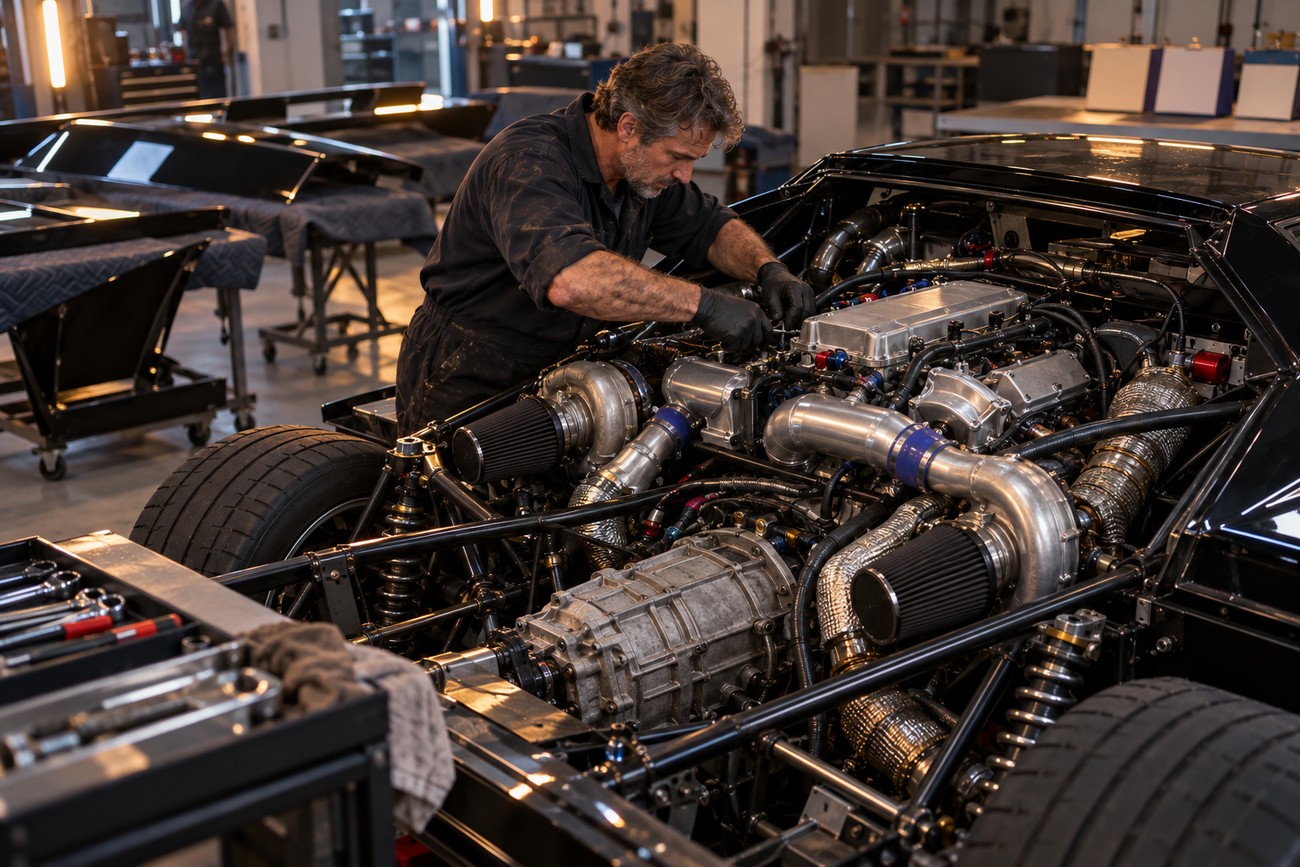
Chevrolet small-block ancestry can help identify some components of the extensively modified Rodeck V8. It does not make the complete W8 straightforward to service. Twin-turbo hardware, tight packaging, bespoke systems, and the adapted three-speed GM Turbo-Hydramatic 425 automatic turn a familiar engine family into a specialized installation.
Owners and mechanics report difficult access, limited original parts, and incomplete service documentation. When a drawing or procedure is missing, photographs of the particular chassis and records of previous work become valuable. Even a seemingly routine job can take longer if earlier modifications must first be identified.
Matching a donor GM part number is only the first step: confirm how that component was modified, mounted, and cooled in the specific W8 before fitting a replacement.
Composite repairs pose a separate challenge. A workshop accustomed to conventional panels may be poorly equipped to assess damaged Kevlar or carbon-fiber components, especially if factory forms are unavailable. Significant accident damage can therefore become difficult to price or repair with confidence, even when the engine still runs.
Reported heat buildup, variable build quality, and drivetrain stress are concerns to inspect, not faults proven on every chassis. Indiscriminate turbo upgrades may increase thermal and transmission loads; prolonged storage can create its own work in rubber parts and the fuel system. Moderate, well-monitored use and preventive maintenance may be more sensible than treating the car as either a constant track machine or a static exhibit.
An engineering artifact, not a turnkey investment
The W8’s significance lies in the scale of its ambition and the unusual machinery that resulted. Its aluminum-and-composite construction, twin-turbo V8, and aircraft-like presentation preserve a distinct chapter of American supercar history. Regular driving, however, asks an owner to accept specialized service, uneven parts availability, and the possibility that a small fault will require custom work.
The original price—approximately $400,000–$450,000 in the early 1990s, before individual options and changes—does not establish what a W8 is worth today. The market is exceptionally narrow, and the evidence supplied here does not support one dependable present-day value. An asking price alone may say little about what another, differently configured chassis could achieve in a transaction.
Provenance matters unusually much in such a small run. A documented prototype history, period appearances, later modifications, and evidence of careful maintenance can all change how an individual car is assessed. Condition still matters, particularly where repairs to structure or composites are hard to verify.
The strongest case for owning a W8 is an informed interest in the car itself. It rewards someone willing to study its history, document its current configuration, and participate in decisions about maintenance. Assuming easy resale or a uniform ownership experience would ignore the very individuality that makes the car compelling.
Frequently asked questions
The W8’s rarity makes model-wide answers less useful than records for a particular chassis. These questions call for careful separation of known facts from estimates and proposals.
How much is a Vector W8 worth today?
There is no dependable single present-day value established by the available evidence. Start with recent comparable transactions where they can be verified, then examine how closely those cars match in provenance, modifications, condition, and documentation. In such a thin market, even a relevant sale may need substantial qualification before it informs another chassis’s value.
Why did the Vector W8 production program end?
The documented outcome is an exceptionally small run of approximately 17–22 cars, including prototypes; the count varies with chassis definitions and later modifications. That fact alone does not establish a specific financial or corporate cause for the program’s end, and the car’s mechanical shortcomings should not be offered as a substitute explanation.
To assess a proposed business-history account, look for contemporary company records, dated reporting, or direct testimony that connects the claimed event to production ending. Without that link, the precise cause remains a question requiring further sourcing.
How can an owner arrange insurance for a Vector W8?
An owner can approach insurers or brokers that handle rare collector cars and ask whether they will consider the specific chassis. An agreed-value discussion may be useful, though acceptance and terms will depend on the insurer. The car’s rarity and limited repair support make it important to describe its configuration accurately.
Prepare ownership and provenance records, clear photographs, a list of modifications, maintenance history, and any available appraisal or comparable transactions. Those materials can help an insurer understand both the car being covered and the basis for a proposed value; they do not guarantee a policy.







