
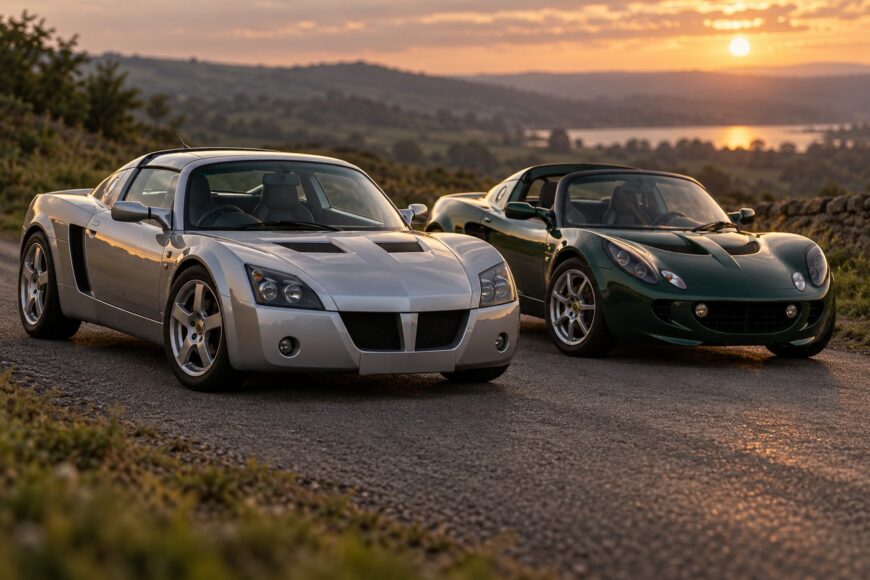
An Elise-related sports car with a Vauxhall badge has an unusual appeal. The VX220 offers the low seating position, light controls, and direct connection to the road that make this family of cars compelling, often without the assumptions attached to the Lotus name. Its fiberglass body also gives it an identity of its own.
The choice is more involved than choosing between badges. Shared architecture does not mean identical engines, handling character, or ownership risks, and a sound-looking example can hide costly structural or bodywork problems. Built by Lotus for Vauxhall, the VX220 deserves to be judged as a distinct sports car rather than an Elise substitute.
- How the VX220 became the Elise’s sibling
- VX220 2.2 vs Turbo: specifications at a glance
- What feels different from an Elise on the road?
- Engine checks that matter more than the badge
- Chassis, ABS and bodywork: the expensive surprises
- Which VX220 should you buy—and could you live with it?
- Frequently asked questions
- Why have my VX220’s speedometer and ABS light failed together?
- Which is better, the Lotus Elise or the Vauxhall VX220?
- Why was the Lotus Carlton banned?
- What cars are similar to the Lotus Elise?
How the VX220 became the Elise’s sibling
The VX220 was built by Lotus around the bonded-aluminum architecture associated with the Elise Series 2. Fibreglass panels form the body, while the structure underneath provides the low weight and rigidity central to the car’s appeal. Both the naturally aspirated and Turbo versions place their engines behind the occupants and drive the rear wheels.
Those foundations explain the family resemblance from the driver’s seat: you sit low, close to the road, in a compact car that responds readily to small inputs. They do not make the VX220 an Elise with different badges. Engines, weight, braking electronics, suspension setup, and equipment differ, so an Elise review cannot tell you exactly how a VX220 will drive or what it will cost to maintain.
Production ran from 2000 to 2005. Approximately 5,267 naturally aspirated VX220s and 1,940 VX220 Turbos were built, making either version a relatively uncommon sight. That scarcity matters most when you need VX220-specific parts rather than routine engine service items.
The Lotus connection is a reason to take the engineering seriously, rather than a guarantee that parts or settings transfer between models. Before buying a modified car, establish which components it has and whether the work suits its particular engine and chassis setup.
VX220 2.2 vs Turbo: specifications at a glance
These are approximate figures for standard cars; condition and specification matter more to a purchase than a small difference in a published test.
| Specification | VX220 2.2 | VX220 Turbo |
|---|---|---|
| Engine | 2.2-litre naturally aspirated Z22SE | 2.0-litre turbocharged |
| Power | Approximately 145–147 hp | Approximately 197–200 hp |
| Weight | Approximately 875 kg | Approximately 930 kg |
| Quoted 0–62 mph | 5.6 seconds | About 4.7 seconds |
Published Turbo 0–60/62 mph results range from about 4.2 to 4.7 seconds, with differing test methods and vehicle specifications; the endpoints are not directly comparable. Higher VXR220 or modified-car power claims do not describe a standard Turbo.
What feels different from an Elise on the road?
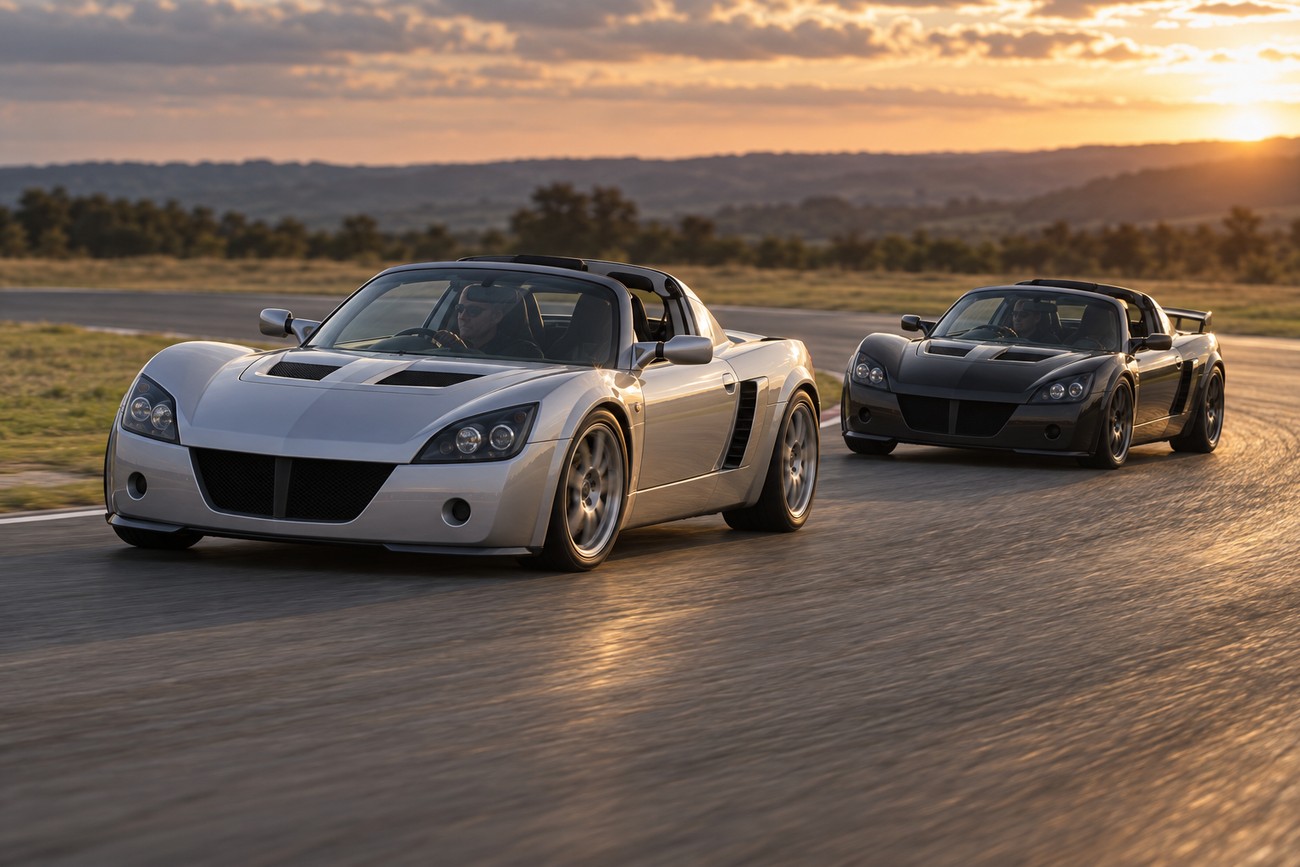
The naturally aspirated 2.2 makes a persuasive case through its modest weight and predictable response. At approximately 875 kg and 145–147 hp, it encourages you to carry momentum and work with the engine. The Turbo brings much stronger acceleration, with approximately 197–200 hp, though its approximately 930 kg weight and different power delivery give it another character.
Both versions use a five-speed Getrag manual gearbox and independent double-wishbone suspension. The basic layout makes each feel alert in a way a heavier sports car rarely does, yet neither should be treated as a fixed reference point for the Elise. Engine choice, suspension setup, braking electronics, and equipment all influence what reaches the driver.
Tyres and alignment deserve particular attention on a light, mid-engine car. An aggressive tyre choice can make a poorly set-up VX220 feel impressive on one smooth bend and unsettled over a rougher sequence. Worn suspension parts or incorrect toe settings can have a similarly large effect, so compare cars only after considering their mechanical condition.
The better road car is therefore the one whose responses suit your driving and whose setup you can verify. A healthy 2.2 may be more satisfying than a tired Turbo despite the power gap; a properly maintained Turbo delivers acceleration the 2.2 cannot match. A test drive should reveal consistent steering and braking, rather than simply a strong engine.
Engine checks that matter more than the badge
Start an unfamiliar 2.2-litre Z22SE from cold and listen for a metallic timing-chain rattle. A quiet, warm engine cannot answer that check. There is no universally safe replacement mileage: practical sources suggest around 60,000 miles, while some owners report tensioner failure near 50,000 miles, so investigate the sound and the service record rather than trusting the odometer alone.
For a Turbo, ask for dated evidence of timing-belt work. Practical guidance commonly cites about four years, while quoted mileage recommendations differ between 40,000 and 60,000 miles. Confirm the applicable schedule and what was replaced; an assertion that the belt “looks fine” is no substitute for a record.
Inspect the radiator and cooling system for leaks, including evidence of earlier repairs. The original radiator can fail with age, and an all-aluminum replacement is a common upgrade. Check that any replacement is documented and that the system is dry and behaving normally, rather than assuming an upgraded part settles every cooling concern.
Watch how far the engine moves as it starts and stops. Excessive rocking can point towards tired mounts, which owners report replacing repeatedly at approximately 20,000–50,000 miles, particularly on cars subjected to hard launches; that range is an observation, not a service interval. A drive can add context if the powertrain shifts noticeably when load changes.
Check the 2.2’s oil level more than once under consistent conditions. Owners report that a single dipstick reading can be misleading. Repeated readings and a credible maintenance history provide a firmer basis for judging a car than a reassuring glance at the dipstick during a hurried viewing.
Chassis, ABS and bodywork: the expensive surprises
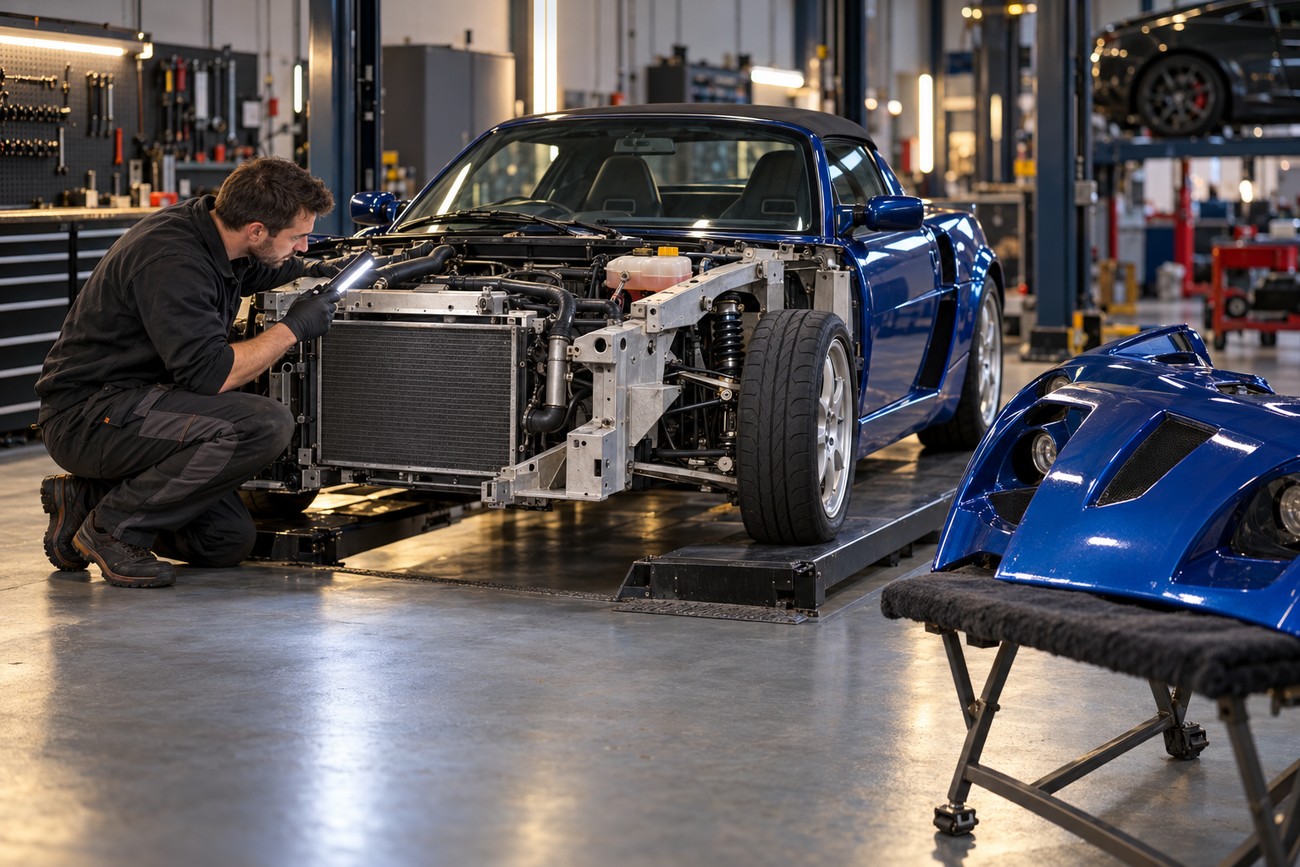
A specialist inspection of the bonded-aluminum chassis is worth arranging before committing to a VX220. Accident damage, incorrect lifting, corrosion, or poor repairs may be difficult to assess from above, and structural work is a different proposition from replacing a service part. Ask a Lotus/VX specialist to examine the chassis and lifting-point areas, especially if the car has a vague damage history.
Cosmetic condition still matters, but it can mislead in either direction. Blistering paint on a door, boot lid, or spoiler can arise from the coating and does not, by itself, prove an accident. Equally, a tidy outer panel offers little assurance about what lies beneath; correct preparation and curing also matter if blistered panels need refinishing.
Electrical faults can be awkward to trace where a poor ground connection is involved. The period ABS system also deserves a careful check: early systems can feel disconcerting under hard braking. The car has ABS and a driver’s airbag, but lacks modern electronic driver aids. Some owners disable ABS for track use; doing so on the road reduces a safety provision and may cause inspection problems.
Budget for the parts you cannot readily substitute. VX220-specific fiberglass panels, lamps, seals, and interior trim can be costly or slow to find, making a seemingly minor knock disproportionately expensive. That remains true even if the engine and gearbox are healthy, and it makes evidence of competent previous repairs especially valuable.
Which VX220 should you buy—and could you live with it?
Choose the 2.2 if its lighter feel and naturally aspirated response matter more to you than outright acceleration. Choose the Turbo if you will use its extra thrust and are comfortable verifying its additional maintenance demands. Neither is automatically the better purchase: condition can outweigh the gap in power and quoted performance.
Prioritise documented servicing and a specialist chassis assessment over a low asking price or fresh paint. Review the radiator, engine mounts, and ABS alongside the relevant timing-system history, and ask for evidence of work rather than a list of claimed upgrades. Previous-owner forum posts, where identifiable, can sometimes clarify repeated repairs or track use, though they should be checked against records and the car itself.
Living with a VX220 also takes commitment. Low ground clearance demands care over ramps and damaged roads; the cramped cabin, noise, and limited luggage space can make regular journeys tiring. A short drive on familiar roads is more revealing than sitting in the car at a showroom.
Leave room in the ownership budget for scarce body and trim parts, even if the drivetrain looks straightforward to maintain. The most rewarding VX220 is one whose chassis, setup, and history let you enjoy its directness without wondering what a cheap purchase concealed.
Frequently asked questions
Common questions range from fault diagnosis to comparisons with the Elise. Shared architecture is a useful starting point, but condition and driving feel still matter. The Lotus Carlton is a separate car, despite its Lotus connection.
Why have my VX220’s speedometer and ABS light failed together?
A failed rear ABS sensor is one possible shared cause of a missing speedometer reading and an illuminated ABS warning light. Have the fault diagnosed before buying parts: the symptoms occurring together do not prove that two separate components have failed, or establish the sensor as the cause without testing.
Which is better, the Lotus Elise or the Vauxhall VX220?
Neither is universally better. Compare examples on their condition, driving position, controls, and service history, then drive both if possible. Their shared architecture gives the comparison meaning, but the badge alone tells you little about which individual car will suit you or need less work.
Why was the Lotus Carlton banned?
The Lotus Carlton was not generally banned from UK roads. Its performance prompted public controversy and calls for a ban, which is likely the source of the claim. It is a separate car from the VX220; the shared Lotus connection should not be taken to imply a similar legal history.
What cars are similar to the Lotus Elise?
The VX220 is among the closest relatives because it shares the bonded-aluminum Elise Series 2 architecture. The Opel Speedster is its counterpart in markets where the car wore an Opel badge. For a broader comparison, a Toyota MR2 also offers a mid-engined, rear-wheel-drive layout, though it is a different kind of sports car.







