
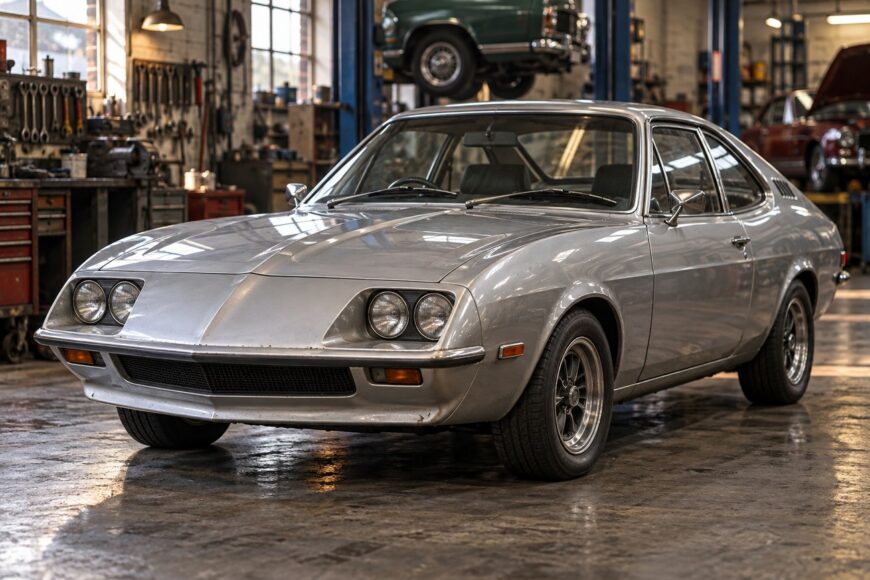
The Vauxhall Firenza Droopsnoot announces itself with a low, aerodynamic nose. The harder questions are less visible: whether the car began life as a factory HP, what rust lies beneath the steel body, and how much of its scarce equipment survives. Its shape matters, but it cannot establish identity or condition.
This was a rare road-going Vauxhall with a modified engine and a five-speed gearbox, rather than a styling exercise built around a striking front panel. Developed from an existing coupé, it reached buyers at a difficult moment for performance cars. That short production life now makes careful inspection as important as an appreciation of the design.
- What the Firenza HP was—and why only 204 were built
- The drooping nose: aerodynamic idea, fragile reality
- Slant Four power and Vauxhall’s first five-speed
- How fast was the road car, really?
- Spotting a genuine HP rather than a convincing conversion
- Ownership costs hide beneath the bodywork
- Frequently asked questions
- How much is a Vauxhall Firenza Droopsnoot worth?
- How many Vauxhall Firenzas were made?
- What paperwork helps verify a claimed factory Firenza HP?
What the Firenza HP was—and why only 204 were built
The factory name was Vauxhall Firenza HP: HP stood for High Performance. “Droopsnoot” is the nickname that stuck, describing the car’s most obvious feature rather than a separate model line. That distinction matters when a modified Firenza is advertised under the better-known name.
Beneath the distinctive front end was a two-door coupé derived from the Firenza/Magnum, within the wider Viva HC family. Vauxhall adapted an existing car rather than creating an unrelated sports coupé. Some familiar architecture remained, although that does not make every HP component interchangeable with an ordinary Firenza part.
The initial estimate was around 1,000 cars a year. Built during 1973–1975, the factory Firenza HP instead reached the end of production after 204 cars. That figure belongs specifically to the HP, not to all Firenzas.
The fuel crisis, strikes, and a weak sports-car market all undermined the plan. Reducing the shortfall to one cause would make a tidy story, but a misleading one. For an owner today, the consequence is plain: the pool of original HP-specific parts began small and has had decades to shrink further.
The drooping nose: aerodynamic idea, fragile reality
The HP’s defining feature is its fiberglass nose, fitted to a Firenza/Magnum-derived coupé body. Its lowered profile gave Vauxhall a conspicuous aerodynamic treatment on a production road car. No established figure in the available evidence quantifies the improvement, so the shape deserves attention without an invented drag coefficient or speed gain.
Fiberglass also changes the restoration problem. Cracks, distortion, damaged mountings, and uneven gaps can reveal old impacts or repairs that a fresh finish conceals. A nose that looks right in a photograph may require substantial work to fit properly against the bonnet, wings, and surrounding structure.
Inspect the panel and the steel body separately. The nose can remain glossy while the metal behind and beneath it deteriorates, and a sound-looking replacement panel does not establish that the whole car is a factory HP. Originality depends on the component’s history as well as its outline.
Repair decisions have consequences beyond appearance. Poorly aligned mounting points may put stress back into the fiberglass, while excessive filler can obscure the form of an earlier repair. Preserving a repairable original nose may therefore be preferable to fitting a superficially neater part whose provenance and fit are uncertain.
Slant Four power and Vauxhall’s first five-speed
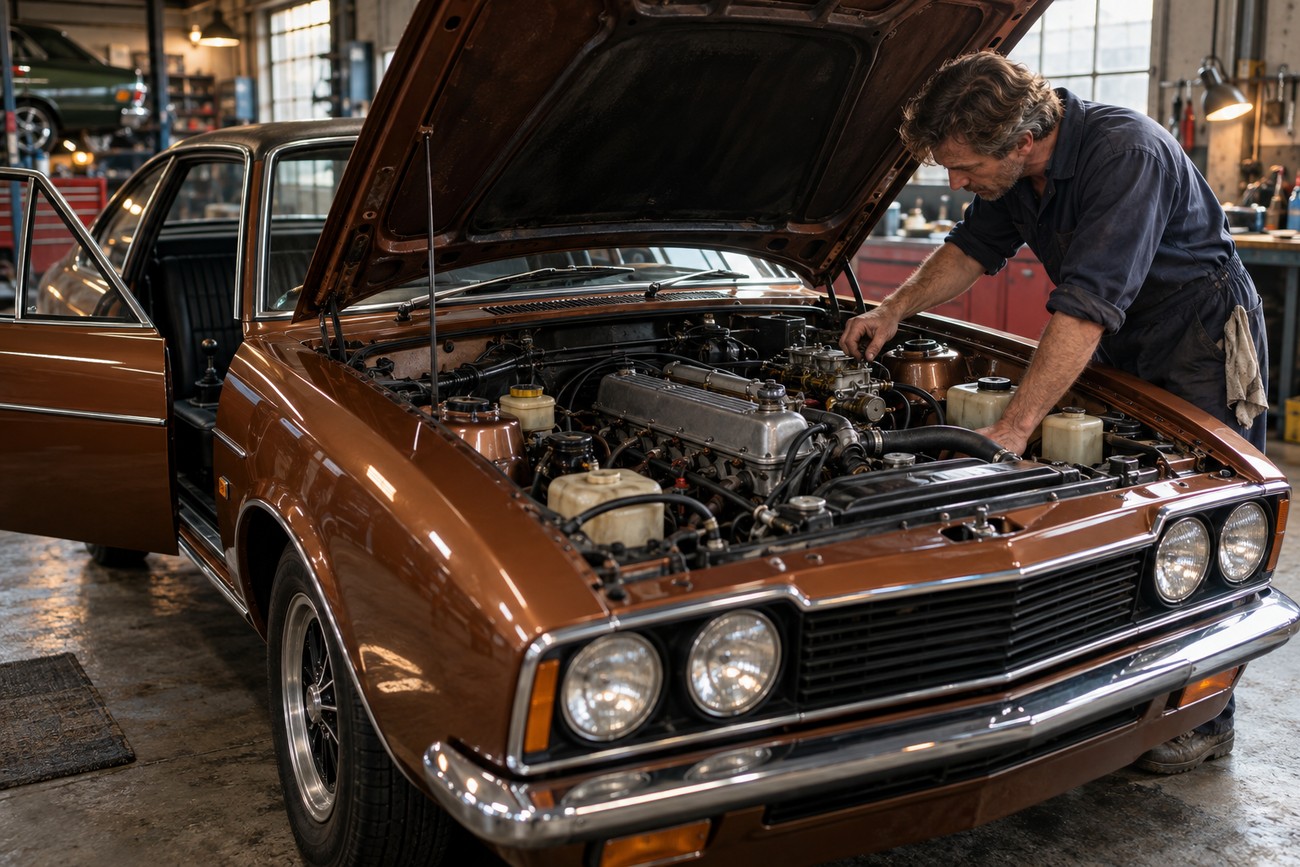
The road HP used a 2,279 cc Slant Four modified by Vauxhall and Bill Blydenstein. Vauxhall claimed 131 bhp at 5,500 rpm for this specification. The displacement alone proves little: an ordinary 2.3-liter Firenza engine should not be assigned the HP output simply because it shares the broad engine family.
Power went to the rear wheels through a five-speed ZF gearbox. The Firenza HP was the first production Vauxhall with a five-speed gearbox, making the transmission a significant part of its specification rather than a minor equipment detail. Its presence matters when assessing a car claimed to be complete and original.
Racing Firenzas add a further source of confusion. Competition cars could use different engine specifications, including 16-valve developments, and their outputs do not describe the road HP. Equally, a loose Slant Four offered as an “original HP engine” needs evidence of its specification, carburetors, and associated equipment.
For a buyer, matching the claimed configuration is more useful than relying on a single capacity figure or an impressive racing association. Check what is installed, what has been changed, and whether records explain those changes. A well-maintained replacement may make a car enjoyable, but it should be described differently from a surviving original drivetrain.
How fast was the road car, really?
Vauxhall’s official claims were 0–60 mph in 7.6 seconds, a top speed of 120 mph, and fuel consumption of 22 mpg. These figures describe the car as promoted when new; they are not test results for every surviving example. Fuel consumption in particular will depend on use and mechanical condition.
Some specialist publications give approximately 8 seconds to 60 mph and 114 mph at the top end. The difference need not mean that either account is definitively wrong. Test methods, vehicle specification, and the condition of the car being measured can all affect the result.
The claimed 131 bhp likewise belongs to a correctly specified and tuned HP engine. Carburetor settings, ignition condition, tires, and transmission losses can make an individual car feel markedly different from a period claim. A test drive should reveal how the example on offer runs, shifts, and pulls, rather than serve as an attempt to reproduce a brochure number.
Spotting a genuine HP rather than a convincing conversion
Begin with the car’s recorded identity and history, then inspect its physical specification. Registration and identity records should form a coherent account of the shell through changes of ownership and restoration. A Droopsnoot-shaped nose, an HP badge, or an owner’s assertion cannot settle the question alone.
Next, compare the shell, the modified 2,279 cc Slant Four specification, the five-speed ZF, and the fiberglass nose with the claimed factory configuration. Record discrepancies before accepting an explanation for them. Replacement parts are possible on a car of this age, but each significant change should make the history clearer, not more mysterious.
Conversions, replicas, drivetrain swaps, and cars assembled from multiple vehicles can all resemble a factory HP. A separate engine said to be original is especially weak evidence unless its specification and connection to the car can be substantiated. Neither a single correct component nor one missing item should substitute for a consistent account of the whole vehicle.
Keep photographs and notes of identification details, repairs, and major assemblies during an inspection. They allow a specialist or marque record keeper to examine inconsistencies before money changes hands. A credible car should withstand that scrutiny even if its restoration history is complicated.
Ownership costs hide beneath the bodywork
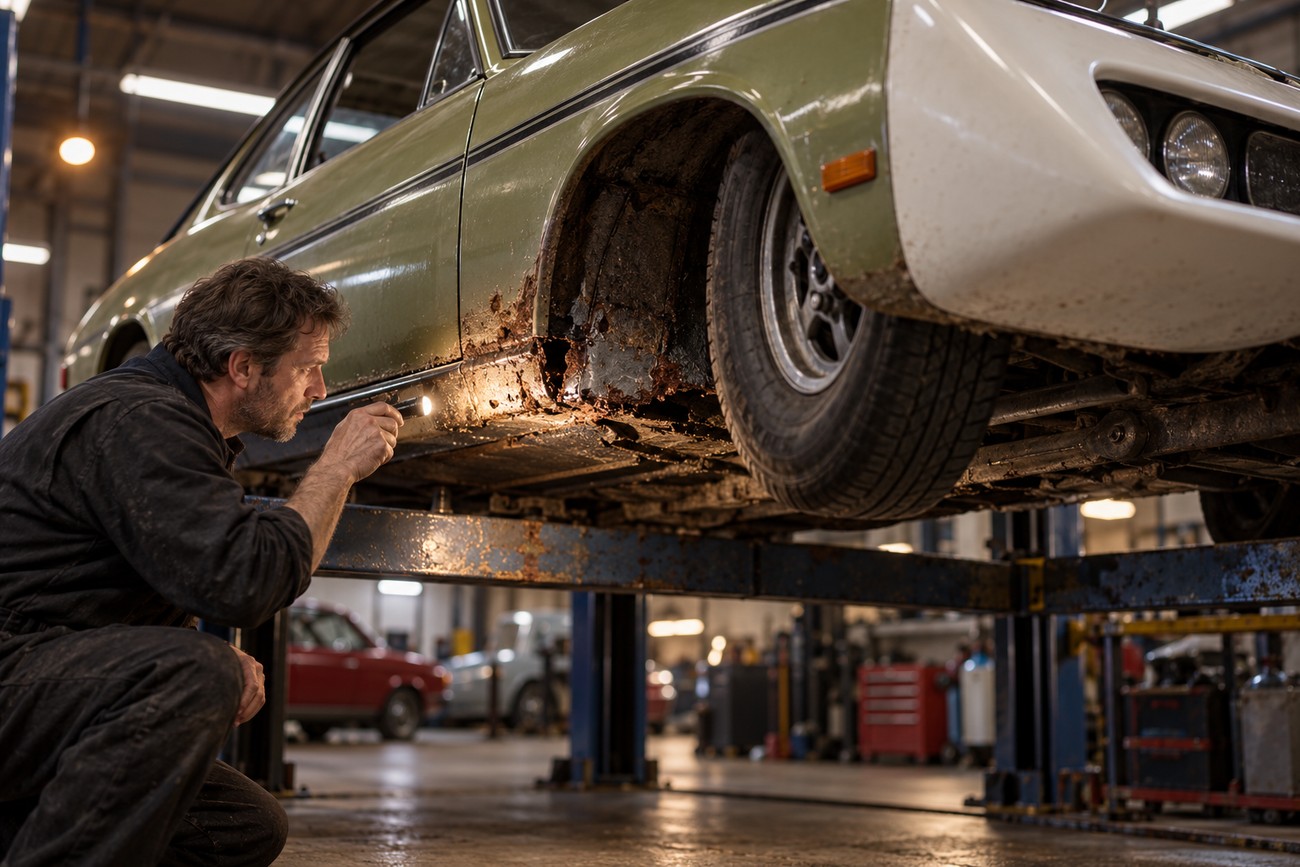
Inspect the steel shell before being persuaded by the fiberglass nose or paint. Floors, sills, and structural mounting areas deserve close attention, including evidence of earlier repairs underneath the car. Corrosion in these places can turn a presentable coupé into a substantial metalwork project.
The front panel creates a different bill. Fiberglass damage may demand careful repair and fitting, and scarce original HP pieces cannot be treated like readily available service parts. Ask how cracks, mountings, and gaps were addressed during a restoration; polished paint offers little evidence of the work below it.
After storage, Stromberg carburetors may need careful setup to restore reliable starting and a steady idle. The five-speed ZF deserves a thorough assessment on the road, because its specific repair parts and specialist work may be harder to source than those for a more common Vauxhall gearbox. These are inspection priorities, not a claim that either system fails more often than another.
Related Viva HC and Firenza components can sometimes help keep a car running, but apparent fit does not guarantee the correct HP specification. Check part numbers and details before ordering or fitting substitutes, especially where a future buyer will expect original equipment. Rarity alone does not secure appreciation: structural condition, completeness, and the quality of previous work remain decisive.
Frequently asked questions
The Firenza HP’s small production run makes broad claims about value and originality particularly risky. Comparable evidence and a traceable history are more useful than the asking price of an unrelated or heavily modified car.
How much is a Vauxhall Firenza Droopsnoot worth?
Judge value against documented completed sales where available, rather than advertised prices, which show what sellers hope to receive. Adjust those comparisons for verified provenance, corrosion and structural repairs, completeness, and the condition and quality of HP-specific parts. A convincing nose on a poorly documented shell should not be valued on the same basis as a well-evidenced factory car.
How many Vauxhall Firenzas were made?
Production of the factory Firenza HP ended after 204 cars built during 1973–1975. That number does not cover ordinary Firenzas or every coupé in the related family. An advertisement using “one of 204” should therefore be making a supportable claim of factory HP identity, rather than referring only to the car’s appearance.
What paperwork helps verify a claimed factory Firenza HP?
Useful evidence includes period registration records, consistent vehicle identity records, dated photographs, restoration invoices, and any available corroboration from marque records. Look for a continuous account linking the present shell to its earlier identity and explaining changes to the engine, gearbox, or nose. Paperwork strengthens a physical inspection; an invoice describing a part as “original” does not, by itself, prove where that part began life.







