
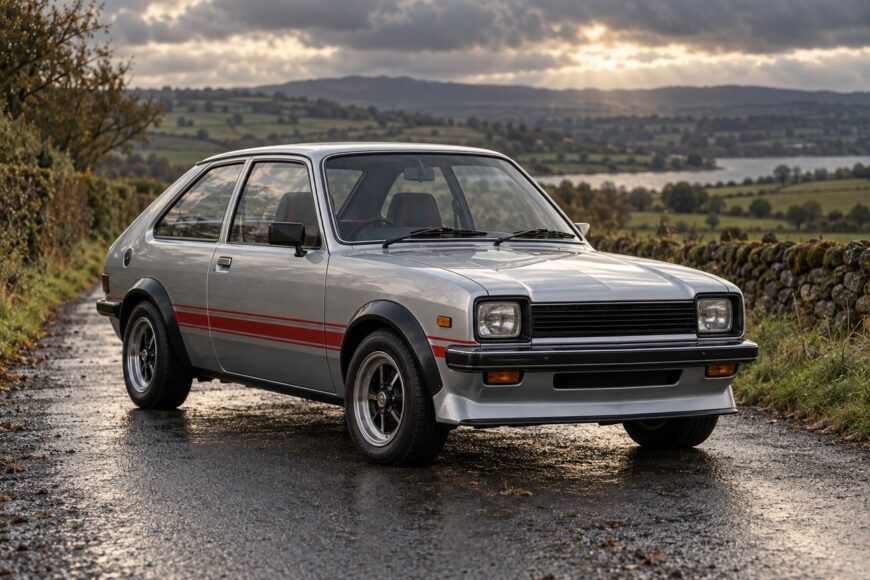
The Vauxhall Chevette HS has the ingredients that make a compact British rally hatch so appealing: rear-wheel drive, a rev-happy four-cylinder engine, a five-speed gearbox, and a competition career that gave the small Vauxhall genuine credibility. It feels like a car developed for drivers rather than shaped by a marketing department.
Its reputation also creates risks for buyers. A road-going HS was commonly quoted at 135 bhp, not the around 240 bhp associated with a prepared Group 4 rally engine. An impressive body kit can conceal rust, old repairs, or an uncertain identity, so the engineering and homologation records matter as much as the badges.
- How the Chevette HS became a homologation special
- What the road-going HS was actually like
- Road HS and Group 4 rally car: which figures belong to which?
- The rally record behind the reputation
- Authenticity is more than an HS badge
- Where an inspection can go wrong
- The real cost of keeping an HS on the road
- Frequently asked questions
- How much is a Vauxhall Chevette worth?
- How should an HS be stored to limit corrosion?
- How many Chevette HSR were made?
- How much horsepower did a Chevette have?
How the Chevette HS became a homologation special
The HS occupied a special place in the Chevette range because it was built to make the small rear-wheel-drive hatch competitive in international rallying. The FIA identifies the model as the Chevette HS 2300, rather than simply any Chevette carrying HS lettering. Its Group 4 homologation was No. 649, dated 2 November 1976, with the FIA record ending 1 January 1982.
Group 4 rules required at least 400 production cars before the competition specification could be accepted. Some sources report that 400 HS cars were built, while others suggest the actual total was nearer 300. That disagreement matters because the requirement is often repeated as though it were a confirmed production figure. It was a homologation threshold, not proof that every surviving or advertised car came from a verified batch of 400.
The FIA-listed car used rear-wheel drive and a 2,279 cc four-cylinder engine. That layout gave the HS a mechanical character that separated it from an ordinary economy hatch: the front wheels steered, while the rear wheels delivered power. The result was a compact car with a useful balance for loose surfaces and fast road sections.
For a collector, the homologation story is more than background history. It explains why the car has a 16-valve engine, special transmission, stronger running gear, and a competition identity that cannot be established by an HS badge alone. The shell, drivetrain, paperwork, and ownership history must be considered together.
What the road-going HS was actually like
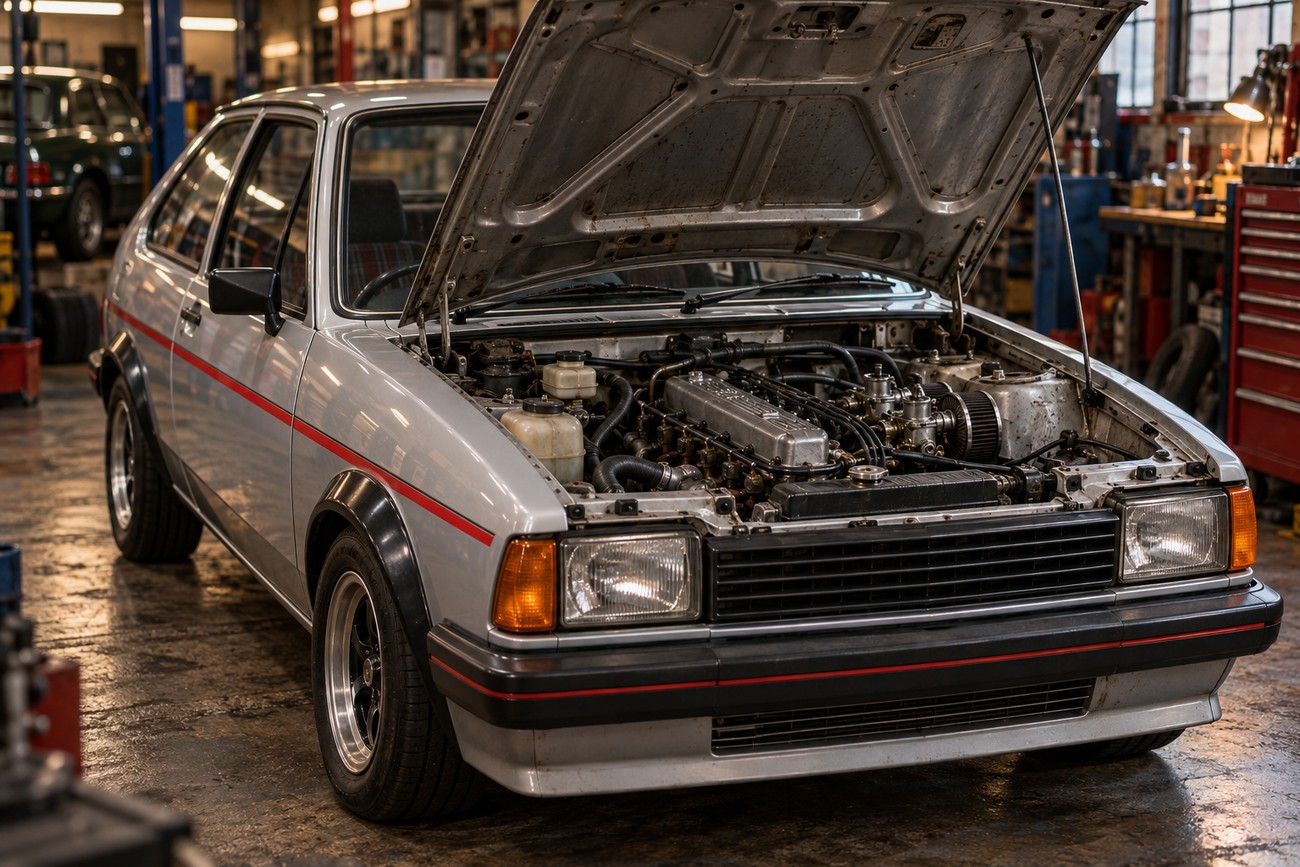
The road HS used a 2,279 cc slant-four with a 16-valve cylinder head. It was paired with a five-speed Getrag manual gearbox, while the brakes and suspension were upgraded to suit the extra performance. Those changes made the car feel considerably more purposeful than a standard Chevette, particularly when the road became narrow, uneven, or winding.
Commonly quoted road-car figures are 135 bhp and 134 lb-ft, with 0–62 mph in 8.8 seconds and a top speed of 117 mph. These are period or reference figures, not guarantees for a surviving car. Carburetor condition, ignition setup, compression, and exhaust changes can all alter what a particular HS delivers today; speedometer accuracy can affect how its performance is measured.
Reference fuel-consumption figures are approximately 18–25 mpg. That range reflects the nature of the car: it was a performance homologation model with a relatively large engine for its compact body, rather than an economical commuter. A worn or badly tuned example may also consume more fuel while producing less performance.
The Getrag is generally regarded as robust, but it is not immune to age or neglect. Its condition becomes part of the driving experience: a precise, quiet shift reinforces the HS’s sporting character, whereas noise, difficult changes, or weak synchronizers can turn a promising purchase into a transmission project. The engine is similarly dependent on proper cooling, carburetor adjustment, and specialist servicing.
Road HS and Group 4 rally car: which figures belong to which?
The following comparison keeps the road specification separate from the competition figures that are often borrowed by sales descriptions.
| Area | Road-going Chevette HS | Prepared Group 4 rally HS |
|---|---|---|
| Purpose | Road use and homologation production | Competition use under Group 4 preparation |
| Engine | 2,279 cc slant-four with a 16-valve head | Competition-developed version of the four-cylinder engine |
| Carburetion | Road specification, subject to the equipment fitted to the surviving car | Twin 48 mm Dell’Orto carburetors and competition modifications |
| Quoted power | Commonly quoted at 135 bhp | Around 240 bhp |
| Meaning of the figure | A reference figure for the standard road HS | A figure for a prepared rally engine, not a standard road car |
The difference is too large to dismiss as a minor tuning variation. A prepared rally engine operated with competition settings and supporting modifications, while the road car had to start, idle, run in traffic, and cover ordinary distances. Quoting around 240 bhp for an unmodified HS is therefore a specification error, even if the car has rally-style wheels, arches, or decals.
HSR refers to a later, more rally-oriented evolution. It is not another name for every HS, and its identity should be established from the car’s records and specification rather than from a generic description in an advertisement.
The rally record behind the reputation
The HS’s competition reputation came from combining a suitable layout with a powertrain that could be developed for serious rally work. Rear-wheel drive allowed engineers and drivers to exploit traction and rotation on loose surfaces, while the homologated road car provided the necessary production basis for the competition program.
The Chevette won the British Open Rally Championship drivers’ title in 1979 and the manufacturers’ title in 1981. Those results belong to the Chevette’s competition program, not automatically to an unmodified road HS. A road car can be historically connected to that success without carrying the same engine tune, suspension settings, or structural preparation as an event car.
A prepared Group 4 engine could produce around 240 bhp, compared with the commonly quoted 135 bhp for the road HS. That output placed much greater demands on the gearbox, rear axle, torque-tube rear suspension, and their mountings. A competition survivor may therefore have more interesting history while also carrying substantially more mechanical risk.
Rally use changes the way parts should be judged. A repaired mounting, replaced torque tube, or changed axle is not automatically evidence of poor ownership; it may reflect hard use and sensible replacement. The important questions are whether the work is documented, whether it was done correctly, and whether the car is being represented as a road HS, a competition replica, or a genuine event car.
Authenticity is more than an HS badge
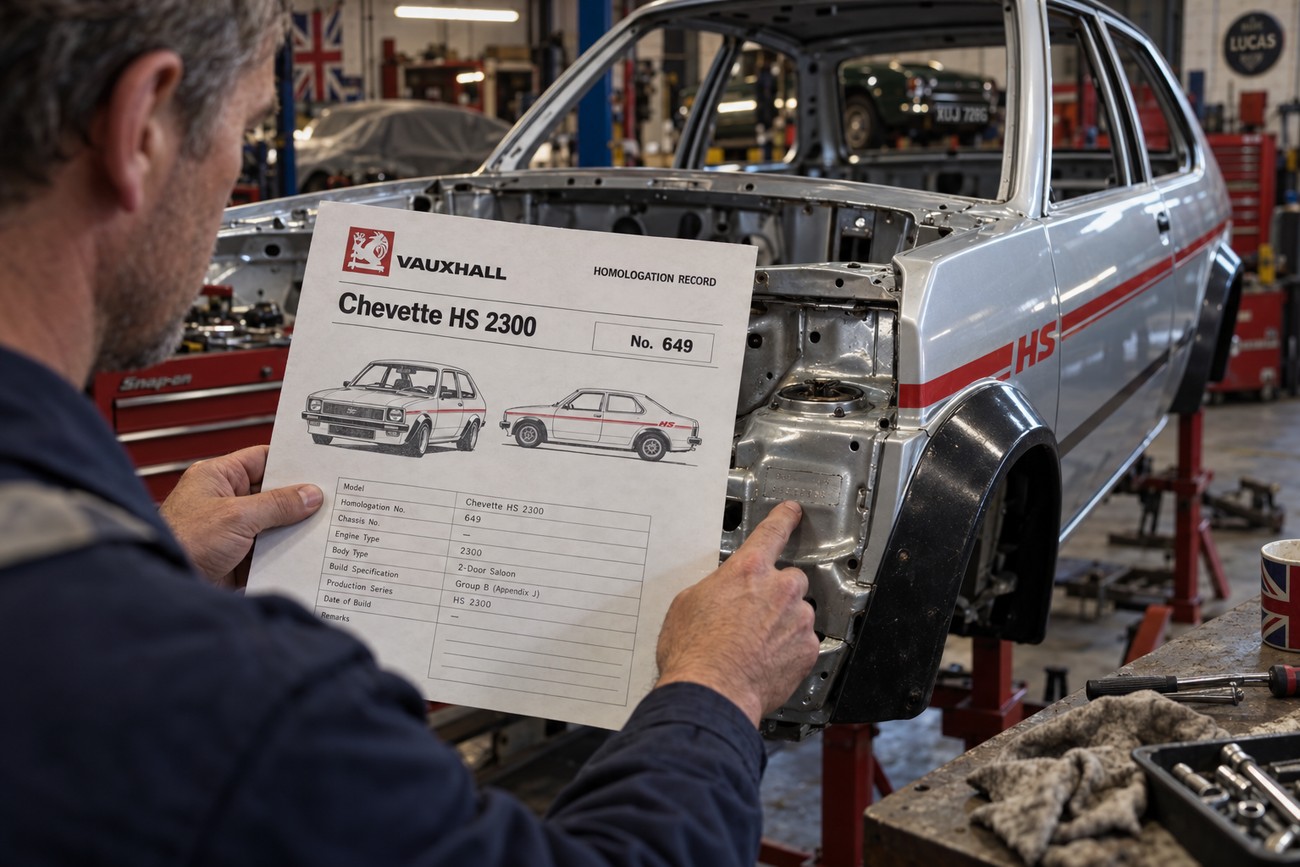
The starting point is the identity of the shell. Check the VIN and available factory or registration records, then compare the car with the documented Chevette HS 2300 specification associated with FIA homologation No. 649. The FIA record identifies a specific model and specification; it does not authenticate every Chevette with HS badges or wider arches.
Next, inspect the major mechanical components as a group. The 16-valve cylinder head, engine number, carburetors, five-speed Getrag gearbox, rear axle, suspension components, and brake arrangement should be recorded rather than described loosely as “original.” A replacement part may be perfectly acceptable for a usable road car, but it changes the way the car should be valued and described.
Ownership history is especially important where rally provenance is claimed. Event photographs, competition logbooks, invoices, registration records, and a continuous chain of custody carry more weight than period-looking paint or a set of familiar decals. A car can have genuine sporting preparation without being the particular works or event car suggested by a sales listing.
The disputed production total deserves the same caution. The Group 4 minimum was 400 cars, while sources differ on whether actual HS production reached 400 or was nearer 300. That uncertainty cannot be resolved by counting badges or inferring originality from the number of cars seen at shows.
Where an inspection can go wrong
Begin with the shell, and inspect it as a structure rather than as a collection of visible panels. Rust around old repairs is a principal concern, particularly where moisture has been trapped or corrosion protection was applied poorly. Look beneath the body kit, inside cavities, along the underside, and around areas where previous welding may have covered weakened steel.
Plastic or fiberglass arch extensions can look sound while concealing cracks, corrosion, or evidence of an earlier impact. Examine their fixings and the metal behind them before judging the quality of the paint. Pay particular attention to suspension mounting points, floor sections, inner arches, and any area where the shell carries drivetrain or axle loads.
Inspect the steel and previous welds beneath apparently intact arch extensions before judging the visible paint or body kit. The outer extension can remain presentable while the structure behind it has deteriorated or been repaired more than once.
The rear suspension deserves separate attention on cars with competition history. Heavy rally use could damage the torque-tube rear suspension and rear-axle mountings, although a worn or repaired component does not by itself prove a particular failure. Look for distortion, cracking, poor weld quality, and repairs that have altered alignment or load paths.
Test the Getrag after the car has warmed fully. Listen for transmission noise, check every gear under light and moderate load, and watch for difficult changes or weak synchronizers. A gearbox that behaves acceptably when cold may reveal wear once its oil and internal parts reach operating temperature.
The engine inspection should cover cooling history, oil pressure, starting behavior, carburetor synchronization, and evidence of overheating. A strong slant-four reputation does not make a neglected 16-valve engine inexpensive to restore. Road use and rally loads produce different wear patterns, so the inspection should distinguish ordinary age-related deterioration from damage associated with sustained competition.
The real cost of keeping an HS on the road
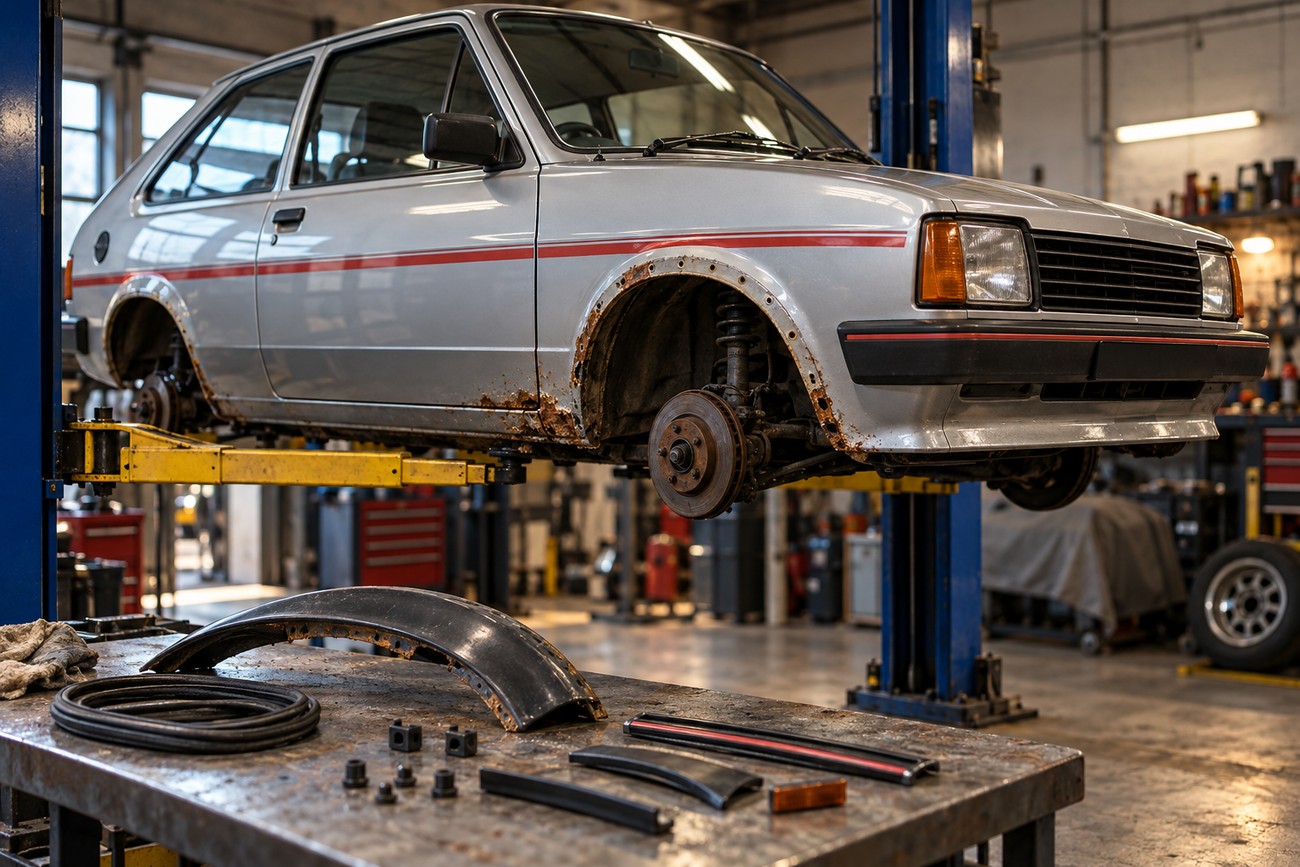
A sound, correctly identified shell can be more valuable to a restoration project than an engine advertised with an impressive power figure. Original body panels, plastic or fiberglass kit pieces, glass, seals, interior trim, and HS-specific parts can be difficult to source. Missing small items may delay a project as effectively as a major mechanical fault.
The Getrag is regarded as robust, but repairs can be costly when bearings, synchronizes, or other internal parts require specialist work. The same applies to the 16-valve engine. Its design is capable of strong performance, yet cylinder-head condition, carburetor tuning, cooling, and correct setup require knowledge that is less common than general classic-car servicing.
Completeness should therefore be recorded before any purchase decision. A car with a correct but tired engine may be a better restoration prospect than one with a modified high-output unit and missing original trim. Replacement engines, heads, carburetors, gearboxes, and suspension components do not automatically make an HS worthless, but they must be disclosed and priced as part of the specification.
Modern carburetor or fueling changes can improve starting, drivability, and ease of adjustment. They may also reduce historical authenticity, particularly if the car is being presented as an original road HS or as an event-related competition car. Decide whether the priority is reliable road use, faithful restoration, or documented competition specification before commissioning modifications.
Frequently asked questions
The questions below cover valuation, storage, HSR identity, and power figures. For pricing, documentation and shell condition matter more than badges. For specifications, road and competition cars need to be considered separately.
How much is a Vauxhall Chevette worth?
Assess the asking price against comparable cars by separating ordinary Chevettes, documented HS cars, modified examples, and proven competition cars. The badge and body kit should be treated as a starting point; VIN records, drivetrain specification, shell condition, ownership history, and supporting competition documents determine which category the car genuinely belongs to.
Compare completed sales where possible rather than relying on optimistic advertisements. A complete, structurally sound HS with credible documentation may justify a different price from a rusty project, a replica, or a modified car with uncertain identity, even when the latter looks more dramatic.
How should an HS be stored to limit corrosion?
Keep the car dry, ventilated, and protected from trapped moisture. Address water inside the cabin, trunk, cavities, or beneath body-kit extensions promptly, and avoid storing the car in conditions that allow condensation to remain against concealed steel.
Check the underside, inner arches, suspension mountings, seams, and repaired areas periodically. A clean, dry storage space helps, but it does not replace inspection of hidden steel or renewal of damaged corrosion protection.
How many Chevette HSR were made?
A securely verified HSR production total is not established by the evidence used here. HSR was a later, more rally-oriented evolution, and it should not be confused with the original HS or with a road car carrying HSR-style parts.
Any claimed HSR identity should therefore be supported by period records, chassis documentation, specification details, and a credible ownership history rather than by an advertised production number alone.
How much horsepower did a Chevette have?
It depends on the version. The road-going Chevette HS is commonly quoted at 135 bhp, while a prepared Group 4 rally engine could produce around 240 bhp with twin 48 mm Dell’Orto carburetors and competition modifications.
Those figures should not be applied to every Chevette or exchanged between road and rally specifications. An ordinary Chevette, a road HS, an HSR, and a fully prepared competition car are different categories.







