
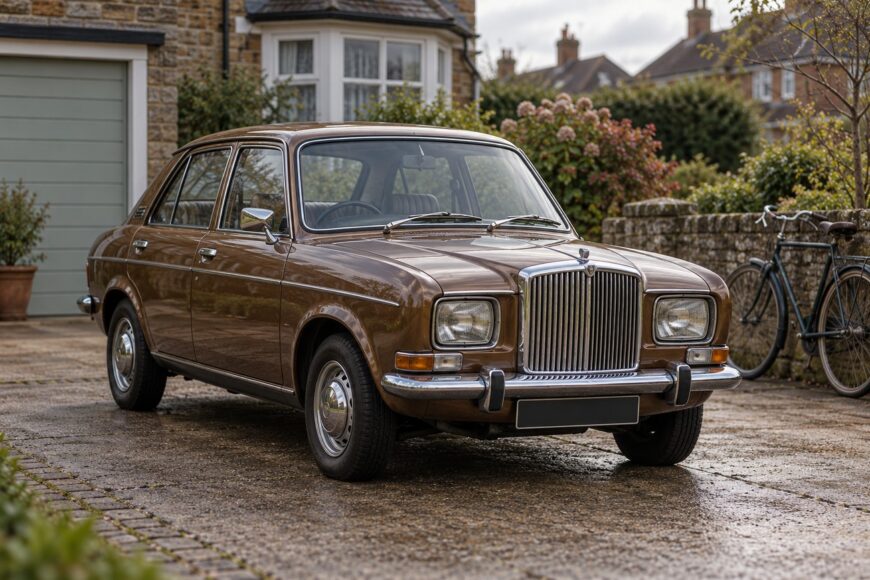
A modest British family-car platform wearing a large formal grille and expensive-looking trim is an awkwardly appealing combination. The Vanden Plas 1500 has the stance of a small diplomatic saloon, yet its engineering remains closely related to the Austin Allegro beneath the leather and polished wood.
That makes it more than an Allegro with a badge, but less than a separate luxury car in the traditional coachbuilt sense. Its attraction lies in the contrast: rarity, a quiet Hydragas ride, and a properly period cabin on one side; water leaks, hidden rust, specialist suspension work, and scarce trim on the other. A good example can be charming. A neglected one can make the grille the cheapest part of the restoration.
- What the Vanden Plas 1500 Really Was
- Vanden Plas 1500 Mk I, Mk II, and Mk III: What Changed
- The Posh Cabin and the Hydragas Ride
- Water Leaks, Rust, and Other Expensive Reality Checks
- How to Inspect One Before Buying
- A Luxury Allegro or a Classic in Its Own Right?
- Frequently Asked Questions
- What does Vanden Plas stand for?
- What happened to Vanden Plas?
- How do you pronounce Vanden Plas?
- Why was the later car called Vanden Plas 1.5?
What the Vanden Plas 1500 Really Was
The Vanden Plas 1500 was introduced on September 17, 1974, as a luxury version based on the Allegro platform and mechanical components. It was officially presented as a Vanden Plas model rather than being called an Allegro, which explains why the name has acquired a distinct identity among British Leyland products.
The underlying structure and mechanical architecture remained Allegro-based, however. This was a carefully equipped derivative, not a new chassis designed for limousine duty. The front end did receive a substantial visual alteration: a separate bonnet was required to carry the large, formal grille that gave the car its upright appearance.
That grille changed the car’s character more effectively than its size. The ordinary Allegro’s compact family-car proportions were still present, but the brightwork, taller-looking nose, and Vanden Plas details suggested something more senior in the company fleet. The result was faintly theatrical without pretending to be a Rolls-Royce.
Inside, the same formula continued. Better materials, extra equipment, and additional insulation gave the car a more comfortable role on longer journeys, while the modest underlying platform kept it manageable in town. Buyers were paying for presentation and refinement within an existing family-car package, not for an entirely independent luxury automobile.
Vanden Plas 1500 Mk I, Mk II, and Mk III: What Changed
The name covers several mechanical specifications, so a “1500” badge should never be treated as a complete description. The versions differed in carburation, power, transmission, naming, and, in later automatic form, engine displacement.
| Version | Engine and carburation | Power | Transmission and naming | Production |
|---|---|---|---|---|
| Mk I | 1,485 cc overhead-camshaft E-series engine; one SU HS6 carburetor | 68 bhp at 5,500 rpm | Five-speed manual or four-speed AP automatic | 3,640 cars |
| Mk II | 1,485 cc E-series; manual cars used twin SU H1F4 carburetors | Approximately 77 bhp at 5,750 rpm for the manual | Specification varied by transmission | 7,318 cars |
| Mk III | Manual specification retained the later 1.5 identity; automatic cars used a 1,748 cc engine | Late automatic: 72 bhp | Manual cars were known as Vanden Plas 1.5; automatic and manual details must be verified individually | 752 manual cars and 232 automatic cars |
The Posh Cabin and the Hydragas Ride
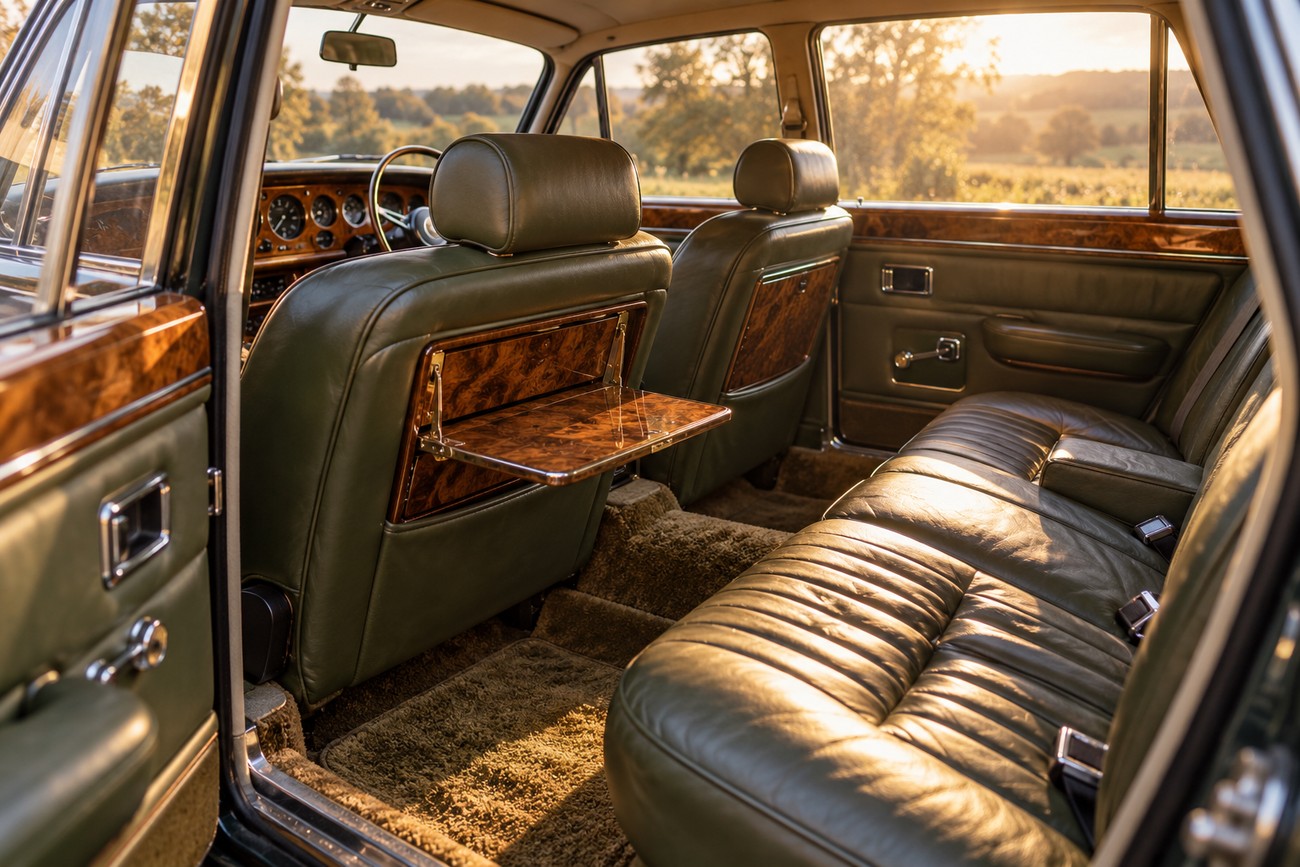
The cabin supplied the strongest argument for the Vanden Plas treatment. Leather seats, a wood dashboard, Wilton carpet, rear picnic tables, and additional sound insulation created a setting that felt more deliberate than the hard-wearing interior of an ordinary family car.
The picnic tables were especially effective at establishing the period idea of compact executive travel. They added little practical value for most modern journeys, but they made the rear compartment feel considered. The extra insulation also mattered: it softened the mechanical background and helped the car deliver the relaxed character its appearance promised.
Ride quality came from independent Hydragas suspension. Hydragas is neither conventional coil-spring suspension nor pneumatic air suspension; it uses pressurized fluid and gas units as part of the suspension system. A correctly maintained car can feel supple and composed, while a poorly serviced one may sit incorrectly and lose much of its appeal.
The expensive-looking materials should therefore be read as equipment, not as proof of flawless construction. Period British assembly could be inconsistent, and age has had decades to expose weak seals, tired fittings, and damp trapped beneath the carpet. The best cabin is a pleasure, but it cannot compensate for structural or suspension neglect.
Water Leaks, Rust, and Other Expensive Reality Checks
Persistent water leaks are among the most important ownership complaints. Water can enter around seals and body joints, then soak the carpet while the visible cabin still looks respectable. A dry seat and attractive leather tell you little about what lies beneath the floor coverings.
Wet carpet is more than a cosmetic irritation. It can require replacement, conceal corrosion, and leave the car smelling damp even after the original leak has been addressed. Inspect the carpet edges, lift the coverings, and look for staining or softness rather than accepting a recently dried interior as evidence of a sound shell.
Rust may also hide in the floors, sills, and drainage channels. Weak corrosion protection means that a clean exterior can coexist with expensive repairs in places that are difficult to photograph and inconvenient to weld. Drainage areas deserve particular attention because blocked or poorly sealed routes can connect the water-ingress problem with the structural one.
Hydragas adds another specialist concern. The system requires proper diagnosis and recharging, and incorrect servicing can affect both ride height and comfort. A car that looks low at one end, or sits with an obviously uneven stance, deserves investigation before any discussion of its trim or asking price.
A road test must cover the controls as well as the engine. A reported failure involved the gear lever disconnecting while reverse was selected, an unwelcome reminder that an old car can fail at the interface between driver and transmission even when the engine starts readily. Select every gear, operate the clutch and brakes, and pay attention to vague or abnormal movement.
How to Inspect One Before Buying
Begin with identity. Compare the VIN, identification plates, paperwork, and visible details with the claimed Mk I, Mk II, or Mk III specification. Confirm the engine, carburetors, transmission, and designation rather than assuming that rarity proves originality. A 1.5-litre badge is a clue, not a certificate.
Next, measure the ride height on level ground before the test drive. Inspect the Hydragas units and ask how the system was serviced or recharged. The car should then be driven over a representative route, because an attractive stance can conceal a suspension problem that becomes obvious only through poor compliance, uneven movement, or an unsettled ride.
Ride height can reveal incorrectly serviced Hydragas before engine noise gives you a useful warning. Check the stance first, then judge the comfort and handling on the road.
Lift the carpets and inspect the floor from above and below. Examine the sills, drainage channels, body joints, and areas around seals for corrosion, repairs, dampness, or fresh underseal used to disguise an older problem. A clean engine bay is welcome, but it should never outrank the condition of the shell.
Finally, test every gear, control, switch, light, and trim fitting. Look carefully at the leather, wood, Wilton carpet, picnic tables, grille, bonnet, and exterior brightwork, while remembering that Vanden Plas-specific fittings are harder to source than ordinary Allegro components. Good upholstery can be replaced more easily than badly corroded floors or missing original exterior parts.
A Luxury Allegro or a Classic in Its Own Right?
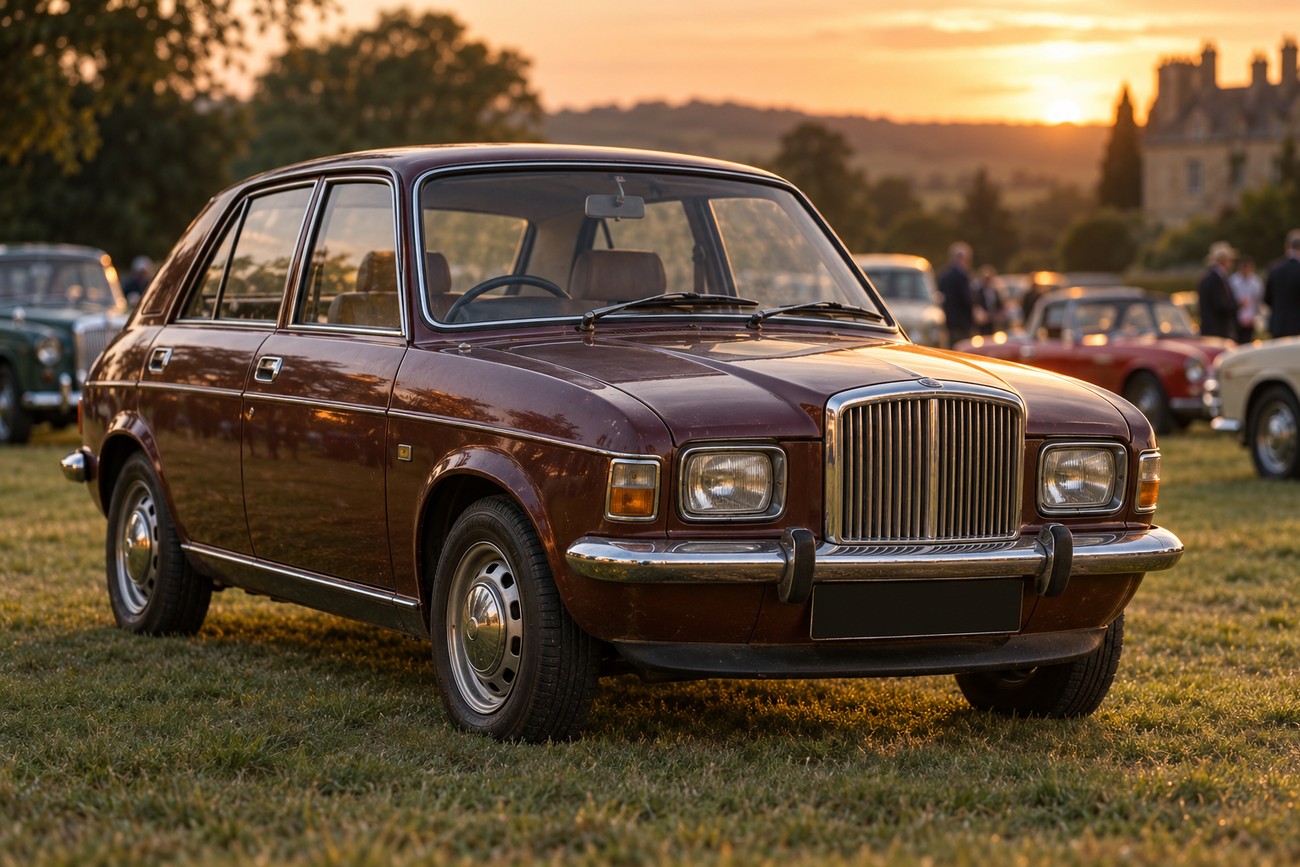
“Just an Allegro” is too dismissive. The Vanden Plas had a separate bonnet, a large grille, distinctive trim, better equipment, and extra sound insulation, all of which changed the ownership experience and gave the car a recognizable identity.
Calling it a true high-class limousine goes too far in the opposite direction. The Allegro-based body and mechanical architecture remained fundamental, and the car’s compact dimensions and family-car origins were never completely disguised by the brightwork. Its charm depends partly on that mismatch.
The Mk II is the pragmatic version to understand: with 7,318 cars, it was the most numerous of the listed versions and may offer a broader choice of surviving examples. The later Mk III is scarcer, with production ending in August 1980 according to club-style specification, although broad advertising sometimes gives the model range as 1974–1980 without separating the individual versions.
Choose condition over badge value. A sound, correctly identified car with functioning Hydragas, a dry shell, and complete trim can be a rewarding period oddity. A rare car with a polished grille, damp carpet, and tired suspension is simply a more expensive way to discover familiar old-car problems.
Frequently Asked Questions
The Vanden Plas 1500 is easiest to understand when its name, production history, and changing specifications are kept separate. These answers address the points most likely to cause confusion when reading advertisements or inspecting a surviving car.
What does Vanden Plas stand for?
Vanden Plas refers to a coachbuilding and luxury-trim identity, not a separate chassis, engine family, or wholly independent car design. In this case, the model used an Allegro-based body and mechanical foundation, then added distinctive exterior treatment, improved equipment, and more elaborate interior materials.
That distinction matters when sourcing parts. Ordinary mechanical and body components may overlap with the Allegro, while the grille, bonnet, trim, fittings, and cabin details can be specific to the Vanden Plas and considerably harder to replace.
What happened to Vanden Plas?
The Vanden Plas factory at Kingsbury closed in 1979, and later assembly moved to MG Abingdon. This production transition makes late cars worth checking carefully against their paperwork, identification plates, and specification rather than relying on an auction description.
The change also helps explain why broad production dates can be misleading. The model range is often described as running from 1974 to 1980, while club-style specification places the end of Mk III production in August 1980.
How do you pronounce Vanden Plas?
An understandable English approximation is “VAN-den plas.” The second word is pronounced like “plass,” rather than being stretched into a French-sounding name.
Pronunciation will not improve the Hydragas, of course, but it does make conversation about this unusually named British model less awkward. The important buying issue remains the car’s condition and identity, not the accent used to describe it.
Why was the later car called Vanden Plas 1.5?
The later manual version was designated Vanden Plas 1.5, reflecting the familiar 1,485 cc engine identity more directly than the earlier 1500 name. The change should not be used to assume that every late automatic retained that engine.
Late automatic versions used a 1,748 cc engine producing 72 bhp. A buyer should therefore confirm the engine and transmission from the car and its documents, rather than treating “1500” or “1.5” as a complete description of every surviving example.







