
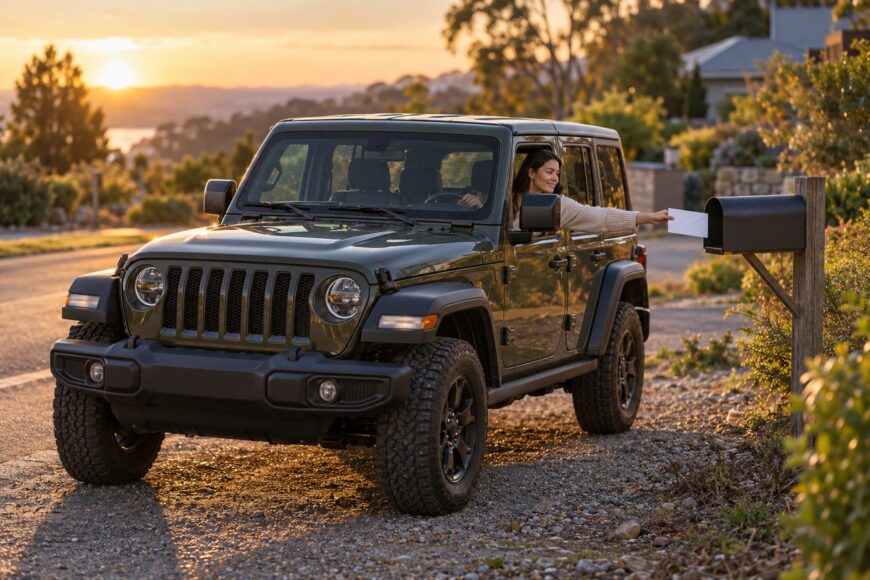
Reaching roadside mailboxes from the right seat is the main appeal of a right-hand drive Jeep. The driver sits beside the delivery side of the road, which can reduce repeated leaning and awkward reaching on routes with curbside or roadside boxes. Safe positioning, seat-belt use, and enough clearance from traffic and obstacles still matter.
The harder decision is whether a Jeep’s ground clearance and cargo room justify its fuel use, firm ride, and heavier stop-and-go wear on your route. A rough shoulder, snow, or deep drainage edge may favor a Jeep. Narrow turnarounds, frequent stops, and long paved stretches may favor a smaller right-hand drive vehicle. Evaluate the route before choosing the vehicle.
- Where a right-hand drive Jeep earns its place on a mail route
- Confirm route approval, insurance, and warranty terms first
- Two-door Wrangler, larger Jeep, or smaller RHD car: match the route
- Set up the cab for repeated stops without creating new hazards
- The daily costs that can outweigh the curbside convenience
- Inspect a used RHD Jeep for route wear, not just mileage
- Keep a delivery Jeep serviceable through stop-and-go work
- Frequently asked questions
- Why do rural mail carriers use right-hand-drive vehicles?
- What should I arrange if my delivery Jeep is out of service?
- How can I test a Jeep’s mail-carrying space before buying?
Where a right-hand drive Jeep earns its place on a mail route
Right-hand drive places the driver beside roadside mailboxes, which can make repeated deliveries more direct. You can approach the box, stop in a controlled position, and reach across a shorter distance than you would from the left seat. The layout does not remove the need to check traffic, use the parking brake when appropriate, and keep the vehicle properly positioned.
Ground clearance is useful where the shoulder is uneven, snow accumulates, or a mailbox sits beyond a shallow rut. A Jeep can handle some rough access points that would demand more caution in a low car. That advantage depends on the vehicle, tires, weather, and your ability to place the wheels accurately.
Size creates a competing cost. A Wrangler or larger Jeep may need more room to turn, and its suspension can feel firm over a long route. Routes with narrow driveways, frequent three-point turns, or closely spaced boxes may make the extra clearance less valuable than a shorter turning path.
Model differences matter. A two-door Wrangler, a four-door Jeep, and a Cherokee or Patriot can offer different sightlines, cargo layouts, turning behavior, and entry heights. Test the vehicle on representative parts of the route if possible, and remember that right-hand drive helps with access only when the vehicle is stopped safely and precisely.
Confirm route approval, insurance, and warranty terms first
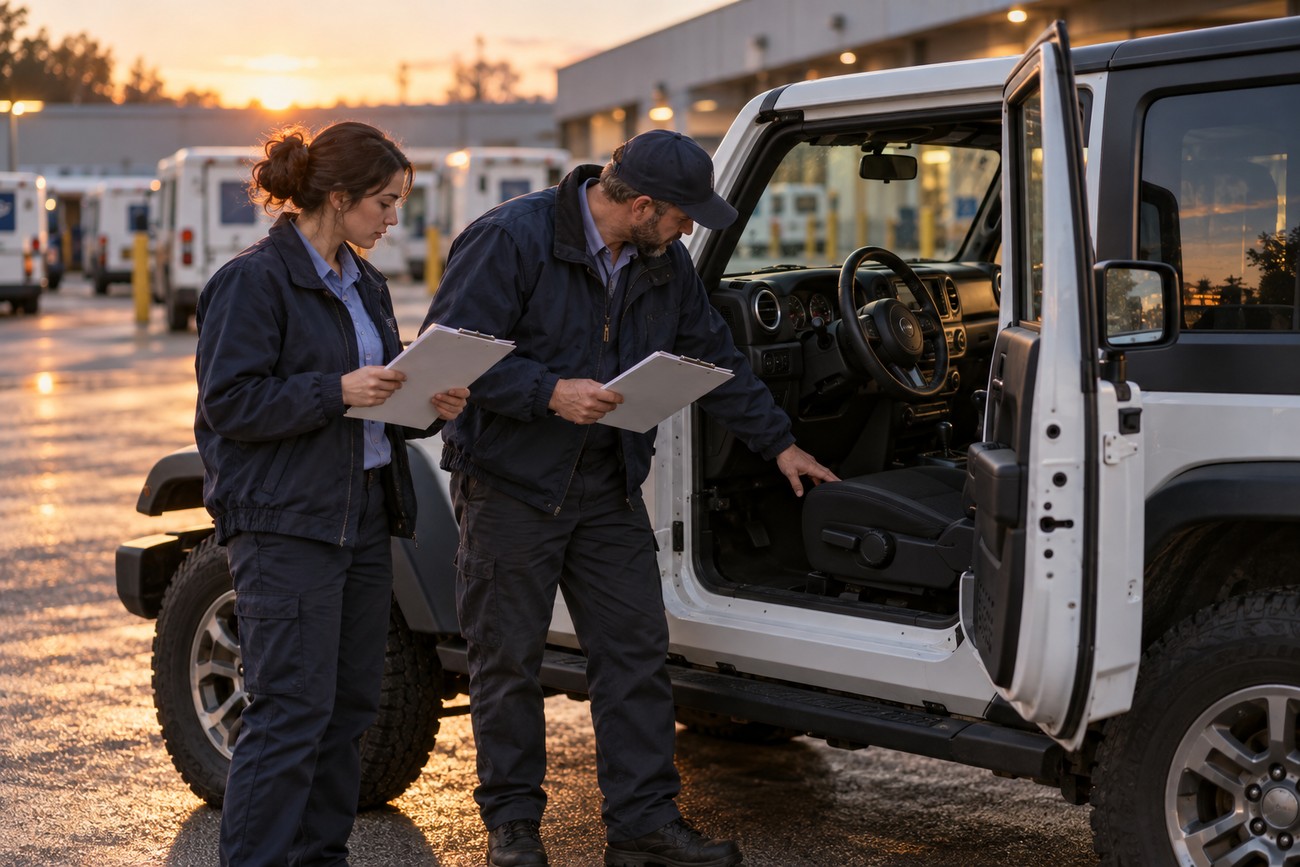
USPS does not endorse or certify a specific Jeep model for personal-vehicle delivery. Permission to use a personally owned vehicle is separate from approval of a particular model, trim, or modification. Confirm the requirements of the individual assignment with local postal management before buying or committing to a vehicle.
Ask what vehicle condition, inspection, documentation, and equipment the assignment requires. Requirements can differ by route and local arrangements, so a Jeep used successfully by one carrier may not suit another assignment. Keep any relevant instructions or confirmations with your vehicle records.
Tell the insurer that the vehicle will be used for postal delivery. Postal delivery may require different insurance terms or a higher premium; confirm coverage with the insurer. Obtain the applicable terms in writing, including how repeated stops, personal use, and commercial or delivery activity are treated.
A dealer’s “USPS package” claim does not establish USPS approval. Such wording may refer to equipment or a delivery-oriented configuration rather than official postal certification. Verify what the package includes, and check warranty exclusions for delivery use in writing before relying on the warranty.
Do not assume that a standard personal-auto policy or ordinary factory warranty will cover every route-related problem. The assignment, insurer, dealer, manufacturer, and vehicle history each introduce separate conditions. Written answers are more useful than a sales description if a claim or repair dispute arises.
Two-door Wrangler, larger Jeep, or smaller RHD car: match the route
The right choice depends on the mail load, road surface, turning space, and physical demands of repeated entry and exit. Availability and specifications depend on model year and market.
| Vehicle type | Mail space | Tight-turn suitability | Rough-shoulder clearance | Operating-cost trade-offs | Ease of entry |
|---|---|---|---|---|---|
| Two-door Wrangler | Can be too cramped for sorting and carrying trays or parcels; test the actual load. | Shorter body can help in some spaces, but turning behavior and visibility still require a route test. | Useful where clearance and traction are needed. | Fuel and maintenance may be higher than with a lighter RHD car. | High step-in and repeated climbing can strain knees and back. |
| Larger RHD Jeep configuration | Usually offers more usable room, depending on seats and interior layout. | More length and width can complicate narrow turnarounds and close mailbox approaches. | Can suit rough shoulders or snow when the tires and driving technique match the route. | May carry the highest fuel, tire, and maintenance burden of these options. | More cabin room may help movement, while ride height still increases the step. |
| Smaller RHD car | May require stricter sorting and parcel management. | Often easier to place and turn on confined roads. | Less forgiving of ruts, snow, and damaged shoulders. | May use less fuel and cost less to operate, depending on the vehicle and route. | Usually requires less climbing, but the exact seat height and door opening matter. |
A two-door Wrangler can look practical until the day’s trays and parcels are loaded. If letters must be moved around the cabin or parcels block the driver’s access, the short body becomes a daily inconvenience. Load the vehicle with your normal equipment before buying rather than judging cargo capacity from an empty showroom.
A larger Jeep can provide useful room and clearance, but extra volume does not automatically improve a route. The body may be harder to place beside boxes, and a longer turning path can add work at the same stops. A smaller RHD car may be the better financial and handling choice where the road surface is consistently paved.
Compare candidates using the route’s actual features: mailbox spacing, shoulder condition, snow, parcel volume, turnaround locations, and the number of times you must enter or leave the vehicle. A route that rewards clearance may punish size. A route that looks easy in dry weather may become a poor match after snow or shoulder damage.
Set up the cab for repeated stops without creating new hazards
Arrange letters and parcels so the next items are reachable without twisting across the cabin or searching behind the seat. Removable trays, bins, and organizers can make staging more consistent, but they must not interfere with restraints, controls, mirrors, or visibility. Keep heavier parcels low and secure them so they cannot become projectiles during braking.
Repeated entry, exit, and mailbox stops increase strain and can accelerate wear on seats, door hardware, locks, and windows. A high Jeep may be manageable during a short test drive yet become tiring after a full route. Pay attention to the step height, door opening, steering-wheel position, and the amount of twisting needed to retrieve mail.
Use road-oriented tires suited to the route and weather. Aggressive off-road tires can add noise, rolling resistance, and compromised paved-road behavior where most deliveries occur. Before purchase, conduct a parked trial with representative trays and parcels, the driver properly belted, doors closed, and mirrors unobstructed.
Seat or belt changes require particular caution. A slightly rotated working posture may feel easier on the back, but modifying a seat, belt, or mounting point can compromise restraint performance and vehicle safety. Keep any adjustment within the vehicle’s intended design and have questionable modifications assessed by a qualified professional.
The daily costs that can outweigh the curbside convenience
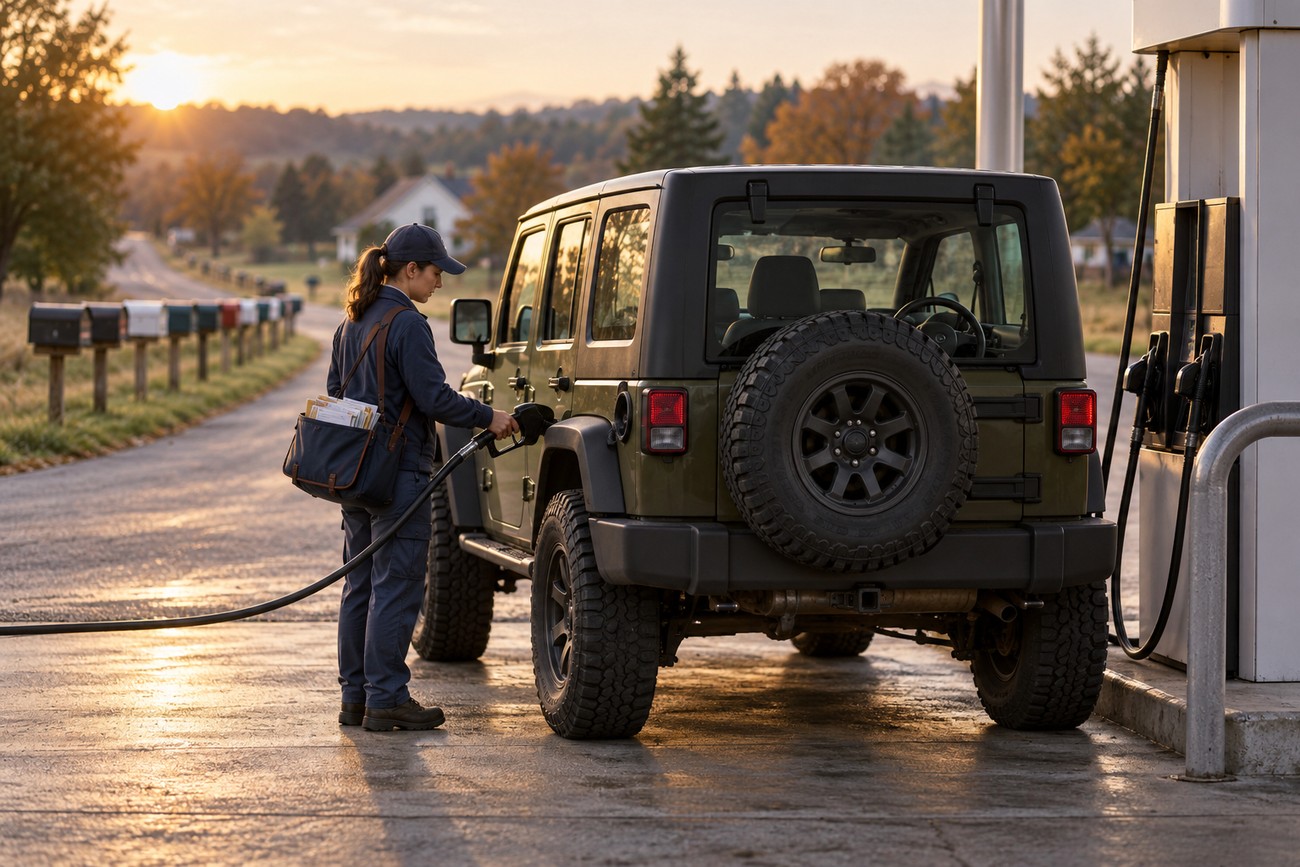
Slow, stop-and-go delivery can use more fuel than ordinary rural commuting, especially in a heavier Jeep. The vehicle repeatedly accelerates, idles, turns, and stops. Compare your route length, stop pattern, fuel use, and expected fuel price rather than relying on a dealer’s general economy claim.
Include the insurer’s written delivery-coverage terms and any premium increase in your cost comparison. Tire choice also changes the budget: a tire selected for appearance or off-road traction may increase noise, wear, and fuel use on mostly paved roads.
Maintenance can be more expensive when RHD-specific components are harder to source or fewer repair shops are willing to handle them. Brakes and drivetrain components face repeated low-speed work, while seats, hinges, locks, and window mechanisms experience unusually frequent use. A small failure can also disrupt the route if the needed part must be ordered.
Physical cost matters alongside the vehicle bill. A firm ride, cabin noise, and repeated climbing in and out can contribute to back, knee, and general fatigue. A Jeep may provide the clearance you need while leaving you less comfortable at the end of a long day.
Dealers may emphasize convenience or economy, while fuel and maintenance can make a Jeep costlier than a lighter RHD vehicle. Build a comparison from your actual route and repair estimates. The useful question is whether the Jeep’s clearance and cargo benefits solve problems that would otherwise cost more in time, damage, or physical effort.
Inspect a used RHD Jeep for route wear, not just mileage
Request service records and arrange an independent inspection before purchase. Ask the mechanic to focus on brakes, steering, suspension, transmission behavior, tires, and signs of uneven loading. A vehicle with modest mileage may still have spent much of its life in low-speed, stop-and-go delivery.
Look for evidence of repeated door and window use: loose hinges, worn seals, tired window mechanisms, damaged locks, and excessive play in handles. Inspect the driver’s seat for collapsed padding or unusual wear, and check whether the interior can accept your trays and parcels without blocking access.
Check that the transmission engages smoothly from a stop and during repeated low-speed maneuvers. Check braking feel, steering response, suspension noise, and the condition of underbody components exposed to rough shoulders or winter treatment. These observations are more relevant to delivery duty than a clean exterior or a low odometer reading.
Confirm that RHD-specific parts, glass, body panels, and electrical components are available through local suppliers or a shop willing to service the vehicle. Longer parts delays can turn an ordinary repair into missed work. Ask the seller directly about delivery use, and compare the answer with service records and physical wear.
Resale demand among other rural carriers can help an RHD Jeep find a buyer later, but it does not guarantee a particular return. Condition, route wear, model year, parts support, and local demand still determine value. Buy for the route you have rather than assuming the next carrier will overlook an unsuitable configuration.
Keep a delivery Jeep serviceable through stop-and-go work
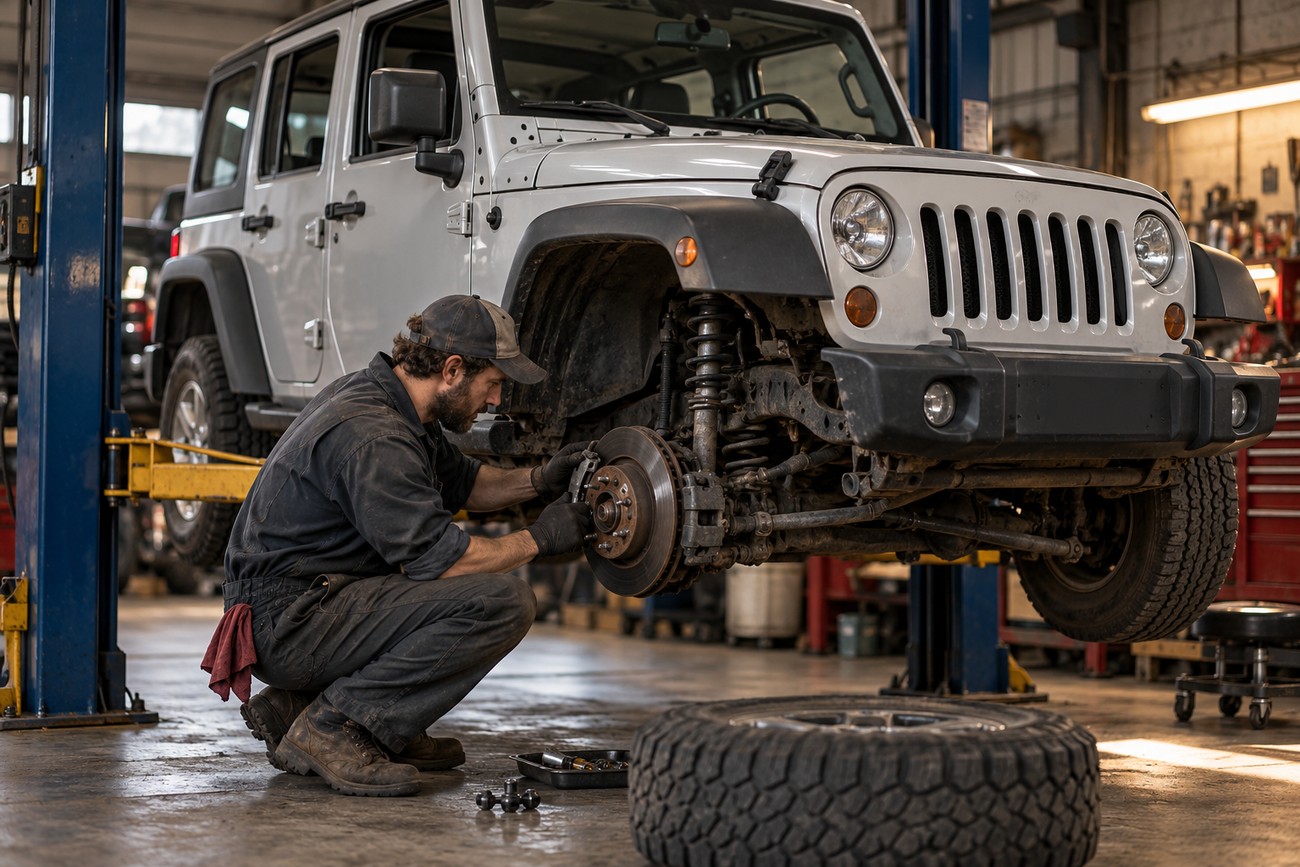
Build the maintenance plan around the actual duty cycle rather than ordinary commuting. Frequent stops and low-speed operation can put substantial wear on brakes and drivetrain components. Follow the applicable manufacturer maintenance schedule, and use a qualified mechanic’s findings to adjust inspections for the route.
As a rule of thumb, extra checks every 10,000–15,000 miles can help identify developing problems with brakes, steering, suspension, transmission, tires, and door hardware. This is not a universal manufacturer or USPS service requirement. Severe weather, rough shoulders, towing, warning signs, and the vehicle’s condition may justify earlier attention.
Check brake feel, tire condition, fluid levels, steering response, suspension noise, and window and lock operation regularly. Keep records of repairs and recurring symptoms so a mechanic can see patterns rather than isolated complaints. Early attention to a stiff door or slow window may prevent a route-day failure.
Interior wear deserves the same practical attention as mechanical wear. Seats, hinges, locks, and window mechanisms can wear quickly on a delivery route. Secure the cargo system, clean debris from door tracks, and repair anything that affects safe access, visibility, or restraint use.
Frequently asked questions
Right-hand drive can make mailbox access easier, but it does not replace safe stopping or route approval. Plan for a breakdown before one interrupts delivery. A parked load test can also show whether a Jeep’s cabin works with your usual mail and parcels.
Why do rural mail carriers use right-hand-drive vehicles?
Right-hand drive places the driver beside roadside mailboxes, which can make curbside access more direct. It does not mean every rural carrier uses an RHD vehicle, and it does not permit reaching from an unsafe position or working without a restraint.
The driver still needs to stop clear of traffic, watch for pedestrians and approaching vehicles, and use the vehicle’s controls safely. Local route arrangements and assignment requirements determine whether a personally owned RHD vehicle is suitable.
What should I arrange if my delivery Jeep is out of service?
Agree on a compliant backup-vehicle and notification plan with local postal management before a breakdown occurs. Do not assume a replacement vehicle will be provided or that any personal car will meet the assignment’s requirements.
Keep contact details, roadside-assistance information, and essential vehicle records accessible. Ask in advance how quickly you must report a breakdown, what documentation is needed, and whether a temporary vehicle requires separate approval or insurance confirmation.
How can I test a Jeep’s mail-carrying space before buying?
Use a parked, realistic mock load with your typical trays, letters, and parcels. Place everything as you would during delivery, then check whether you can reach priority items with the doors closed, the driver properly belted, and mirrors and controls unobstructed.
Repeat the test from the driver’s seat and during simulated stops. Confirm that heavier parcels cannot shift, the passenger area remains usable, and entry and exit do not require awkward twisting. An empty cargo area gives little indication of how the Jeep will work on a full route.







