

A Bentley Continental arriving at a beach wedding has immediate visual impact: its long, low body, polished finish, and quiet, chauffeur-led arrival create a composed frame against the coastline. It can be an excellent wedding car for the road, venue entrance, and carefully planned photographs.
The difficulty begins where firm access ends. A heavy, low luxury car may be poorly suited to loose sand, steep transitions, limited turning areas, coastal wind, and salt aerosol. In most cases, the sensible arrangement is to keep the Bentley on a firm approach and use a buggy, SUV, or other suitable vehicle for the final sandy metres when the ceremony requires it.
- Can a Bentley Continental Actually Reach the Beach?
- Plan Access, Permissions, and the Last Sandy Metres
- GT or Convertible: Choose for Conditions, Not Just Photos
- Make the Arrival Comfortable for the Couple and Guests
- Beach Photography Without Damaging the Bentley
- The Post-Beach Check: Salt, Sand, and Service Risk
- Frequently asked questions
- How much does it cost to hire a Bentley for a beach wedding?
- Which car is best for a beach wedding?
- What should the Bentley hire contract cover before a beach wedding?
Can a Bentley Continental Actually Reach the Beach?
Reaching a beach entrance is different from driving on the beach itself. A Bentley Continental GT or GT Convertible typically weighs about 2.2–2.5 tonnes, depending on generation and specification. Ground clearance is roughly 120–140 mm across different versions, leaving limited margin at steep ramps, rough edges, parking curbs, and uneven sand.
Its wide, low-profile tyres are designed for controlled road surfaces. They offer limited flotation on loose sand and are vulnerable to shells, stones, hidden holes, and wheel damage. The car can look stable while its tyres gradually sink, especially where the surface has been softened by tide, rain, or repeated vehicle traffic.
All-wheel drive can improve traction on firm, damp sand, but it does not make the Continental suitable for deep, loose sand. AWD may help the car leave a hard-packed access lane or cross a short damp section; it cannot overcome the combined effects of mass, low clearance, unsuitable tyre shape, and unstable ground.
The practical verdict is clear: treat the Continental as a road car with limited coastal access, rather than as a beach vehicle. If the route includes genuine loose sand, assume that a separate last-mile plan is required unless an experienced local operator has inspected the surface and accepted responsibility for the access decision.
Plan Access, Permissions, and the Last Sandy Metres
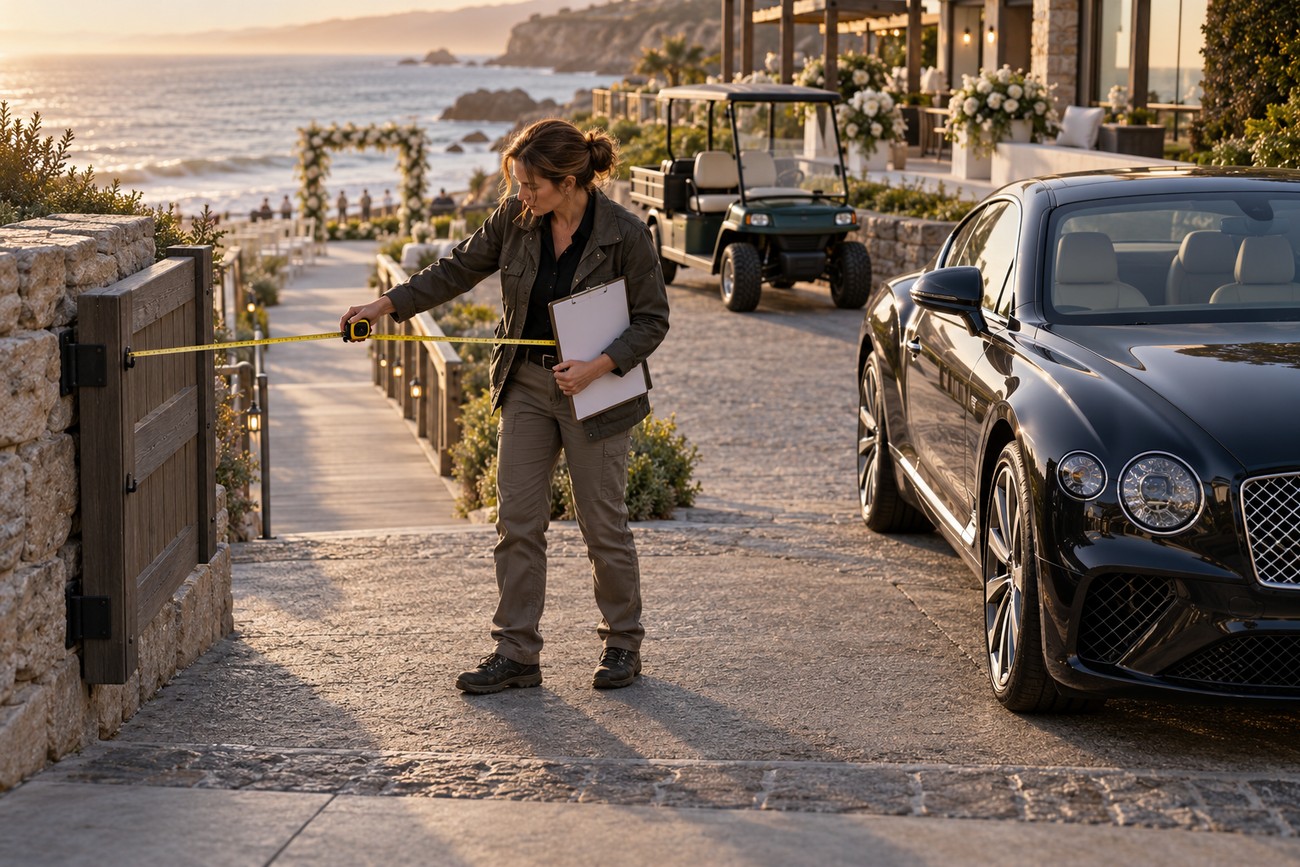
Many beaches restrict or prohibit private vehicle access, and permits or passes may be required. Confirm the rules with the municipality, beach authority, resort, or venue before booking the car. A verbal promise from a wedding venue may not cover a public access road, a seasonal gate, or a separate section of protected shoreline.
Inspect the complete approach rather than relying on a venue postcode. Check the gate width, ramp angle, low transitions, surface condition, hidden obstacles, parking area, and available turning space. A route that works for a compact SUV may still expose the Bentley’s front end or wheels to an awkward angle.
The final 100 metres and the turning route deserve the same inspection as the venue entrance. A car can reach the correct postcode and still be unable to stop, turn, or leave without reversing across soft ground.
Make the handover point part of the wedding schedule. The Bentley can deliver the couple to a firm, level location, while a buggy, SUV, or other suitable vehicle carries them and their essentials to the ceremony area. Avoid reversing or manoeuvring the Bentley on soft sand near the ceremony point, particularly when guests, photographers, and suppliers are already moving around.
Keep a dry-weather alternative in writing. Rain can soften a route that looked acceptable during a site visit, while tide and wind can alter access conditions without changing the venue’s address. The backup may be a closer firm-surface ceremony position, a sheltered transfer point, or a different vehicle for the whole final approach.
GT or Convertible: Choose for Conditions, Not Just Photos
The GT offers a more predictable cabin for a coastal wedding. Its enclosed interior protects formal clothing and passengers from windblown sand, while conversation, music, and chauffeur instructions remain easier during the transfer. It also avoids exposing a folding roof to unnecessary salt, grit, and airborne contamination.
The GT Convertible can create striking photographs, especially on a calm day with a controlled route. Its practical exposure is greater, however: wind, sand, salt, noise, and contamination of the folding-roof mechanisms all become part of the planning. A convertible is especially sensitive to the difference between a sheltered venue driveway and an exposed shoreline.
Strong coastal wind can make an open cabin noisy and uncomfortable during a ceremony transfer. It may disturb hair, veils, florals, and loose clothing, while speeches and music become harder to hear. The roof may need to remain closed in windy conditions, reducing the practical benefit of choosing a convertible.
Both versions remain low, heavy luxury cars designed primarily for firm road surfaces. Choose the body style around the actual weather exposure, passenger comfort, and route, then plan the photographs around those conditions. The most useful image may be taken beside a stable access area rather than with the car directly on the sand.
Make the Arrival Comfortable for the Couple and Guests
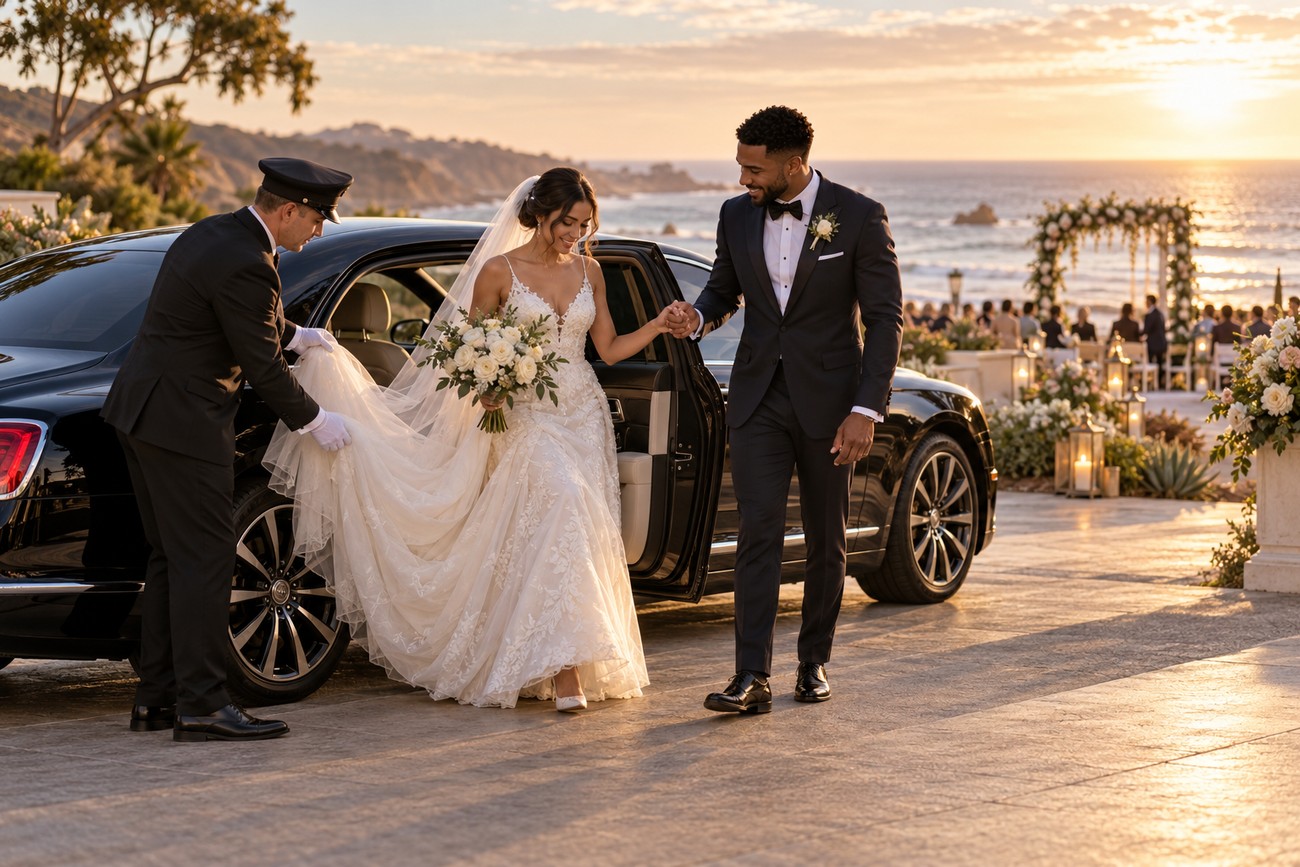
Wedding clothing changes the access problem. Long dresses, veils, bouquets, and high heels make low, uneven, sandy drop-off points difficult, even when the distance from the car to the ceremony is short. A passenger who can step neatly onto firm pavement may struggle when asked to climb out beside a soft shoulder or steep ramp.
Use a firm, level unloading point with enough room for a door to open fully. The chauffeur or a designated member of the wedding team should manage the door, protect the dress hem, and keep the bouquet and veil clear of the wheel and sill. Formal shoes should remain on a clean, stable surface until the couple is ready to walk.
A short walk or planned transfer is often more comfortable than forcing the Bentley to the waterline. It also gives the photographer a predictable moment for the arrival rather than an improvised stop where the car risks sinking or blocking the access route. Guests should know where to meet the couple so they do not gather around the vehicle during unloading.
Schedule car photographs before or after the main guest movement. The Bentley’s photogenic value does not solve limited parking, turning, or guest-access space at many beaches. Keep a clear corridor for suppliers and emergency access, and move the car once the planned images are complete if it would obstruct the ceremony area.
Beach Photography Without Damaging the Bentley
The safest beach photographs usually use a controlled, firm-surface position rather than the immediate waterline. A hard-looking strip of wet sand may still become unstable under a vehicle weighing about 2.2–2.5 tonnes. The apparent firmness of the surface is not enough evidence for a safe stop.
Salt aerosol can affect the vehicle even without direct contact with seawater. Fine salt and moisture can settle on paint, chrome, wheels, brake areas, and trim, while airborne sand may enter door seals and cabin gaps. This does not mean that one coastal photograph guarantees damage; it does mean the exposure should be treated as a cleaning and inspection event.
Low-profile tyres and expensive wheels are vulnerable to sharp shells, stones, and concealed holes. Keep the car away from debris lines, uneven shell banks, and any area that requires a tight turn. A photographer can often create the coastal impression with the car on a firm access lane, using the shoreline as the background rather than the driving surface.
For a Convertible, agree on the roof position before the shoot and check the wind shortly beforehand. A closed roof may protect the cabin and preserve comfort, while a brief, controlled opening on a sheltered surface may provide the desired image. Avoid repeated roof operation in blowing sand, where contamination of the folding-roof mechanisms becomes harder to control.
The Post-Beach Check: Salt, Sand, and Service Risk

After coastal exposure, rinse the wheel arches, underbody, wheels, and brake areas with fresh water. This should happen promptly, especially if the car has traveled through damp sand or remained near the waterline. A rinse removes salt and loose grit before they remain on exposed surfaces and working components.
Follow the rinse with a careful inspection of the tyres, wheel faces, brake areas, lower bodywork, door seals, and Convertible roof mechanism, if applicable. Salt, humidity, and sand can contribute to corrosion and leave abrasive deposits if left untreated. Visible marks should be documented before cleaning when the car is hired, so the condition is clear to both parties.
Bentley brake, wheel, suspension, and trim components can be costly to inspect or repair. A coastal visit does not guarantee mechanical failure, but careless access and delayed cleaning can create an avoidable service issue. The chauffeur or supplier should know the planned route and any intended photography stop before the day begins.
Use this short checklist before confirming the booking:
- Inspect the complete route, including the final approach and turning area.
- Confirm beach permissions, gate access, and any required pass.
- Check the wind forecast and agree whether the Convertible roof will remain closed.
- Set a firm, level unloading point away from loose sand and steep transitions.
- Reserve a buggy, SUV, or other backup transfer for the final distance.
- Agree on the fresh-water rinse and post-coastal inspection with the supplier.
Frequently asked questions
The right booking depends on access, passenger needs, weather exposure, and the level of responsibility each supplier accepts. Clarify commercial terms before the wedding day, especially where beach access and cleaning are involved.
How much does it cost to hire a Bentley for a beach wedding?
There is no universal beach-wedding hire price. A quote varies with location, hire duration, vehicle specification, chauffeur service, travel distance, waiting time, and any agreed cleaning or access requirements.
Request an itemized quote that separates driving time from standby time and identifies travel beyond the standard service area. Ask whether a last-mile vehicle, permit administration, route inspection, or coastal cleaning is included. This makes two apparently similar offers easier to compare and prevents an access-related charge from appearing after the event.
Which car is best for a beach wedding?
The best car is the one that matches the surface and the passengers. Use the Bentley for a polished arrival and photographs on firm ground, then choose a vehicle with more suitable clearance and tyres for loose sand when the ceremony location requires it.
A capable SUV or buggy may be the practical choice for the final distance, while the Bentley remains the luxury-road element of the day. Consider dress access, luggage, wind protection, turning space, and the return route alongside appearance. A beautiful car that cannot unload safely is a poor fit for that particular beach.
What should the Bentley hire contract cover before a beach wedding?
The agreement should define permitted surfaces, responsibility for access approval, waiting time, cleaning charges, and the procedure for documenting damage or pre-existing marks. It should also state cancellation terms if weather, tide, venue rules, or unsafe access changes the plan.
Confirm the backup vehicle arrangement in writing, including who supplies it and what happens if it is needed on the day. Beach-use cover must be confirmed with the supplier rather than assumed from ordinary road-hire insurance. The contract should also identify the approved unloading point and whether the chauffeur may refuse an unsafe route.







