
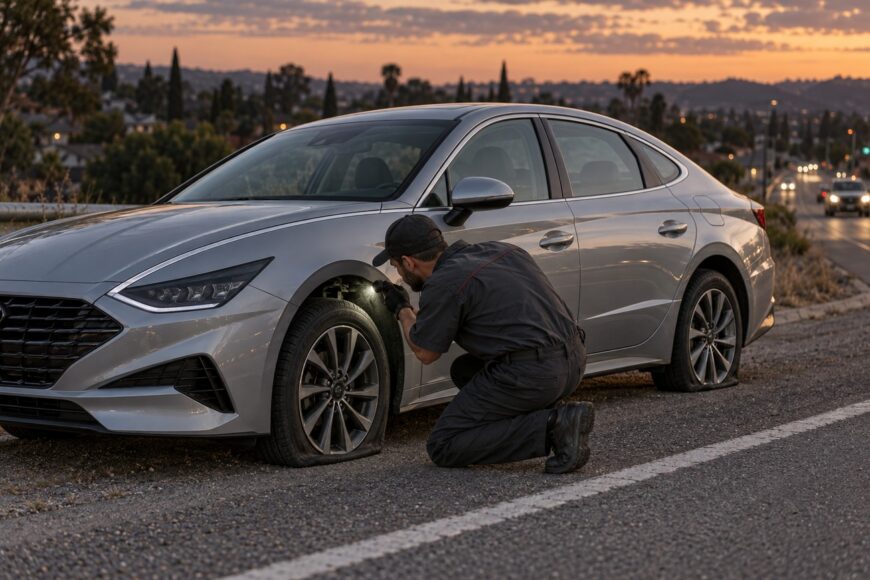
Two flats at once in a Hyundai Sonata is a useful way to describe a broader buying risk: the car can appear comfortable and well equipped while hiding two separate concerns. Its ride quality changes sharply between smooth asphalt and broken roads, and its rear suspension can cost more to diagnose and repair than a simpler axle design. A careful buyer has to assess both sides before treating a Sonata as an easy family-sedan purchase.
The Sonata is a spacious, front-engine, front-wheel-drive, four-door sedan with strong highway stability and a generous equipment list in some markets. Its traditional layout uses MacPherson struts at the front and a multi-link rear suspension. That combination supports precise wheel control, yet it also makes condition, alignment, and market specification more important than a short showroom test suggests.
- What the Hyundai Sonata setup actually includes
- Why the ride can feel tight, then unsettled
- The rear suspension cost that brochures rarely explain
- One Sonata is not every Sonata: markets, years, and equipment
- How to inspect a Sonata before buying
- Sonata myths that create expensive mistakes
- Frequently asked questions
- What is the most common problem with a Hyundai Sonata?
- What are some hidden features in Hyundai Sonata models?
- What year of Hyundai Sonata should you stay away from?
What the Hyundai Sonata setup actually includes
The Sonata’s front-engine, front-wheel-drive layout gives the cabin a practical balance of space and mechanical simplicity at the front axle. MacPherson struts are compact, familiar to most repair shops, and generally straightforward to inspect. They still depend on the condition of the strut, mount, spring, and lower mounting points, so a quiet test drive alone does not prove that the front suspension is healthy.
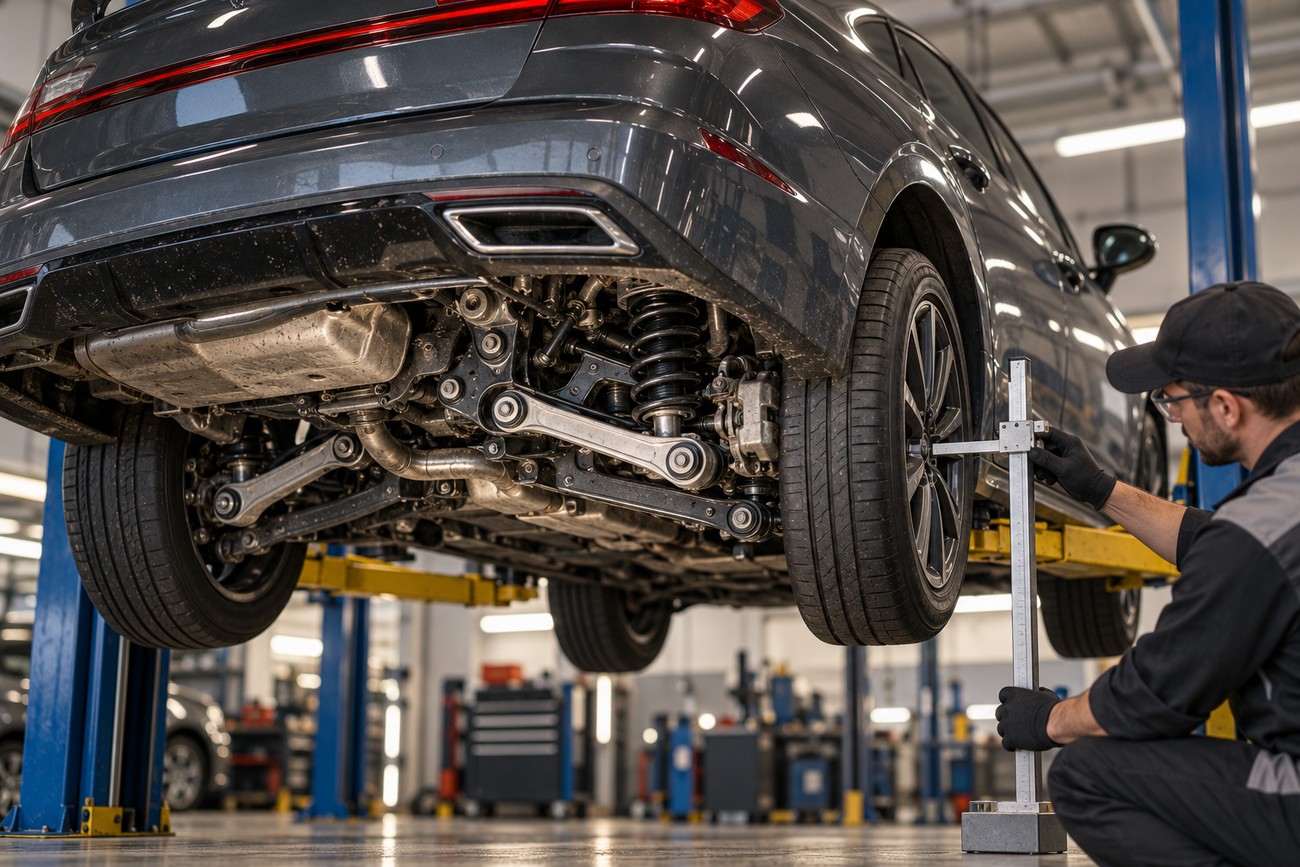
At the rear, the multi-link suspension uses several links and bushings to control wheel movement. This can help the car hold its line through bends and over long highway undulations. It also creates more individual wear points than a basic rear beam, with alignment depending on the condition of several components rather than one simple assembly.
The eighth generation introduced a new platform with a higher share of high-strength steel. A stiffer structure can support more consistent suspension behavior and improved control of noise, vibration, and harshness. It does not remove the effect of rough pavement, worn suspension parts, or incorrect wheel alignment.
For a buyer, the important point is the ownership equation. The Sonata offers the space and stability expected from a large family sedan, while the rear chassis deserves the same financial attention as the engine and transmission. A lower purchase price can lose its appeal if the car needs several related suspension parts soon after purchase.
Why the ride can feel tight, then unsettled
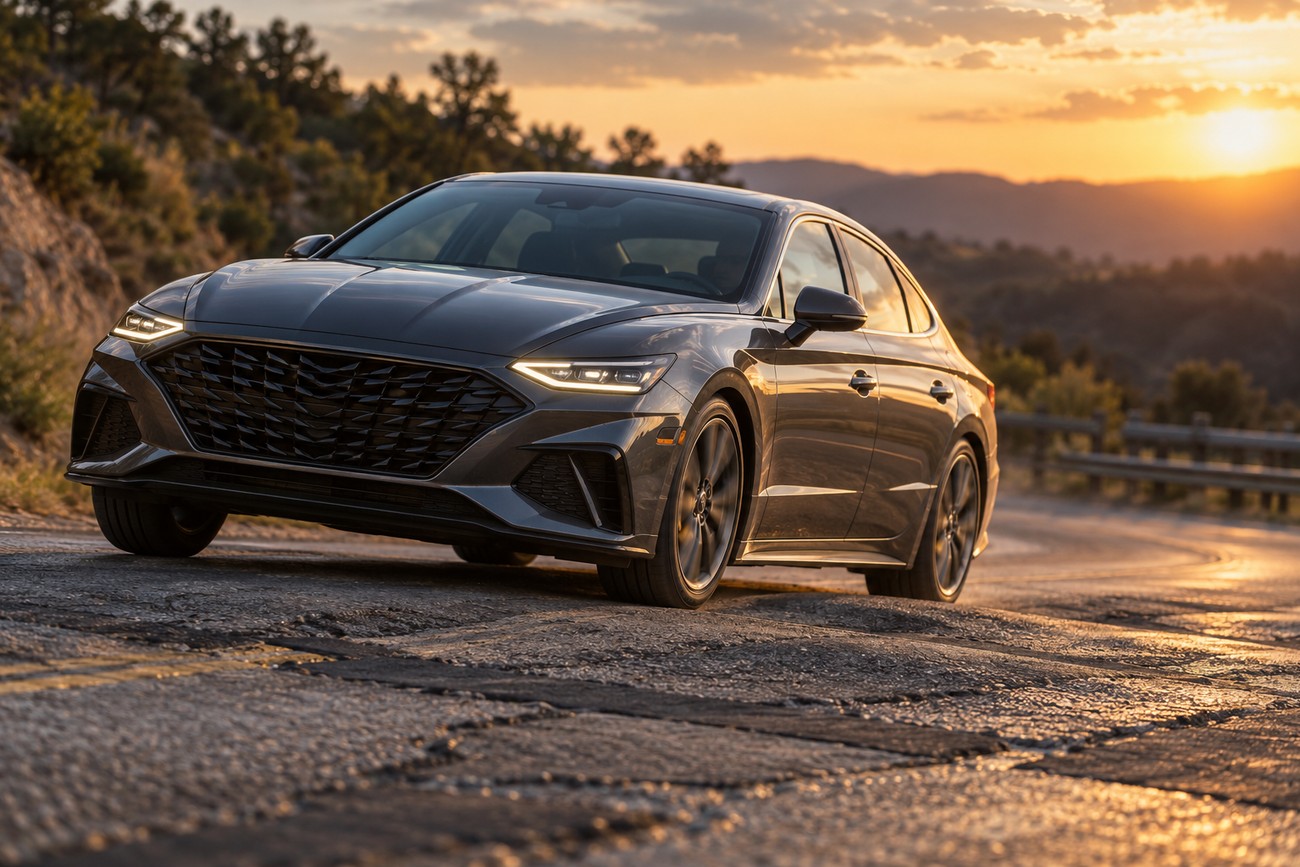
On good roads, the Sonata is commonly described as composed, firm, and well controlled. The steering and body can feel settled at speed, and the suspension gives the car a deliberate response instead of a loose, floating character. That impression can change on asphalt waves, patched surfaces, or corrugated roads.
Over a long wave, the body may heave noticeably after the first bump. On a rough or rippled surface, the car can appear to catch the wave, with comfort falling as the suspension works through repeated inputs. This does not make every Sonata harsh or uncomfortable; it means the car’s behavior depends heavily on road quality, tire condition, damping, and the exact suspension calibration.
The multi-link rear design generally helps trajectory control, but it is more sensitive to play in individual links and bushings. A worn stabilizer link may produce a knock, while a tired bushing or control arm can change the car’s response without creating an obvious noise. Incorrect alignment can then amplify tire wear and make the vehicle feel nervous or reluctant to track straight.
A short drive around a dealership can conceal these traits. Include a rough section, a series of shallow waves, and a road where you can make a controlled lane correction. Repeated bouncing, delayed settling, steering corrections, or a rear end that feels busy after one bump deserve a chassis inspection before negotiations continue.
The rear suspension cost that brochures rarely explain
The main ownership complication is the way a multi-link rear suspension distributes work among several components. Older Sonatas are often discussed in connection with worn rear bushings and control arms, but the visibly damaged part may only be one contributor to the symptom. Stabilizer links, neighboring bushings, fasteners, and alignment can also matter.
Replacing one arm can restore part of the system while leaving other worn components in place. The result may be a car that still wanders, knocks, or wears a tire unevenly, followed by a second visit to remove parts that were already close to the end of their service life. Repeated disassembly adds labor and creates another opportunity for incorrect tightening or an incomplete alignment check.
This is why a proper diagnosis should consider the complete rear axle. The inspection should look for play, cracked or distorted rubber, uneven tire wear, leaking shock absorbers, damaged mounts, and evidence of previous repairs. A workshop that names one failed part without checking the surrounding links may be offering a convenient answer rather than a complete one.
Rear-axle assessment should precede approval of a visibly failed arm, because adjacent bushings and links may already be contributing to the same symptom.
The cost difference compared with a simpler rear-axle design comes from the number of links, bushings, and associated hardware, along with the time needed to reach and adjust them. Exact parts and labor vary by generation and market. The sensible buying allowance is therefore based on inspection results and service records, rather than on a generic claim that every Sonata needs a full rebuild.
One Sonata is not every Sonata: markets, years, and equipment

Specifications should be tied to a specific market, year, engine, and trim. For the cited Russian-market Sonata with the 2.0 MPi engine, the transmission was a six-speed automatic. That detail should not be transferred automatically to every imported or later vehicle carrying the Sonata name.
Common DN8 figures are approximately 4,900 mm in length, 1,860–1,890 mm in width, 1,455–1,465 mm in height, and 2,840 mm for the wheelbase. The luggage compartment is commonly listed at approximately 510 liters, while the fuel tank is approximately 60 liters. These figures are useful for checking an advertisement, though they do not replace the vehicle’s identification and market documentation.
The Russian description of the newer generation lists six airbags, a BOSE audio system with 12 speakers, and memory settings for two drivers. Such equipment can be valuable in daily use, especially for a shared car, but trim names and imported-market listings are unreliable proof. Verify the actual controls, seat modules, audio hardware, and safety equipment in the vehicle.
Market differences can also affect ride height, powertrain, suspension tuning, and available electronic systems. Published DN8 clearance figures include both 155 mm and 145 mm, depending on the market, version, and source. Checking the VIN, specification sheet, and installed parts prevents a buyer from comparing the car with a version that was never sold in the same configuration.
How to inspect a Sonata before buying
Start the road test on a route that includes rough pavement rather than polished dealership asphalt. Listen for knocks over small repeated bumps, observe how quickly the body settles after a wave, and check whether the car tracks straight without constant steering input. A single hard impact tells you little; repeated reactions reveal more about damping and bushing condition.
On a lift, inspect the front struts and mounts, rear shock absorbers, control arms, bushings, and stabilizer links. Look for leakage, torn rubber, corrosion around fasteners, bent components, and fresh parts surrounded by older visibly worn items. Uneven tire wear can point toward alignment or suspension play even when the vehicle feels acceptable during a short drive.
Ask for the exact generation, market, model year, engine, transmission, and trim before ordering parts or comparing specifications. This information affects equipment, ride behavior, clearance, and the correct repair references. Imported cars deserve particular caution because a part that fits one market version may be unsuitable for another.
Wheel alignment should be verified after suspension work, even if the steering wheel appears centered. The multi-link rear axle can influence the vehicle’s thrust angle and tire wear, so a visual parts replacement is incomplete without measurement. Keep the alignment report with the repair invoice, especially if you are buying a car soon after chassis work.
A sensible inspection order is:
- Confirm the vehicle’s market, year, engine, transmission, and trim.
- Drive it over waves, rough pavement, and corrugations.
- Check shocks, bushings, control arms, stabilizer links, mounts, and tires.
- Inspect for previous repairs and mixed old and new suspension parts.
- Measure wheel alignment after any suspension replacement.
Sonata myths that create expensive mistakes
Myth: every DN8 has 155 mm of ground clearance. Reality: published sources cite either 155 mm or 145 mm, and the figure varies by market, version, and source. Confirm the specification for the actual car instead of using a universal number when judging winter-road or rough-road suitability.
Myth: the Sonata has a cheap rear beam. Reality: the generations covered here use a multi-link rear suspension. It can provide good wheel control and stability, while its multiple links and bushings make diagnosis and repair more involved.
Myth: a stiffer body eliminates noise and vibration. Reality: a higher share of high-strength steel and a more rigid platform can improve control of noise, vibration, and harshness. Rough pavement can still create road noise, vibration, wave motion, and a firm response, particularly when tires or suspension parts are unsuitable or worn.
Myth: ECS or adaptive damping makes the car permanently soft. Where fitted, the system varies damping by driving mode and road conditions. It changes the response available to the driver and the vehicle’s control strategy; it does not turn every road surface into a soft ride.
Frequently asked questions
The correct answer depends on the Sonata’s generation, market, engine, service history, and actual condition. These questions are best treated as buying filters rather than universal fault declarations.
What is the most common problem with a Hyundai Sonata?
There is no single problem that applies equally to every Sonata. A chassis complaint may come from worn rear bushings, control arms, stabilizer links, damping, or alignment, while another car may have an engine, transmission, or market-specific issue.
Separate the systems before buying: confirm the powertrain specification, scan for relevant faults, inspect the suspension on a lift, and compare the road-test symptoms with tire wear and alignment measurements. That process is more reliable than assigning every unusual noise to one model-wide defect.
What are some hidden features in Hyundai Sonata models?
Less obvious equipment can include memory settings for two drivers and a BOSE audio system with 12 speakers in the cited Russian-market description. These features should be verified in the actual car by checking the seat-memory controls, stored-position operation, audio hardware, and trim documentation.
Do not use a trim name alone as proof of equipment. Imported cars may combine features differently, and missing modules can be expensive to retrofit or difficult to replace correctly.
What year of Hyundai Sonata should you stay away from?
A blanket year blacklist is unreliable without a defined market, engine, transmission, and maintenance record. The condition of the individual car can matter more than a broad model-year reputation, particularly for suspension wear and previous repair quality.
Choose on evidence: verify the vehicle’s identity, review service history, test it on rough roads, inspect the full rear suspension, and confirm alignment. A well-documented car that passes those checks can be a stronger purchase than a newer example with neglected chassis components.







