
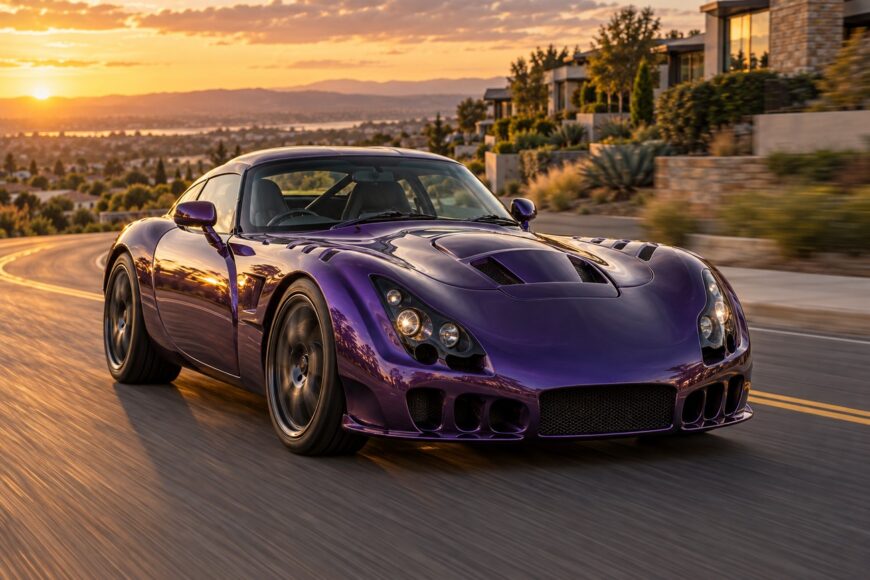
The TVR Sagaris combined extreme performance with a mass of approximately 1,078 kg, rear-wheel drive, and a naturally aspirated engine that delivered its character through sound and mechanical response. It was fast because there was little car to move and little electronic intervention between the driver and the road. That rawness remains its strongest appeal.
It also makes ownership more demanding than the dramatic styling suggests. Buyers are drawn by the noise, rarity, and claimed acceleration, while the decisive questions concern the per the evaluation of specialists with hands-on experience support, and specifications that are less consistent than many advertisements imply.
- Why the TVR Sagaris became the last wild TVR
- TVR Sagaris specifications—and why the numbers conflict
- What the Sagaris feels like on the road
- The ownership risks hidden beneath the fiberglass
- Five buying mistakes that turn a Sagaris into a liability
- Rarity, originality, and the investment myth
- Frequently asked questions
- How rare is the TVR Sagaris?
- Which TVR is considered the best ever made?
- What is the average price of a TVR Sagaris?
Why the TVR Sagaris became the last wild TVR
Produced approximately in 2005–2006, the Sagaris belongs to TVR’s final era before the company’s collapse. Its place in that story comes from its uncompromising formula: a lightweight body, a steel spaceframe, rear-wheel drive, a five-speed manual gearbox, and a large naturally aspirated inline-six. The car feels developed around the driver’s physical senses rather than electronic correction.
At approximately 1,078 kg, the Sagaris does not need the mass, power delivery, or software calibration associated with modern performance cars. Steering, throttle response, tire loading, and rear-end traction become immediate parts of the experience. That directness can feel wonderfully transparent on a suitable road, yet it gives you fewer safety margins when grip falls away.
The bodywork is equally deliberate in its visual aggression. Vents, exposed-looking openings, a low nose, and prominent lower sections give the Sagaris a presence that is difficult to confuse with anything from a large manufacturer. Those features also increase the chance of damage during parking, on steep ramps, or across rough surfaces.
There is no modern stability-control system or comparable set of everyday driver-assistance systems to manage a poor surface or an abrupt throttle input. The Sagaris therefore feels like a product of its mechanical layout at every speed. That is central to its appeal and to the care it demands from its driver.
TVR Sagaris specifications—and why the numbers conflict
The table below separates commonly published specifications from approximate, club-sourced, or disputed data. The available information does not provide one complete factory specification sheet that resolves every difference.
| Specification | Published or reported figure | Status |
|---|---|---|
| Engine | Naturally aspirated 3,996 cc Speed Six inline-six | Core specification |
| Power | 400 bhp at 7,000 rpm or 406 bhp at 7,500 rpm | Conflicting published figures; the difference may reflect measurement standards or source conventions |
| Top speed | 185 mph commonly cited; some databases state 195 mph | Disputed; no single confirmed factory figure is available in the supplied data |
| Acceleration | Claimed 0–60 mph in 3.7 seconds | Published claim; real results depend on tires, surface, and drivetrain condition |
| Gearbox | Five-speed BorgWarner manual | Published specification |
| Differential | Hydratrak limited-slip differential | Published specification |
| Chassis and body | Steel spaceframe with a fiberglass body | Structural and body construction |
| Suspension | Independent suspension with double wishbones | Published specification |
| Mass | Approximately 1,078 kg | Approximate figure |
| Dimensions | 4,056 mm long, 1,849 mm wide, and 1,176 mm high | Club-sourced figures; other databases use different measurement methods |
| Original UK price | £49,995 | Original list price |
What the Sagaris feels like on the road
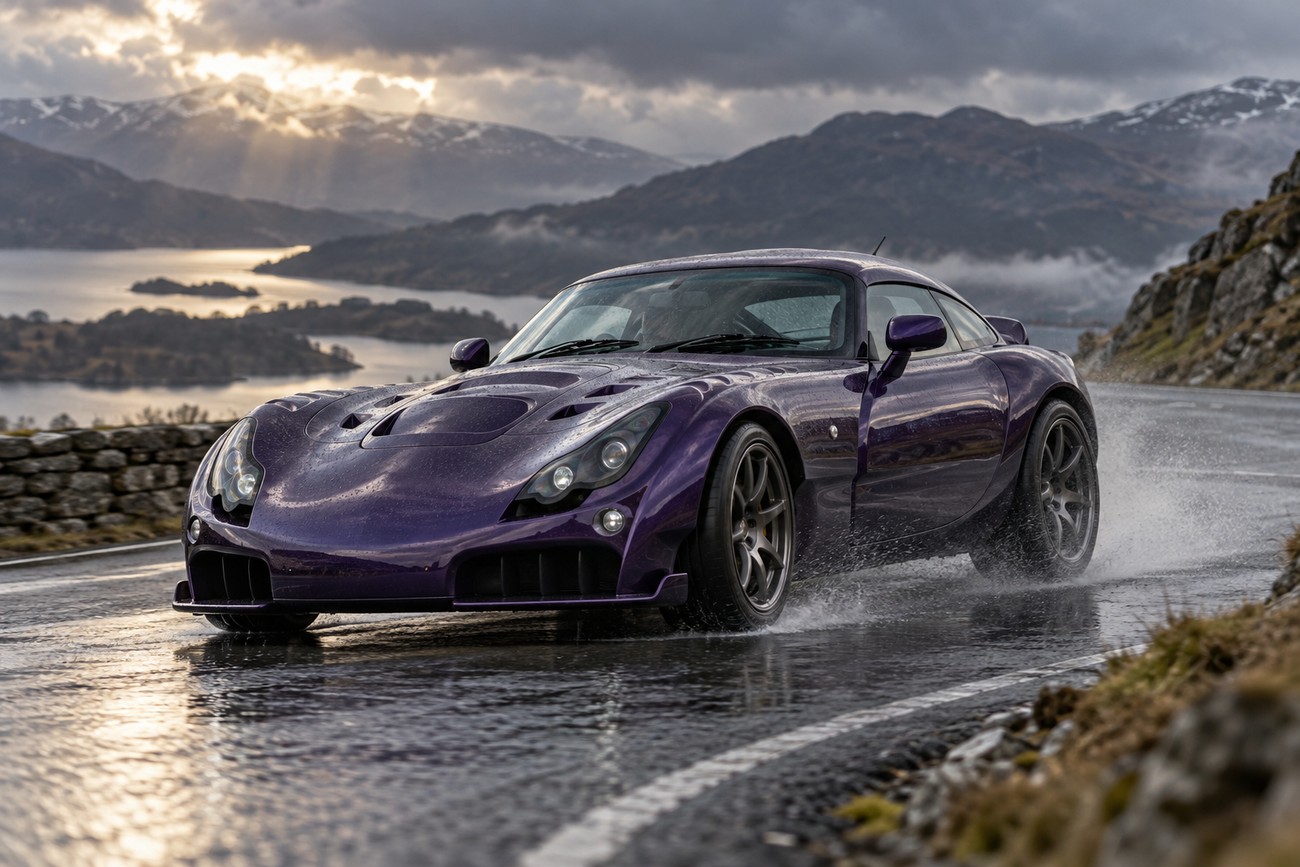
The Sagaris’s performance begins with its power-to-weight ratio. Approximately 1,078 kg gives the 3,996 cc Speed Six relatively little mass to accelerate, while rear-wheel drive preserves the traditional relationship between throttle input and rear-tire traction. The Hydratrak limited-slip differential helps manage that traction, although it cannot compensate for worn tires, poor alignment, or a wet surface.
The claimed 0–60 mph time of 3.7 seconds should be treated as a performance reference rather than a guaranteed result for every road car. Launch technique, tire condition, pavement, clutch health, and the condition of the gearbox and differential all matter. A tired example may still sound spectacular while falling well short of its published acceleration.
On a clean, flowing road, the car’s lack of modern stability-control assistance makes its behavior unusually legible. You feel weight transfer and changes in grip directly, which can make a well-sorted Sagaris deeply rewarding. The same qualities demand restraint because a correction from the driver arrives later than an electronic intervention would.
Everyday use exposes the compromises. The ride is firm, cabin noise is high, and the car is sensitive to tire condition and setup. Low ground clearance leaves the front splitter, underside, and lower bodywork vulnerable to ramps, potholes, and badly shaped speed humps. A Sagaris can be used regularly, but it does not disguise its priorities.
The ownership risks hidden beneath the fiberglass
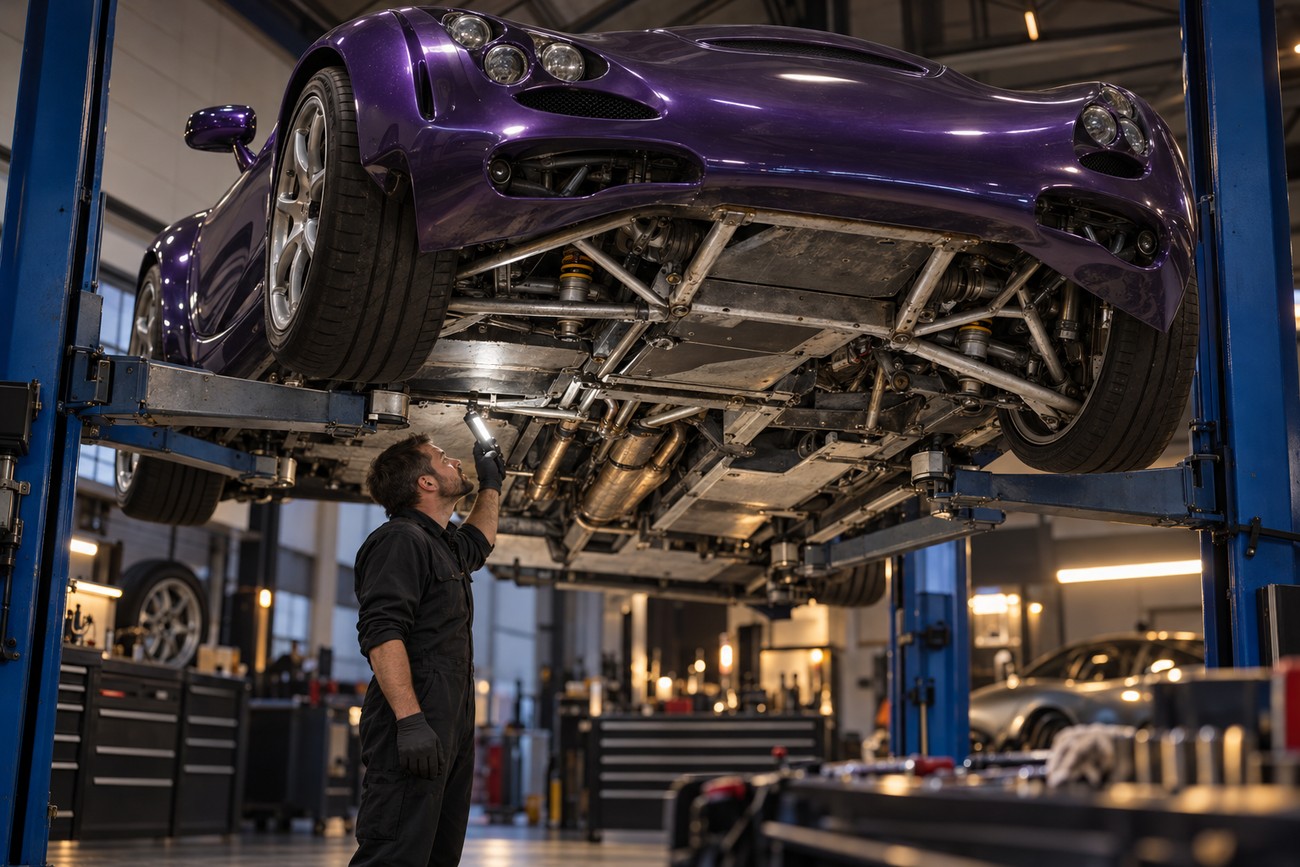
Fiberglass removes one familiar concern from the visible body: the panels themselves do not rust. It does not make the car structurally corrosion-free. The steel spaceframe, suspension structures, mounting points, fasteners, and concealed cavities remain essential inspection areas, and repairs to those components can be considerably more serious than cosmetic panel work.
Panel gaps require careful interpretation. Uneven gaps may reflect low-volume fiberglass construction, yet they can also indicate previous accident damage, movement in the body mounts, or an incomplete repair. A visually striking car with inconsistent geometry deserves measurement and inspection rather than an automatic allowance for “TVR character.”
Cold-start behavior and documented valve history can reveal more than a warm engine or a single compression figure. The fiberglass shell must also be assessed separately from the frame and suspension mounts, because a clean-looking body can conceal structural work.
The Speed Six deserves particular scrutiny. Owners report valve clearances moving out of adjustment quickly, and practical discussions sometimes mention checks around every 3,000 miles. That figure is not confirmed as a factory service interval, so it should be treated as an owner-reported maintenance concern rather than a definitive manufacturer requirement.
A proper inspection should include a cold start, idle stability, evidence of smoke or abnormal mechanical noise, and records of valve work. Minor electrical faults and unstable instruments are also reported ownership complaints, although their exact frequency is not established. These issues may be manageable individually, but the time and specialist knowledge required to diagnose them should be included in the ownership plan.
Five buying mistakes that turn a Sagaris into a liability
The first mistake is buying on sound, power, and appearance alone. The Speed Six’s noise can dominate a viewing, while a polished engine bay can conceal an incomplete maintenance history. Ask for evidence of valve adjustments and investigate how the engine behaves from cold, rather than accepting a warm demonstration as proof of health.
The second mistake is treating fiberglass as a guarantee against corrosion. Inspect the steel spaceframe from accessible points and, where necessary, from underneath or through removed trim. Suspension mounts, structural joints, hidden metal areas, and signs of water retention deserve the same attention as the body panels.
A third mistake is dismissing uneven panel gaps as harmless low-volume craftsmanship. Some variation may be consistent with the way these cars were built, but a mismatch in adjacent panels, disturbed fasteners, inconsistent paint, or altered alignment can point to accident repair. The question is whether the geometry and repair quality are sound, not whether every gap matches a modern production car.
Fourth, assess the car’s tires, alignment, ride height, splitter, underside, and lower bodywork before judging its road manners. A Sagaris with poor tires or incorrect geometry may feel nervous and unpleasant, leading an owner to blame the design for problems created by maintenance. The inspection should also cover electrical operation and instrument stability.
Finally, identify a TVR specialist and a realistic parts supply before buying. Low-volume production affects documentation, interchangeable components, and service procedures. Rarity does not guarantee investment value, and a cheap example can become expensive if it requires structural work, engine attention, and hard-to-source parts at the same time.
Rarity, originality, and the investment myth
A TVR club estimate places Sagaris production at approximately 200 cars. The exact total is not confirmed by factory archives, so that figure should be presented as an informed estimate rather than a verified factory registry. Listings and provenance documents should use careful wording instead of claiming an exact production number as established fact.
Limited production contributes to the Sagaris’s appeal, yet scarcity alone does not establish market value. Condition, originality, service history, and the quality of previous repairs have a greater practical effect on whether a particular car deserves a premium. A structurally sound, well-documented example can be far more desirable than a rarer-sounding car with uncertain maintenance and repaired damage.
Documentation is unusually important because factory records and technical information are limited. Owners may need to assemble a history from invoices, specialist inspections, chassis work, engine servicing, and credible provenance records. That process does not eliminate uncertainty, but it helps separate an original, maintained car from one that has simply been made presentable for sale.
The same logic applies to parts and future support. A low-volume sports car can remain rewarding when its weak points are understood and planned for; it becomes a liability when rarity is used to excuse missing records, poor repairs, or an unavailable maintenance network.
Frequently asked questions
How rare is the TVR Sagaris?
The commonly cited figure is approximately 200 cars, based on a TVR club estimate rather than a verified factory production registry. Factory archives do not confirm an exact total in the available evidence, so claims should use language such as “approximately 200 cars are estimated to have been produced.”
For provenance checks, the car’s individual history matters more than an unsupported serial-number claim. Confirm its identity, ownership records, service invoices, chassis condition, originality, and repair history. A listing that presents the estimate as an exact factory figure should be treated cautiously.
Which TVR is considered the best ever made?
No universally accepted “best TVR” ranking is established by the available data. The answer depends on the criteria: rawness, daily usability, engineering maturity, collectability, performance, and tolerance for maintenance all produce different results.
The Sagaris is a specialist choice for drivers who value light weight, mechanical feedback, and a dramatic naturally aspirated engine. It is less suitable for someone prioritizing modern safety systems, quiet long-distance travel, predictable parts support, or low-maintenance ownership.
What is the average price of a TVR Sagaris?
The supplied evidence does not establish a reliable current-market average. The original UK price was £49,995, but that historical list price cannot be used as a present valuation.
Current value depends on chassis condition, Speed Six service history, originality, repair quality, documentation, tires, and the availability of specialist support. Those variables create substantial differences between individual cars, making a single average potentially misleading.







