
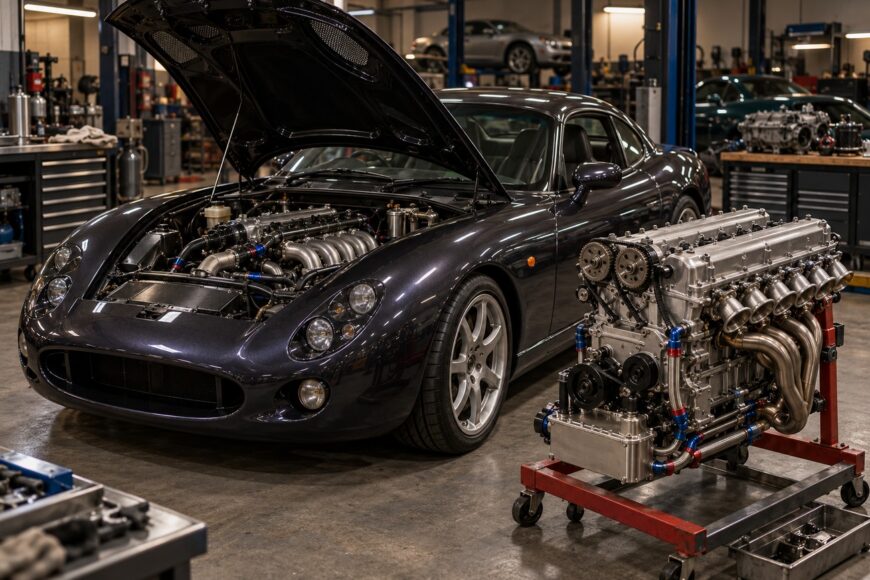
The TVR Cerbera Speed Six combines a dramatic reputation with a genuinely serious engineering story. Its naturally aspirated straight-six delivered the power and response that made the Cerbera memorable, while early engine failures, expensive repairs, and inconsistent support gave the unit a reputation that still follows every car wearing the badge.
The useful question is not whether every Speed Six is bad, but whether a particular Cerbera has credible mechanical evidence behind it. A low-mileage car can conceal an incomplete repair, while a vague claim that the engine was “rebuilt” may cover only the cylinder head. Rough running can also come from throttle electronics, coils, air leaks, or moisture rather than an imminent internal failure.
- What the Speed Six Was—and Why Its Reputation Stuck
- The Failure Points That Can Actually Destroy the Engine
- When Rough Running Does Not Mean a Dead Engine
- Rebuild History Matters More Than Mileage
- How to Inspect a Cerbera Before You Buy
- Is a Sorted Speed Six Actually Reliable?
- Frequently asked questions
- Why did TVR fail?
- What should a seller provide as proof of a Speed Six rebuild?
- What is the most reliable V6 engine ever built?
What the Speed Six Was—and Why Its Reputation Stuck
The Speed Six is a 3996 cc naturally aspirated inline-six with an aluminum block and cylinder head, DOHC, 24 valves, and dry-sump lubrication. In the Cerbera, TVR advertised approximately 350 bhp at 6800 rpm and 330 lb-ft at 5000 rpm. Those figures explain the engine’s appeal, but they also describe the intended output of the model rather than the condition of an individual car.
Its valvetrain uses camshafts working through finger followers, a compact arrangement that supports high engine speed and strong breathing. That layout also demands accurate machining, suitable materials, correct clearances, and disciplined maintenance. Small weaknesses in the cam-and-follower interface can become expensive wear, particularly when an early engine has covered years of use without reliable inspection records.
Early Speed Six engines are associated with camshaft and finger-follower wear, alongside valve-guide, valve-seat, and valve-clearance issues. These problems did not affect every engine in the same way, and later upgrades or a properly executed rebuild can substantially change the risk. The important distinction is between a known weakness that has been addressed and one that has simply been assumed away.
The 350 bhp figure therefore has little value during a used-car inspection. A dyno number, even when genuine, does not confirm oil pressure, cooling-system condition, bearing health, or the state of the valve gear. A sound purchase depends on evidence of those systems rather than on the factory specification printed in an old brochure.
The Failure Points That Can Actually Destroy the Engine
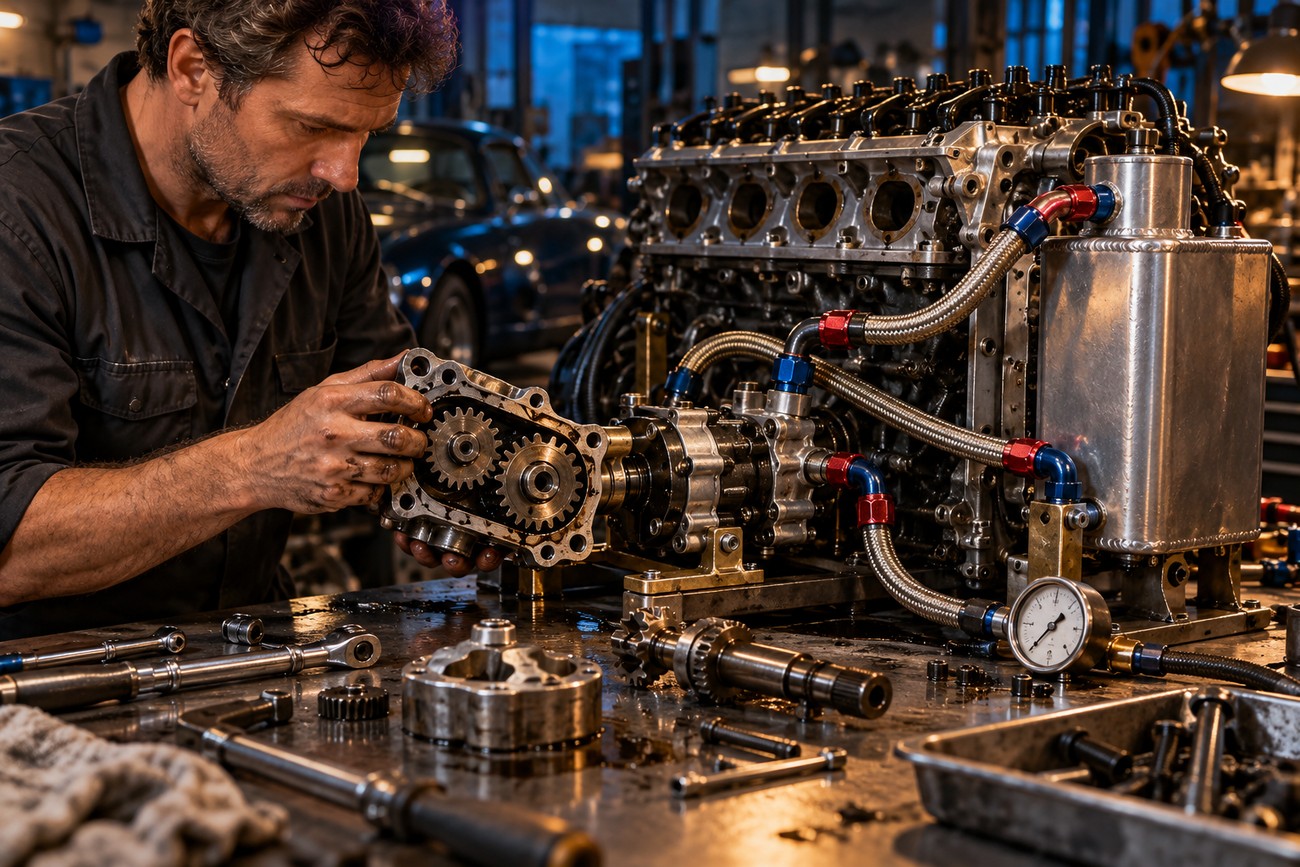
Loss of oil pressure is the most serious mechanical warning. A highly tuned engine with dry-sump lubrication depends on the oil pump, its drive, the tank, and the associated plumbing working correctly. If pressure falls and the car continues to run, damage to bearings and other internal parts can develop quickly, turning an inspection fault into a major engine rebuild.
Oil-pressure evidence should be treated as a pattern, not a single reassuring reading. The behavior when the engine is cold and hot matters, as does the condition and history of the oil pump and its drive. An owner who can produce only a recent sender replacement or a dashboard reading has not necessarily demonstrated that the lubrication system is healthy.
Cooling failure is another direct route to engine damage. A failed water pump can cause rapid overheating, followed by head-gasket damage and damage to the engine itself. A temperature gauge that returned to normal after an overheating event does not erase the event; the head, gasket, and cooling system still require a proper assessment.
The upper end presents a connected chain of risks. Worn camshafts and finger followers can affect valve operation, while worn valve guides, eroded seats, and closing valve clearances can reduce the margin for correct adjustment. A camshaft replaced without matching or correctly upgraded finger followers may leave the underlying wear mechanism in place.
That is why a parts list matters more than the phrase “new cams.” The repair record should show which camshafts, followers, valve-related parts, and measurements were used. A top-end repair can restore compression and quieten the engine while leaving the crankshaft, bearings, oil pump, and pump drive unverified.
When Rough Running Does Not Mean a Dead Engine
Owners of some early cars report uneven idle, hesitation, misfires, and stalling at low rpm. Those symptoms deserve attention, yet they do not automatically prove internal engine damage. Throttle potentiometers, coils, air leaks, wiring, and engine-management components can all produce a car that feels mechanically unwell.
Moisture adds another layer of confusion. Washing the car or driving through heavy rain can allow water into sensors or other engine-management components, producing unstable running that may improve once the car dries. Temporary recovery is useful evidence, though it does not make the fault harmless: it points toward a sealing or moisture-ingress problem that should be found.
High-rpm vibration can also interfere with throttle-potentiometer signals. If the control system misinterprets those readings, the engine may suddenly limit power or respond inconsistently. A fault code can identify the area in which the system detected an implausible signal, but it does not always identify the failed component, and it cannot by itself prove the mechanical condition of the engine.
Diagnosis should therefore combine electronic testing with mechanical checks. A workshop should inspect coils, air leaks, wiring, sensor connections, and throttle signals while also considering valve clearances, cam and follower wear, oil pressure, and compression. Replacing spark plugs repeatedly is an expensive way to avoid that wider assessment.
Rebuild History Matters More Than Mileage
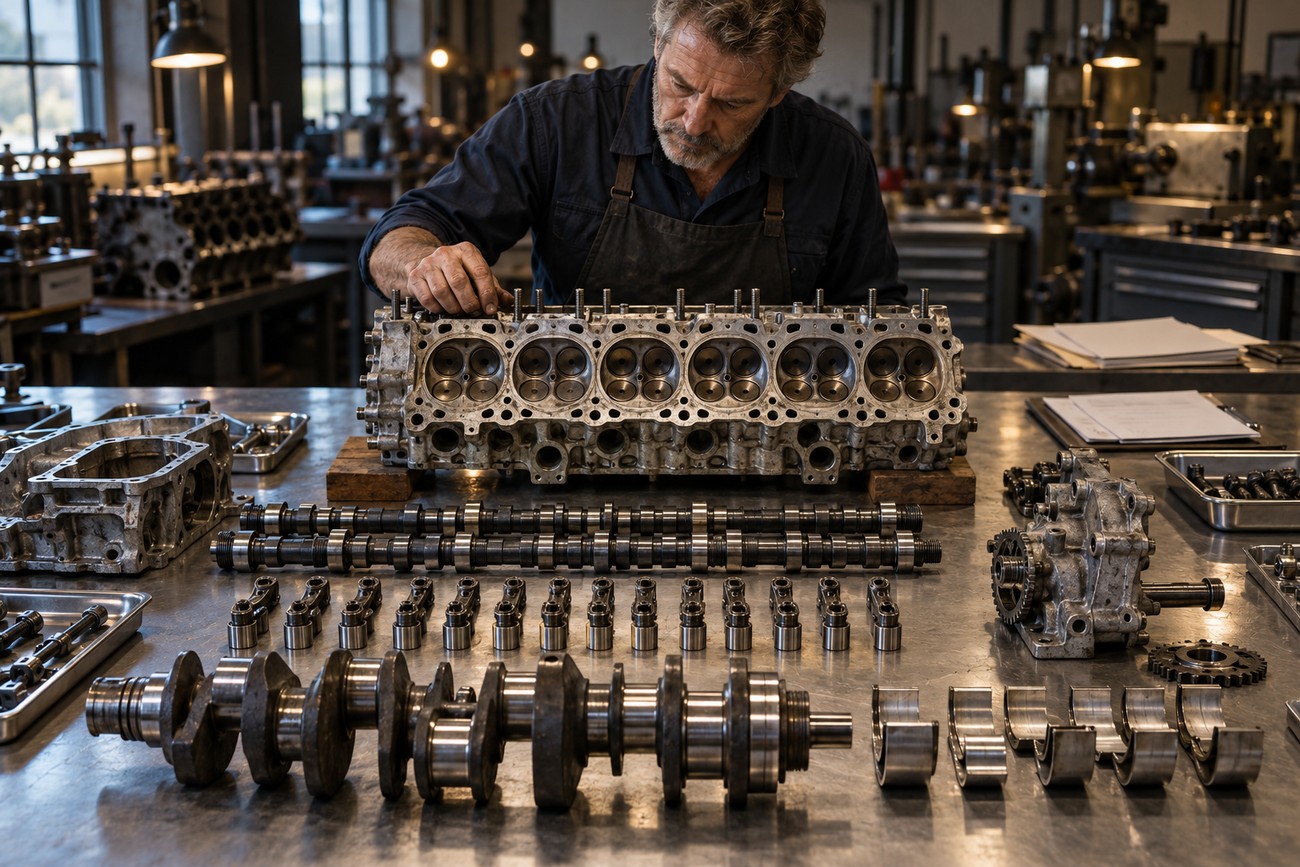
Documented engine history is more valuable than low mileage when assessing a used Cerbera. A car that has covered relatively little distance may still have suffered from age, overheating, poor storage, or an early valvetrain problem. Conversely, a higher-mileage car with clear invoices and a coherent repair record may offer a more rational ownership risk.
The word “rebuild” needs careful translation. It may describe cylinder-head work only, with no inspection of the crankshaft, bearings, oil pump, or pump drive. A credible record should state whether the repair covered the top end, the bottom end, the lubrication system, or a defined combination of those areas.
A rebuild claim becomes useful only when the seller can separate cylinder-head work from bottom-end and oil-pump-drive work. A single line saying “engine rebuilt” is not evidence of a complete repair.
Look for invoice dates, mileage at the time of the work, parts specifications, measurements, photographs, and the identity and reputation of the rebuilder. The record should identify the camshafts, finger followers, and valve-related parts fitted. Photos of worn components and measured clearances are more informative than a generic statement that the engine was “refreshed.”
One current guide gives a rebuild estimate of £3000–£6000, but that is a single-source range rather than a universal price. The final bill depends on what inspection finds, how much machining is required, and whether the work is a top-end repair or a complete engine and lubrication-system rebuild. That variability is another reason to verify the previous work before buying.
How to Inspect a Cerbera Before You Buy
Start with a genuinely cold engine and observe the first start, idle quality, warning lights, and the way the engine settles. A test drive should include low-speed running, full operating temperature, and a controlled high-rpm inspection where conditions permit. Listen for changes as the engine warms, since a car that behaves well for five minutes may reveal oil-pressure, cooling, or valvetrain issues later.
Check oil-pressure behavior when cold and hot, rather than accepting the presence of an oil-pressure reading as proof. Inspect temperature control and the cooling-system history, with particular attention to evidence of water-pump work and past overheating. The inspection should also consider the dry-sump system and pump drive, because lubrication and cooling failures can turn a minor warning into major damage.
Compression testing is useful, but it is only one part of the picture. It cannot verify the oil pump, the dry-sump system, camshaft surfaces, or finger-follower condition. Valve-clearance records and a detailed valvetrain inspection provide information that a compression figure cannot replace, especially on an early engine.
Use a specialist familiar with TVR’s nonstandard construction and engine-management system. A generic workshop may correctly identify a fault code while misjudging its cause, or may miss the significance of a mechanical symptom that resembles an electrical fault. The cooling, lubrication, valvetrain, and control systems should be assessed as one package.
Ask the seller to show where the repair stopped. A documented top-end job is valuable information, but it should never be presented as proof that the crankshaft, bearings, oil pump, and pump drive were rebuilt.
A low-mileage Cerbera without invoices, repair specifications, and inspection evidence is not automatically the safer purchase. If the seller cannot explain the rebuild date, mileage, parts, measurements, and workshop involved, budget for an independent inspection that may include deeper access to the valve gear. Walking away from an unclear car is often cheaper than discovering the missing evidence after purchase.
Is a Sorted Speed Six Actually Reliable?
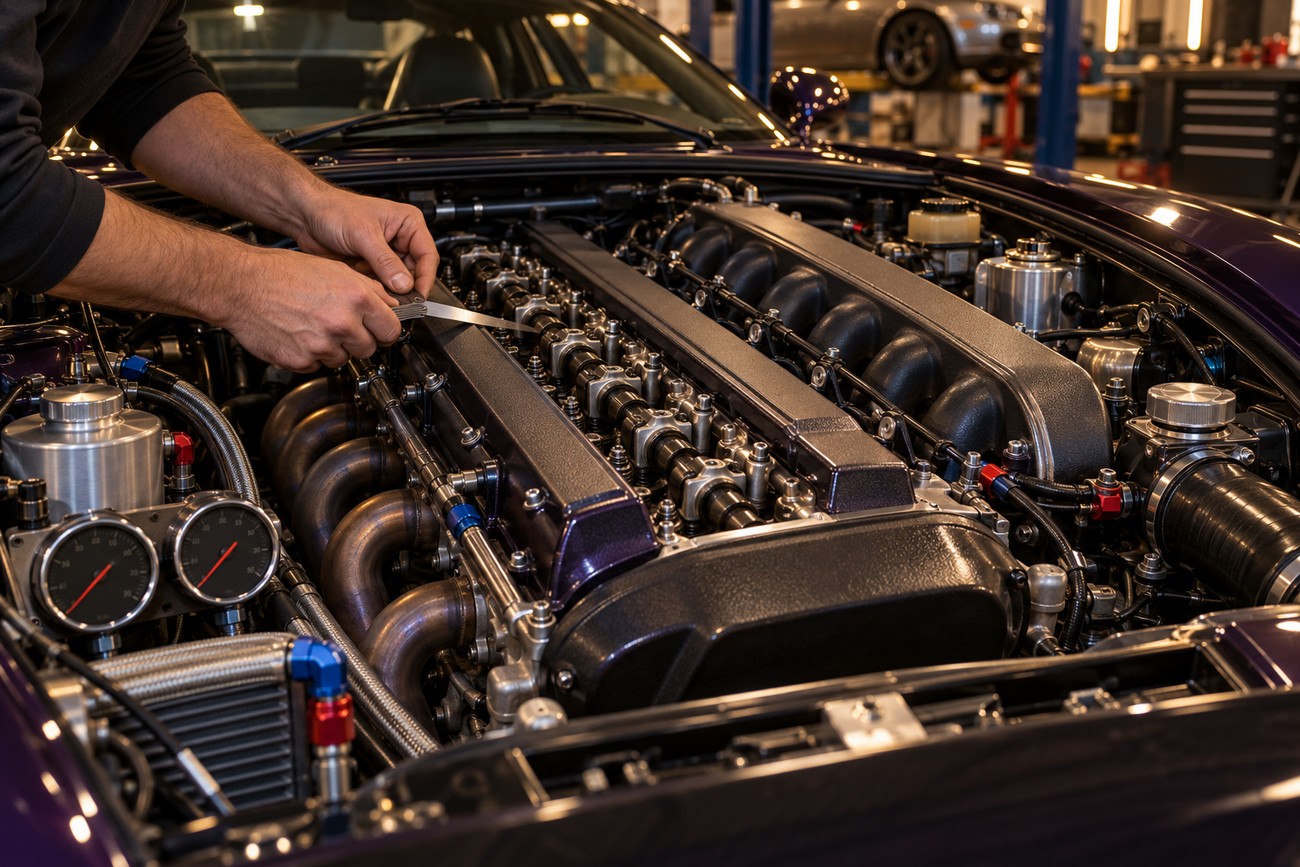
A sorted Speed Six can be substantially more durable than the worst stories suggest. The claim that every engine is doomed is too broad; correctly upgraded and documented engines can give dependable service when oil pressure, temperature, valve clearances, and maintenance are treated seriously. Early weaknesses remain relevant, though, especially where the repair history is incomplete.
The factory figure of approximately 350 bhp describes the model, not the health of a particular engine. Reliability depends more on the quality and completeness of previous rebuilding than on the badge, the advertised output, or the word “rebuild” in a sales description. A properly addressed valvetrain and a verified lubrication system change the ownership outlook far more than a low odometer reading.
The ownership burden does not disappear after a successful rebuild. Specialist diagnosis can be expensive, suitable parts may require careful sourcing, and many general repair shops lack experience with TVR’s unusual systems. Those factors are part of reliability ownership because a fault must be diagnosed correctly before it can be repaired correctly.
The fair verdict is conditional. The early Speed Six has genuine mechanical weaknesses, and an undocumented car deserves caution. A correctly upgraded, thoroughly inspected, and well-supported example is not automatically a failure waiting to happen; it is a specialist performance car whose reliability depends heavily on evidence, maintenance, and the quality of the people working on it.
Frequently asked questions
The Speed Six’s reputation is often mixed with wider assumptions about TVR and with loose terminology. These answers separate the engine’s documented risks from broader company history and from claims that cannot be established through a single test.
Why did TVR fail?
TVR’s collapse cannot be reduced to the Speed Six alone. Financial pressures, production difficulties, business decisions, and wider manufacturing problems also shaped the company’s outcome.
The engine’s reputation affected customer confidence and ownership costs, but it was one part of a broader failure. Treating the company’s collapse as proof that every Speed Six was mechanically doomed oversimplifies both the business history and the engineering record.
What should a seller provide as proof of a Speed Six rebuild?
A useful rebuild file should include the invoice date, mileage, parts specification, measurements, photographs, and the identity of the workshop or rebuilder. It should state whether the work covered the cylinder head, bottom end, oil pump, pump drive, or only selected components.
The record should also identify the camshafts, finger followers, and valve-related parts installed. Without that scope, “rebuilt” is a description of unknown value rather than proof that the complete engine has been inspected and upgraded.
What is the most reliable V6 engine ever built?
There is no objective single winner. Reliability depends on the engine’s application, maintenance, cooling system, parts supply, and the quality of the specific example.
The Speed Six is an inline-six, not a V6, and its reputation should not be used to answer a general V6 reliability ranking. A sensible comparison requires defined criteria, such as service life, repair frequency, tolerance of neglect, and availability of specialist support.







