
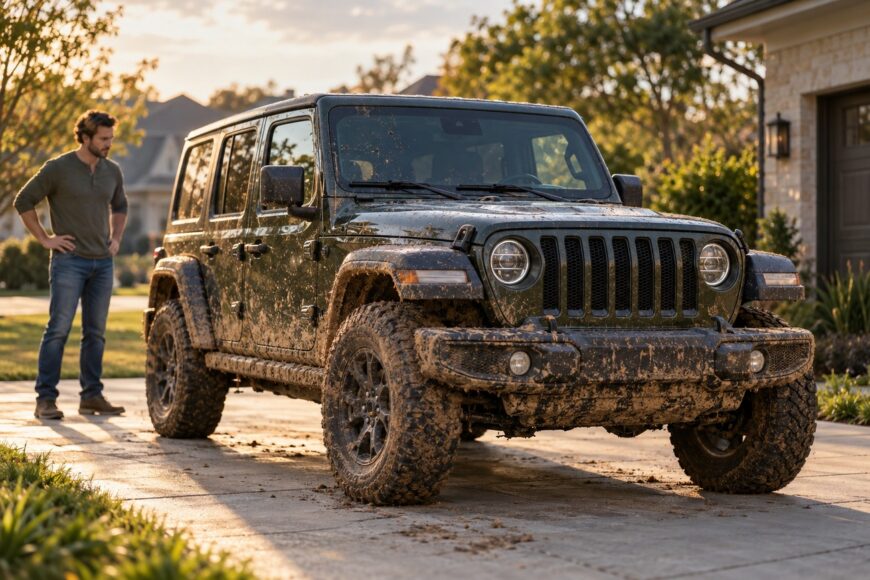
A Jeep Wrangler may handle rough terrain, but that does not mean a Turo listing permits off-road use. A renter might see a dirt road as an ordinary way to reach a destination, while a host might view the same trip as unauthorized use. If damage appears after the return, that difference in interpretation can become a dispute over both the route and the vehicle’s condition.
Turo is a peer-to-peer vehicle rental platform, so the specific listing and host agreement matter alongside applicable protection or insurance terms. Before-and-after records matter just as much once a claim begins: a photograph of a scratched skid plate means less if neither party can show what it looked like before the trip. Clear route messages, condition photos, and any available trip records help separate what happened from what each person assumed was allowed.
- The short answer: a Wrangler is not automatically approved for off-road use
- What Turo may treat as off-roading
- Why off-road damage disputes become expensive
- The evidence that usually decides the argument
- What renters and hosts should do before and after the trip
- Common mistakes and myths that trigger claims
- How to respond when the Jeep comes back with an off-road claim
- Frequently asked questions
- What does Turo consider off-roading?
- What does it mean when a Turo listing says no off-roading?
- What should I do if I discover underbody damage after returning a Turo Jeep?
The short answer: a Wrangler is not automatically approved for off-road use
Off-road permission depends on the specific listing, host agreement, and applicable protection or insurance terms. A Jeep Wrangler’s high clearance and short overhangs may improve physical capability, but they do not establish permission for off-road use. The vehicle’s design tells you something about what it can handle, not what this rental allows.
Read the listing and any prohibited-use language before treating a route as acceptable. A host may restrict trail driving even if the Jeep is advertised as an SUV, and applicable protection terms may address unauthorized use separately from the host’s expectations. Do not assume that buying a protection plan changes a route restriction.
Unpaved roads require more care than a blanket yes-or-no rule. A maintained public gravel road and a rocky recreational trail may present different risks, and the applicable wording may distinguish between them—or leave room for disagreement. If the planned route is ambiguous, describe it to the host in the trip messages and seek a clear written answer before driving.
What Turo may treat as off-roading
Ordinary paved-road driving is generally easier to assess than travel beyond maintained roads. An unpaved public road sits in a less certain category: its surface alone may not settle whether the trip complied with the listing. The route’s status, conditions, and the exact prohibited-use wording all matter.
Closed trails, sand, mud, rocks, and water create a stronger off-road or unauthorized-use argument than a smooth maintained gravel road. They also create greater potential for hidden damage, including impacts underneath the Jeep and damage to tire sidewalls. A route need not look technically difficult to conflict with a restriction if the agreement excludes it.
Descriptions such as “dirt road” can hide important differences. A maintained access road leading to lodging is unlike a muddy track across open terrain, even though neither has pavement. Before the trip, give the host the specific route or destination rather than asking only whether “dirt roads” are allowed, and keep the reply with your trip records.
Why off-road damage disputes become expensive
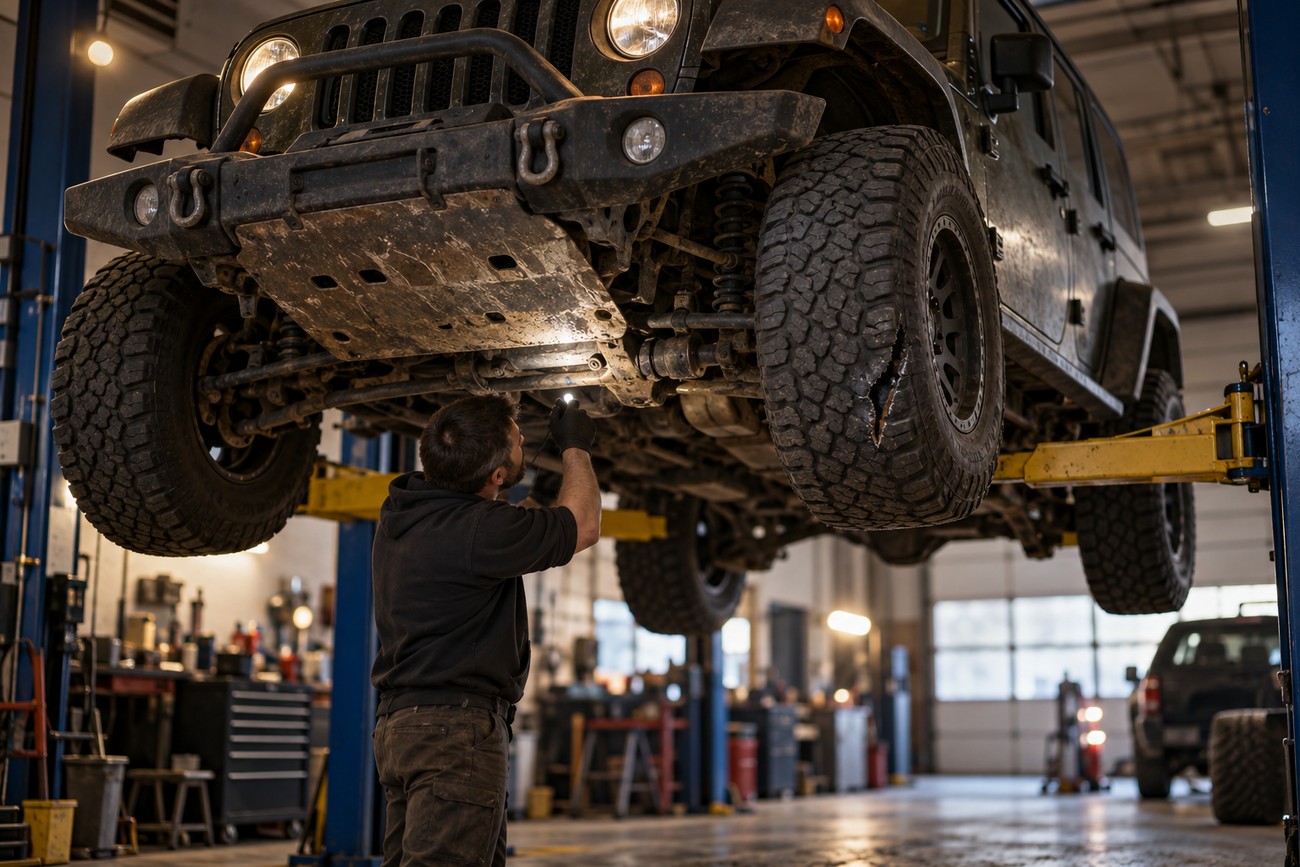
Some of the most consequential damage is difficult to see during a quick walk around the returned Jeep. Tire sidewalls and wheels can show cuts or impacts; suspension components, the underbody, and skid plates can show damage from obstacles. Wheel arches and lower bumper edges may retain mud, scratches, or other marks that prompt a closer inspection.
Those marks are clues, not a complete account of when damage occurred. Mud in a wheel arch may justify checking the underside, but it does not identify a particular broken component or establish that the renter caused it. An itemized claim should connect each alleged defect to condition records and, where relevant, repair documentation.
Tires, wheels, suspension, and underbody damage may be handled differently from ordinary wear under some rental or protection arrangements. Protection may advertise coverage up to a stated limit, but exclusions for unauthorized use or damage to particular components can change the practical result. Neither a purchased plan nor an off-road allegation alone establishes what will be paid; the applicable terms and supported facts control the dispute.
The evidence that usually decides the argument
The core evidence set is timestamped before-and-after photos or video, GPS or telematics, trip geolocation, host messages, and comparisons of the vehicle’s condition. Useful images show the same areas from similar angles, especially the wheels, tire sidewalls, wheel arches, lower bumper edges, and underbody. Original files are preferable to cropped screenshots when dates or image detail may matter.
Route records can help establish where the Jeep traveled, if those records are available and obtained appropriately. A track that passes through a disputed area may support a route allegation, but route data alone does not automatically prove when or how a specific defect occurred. Condition evidence is needed to make that connection.
Photograph lower bumper edges, wheel arches, tire sidewalls, and the underbody before washing away trail residue; cleaning can remove the context needed to assess a mark. Treat GPS as evidence of a route, then assess damage causation separately.
Preserve trip messages that clarify a route or record a concern at pickup or return. If an inspection identifies a defect later, compare it with the earliest available post-trip images as well as the pre-trip record. Off-road disputes can require substantial documentation, and there is no single settlement period to assume for every claim.
What renters and hosts should do before and after the trip
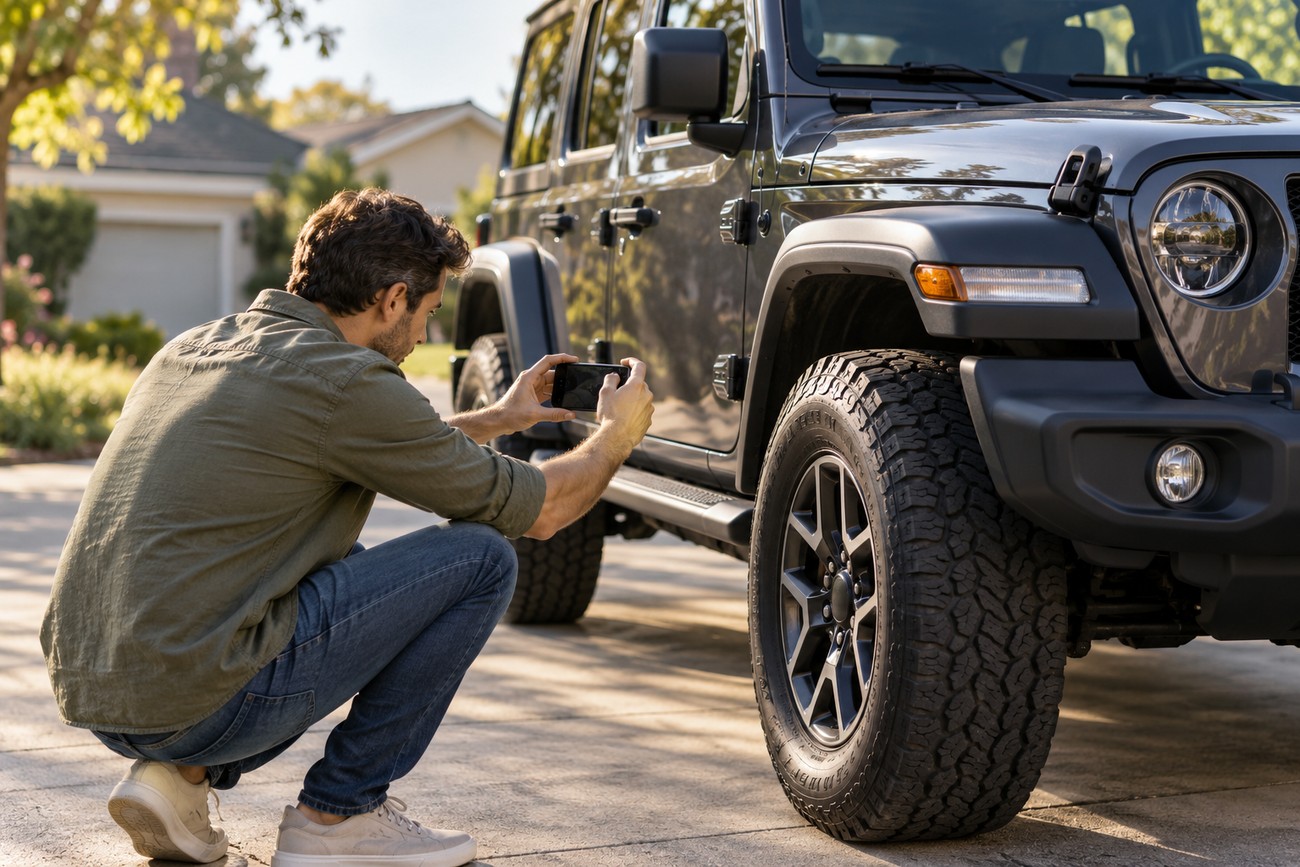
Renters should read prohibited-use language before booking a route through unpaved terrain. If a road’s status is unclear, ask about that specific road in writing rather than relying on the Wrangler’s appearance or an informal conversation. Save the listing language and the host’s response so both are available if memories differ later.
Before driving, photograph the tires, wheels, wheel arches, lower body, lower bumper edges, and underbody as safely and visibly as possible. Record existing scratches, dents, and tire marks without touching or moving parts to get a better image. Repeat the inspection at return, ideally before dirt is removed or the vehicle is driven again.
Hosts should document pre-existing wear with the same care they expect from renters. After return, inspect the same areas and record a suspected new defect before arranging cleaning or repairs where practicable. A comparable before-and-after view is more useful than a close-up that gives no indication of whether the mark was already present.
A muddy return can raise two distinct issues: the vehicle’s cleanliness and possible physical damage. Keep photographs and explanations for a cleaning-fee request separate from evidence of a damaged tire, skid plate, or suspension part. That separation helps both sides evaluate each charge on its own facts rather than treating dirt as proof of every alleged repair.
Common mistakes and myths that trigger claims
The most persistent mistake is assuming that a Wrangler can go anywhere because it was built for difficult terrain. Its design does not override listing restrictions or protection exclusions. A renter who intends to drive carefully may still face a contractual dispute if the chosen route falls outside permitted use.
Another assumption is that a smooth gravel road cannot count as off-road travel. Depending on the listing, host agreement, and route, an unpaved road may still create a dispute; other terms may distinguish a maintained public road from a trail. Written clarification about the actual route is stronger than either party’s later recollection of a general verbal assurance.
A clean-looking exterior does not rule out damage underneath. Tire sidewalls, suspension, and the underbody can be missed during a superficial return inspection, then become the subject of a later claim. Skipping the pre-trip inspection leaves both renter and host with a weaker basis for deciding whether a newly noticed mark is genuinely new.
How to respond when the Jeep comes back with an off-road claim
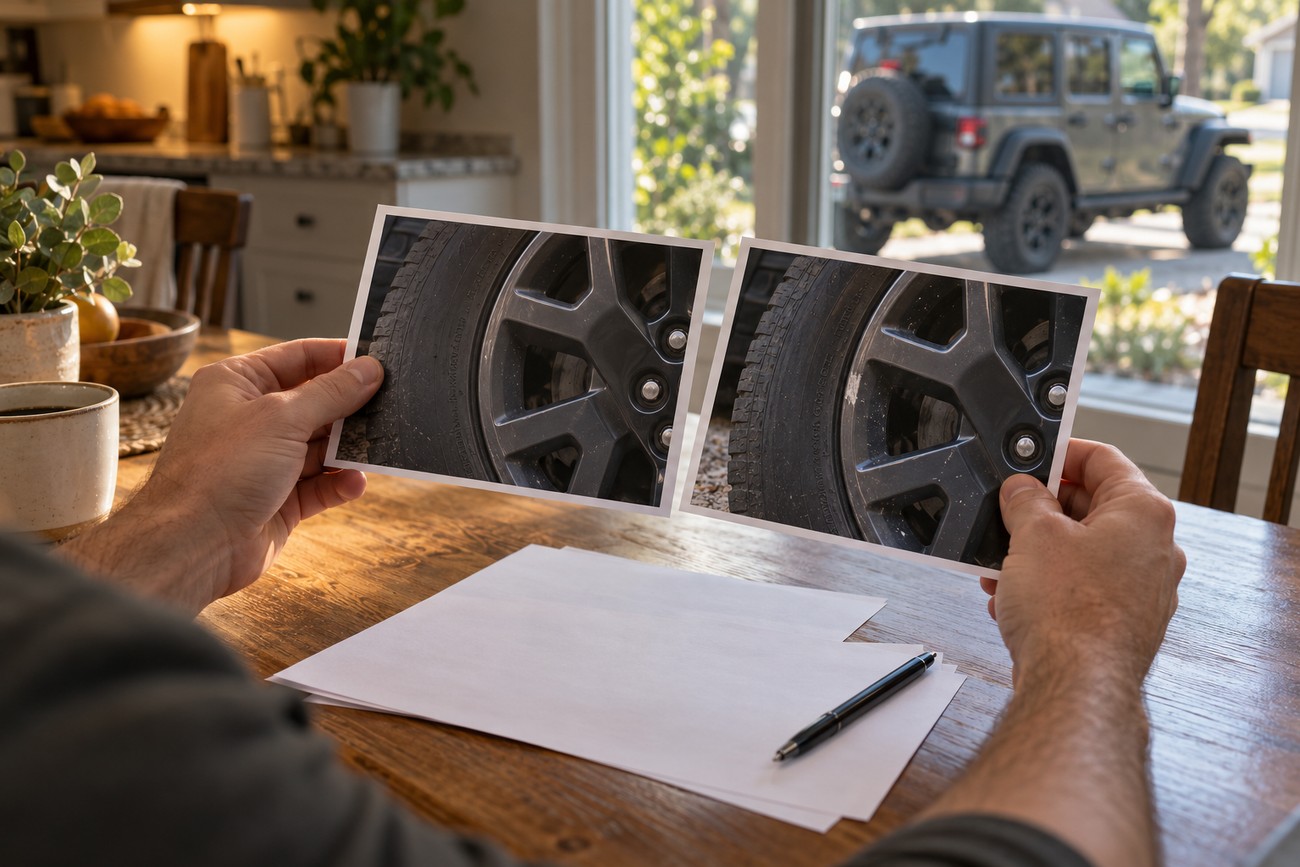
Preserve the listing as it appeared for the trip, the host agreement, relevant protection terms, and the full message thread. Save original pickup and return photos, videos, and any available location records. Whether you are the renter receiving a claim or the host making one, avoid editing or discarding material that could clarify the vehicle’s condition.
Ask for an itemized description of each alleged defect and its supporting photographs. Compare those images with the documented pre-trip condition and note any uncertainty, such as a wheel mark visible in an earlier photo or an area that was never photographed. Request relevant repair records where a claimed amount depends on a repair.
Keep responses factual and distinguish what you know from what remains unproven. A renter can explain the route taken without accepting responsibility for an unrelated defect; a host can report a newly observed scratch without claiming that mud proves its cause. Claims may involve extensive photographs, chats, receipts, and route information, and the applicable terms and evidence will shape the result without guaranteeing a particular timeline.
Frequently asked questions
What does Turo consider off-roading?
There is no safe surface-only answer for every listing. Sand, mud, rocks, water, and closed trails present a stronger off-road argument than a maintained public dirt road because the route and conditions are further from ordinary road use and carry greater risk of hidden damage. Even a public dirt road can be disputed if the applicable wording restricts unpaved travel, so check the exact listing and terms before driving it.
What does it mean when a Turo listing says no off-roading?
It means the renter should treat off-road routes as restricted even if the vehicle is mechanically suited to them. The phrase does not necessarily resolve every borderline route, such as a maintained gravel access road. Send the host the specific route in writing and seek clarification before the trip; also review applicable protection terms rather than assuming host approval determines coverage.
What should I do if I discover underbody damage after returning a Turo Jeep?
Preserve the condition and evidence before drawing a conclusion about cause. Avoid cleaning or altering the relevant area, save original photos, videos, messages, and available location records, and request an itemized description with supporting images if someone has raised a claim. Communicate what you observed and when you observed it, then compare the allegation with pickup and return records without accepting an unsupported account of how the damage occurred.







