
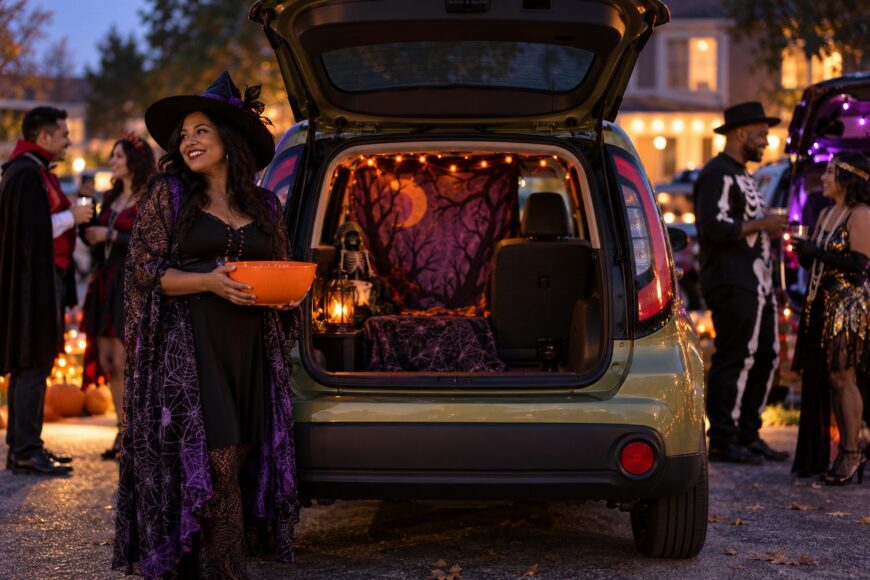
A Kia Soul can look roomy in a trunk-or-treat photo, yet its usable display area is smaller than the headline cargo number suggests. Wheel arches consume floor width, the cargo-floor height changes the available vertical space, and the liftgate needs a clear path above and behind the vehicle. Folded seatbacks also leave a surface that is not perfectly flat.
The strongest setup treats the Soul as a low, readable candy station rather than a packed prop closet. A compact backdrop, an open handoff zone, soft materials, and removable attachments will survive children, queues, and quick cleanup better than a tall arrangement filled to the roof.
Plan the scene around the vehicle’s actual geometry before adding decoration. The result should be visible from the queue, easy to refill, safe around hands and faces, and removable without damaging paint, seals, upholstery, or the vehicle’s safety equipment.
- What the Kia Soul Can Actually Stage
- Kia Soul Cargo Setups: Space, Height, and Best Use
- Design a Low, Visible Halloween Scene
- Build and Secure the Decor Without Damaging the Soul
- Safety Rules for an Open Kia Soul Liftgate
- Make the Stand Work During Queues, Wind, and Candy Refills
- Common Kia Soul Trunk-or-Treat Mistakes and Myths
- Frequently asked questions
- Why is Kia discontinuing the Kia Soul?
- How can I remove Halloween decor from a Kia Soul without leaving residue?
- What are creative Kia Soul trunk-or-treat ideas for 2026?
- What is the Kia Soul’s biggest weakness for trunk-or-treat use?
What the Kia Soul Can Actually Stage
For the 2024–2025 Kia Soul, the stated cargo volume is 24.2 ft³ with the rear seats raised and 62.1 ft³ with them folded. The larger figure describes total volume to the roof, not a guaranteed usable staging area. Wheel arches, the floor step, the liftgate’s travel path, and the space required for a safe opening all reduce the area available for a display.
The rear seats fold in a 60:40 split. That lets you keep one rear seating position available while using the longer side zone for a backdrop, side panel, or concealed supply area. It also gives you more flexibility than folding the entire row when passengers or equipment still need to travel in the vehicle.
Folded seatbacks do not create a perfectly flat cargo floor. A step or uneven transition can make a long rigid panel wobble, so lightweight fabric, EVA panels, or a short freestanding frame are easier to position. A low display also reduces the need to build across the irregular floor.
Keep the main visual element below the upper edge of the opening and leave a clear candy handoff zone. This preserves sightlines through the mirrors, gives children a defined place to reach, and avoids turning the liftgate area into a tangle of hanging props. The unused space behind the scene can hold reserve candy and weather-protected supplies.
Kia Soul Cargo Setups: Space, Height, and Best Use
Choose the cargo configuration according to the job: passenger access, display width, or a cleaner base for lightweight decor. Published cargo figures can vary by floor position and measurement basis, so the figures below describe the specified configurations, while the practical notes account for the geometry that a trunk-or-treat setup must leave usable.
| Configuration | Stated cargo figure | Best use | Practical limitations |
|---|---|---|---|
| Rear seats raised, cargo floor in the lower position | 23.4 ft³ | A compact candy station that keeps the rear seats available | Less vertical clearance near the opening; wheel arches still limit the display footprint |
| Rear seats raised, cargo floor in the upper position | 18.7 ft³ | A smaller display where hiding some floor unevenness matters | Reduced available volume; the opening and wheel arches still determine the usable stage |
| Rear seats folded, cargo floor in the lower position | 62.1 ft³ stated total volume | A wider prop base, reserve candy, or a longer side backdrop | The folded-seat surface is not perfectly flat, and the figure is volume to the roof rather than display area |
| Rear seats folded, cargo floor in the upper position | Not specified by the 62.1 ft³ figure | A setup that benefits from hiding part of the uneven transition | The upper position reduces available volume; do not treat the stated total as a clear, level stage |
The lower floor position gives more room with the rear seats raised, while the upper position provides a more controlled base for a small arrangement at the cost of volume. With the seats folded, use the 60:40 split if you need a passenger seat or a long side channel for decoration. A fabric backdrop can bridge the transition more easily than a rigid board.
Measure the actual opening with the liftgate fully raised before cutting panels. The liftgate path, hinges, and gas struts define where overhead decoration can go, and the wheel arches prevent a full-width floor from behaving like a stage. A display that fits on paper may still obstruct the candy handoff once people stand behind it.
Design a Low, Visible Halloween Scene
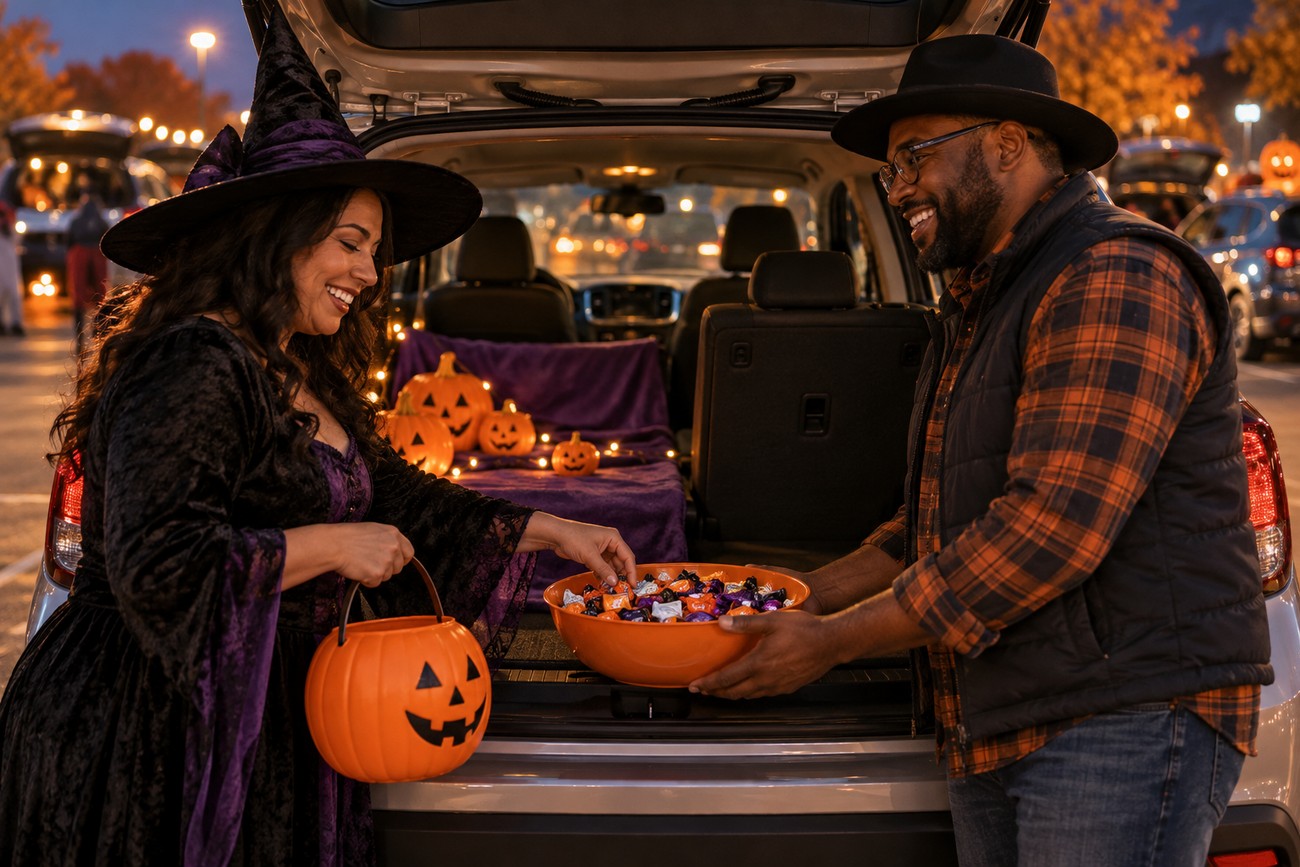
Build the composition around a low rear backdrop and a clear candy handoff zone. The backdrop can establish the theme with color, cutouts, or a fabric surface, while the front remains open for the bowl and children’s hands. This arrangement is easier to read from a queue than a collection of props scattered at different depths.
Use the 60:40 seat split to keep one passenger seat available and create a longer side zone for decoration. A side panel, fabric banner, or lightweight EVA shape can run along that area without filling the whole opening. Keep the center visually simple so the person handing out candy can see approaching children and reach the supplies.
Soft EVA panels, fabric, and plastic clips are safer near heads and hands than rigid wooden details. Avoid pointed corners, heavy overhead pieces, and brittle paper elements that can tear when children pull them. Reinforce edges where possible, and keep any loose decorative piece outside the reach zone.
Lighting should illuminate faces and the candy container rather than shine outward into the eyes of drivers or waiting children. Battery-powered LED strands or lanterns can add definition after dark, but weak lights may disappear in daylight. Place the light source low and behind a diffuser or fabric edge so the candy handoff remains clear without creating glare.
Build and Secure the Decor Without Damaging the Soul
Start with a dry build on the floor, outside the vehicle. Arrange the backdrop, candy bowl, side elements, and reserve supplies as they will appear at the event, then photograph the attachment points and label the pieces. This exposes problems with height, reach, and balance before you are working around the open liftgate.
Transfer the arrangement using removable clips and painter’s tape. Do not attach decor to gas struts, latches, locks, or vehicle wiring, because those parts need to move, close, or remain accessible. Keep tape on clean, dry surfaces, remove it slowly, and follow the tape maker’s directions for the vehicle’s finish.
Aggressive tape can leave adhesive or affect paint and seals, while artificial cobweb material can catch on trim and upholstery. Glitter is especially difficult to remove from carpet and fabric, so contain it on a removable panel instead of scattering it through the cargo area. Place cardboard and fabric in a water-resistant container until the event begins.
Make every decorative unit removable without tools. If a child pulls on one section or rain arrives, you should be able to detach the affected piece without opening trim, cutting wiring, or unloading the entire car. Keep the original cargo covers and a clean container nearby for the return trip.
Safety Rules for an Open Kia Soul Liftgate
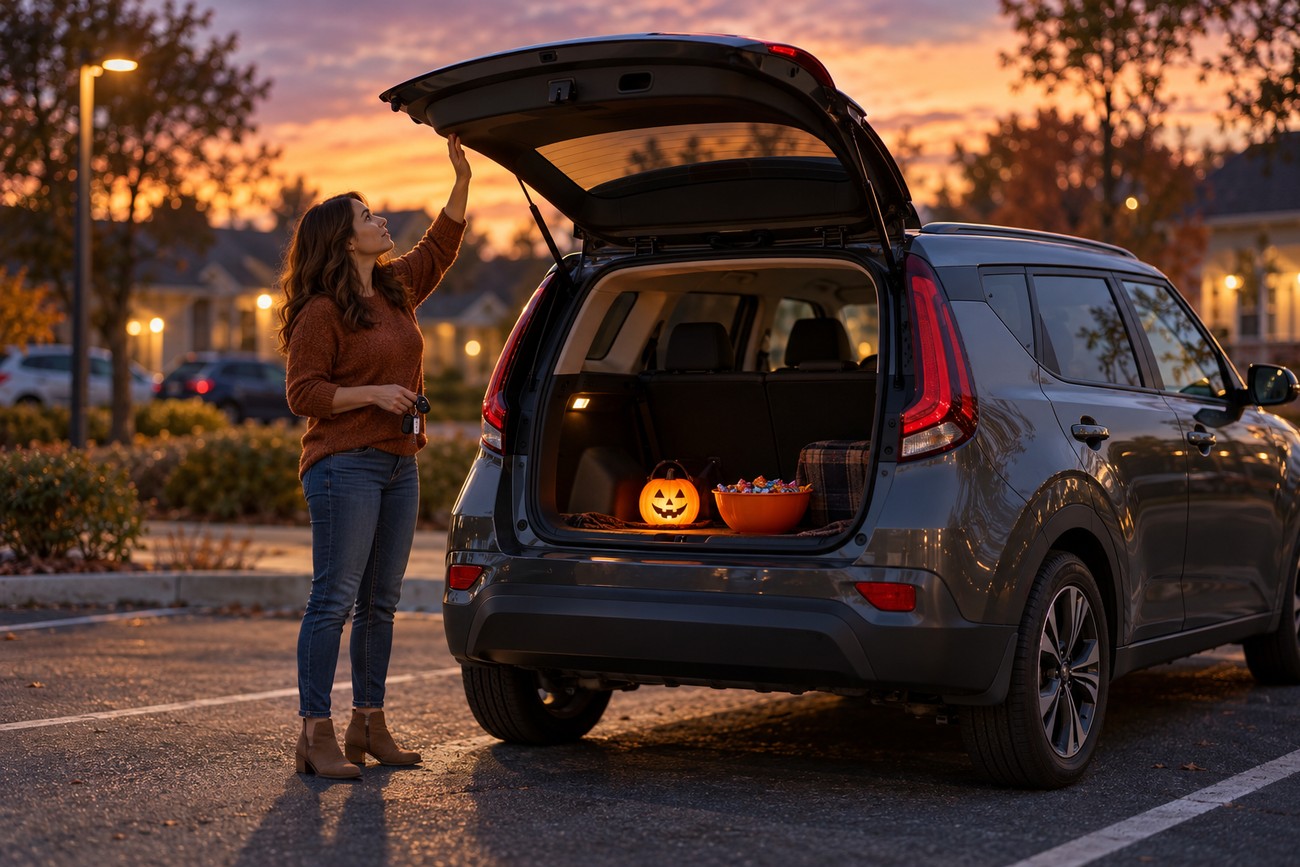
The liftgate may be open only while the Soul is parked. Kia warns that exhaust can enter the cabin through an open liftgate and cause serious poisoning or death, so do not leave the engine running with the liftgate open. Turn the vehicle off before arranging the display, and do not use idling as a shortcut for powering decorations.
Check the space above and behind the vehicle before opening the liftgate. The door swings upward and can strike a low roof, branch, sign, or person. A decorated liftgate also creates additional wind exposure, so allow clearance for movement and keep lightweight elements away from the door’s travel path, hinges, and gas struts.
Keep lights, the license plate, driver visibility, handles, locks, and emergency openings unobstructed. The exact restrictions depend on local event rules and applicable road laws, but a trunk-or-treat display should remain removable and clearly separate from the vehicle’s required equipment. Never use a decoration to cover an emergency release or access point.
Do not use candles, pyrotechnics, or heating devices near fabric, cardboard, artificial cobwebs, or plastic. Battery-powered LEDs avoid an open flame, but they still need secure wiring and protection from pulling hands. Remove any element that becomes hot, loose, wet, or unstable during the event.
Wind can loosen tape, swing a hanging panel, or tip a light prop. Test the scene with the liftgate open in the actual parking area, and place heavier items low and toward the vehicle’s center. If conditions exceed what the attachments can handle, close the liftgate and switch to a simpler display.
Make the Stand Work During Queues, Wind, and Candy Refills
Separate the visual front layer from the candy reserve. Keep the bowl and a working supply within easy reach, then store additional candy behind or beside the backdrop in a closed container. This lets you refill the presentation without dismantling the scene or reaching over children.
Test the complete setup outside the garage. Check wind, light rain, children pulling on props, the shape of the queue, and the time needed to remove every piece. A display that looks stable indoors may catch wind through the open liftgate, while damp cardboard and fabric can sag or transfer moisture to the cargo area.
Keep the candy reserve behind the visual front layer, and rehearse a tool-free removal sequence before arriving. A setup that can be cleared in sections is easier to manage when weather changes or the event ends suddenly.
Battery-powered LED strands and lanterns are usually more practical than relying on the vehicle’s 12-volt outlet. The outlet is not automatically suitable for any combined accessory load, and extended use of interior lights, audio, or homemade accessories may discharge the vehicle battery. Use self-contained lighting, carry spare batteries, and switch off every accessory before leaving.
Pack the removal kit with painter’s tape, a soft brush, sealed bags for damp materials, and a water-resistant container. That small amount of preparation protects the Soul on the way home and prevents glitter, wet fabric, and loose fasteners from mixing with the cargo area.
Common Kia Soul Trunk-or-Treat Mistakes and Myths
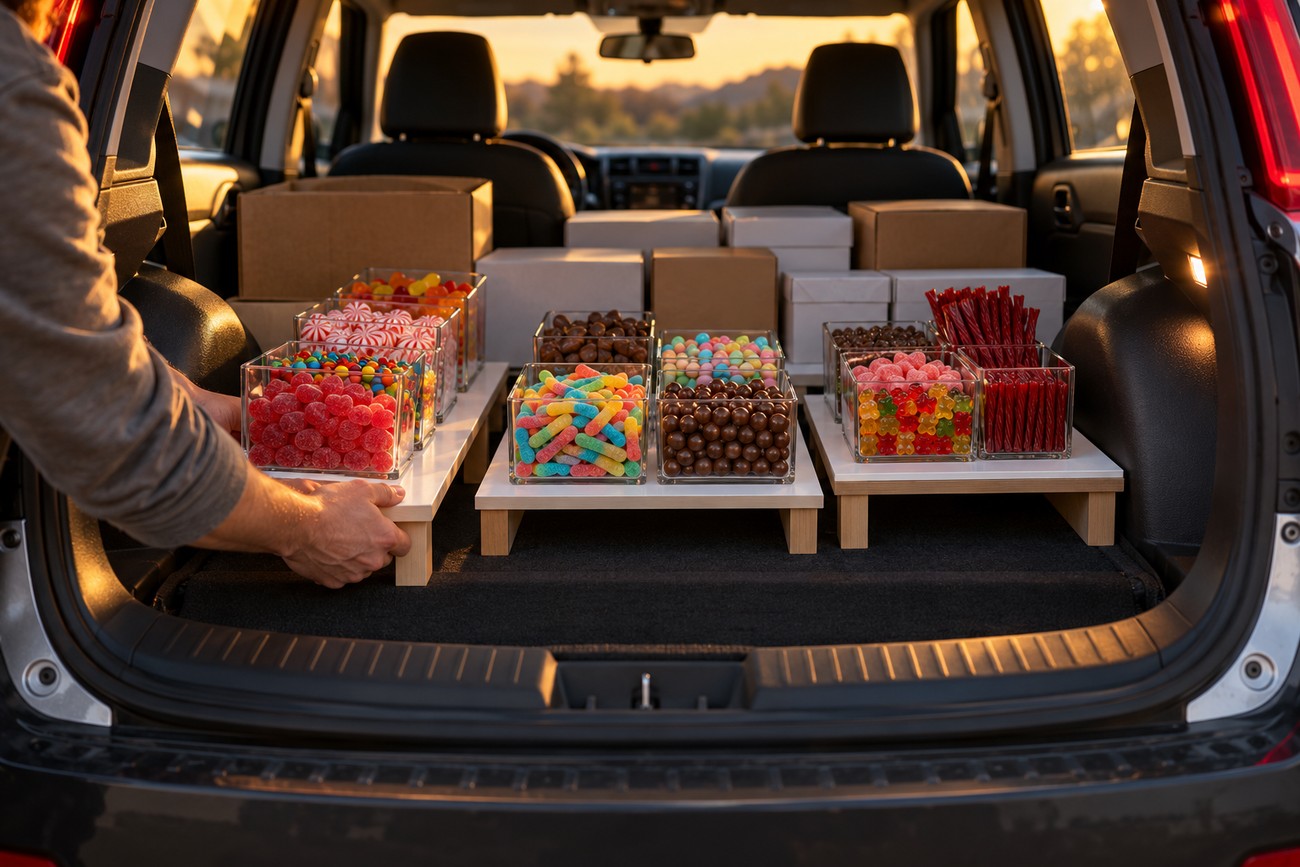
The 62.1 ft³ figure is not the same as a 62.1 ft³ stage. It is advertised total volume to the roof with the rear seats folded, while wheel arches, the floor step, the liftgate, and the safe opening reduce usable display space. The correction is to design around the opening and handoff zone first, then use the remaining space for reserve supplies.
The folded-seat surface is not perfectly flat. Treating it like a level platform can make rigid panels rock, shift, or pull on their attachments. Use flexible materials, short supported sections, or the upper floor position when hiding part of the unevenness helps, while remembering that the upper position reduces available volume.
A briefly idling vehicle is not safe with the liftgate open. Exhaust can enter the cabin and cause serious poisoning or death, so the engine should remain off whenever the liftgate is open. This also removes a common source of battery and accessory confusion during the event.
Weak daytime LEDs, loose paper decor, and unsecured overhead elements are predictable failure points. Aim for strong visual shapes at low height, reinforce anything within reach, and keep hanging pieces away from the liftgate path. A simpler display that stays visible and stable will serve children better than a crowded arrangement that needs constant repair.
Frequently asked questions
Why is Kia discontinuing the Kia Soul?
Availability of the Kia Soul is market- and model-year-specific, so a rumor or a change in one market does not by itself confirm a global discontinuation. Check Kia’s official regional model information and the exact vehicle model year before applying the 2024–2025 cargo figures to another Soul.
For planning, verify the vehicle’s seat layout, cargo-floor design, and liftgate arrangement directly. The 24.2 ft³ and 62.1 ft³ figures in this guide apply to the 2024–2025 Kia Soul data specified here, not automatically to every earlier or later model.
How can I remove Halloween decor from a Kia Soul without leaving residue?
Remove loose glitter, fibers, and cobweb material first with a soft brush or suitable vacuum attachment. Peel painter’s tape slowly back over itself rather than pulling it upward, then test any cleaner on a hidden area before using it on paint, seals, plastic, or upholstery.
Inspect the liftgate seals, cargo trim, and upholstery before closing the vehicle. Remove adhesive while it is still accessible, collect damp cardboard and fabric in sealed containers, and avoid scraping surfaces with sharp tools.
What are creative Kia Soul trunk-or-treat ideas for 2026?
Compact themes suit the Soul best: a low haunted ticket booth, a glowing creature mouth made from soft panels, or a mini night-market stall with a fabric canopy kept below the liftgate path. Each concept can use a low backdrop, a clearly lit candy container, and a side panel without relying on tall or rigid props.
Use color, lighting, and one strong silhouette instead of filling the opening with small items. Keep the front presentation separate from the candy reserve so the theme remains intact during refills.
What is the Kia Soul’s biggest weakness for trunk-or-treat use?
The main limitation is the gap between advertised cargo volume and usable display geometry. The uneven folded-seat surface, wheel arches, changing floor height, and liftgate trajectory constrain the practical stage before cargo volume becomes the deciding factor.
Plan around a low backdrop and an open handoff zone, then use the remaining cargo space for flexible decor and reserve candy. This approach also makes the display easier to secure, supervise, and remove.







