
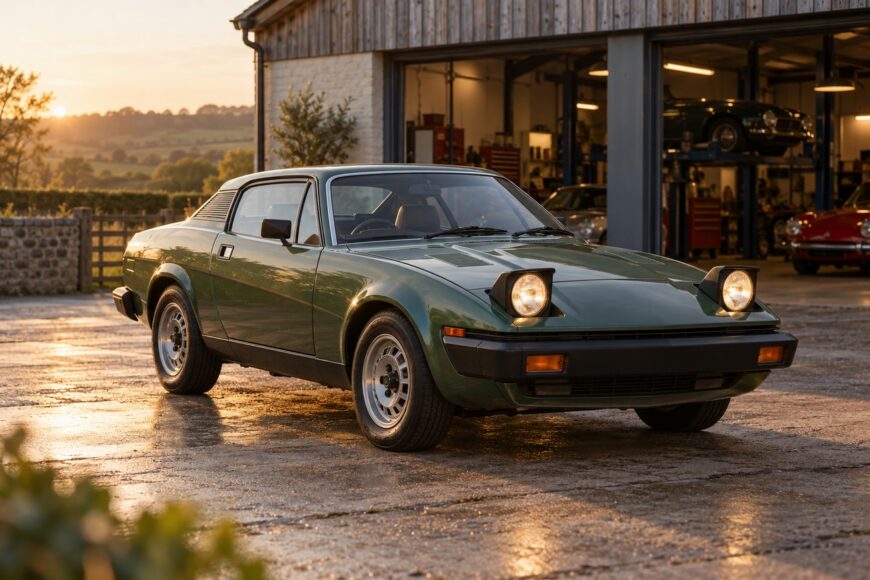
The Triumph TR7 arrived wearing a wedge-shaped body, concealed headlamps, and a slogan about “The Shape of Things to Come.” Its design promised a different future for Triumph’s sports-car range, while its early reputation suggested that the company had struggled to build that future properly.
That tension still defines the car. Some enthusiasts see an underappreciated British classic with genuine character; others see awkward styling, weak assembly quality, and too many unfinished jobs. The useful buying question is less about the badge or asking price than the condition of the shell, the maintenance history, and the quality of previous repairs.
This is an assessment of the TR7 as an affordable British classic for real ownership. Period road tests, modern enthusiast interest, and the evidence beneath a car’s paint all deserve consideration before money changes hands.
- The wedge that divided the Triumph faithful
- What a TR7 feels like on the road
- The expensive truth: rust comes before horsepower
- The smaller failures that make ownership feel bigger
- Buying a TR7 without buying someone else’s project
- A bargain classic, a tuning platform or a future collectible?
- Frequently asked questions
- What does TR7 stand for?
- What is a Triumph TR7 worth today?
- What are some common problems with the Triumph TR7?
The wedge that divided the Triumph faithful
The TR7 coupé was produced from 1975–1981, replacing the more traditional TR6 with a visibly modern design. The sharp nose, rising beltline, broad rear treatment, and pop-up headlights made it look closer to a small grand tourer from the future than to the open sports cars that had established Triumph’s reputation.
The TR7 Drophead Coupé entered series production in 1979. Its convertible format restored some of the visual connection with earlier TR models, although the body retained the wedge profile and the car remained a substantial departure from the familiar recipe. The front longitudinal engine and rear-wheel-drive layout preserved a mechanical link with Triumph’s past.
Traditional TR buyers resisted the change for understandable reasons. The TR7 looked enclosed, angular, and mass-produced beside the more delicate TR6, while its interior and construction did little to dispel concerns about industrial quality. Styling preference remains subjective, so calling the shape a failure misses why the car has survived as a niche classic.
The same design that limits its broad appeal gives it a clear identity today. Original colors, Limited Edition cars, special US-market versions, and complete factory configurations can attract collectors, while ordinary examples remain relatively illiquid. A buyer who likes the wedge has a better starting point than someone hoping the market will eventually make the car fashionable.
What a TR7 feels like on the road
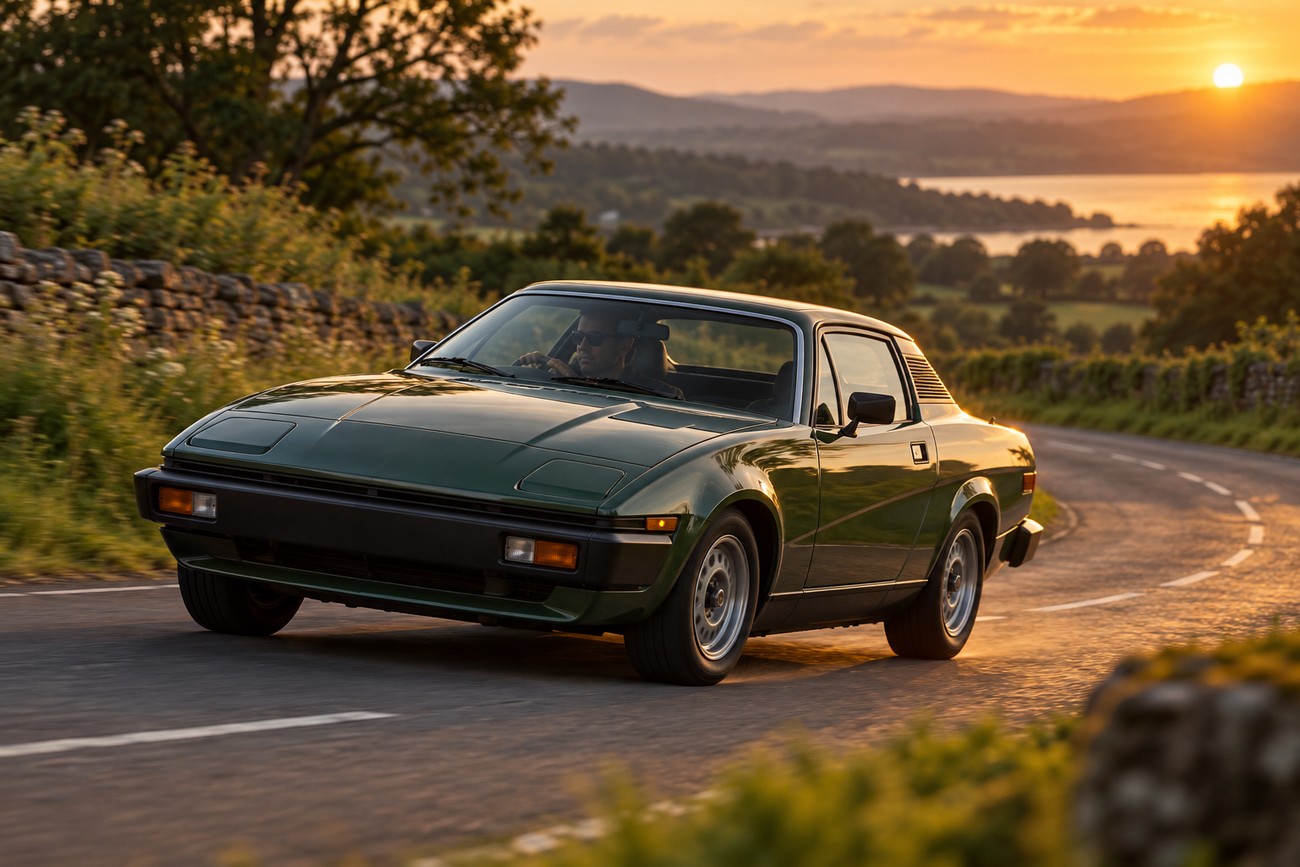
Most markets received a 2.0-litre inline-four Slant-four producing approximately 90–105 hp, depending on specification and emissions equipment. Most examples weigh approximately 1,050–1,150 kg, so the figures do not make the TR7 exceptionally quick by modern standards. The car’s character comes more from its rear-drive chassis, low seating position, and period mechanical feel.
MacPherson struts locate the front suspension, while a live rear axle with trailing links serves the rear. The layout is simple and generally repairable, though the front-heavy weight distribution contributes to noticeable cornering behavior and understeer. Worn dampers, tired bushes, poor alignment, or old tires can make that tendency feel much worse than it should.
The braking system uses front discs and rear drums. It is adequate when correctly maintained, yet many owners fit upgraded discs, calipers, or related components from other British Leyland models. Such changes can improve confidence, though the quality of installation matters more than the mere presence of upgraded parts.
Period reviews often judged performance mediocre. Owners of healthy cars with light carburetor and exhaust improvements may find them lively enough for the era, especially on a winding road where outright acceleration matters less. A properly sorted TR7 can be an enjoyable driver, while a neglected one feels slow, loose, noisy, and reluctant to change direction.
The expensive truth: rust comes before horsepower
Corrosion is widely regarded by TR clubs as the model’s central technical problem. Inspect the sills, rear chassis rails, headlamp pockets, door bottoms, and rear-suspension mounting areas before spending time admiring paint, wheels, or engine modifications. These locations affect structural integrity and can require extensive fabrication when rust has been allowed to spread.
Some corrosion develops behind inner panels and in difficult-to-see structural areas. A clean engine bay says little about the condition of the rear chassis, and fresh underseal can conceal repairs or active rust. Convertible cars deserve additional attention around the roof structure and its mounting areas, where access is limited and water can remain trapped.
Probe suspension mounting points and inner sill areas rather than trusting fresh underseal or a clean engine bay. A sound shell can support years of mechanical improvement; a rotten shell can consume the entire project budget before the engine receives attention.
The mechanical design is comparatively straightforward. Engines, brakes, suspension components, and cooling systems can usually be diagnosed and repaired by a suitably equipped workshop. Restoring distorted structural sections, aligning repaired panels, and recreating hidden corrosion protection is slower and more expensive.
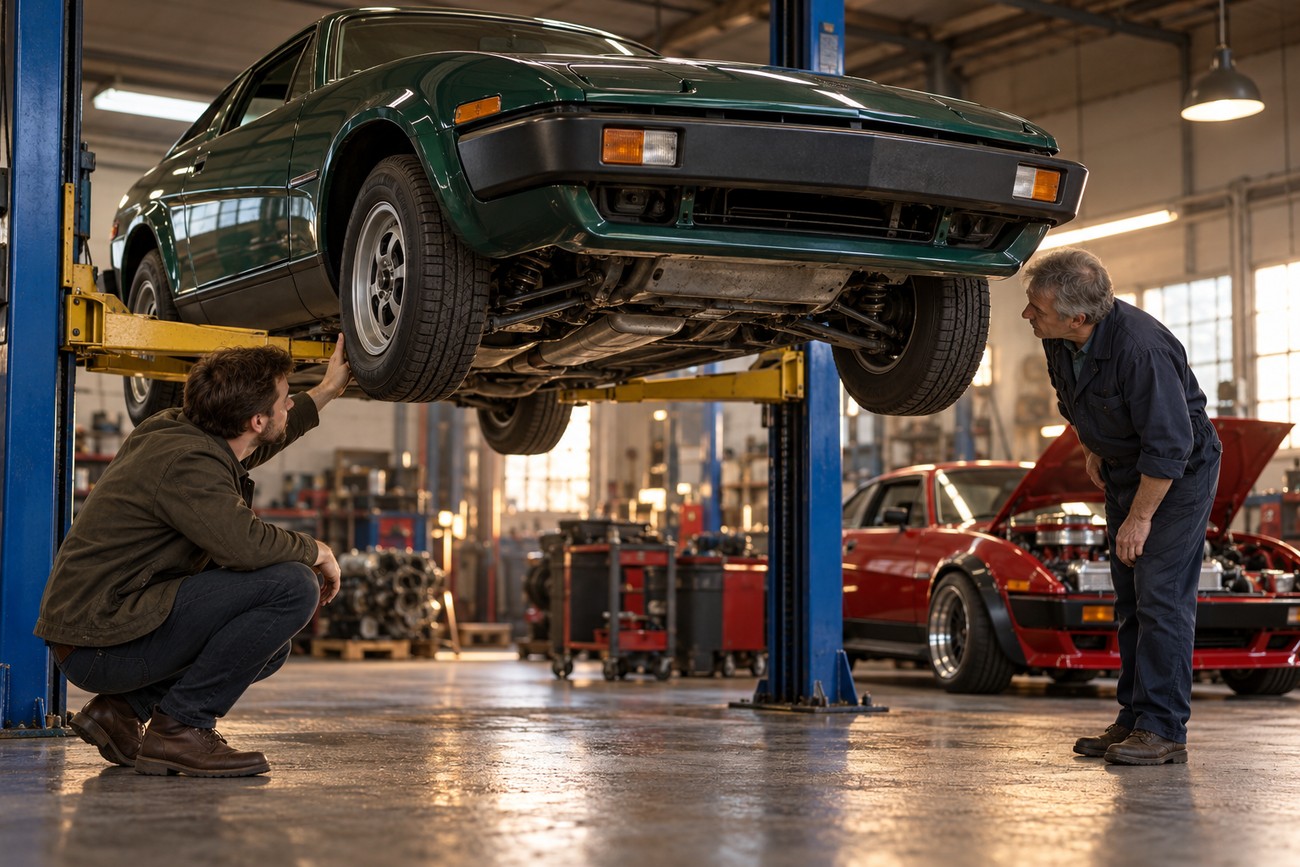
A sound body shell is usually more valuable than a recently running engine. “Starts and drives” may describe a car with low compression, leaking seals, unsafe suspension mounts, and a cooling system that only survives a short test drive. A proper inspection on a lift, with careful probing and access to the inner structure, is the sensible first expense.
The smaller failures that make ownership feel bigger
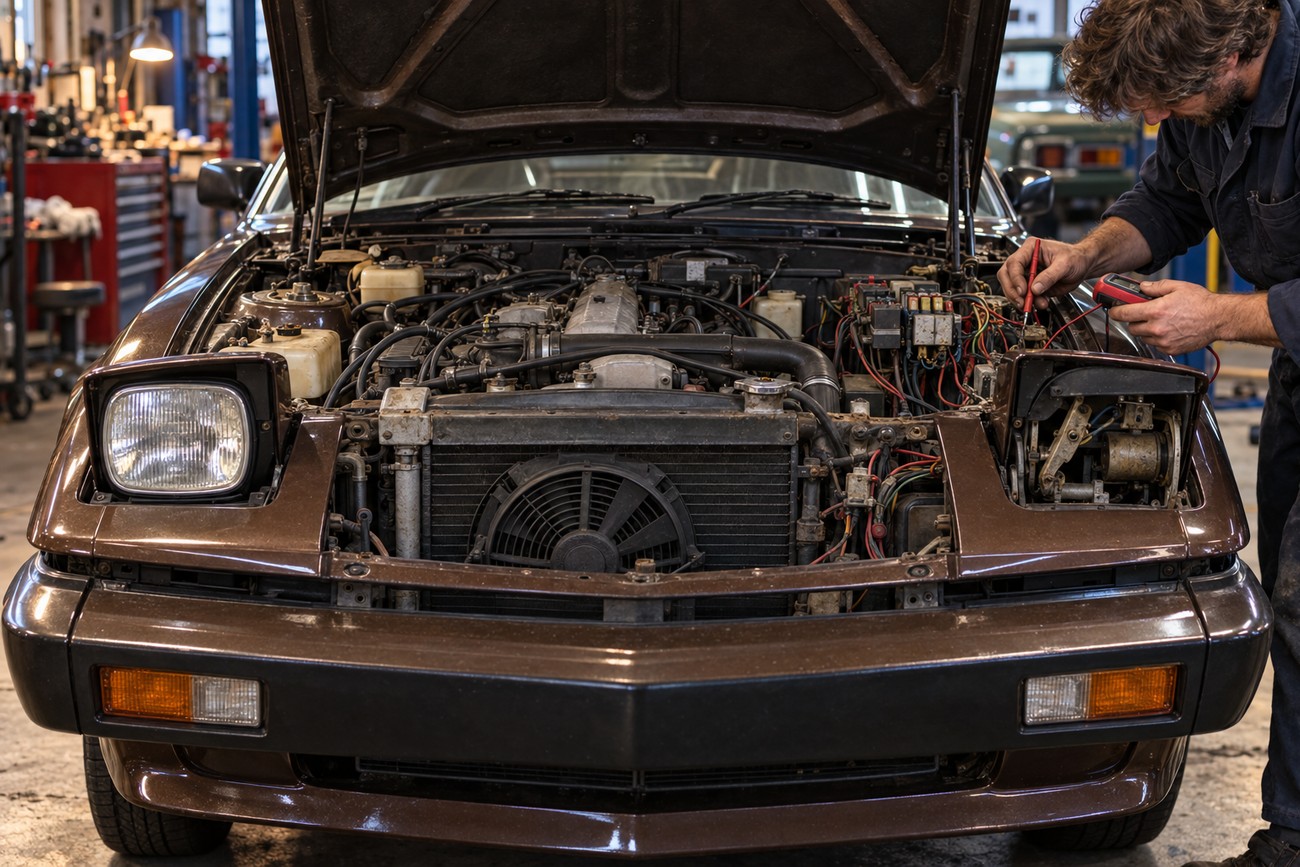
Lucas electrical systems can suffer from unreliable relays, wiring, and pop-up headlamp operation. Original systems are not automatically unusable, but years of amateur stereo installations, auxiliary gauges, alarm systems, and improvised repairs often create faults that are difficult to trace. The wiring should be judged by its condition and logic rather than by the reputation of the component supplier alone.
Overheating complaints are associated with marginal radiators and inefficient fans, especially in hot climates. A car that behaves acceptably on a cool morning may reveal a weak cooling system in traffic or during a warm-weather climb. Many owners upgrade the radiator, fan, controls, and hoses as preventive work, provided the modifications are installed cleanly and remain serviceable.
Build-quality complaints include uneven panel gaps, interior rattles, poor panel fit, and sagging doors. These faults do not always indicate a dangerous car, but they affect the experience every time the vehicle is used. A door that closes badly may require hinge or body repairs rather than a simple adjustment, and persistent rattles can make an otherwise sound classic feel unfinished.
Specific body and interior parts, including moldings and plastic trim, can be difficult to source. Club networks, enthusiast suppliers, and small specialist workshops are often more useful than a general parts retailer. The practical lesson is to locate likely sources before dismantling a rare trim component, since replacement may involve a long search rather than an ordinary online order.
Buying a TR7 without buying someone else’s project
Begin with the body, then move to the mechanical systems. Check the shell from underneath, inspect the suspension mounting points, lift carpets where possible, and look for mismatched repairs, fresh sealant, or paint that stops abruptly at structural seams. A late-production car is generally regarded as better assembled and less corrosion-prone than many early examples, although age and storage still matter more than the calendar alone.
Once the shell passes inspection, assess the engine properly. Compression testing, checks for oil leaks, cooling-system pressure and temperature behavior, and examination of the exhaust provide more useful evidence than a short drive. A car that starts instantly after weeks of standing may still have worn rings, poor cooling, or an engine that has been prepared only for the sale.
Inspect the wiring for added circuits, twisted connections, unused accessories, and modifications that cannot be explained with a diagram. Suspension wear, tired steering components, brake condition, and tire age also deserve attention. The cost of correcting several modest faults can quickly exceed the difference between a rough car and a well-maintained one.
Interior completeness has financial importance. Original trim, instruments, seats, door cards, and plastic fittings may be harder to replace than routine mechanical parts. Decide whether you want a usable driver, a sympathetic restoration, or a factory-correct car before buying, because each goal changes which defects are acceptable.
TR clubs and specialist communities can identify regional parts sources, known model variations, and repairers familiar with British classics. That support is especially valuable where few general workshops want to diagnose an older Triumph. Documentation, photographs of earlier work, and evidence of regular maintenance do not replace inspection, but they can distinguish a continuously improved car from one that has merely been stored.
A bargain classic, a tuning platform or a future collectible?
Comparable-condition TR7s generally remain less expensive than TR6s and TR8s, while interest in the model is gradually increasing. The market remains highly condition-sensitive, so a neglected example can be cheap for good reason and a documented, rust-free car can command much stronger interest without needing a famous engine.
Originality has become more relevant as conversions become common. V8 swaps and other engine changes can produce a faster, more desirable driving machine for some buyers, yet they also reduce the supply of cars retaining their original configuration. A conversion should therefore be judged as a complete engineering project, with attention to cooling, brakes, suspension, wiring, documentation, and installation quality.
Limited Edition cars, special US-market versions, original colors, and unusual factory details can add collector appeal. They do not override serious structural corrosion or poor workmanship. A rare specification with missing trim may be less satisfying to own than a standard car that is complete, straight, and mechanically dependable.
The purchase bargain is only one part of the ownership equation. Classic-car insurance, tax, storage, preventive maintenance, specialist labor, and parts sourcing all affect the real cost. A maintained TR7 can be dependable, but a neglected example commonly becomes a project requiring corrosion, cooling, and electrical work; that distinction should guide the decision more than optimism about future values.
Frequently asked questions
What does TR7 stand for?
TR7 means the seventh model in Triumph’s TR sports-car series. The name describes its position in the sports-car range, not the engine size, body style, or performance level.
That numbering also explains why the car was judged against earlier TR models. Buyers expected a familiar open sports car, while the TR7 introduced a wedge-shaped coupé with pop-up headlights and a more modern visual identity.
What is a Triumph TR7 worth today?
Its value depends primarily on structural condition, originality, specification, documentation, and running quality. A straight, rust-free shell with complete trim and convincing maintenance records deserves a different assessment from a freshly painted car with hidden corrosion or an incomplete interior.
Compare cars by condition rather than by advertised model year or engine modifications. A specialist inspection, evidence of structural repairs, and the availability of rare trim should influence the valuation more than a short test drive or a low asking price.
What are some common problems with the Triumph TR7?
Common problems include corrosion in structural areas, Lucas-related electrical faults, unreliable pop-up headlights, overheating, worn suspension components, poor panel fit, sagging doors, and missing or damaged trim. Amateur wiring modifications can make otherwise simple electrical faults considerably harder to diagnose.
Convertible cars also require careful inspection around roof mounting areas, while all versions benefit from checks of the cooling system and rear-suspension attachments. Most faults are manageable on a sound shell; structural rust and incomplete restoration work create the greatest risk.







