
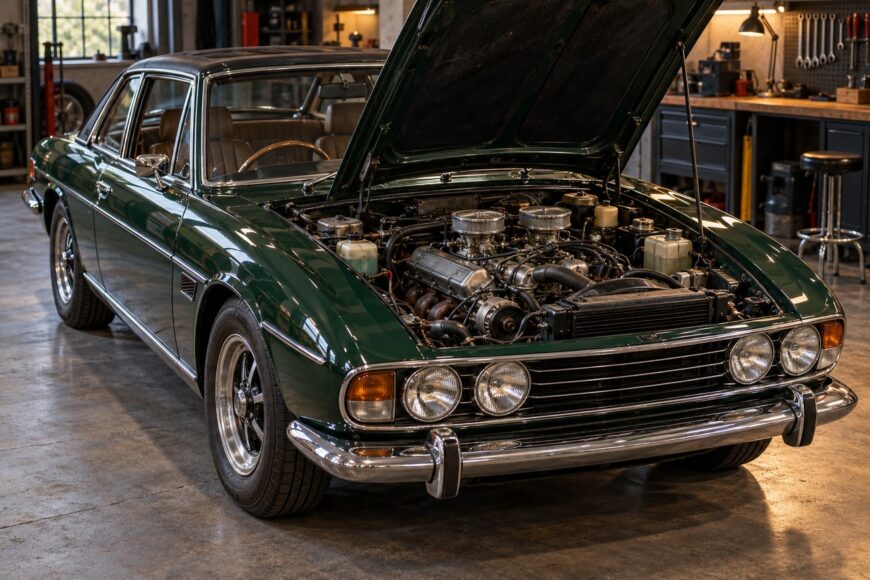
The Triumph Stag’s 3.0-litre V8 has the character that makes the car appealing: smooth power, a distinctive exhaust note, and enough torque for relaxed touring. It also has a reputation for overheating, failed head gaskets, and repairs that recur because the original cause was never removed.
The V8 can be made reliable, but the answer is not a single upgraded part or a fresh head gasket. Reliability depends on restoring the complete cooling system, checking for damage from earlier overheating, using the correct coolant, and judging the quality of previous assembly and maintenance. A sound Stag can be dependable; an average unrestored example remains a technical project.
- What Went Wrong with the Triumph Stag V8?
- Why Overheating Turns into Repeat Engine Failure
- Can the Stag V8 Be Made Reliable?
- The Cooling System Is the Real Restoration Project
- Buying a Triumph Stag: What to Check Before the V8
- Common Stag V8 Fixes That Do Not Really Fix It
- What Reliable Stag Ownership Actually Looks Like
- Frequently asked questions
- What was the problem with the Triumph Stag engine?
- What should happen after a Triumph Stag has overheated once?
- What is the most reliable V8 engine ever?
What Went Wrong with the Triumph Stag V8?
The Stag used a 2,997 cm³ (3.0-litre) petrol V8 with a 90-degree, liquid-cooled, SOHC layout and twin Zenith carburetors. Factory output was 145 hp (108 kW), with approximately 231 Nm at 3,500 rpm. Those figures made the engine suitable for a comfortable grand tourer, while its compact V8 format added mechanical and thermal complexity.
The recurring engineering complaint is overheating followed by head-gasket damage. The problem became especially damaging because the engine’s cooling system is sensitive to restricted flow, air pockets, thin coolant passages, and aging components. Once temperature control is lost, the consequences can extend beyond the original fault and leave the engine less tolerant of later use.
Age has magnified the original weaknesses. Radiators become restricted, pumps lose effectiveness, hoses deteriorate, thermostats and caps fail, and old repairs may leave passages partly blocked with sludge or corrosion. Poor assembly quality and inadequate servicing then turn a manageable cooling fault into a major engine repair.
Retrospective criticism of inconsistent British production quality appears in some classic-car commentary, but it should not be treated as a measured single cause. The useful conclusion is narrower: the Stag V8 demands better inspection and repair discipline than its reputation for simplicity might suggest.
Why Overheating Turns into Repeat Engine Failure
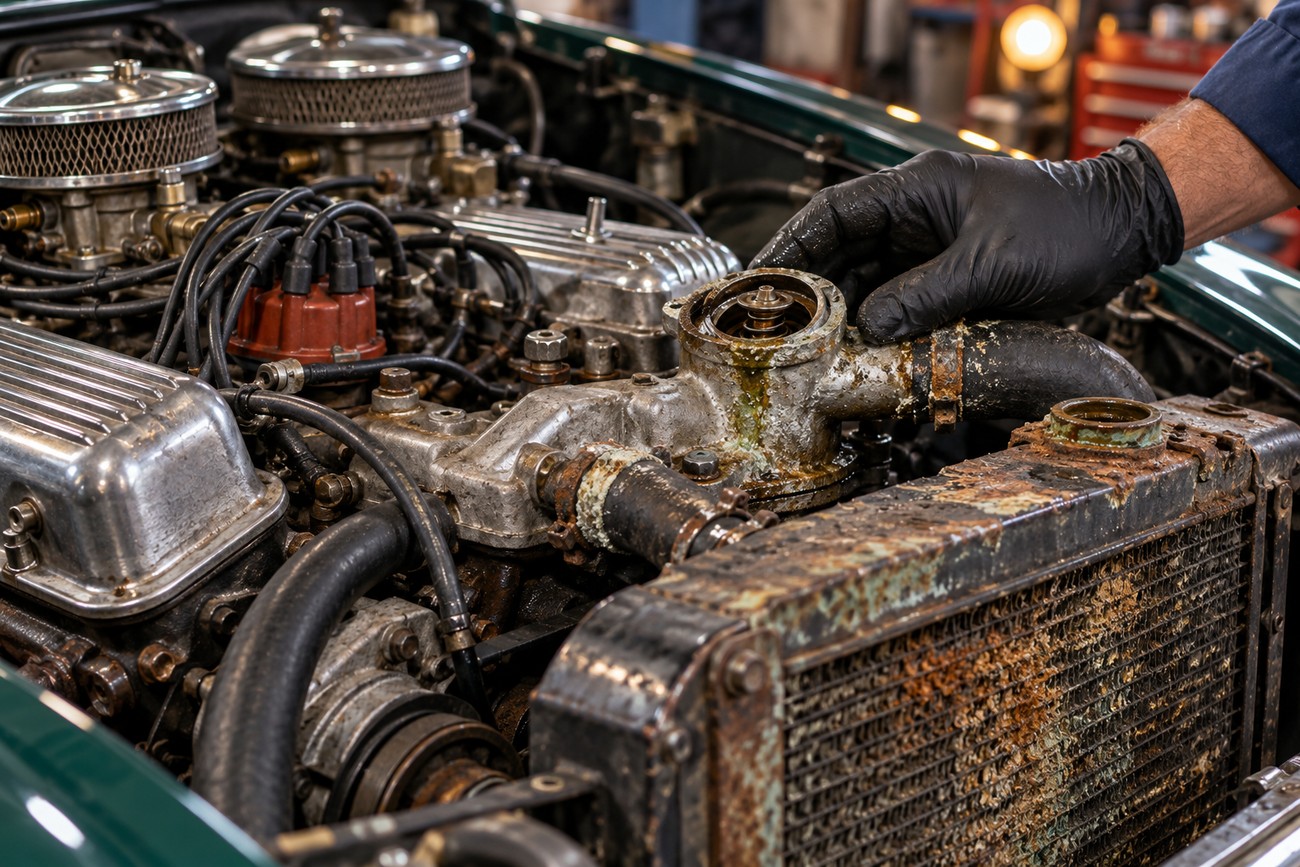
The failure chain often starts with reduced coolant circulation or a low coolant level. Thin passages and accumulated dirt restrict coolant flow and heat transfer, while trapped air can prevent part of the engine from receiving proper coolant flow. A radiator that looks acceptable externally may still be unable to remove enough heat when the car is moving slowly or carrying a sustained load.
Mixed aluminum-and-iron components are vulnerable to corrosion when plain water or unsuitable coolant is used. Corrosion products can contaminate the system, narrow already sensitive passages, and reduce the efficiency of the radiator and pump. The result may be a gradual rise in temperature rather than an obvious leak, which makes the fault easy to overlook.
A thermostat, pressure cap, water pump, hose, or radiator can be the weak link. A car may idle normally in a workshop because the engine is producing limited heat and the test is short. Traffic, hot weather, a long climb, or higher engine load can expose inadequate circulation that a stationary check never reveals.
After serious overheating, the head gasket is only one possible casualty. Heads, sealing surfaces, passages, and timing-chain components may have suffered heat-related stress or accelerated wear. Replacing the gasket without measuring and inspecting the surrounding parts leaves the original failure chain intact, so the next gasket becomes another temporary repair.
Can the Stag V8 Be Made Reliable?
Yes, the Stag V8 can be made reliable, provided reliability is treated as a complete restoration standard. The engine should be assessed together with its radiator, pump, thermostat, caps, hoses, passages, coolant, and bleeding procedure. A clean-looking engine bay does not prove that the internal cooling circuit is sound.
Correct assembly matters just as much as replacement parts. A repair must account for the condition of the heads and sealing surfaces, the cleanliness of coolant passages, and the quality of previous work. Timing-chain wear is also reported as an additional maintenance and failure concern, so a rebuild that ignores the timing system may leave another source of trouble in place.
One enthusiast source reports up to 150,000 miles without major problems for a correctly developed engine. That is a qualified single-source claim, not a universal guarantee or a prediction for an average Stag. It does, however, support the more useful conclusion that the V8 is not inherently beyond saving.
Restored examples and neglected examples should therefore be considered different products. A documented engine with a fully renewed cooling system may provide long service, while a car that merely starts, idles, and has a recent gasket fitted may still be carrying hidden damage.
The Cooling System Is the Real Restoration Project
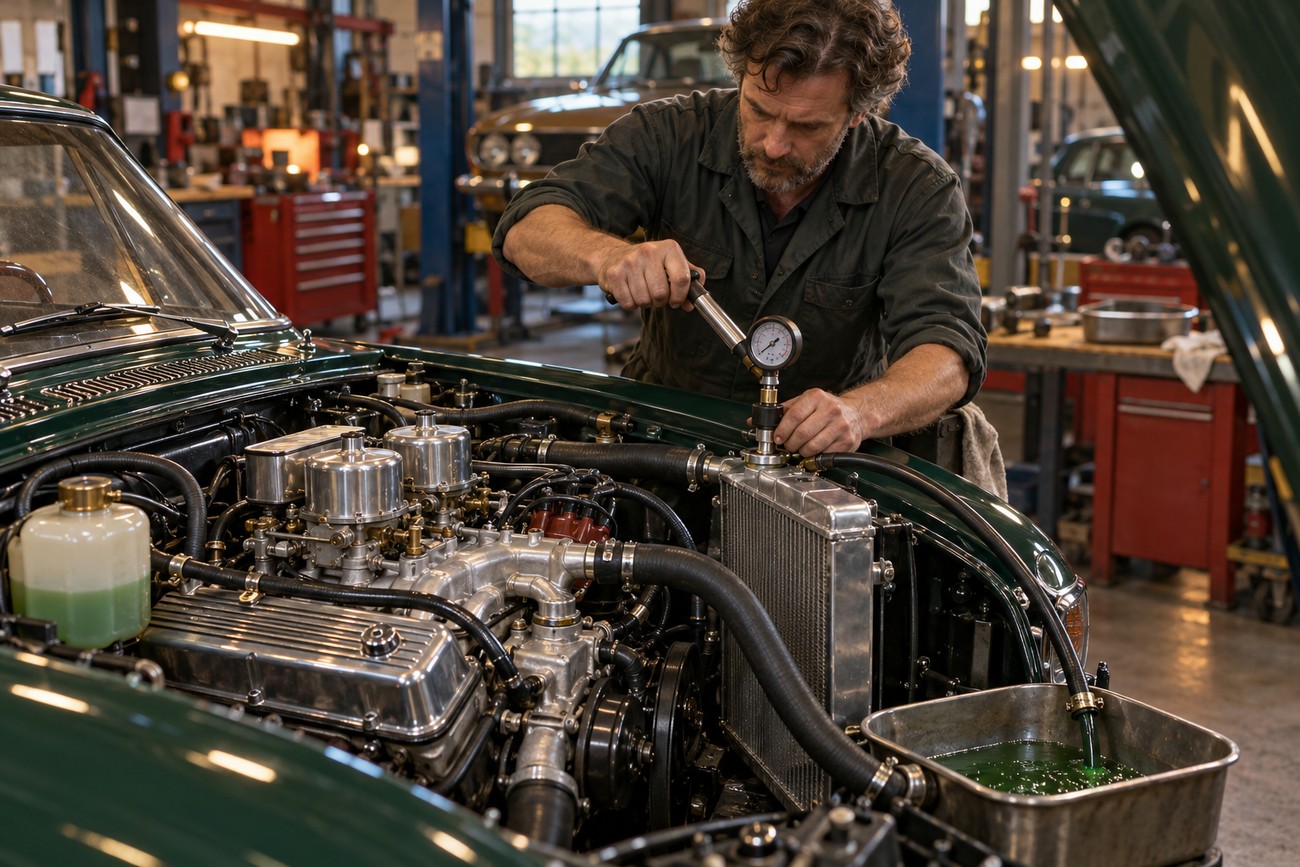
Begin with the whole circuit rather than choosing a favorite replacement part. The radiator, water pump, thermostat, caps, hoses, and engine passages must work together, and the coolant must be suitable for the mixed aluminum-and-iron construction. The system also needs to be filled and bled correctly, because trapped air can recreate a circulation problem after an apparently successful repair.
Flushing is part of the repair, not cosmetic preparation. Sludge and rust left in the block or radiator can move after components are replaced and restrict flow again. If the old coolant shows contamination, the condition of the passages deserves particular attention before the engine is judged ready for normal driving.
Coolant-flow restrictions should be investigated before accepting another head-gasket replacement as a real fix. The gasket is often where the damage becomes visible, while the cooling circuit remains the reason it happened.
Testing should include heat and load, not only a short stationary idle. A Stag that does not boil in the driveway can still overheat in traffic, hot weather, or under sustained load. Temperature behavior, coolant level, pressure, and signs of renewed contamination should be monitored after the repair.
Buying a Triumph Stag: What to Check Before the V8
Ask for evidence of previous overheating, head-gasket work, cooling-system restoration, and timing-chain repairs. The quality and completeness of the records matter more than a long list of parts. “New gasket” has little value if there is no information about the radiator, passages, pump, head condition, or the reason the original gasket failed.
Inspect the coolant for sludge, rust staining, or an obviously unsuitable mixture, and look for signs that plain water was used. Check hoses, caps, radiator condition, and evidence of repeated disturbance around the engine. Internal corrosion may not be visible from outside, so an uncertain coolant history should be treated as a risk rather than dismissed as an appearance issue.
Do not use the odometer as the main measure of engine condition. On an old Stag, poor repair history can matter more than mileage because one serious overheating event may leave partly hidden damage. Repeated gasket replacements, unexplained cooling work, or a pattern of short ownership can indicate that the underlying fault has never been resolved.
A proper inspection should include a cold start, a fully warm test, and a drive that places the cooling system under realistic load. The engine should be assessed for stable temperature behavior and clean operation, while the seller’s explanation should be compared with physical evidence. A running engine is a starting point for inspection, not proof of health.
Common Stag V8 Fixes That Do Not Really Fix It
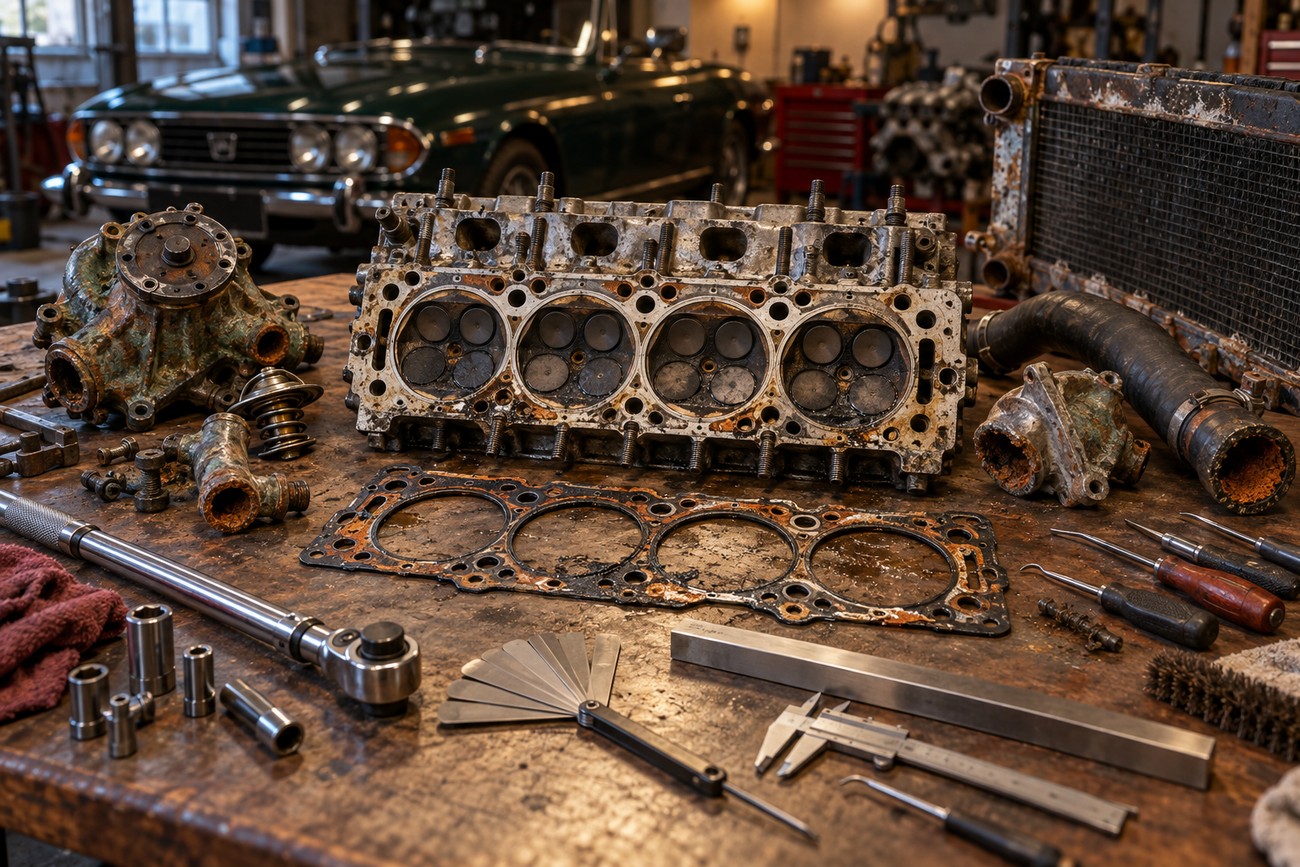
The most persistent mistake is replacing the head gasket alone. That may restore compression for a while, but it does not clear restricted passages, repair a weak pump, restore a blocked radiator, or correct a faulty thermostat or cap. If overheating caused the gasket failure, the cause must be diagnosed and repaired at the same time.
Plain water and unsuitable generic coolant create another avoidable risk. The mixed aluminum-and-iron system needs an appropriate coolant and proper maintenance; corrosion can gradually damage the passages and contaminate the circuit. Skipping the flush after repair leaves the material that caused the restriction ready to circulate again.
It is equally unsafe to assume that a car is healthy because it currently starts and does not boil at idle. A marginal system may fail only after heat builds in traffic or during sustained load. After serious overheating, the engine deserves a reassessment of its heads, gasket surfaces, passages, and timing-chain condition before normal use resumes.
Some owners fit alternative engines, which demonstrates how difficult a full original-engine restoration can become. That choice does not prove every original V8 is unusable, and it does not remove the need to inspect the rest of the car. The best solution depends on the condition of the existing engine, the quality of available work, and the owner’s restoration goals.
What Reliable Stag Ownership Actually Looks Like
Reliable ownership starts with known history. You need confidence that the engine has sound assembly, clean coolant passages, suitable coolant, and a cooling system capable of controlling temperature under real driving conditions. Preventive attention is more valuable than repeatedly repairing the aftermath of overheating.
Monitoring matters because damage can accumulate after one serious event. A car that seems improved after a repair should still be watched for changing coolant condition, unstable temperature, renewed pressure, or other signs that the original problem remains. Early investigation is less disruptive than allowing another overheating episode to weaken the engine further.
The Stag is not automatically a hopeless car, but it is unforgiving of neglected cooling systems and poor-quality repairs. Well-restored examples are reported to provide long service, while average unrestored cars remain risky even if their engines sound good during a brief inspection.
The practical verdict is simple: buy condition and workmanship, not the badge or the reputation. The V8 can be made reliable through complete cooling-system restoration, correct coolant, sound assembly, and disciplined maintenance. A gasket-only repair, an attractive engine bay, or a normal idle test cannot provide the same assurance.
Frequently asked questions
What was the problem with the Triumph Stag engine?
The documented recurring problem was overheating, often followed by head-gasket damage. Thin coolant passages, restricted flow, air pockets, aging components, corrosion, and inadequate servicing could combine to make the engine vulnerable, especially in traffic or under load.
Some retrospective accounts also blame inconsistent British production quality. That is commentary rather than a measured universal cause. A more useful assessment separates manufacturing history from the factors that can be inspected today: cooling-system condition, repair quality, assembly, and maintenance history.
What should happen after a Triumph Stag has overheated once?
Normal use should not resume simply because the engine still runs. The heads and gasket surfaces, coolant passages, cooling components, and timing-chain condition should be reassessed, with the system flushed and the original cause of overheating identified.
A serious first event can leave hidden or cumulative damage that makes the next failure easier to trigger. The repair is successful only when temperature control is restored under realistic load and the engine shows no continuing signs of contamination or loss of coolant.
What is the most reliable V8 engine ever?
There is no universally most reliable V8 without defining the application, maintenance standard, parts support, and restoration quality. A design that is dependable in regular service may be a poor choice for a rare classic if replacement parts and specialist knowledge are limited.
The Stag V8 is best judged in that context. Its thermal sensitivity gives it a weaker reputation than many simpler V8s, but a properly restored example can be dependable. The condition of the individual car matters more than a general ranking.







