
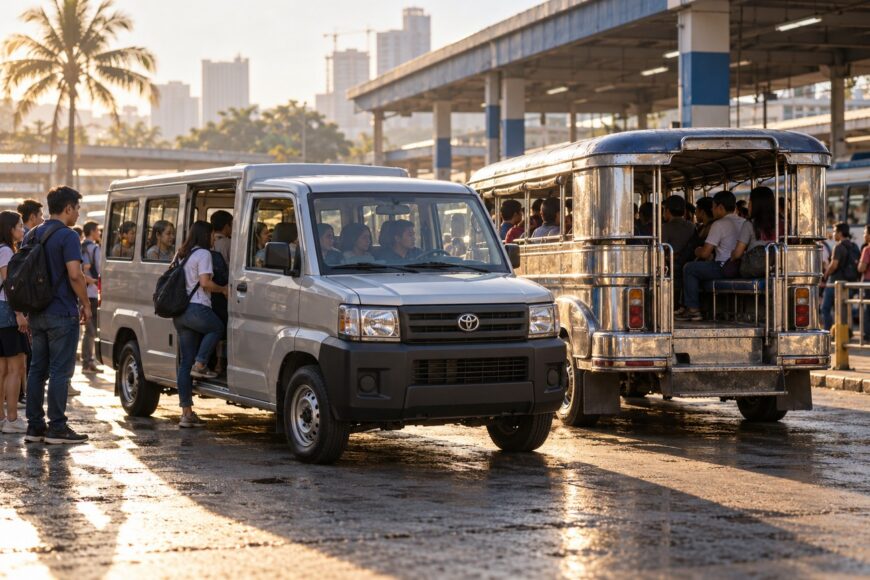
The Tamaraw name is familiar to Philippine operators, but the Toyota Tamaraw MPUV Class 1 presents a different buying decision from a traditional jeepney. A cooperative needs to know whether its approved capacity matches peak demand, whether passengers can board quickly on a stop-heavy route, and whether the vehicle and its required equipment can earn enough to cover upkeep.
Seating descriptions need particular care. The layout described in the available brief holds 12 people in total: two in front, including the driver, and 10 on rear benches. That corresponds to 11 passengers excluding the driver, subject to confirmation in the approval documents for the exact vehicle. Counting the driver as a fare-paying seat can distort a route’s revenue forecast before the Tamaraw makes its first trip.
- What the Tamaraw is—and where it fits among jeepneys
- Tamaraw MPUV: the specifications that matter on a route
- The 11-versus-12-seat question is an approval question
- What passengers and drivers gain—and give up
- The ownership costs a brochure cannot settle
- Three mistakes that can make a workhorse unusable on its route
- When the Tamaraw is the right jeepney replacement
- Frequently asked questions
- How much is a Toyota Tamaraw in the Philippines?
- What should a cooperative check before signing Tamaraw financing papers?
- What is the price of a 2026 Toyota Hilux 4×4 in the Philippines?
What the Tamaraw is—and where it fits among jeepneys
The Toyota Tamaraw MPUV Class 1 is the passenger-focused variant discussed here. Tamaraw utility and cargo models share the name, but they are not automatically approved passenger public utility vehicles. A low price for a bare or cargo-bodied unit therefore says little about the cost of putting an approved vehicle on a route.
Its appeal is a compact passenger layout with equipment intended for modern public transport. On a route with moderate demand, that may suit a cooperative that values a defined seating plan and onboard service systems. It should not be treated as a capacity-for-capacity replacement for every traditional jeepney, particularly a longer vehicle serving heavy peak loads.
The distinction matters during procurement. Compare the completed passenger vehicle, its approved seating plan, and its installed equipment with the requirements of the intended service. A brochure for another Tamaraw body style cannot establish that the unit being offered is eligible to carry paying passengers.
Tamaraw MPUV: the specifications that matter on a route
These figures describe the MPUV specification in the brief; confirm the exact variant against current Toyota documents and the completed vehicle before ordering.
| Item | Tamaraw MPUV specification in the brief | Route relevance |
|---|---|---|
| Dimensions | 5,068 mm long; 1,785 mm wide; 2,280 mm high | Check stops, narrow streets, and height clearance. |
| Wheelbase and turning | 3,085 mm wheelbase; stated minimum turning radius of 5.45 m | Test turns with the completed body and accessories. |
| Engine | 2GD-FTV 2,393 cc diesel; 150 PS at 3,400 rpm; 343 N·m at 1,400–2,800 rpm | Match output to the exact MPUV variant rather than another Tamaraw specification. |
| Transmission | Five-speed manual | Consider driver workload in stop-start traffic. |
| Suspension | Independent double-wishbone front suspension with springs; rear leaf-sprung axle | Assess ride quality both lightly loaded and at the permitted load. |
| Brakes | Ventilated front discs; rear drums | Plan inspection around frequent urban stops. |
| Gross vehicle weight | Approximately 2.79 tonnes | Verify the completed vehicle’s rating; this is not its payload. |
Gross vehicle weight is the maximum permitted weight of the loaded vehicle, subject to the rating confirmed for that unit. The brief’s 885–1,125 kg payload range concerns utility and van variants; it is not an allowance to add passengers or luggage to an MPUV.
Specifications describe what the manufacturer supplies, while transport approval establishes how a particular completed vehicle may operate. Ask for both sets of documents. Neither the table nor an engine-output figure from a different market establishes passenger approval.
The 11-versus-12-seat question is an approval question
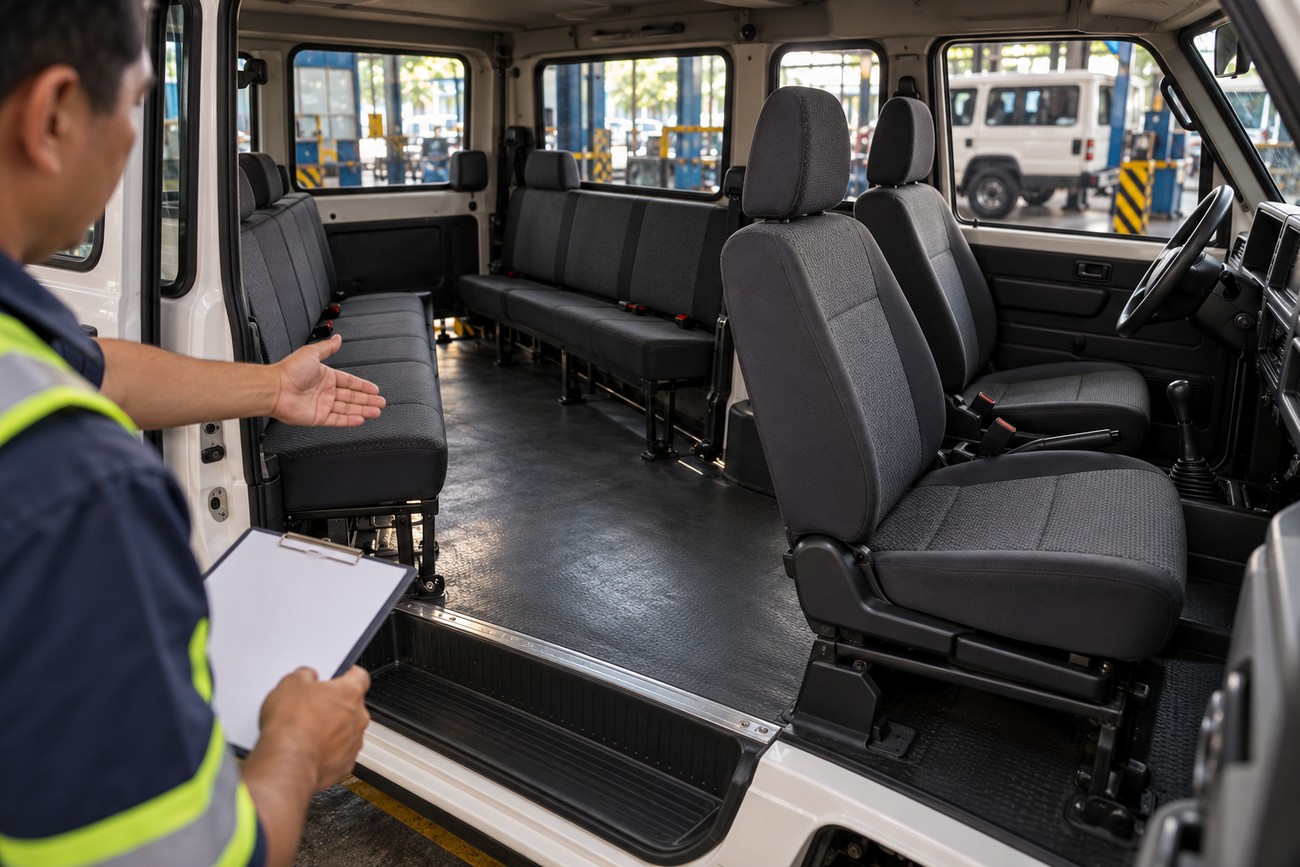
The arithmetic behind the competing descriptions is straightforward. Two front occupants, one of them the driver, plus 10 people on longitudinal rear benches make 12 occupants. That layout carries 11 passengers excluding the driver, which is the public-transport capacity stated in the brief.
An operator still needs the approved seating plan for the exact unit. Bench placement, exits, and the completed body can affect what is authorized. A “12-seater” media description does not grant permission to sell 12 passenger fares, and a nominal seat count should not replace a check of the vehicle’s route and approval documents.
The brief also claims a Department of Transportation Modern PUV Class 1 approval dated May 2026. That approval and date require confirmation from a primary transport-authority document before they can be treated as established. A buyer should request the relevant approval record and check that its vehicle identification and configuration match the unit for sale.
What passengers and drivers gain—and give up
The passenger-version equipment listed in the brief includes air-conditioning, CCTV, automated fare collection, Wi-Fi, GPS, an emergency exit, an emergency hammer, and a reversing camera. Confirm what is installed and what the intended service requires. Each system can support daily operations only if staff know how to use it and it remains working.
The layout also has to work at the curb. Operators have reported tight movement around the benches when the vehicle is full and slower boarding during busy periods. A cooperative can learn more from a timed boarding trial at its actual stops than from a seating diagram alone, especially where passengers carry bags.
Reported ride concerns deserve a test with a light passenger load. The rear leaf springs are suited to carrying weight, but drivers and passengers have described a harsh ride when few seats are occupied. Reports also mention diesel and cabin noise; these are operating impressions, not measured findings for every unit.
For drivers, the five-speed manual can become tiring on a route with repeated stops and long traffic delays. The stated 5.45 m minimum turning radius is useful on paper, yet it does not account for every clearance issue created by the completed body, mirrors, or fitted accessories. Drive the proposed route, including terminal turns and tight pickup points, before committing a fleet.
The ownership costs a brochure cannot settle
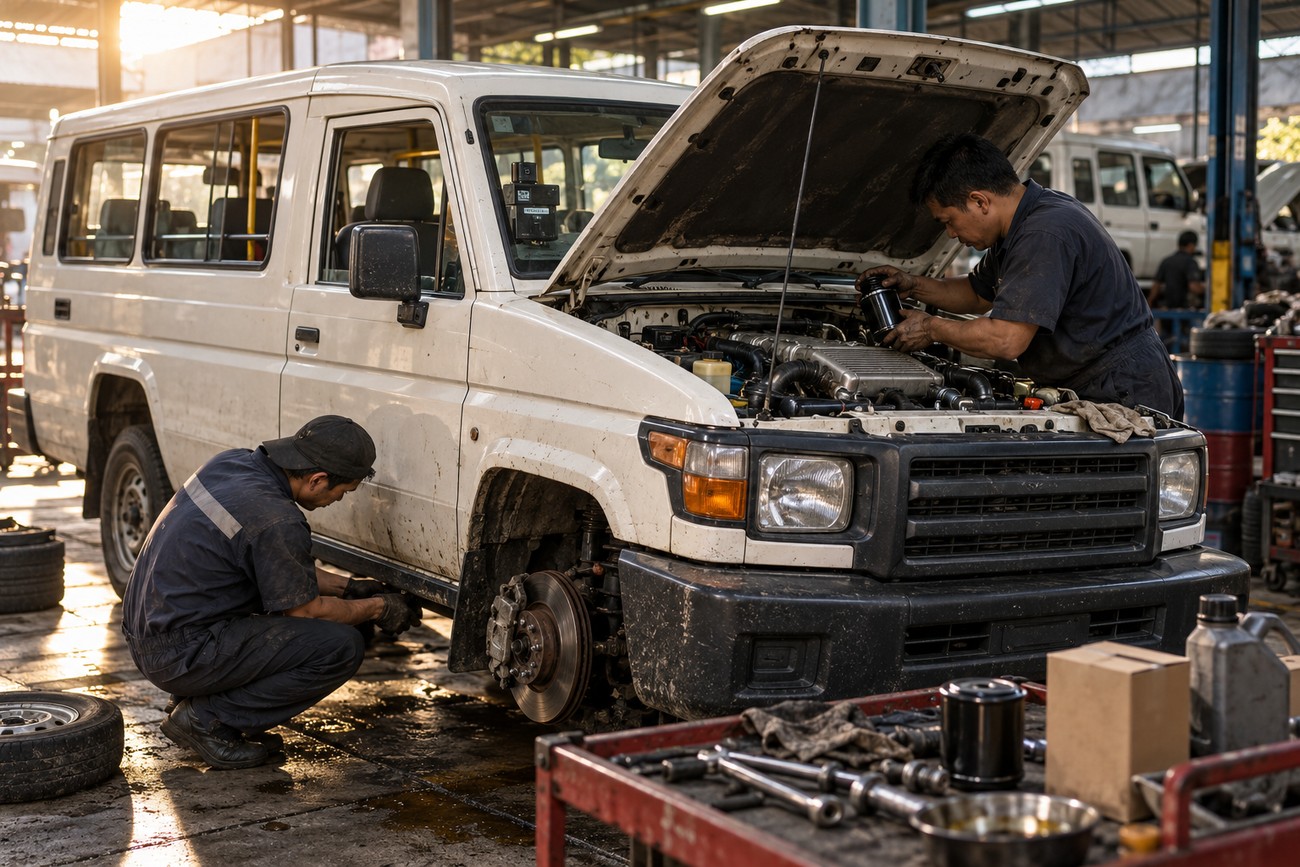
The 2GD-FTV is a 2,393 cc turbo-diesel, so scheduled oil and filter service and attention to engine condition belong in the operating budget. Frequent stopping also makes brake and suspension inspection important. Skipping maintenance may save a day’s expense while increasing the risk of losing service time later.
Passenger equipment creates another maintenance line. A fare collector, camera, GPS unit, or connectivity system can need diagnosis even when the engine runs normally. Operators have raised concerns about that upkeep, but the brief provides no measured Tamaraw failure rates or lifetime-cost totals.
Cabin condition matters because the vehicle works through heat, humidity, and repeated boarding. Inspect seat coverings, hard surfaces, bench mountings, and air-conditioning performance on the finished unit rather than assuming that a new body will remain comfortable with minimal attention. Record defects early so small repairs do not become extended downtime.
Set aside utility-variant payload figures when estimating these costs. Their stated 885–1,125 kg range does not establish the MPUV’s permitted passenger load, and overloading can put additional demand on brakes and rear suspension. Budget against the approved passenger configuration and the luggage typically carried on the route.
Three mistakes that can make a workhorse unusable on its route
The first is buying a utility or cargo Tamaraw on the assumption that inexpensive benches will turn it into an approved MPUV Class 1. Passenger service may require a particular completed body, seating plan, exits, and operating equipment. Conversion work undertaken before those requirements are checked can leave a cooperative with a vehicle it cannot place on its intended route.
The second mistake is using an advertised occupant count as a loading target. The brief describes 11 passengers excluding the driver for the public-transport configuration, pending confirmation for the specific unit. Adding another fare or excess luggage can exceed an approved layout or loading limit even if people can physically fit inside.
The third is changing wheels or suspension to address ride complaints without checking the vehicle’s ratings and approval conditions. Alterations could affect inspection, safety, insurance, or service eligibility, depending on what was changed and the applicable requirements. Train drivers as well: they should know the approved emergency exit and how to operate the fare collection and CCTV systems before carrying passengers.
When the Tamaraw is the right jeepney replacement
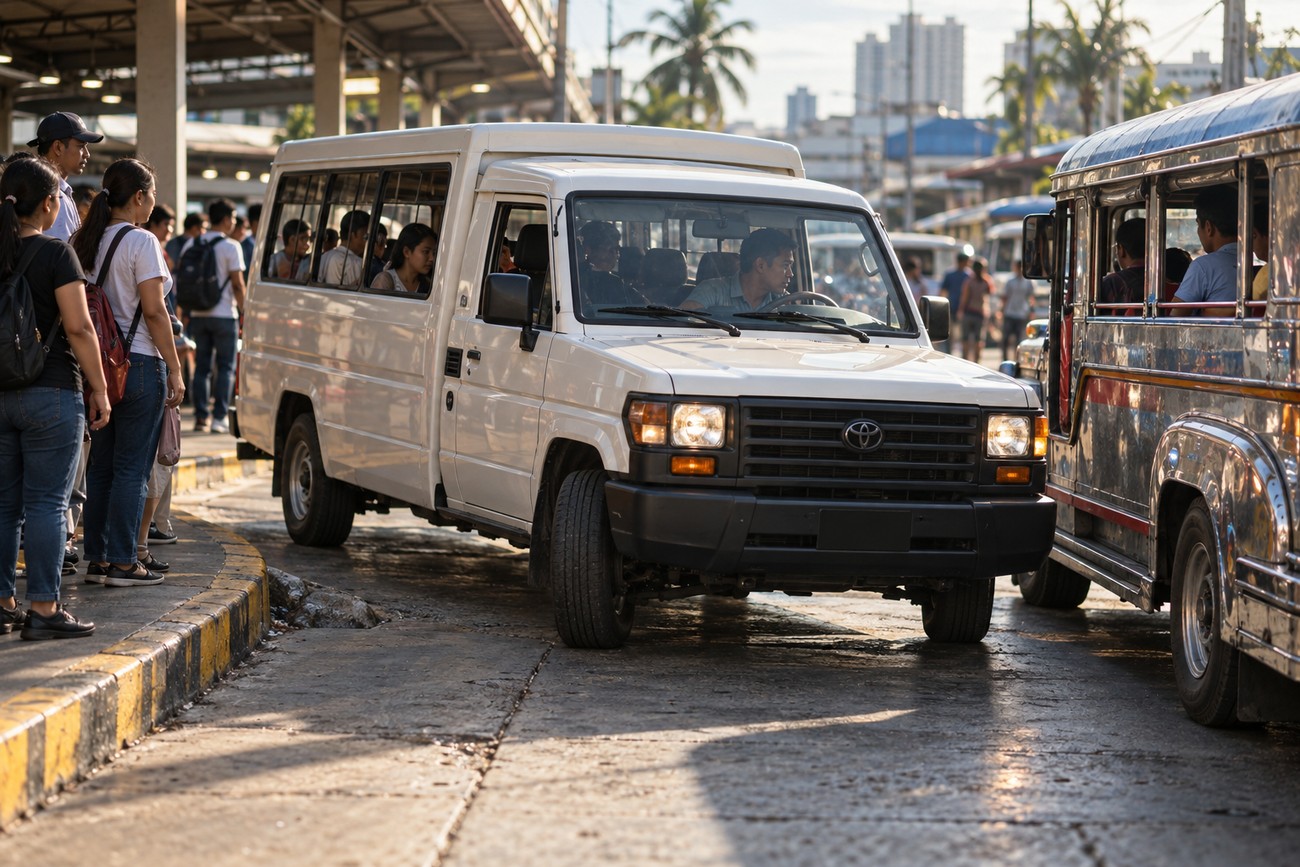
Start with the route’s busiest trips. If the allowance of 11 passengers excluding the driver is confirmed for the unit and meets demand without routinely leaving riders behind, the Tamaraw MPUV Class 1 may be a workable size. A route that regularly needs more seats calls for a higher-capacity option, whatever the Tamaraw’s appeal on quieter trips.
Next, test the completed vehicle where it will work. Watch boarding at crowded stops, check sightlines and clearance at terminals, and make the turns drivers face each day. The stated 5.45 m minimum turning radius is a useful starting point, but bodywork and accessories can change how much space a maneuver needs.
Finally, price the whole service, including the approved passenger body, required equipment, servicing, and likely downtime. Use the brief’s 150 PS and 343 N·m only as the stated MPUV engine specification until it is confirmed for the unit quoted. Figures such as 148 hp and up to 400 N·m for other Tamaraw markets or variants are not interchangeable with it.
Frequently asked questions
Prices and terms depend on the exact vehicle offered. Request written, variant-specific documents before comparing proposals.
How much is a Toyota Tamaraw in the Philippines?
No verified Philippine selling price is available in the brief. Request a current quotation for the exact Tamaraw variant and, for public transport, the completed passenger configuration. Ask the seller to separate the base vehicle, passenger body, required onboard equipment, registration-related charges, and any financing costs so quotations cover the same scope.
What should a cooperative check before signing Tamaraw financing papers?
Check the payment schedule, total amount payable, insurance requirements, and whether the policy covers the completed passenger body and installed equipment. Establish who pays during repairs or approval delays, and whether payments continue while the vehicle cannot serve its route. Compare those obligations with expected earnings from the approved passenger capacity, using the lender’s current written terms rather than an advertised monthly payment alone.
What is the price of a 2026 Toyota Hilux 4×4 in the Philippines?
No verified price for a 2026 Hilux 4×4 is available here. Ask a Philippine Toyota dealer for a current quote specifying the trim and transmission, and check which registration and other charges are included. Hilux pricing should not be used as a quote for the Tamaraw MPUV.







