
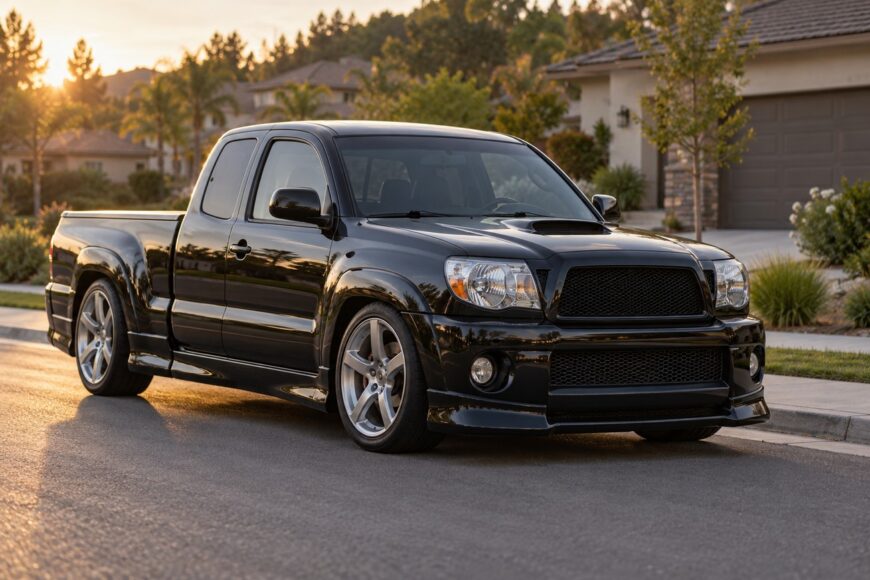
A Tacoma built for asphalt rather than trails sounds like a contradiction. The Toyota Tacoma X-Runner made that choice deliberately: rear-wheel drive, a lowered stance, and a chassis tuned to take paved corners with more composure than a conventional pickup. Its sports-car-like intent was real, even if its size and weight remained unmistakably truck-like.
That tension defines the used-buying decision. A sound X-Runner offers an unusually engaging way to drive a pickup, while a tired one can leave you with a harsh ride, limited bad-weather traction, and hard-to-find trim-specific parts. The value lies in the chassis working as intended, not in the badge alone.
- What the Tacoma X-Runner Was Built to Be
- Tacoma X-Runner Key Specifications
- How the X-Runner Feels on the Road
- The Daily-Driving Compromises Nobody Sees in Photos
- Buying a Used Tacoma X-Runner Without Buying Someone Else’s Project
- X-Runner Myths, Misidentified Versions, and the Real Verdict
- Frequently asked questions
- How many Tacoma X-Runners were made?
- Which Tacoma should you stay away from?
- Was the Tacoma X-Runner factory-supercharged?
What the Tacoma X-Runner Was Built to Be
The X-Runner was a factory street-performance Tacoma rather than an off-road package dressed up with sporty details. Its rear-wheel-drive layout and lowered suspension shifted the emphasis toward steering response and paved-road stability. Buyers expecting the clearance and traction of a four-wheel-drive Tacoma will find that its priorities run in the opposite direction.
Factory equipment included 18-inch wheels and low-profile tires. The stance served a purpose beyond appearance: the track was widened by approximately 75 mm, giving the truck a broader footprint. Together with the suspension changes, that helped distinguish its behavior from a standard Tacoma on smooth pavement.
The trade-off is present every time the road turns rough. Less clearance limits where you can drive without worrying about the underside, while shorter tire sidewalls leave less cushioning between a pothole and a wheel. The X-Runner still has a pickup bed, but its setup asks you to use that utility with more care.
That makes its appeal specific. It suits someone who enjoys the balance of a well-sorted chassis and wants to carry occasional cargo, rather than someone seeking a small sports car or an all-purpose 4×4. Treating it as a conventional Tacoma with a body kit misses the engineering—and the compromises—that define it.
Tacoma X-Runner Key Specifications
The cited 2005–2006 catalog provides the baseline below. Period reviews and other Tacoma sources report different power, torque, and transmission details, so match any claim to the truck’s year and market before treating it as definitive.
| Item | Cited specification | What to check |
|---|---|---|
| Engine | 4.0-liter 1GR-FE naturally aspirated V6 | Confirm the engine and any modifications on the vehicle. |
| Power | 236 hp, 2005–2006 catalog baseline | Some period sources quote approximately 240–245 hp. |
| Torque | 361 N·m, 2005–2006 catalog baseline | Some period sources quote approximately 372–382 N·m. |
| Transmission | 5-speed manual in the cited X-Runner catalog | Some Tacoma coverage mentions a 6-speed; verify the exact year and market. |
| Mass | 1,651 kg in the cited 2005–2006 specification | Equipment and modifications can affect an individual truck. |
| Dimensions and wheelbase | 5,286 × 1,895 × 1,775 mm; 3,246 mm wheelbase | Figures come from one listed specification. |
| Payload and fuel tank | 730 kg; 79 liters | Figures come from one listed specification; check the vehicle’s applicable ratings. |
| Measured wheel output | Approximately 197.4 hp and 237.7 lb-ft, reported by MotorTrend | Wheel measurements are not directly comparable with catalog engine ratings. |
How the X-Runner Feels on the Road
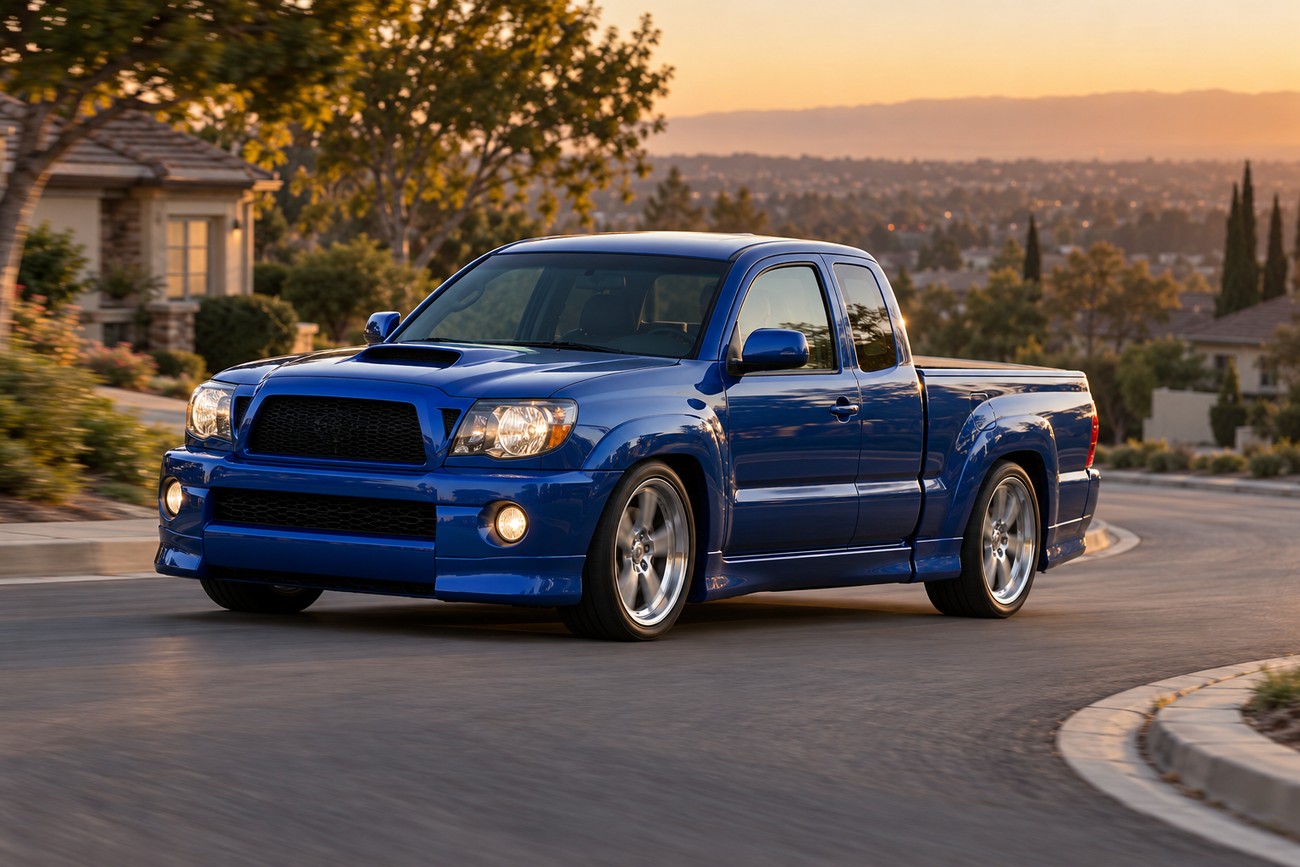
The X-Runner’s strongest argument is its chassis balance rather than an extraordinary acceleration figure. Its wider track and revised suspension help it feel more settled through a paved bend than a buyer might expect from a pickup. The long 3,246 mm wheelbase contributes to stability, although the truck still needs space in tight streets and parking areas.
Longer control arms and a rear axle sourced from the Tundra formed part of the revised hardware. Their benefit is best judged as a complete setup: steering response, body control, tire choice, and suspension condition all influence whether the truck feels cohesive. No axle specification can compensate for worn components or unsuitable wheels.
The naturally aspirated 4.0-liter V6 is more satisfying when allowed to rev than when asked for effortless low-speed thrust. Drivers expecting immediate shove from light throttle inputs may find it less forceful than the published engine figures suggest. MotorTrend reported approximately 197.4 hp and 237.7 lb-ft at the wheels on a dyno, figures measured after drivetrain losses rather than at the engine.
That distinction matters when comparing it with a modified truck or a modern performance vehicle. The standard X-Runner’s reward is the way it responds to steering and throttle on a suitable road, not a claim to be the quickest vehicle in a straight line. A brief drive on smooth pavement alone will flatter it; include rougher streets to understand the whole experience.
The Daily-Driving Compromises Nobody Sees in Photos
The lowered suspension and low-profile tires give the X-Runner much of its character, but they also make its ride notably firm. Repeated sharp bumps can become tiring on a commute, especially where pavement is broken. A standard Tacoma is generally the more forgiving choice for roads that seldom stay smooth.
Reduced clearance changes ordinary habits. Steep driveways, potholes, and curbs deserve more attention, and the tires offer less sidewall protection for the 18-inch wheels. Damage from a careless impact is an ownership risk tied to the design rather than evidence that every X-Runner has a suspension defect.
Rear-wheel drive brings another decision in wet or wintry conditions. Appropriate tires and careful driving matter, yet they do not turn the truck into a four-wheel-drive Tacoma. If regular travel involves snow, steep slippery roads, or unpaved access, the street-focused layout may be a poor match.
Fuel consumption can also disappoint anyone expecting a sporty truck to be economical in return for its performance. The V6 must move a substantial pickup, and driving that keeps it in its stronger rev range adds to fuel use. Consider your normal route and driving style rather than relying on the sport designation to imply efficiency.
Finally, a bed does not erase the limitations of the chassis setup. One listed specification gives a 730 kg payload, but the applicable rating for the individual vehicle, tire condition, and how a load affects clearance still matter. The X-Runner is better understood as a road-focused truck with useful carrying ability than as the default choice for maximum utility.
Buying a Used Tacoma X-Runner Without Buying Someone Else’s Project
Start by establishing exactly what is for sale. Verify the year and market, identify the transmission on the vehicle, and check engine-output claims against appropriate documentation. Published figures of 236 hp, approximately 240–245 hp, and different torque values should not be blended into a single specification for every X-Runner.
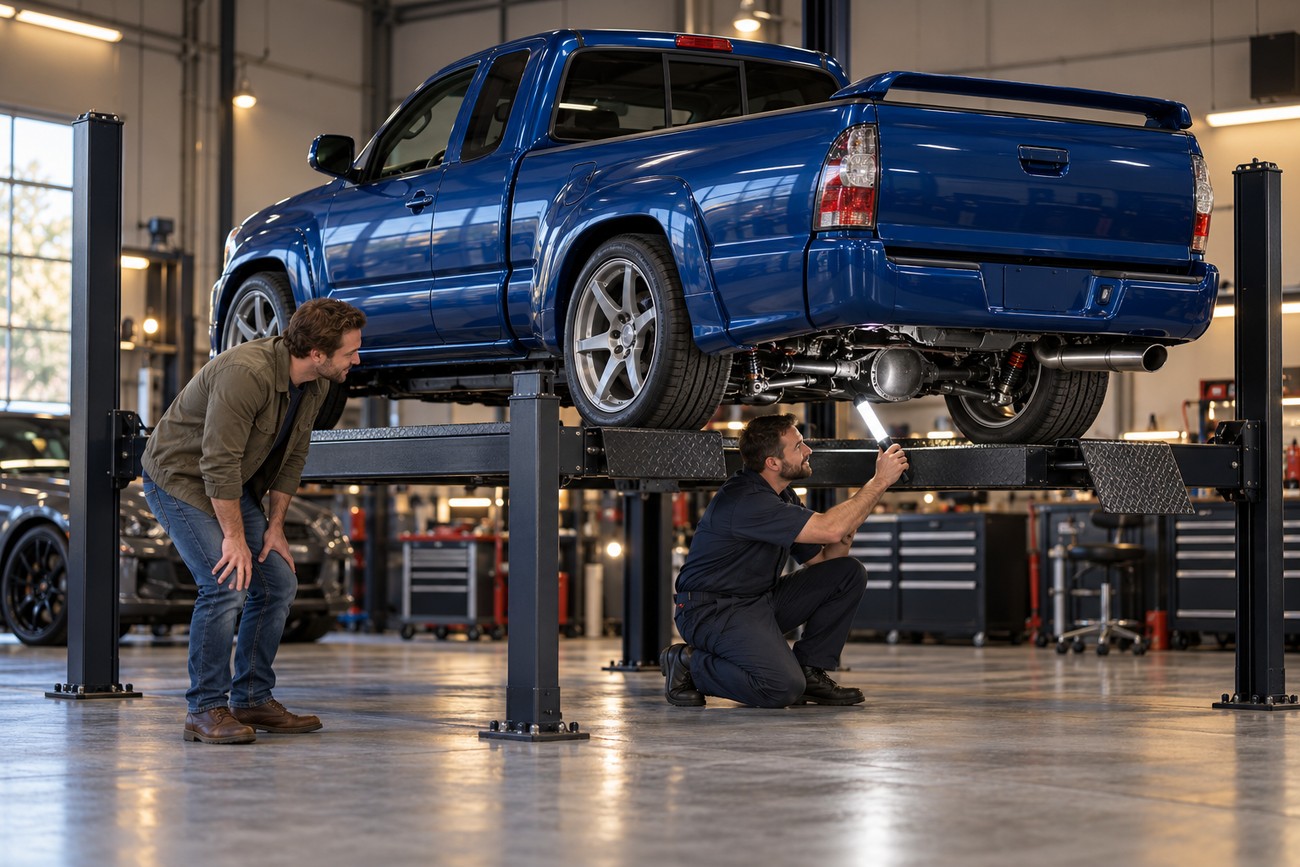
Next, inspect the suspension and bushings closely, then drive the truck over uneven pavement as well as through a few steady corners. Listen for knocks, note whether it tracks consistently, and look for uneven tire wear. A neglected example can lose the controlled response that makes this version worth seeking and begin to feel like an exhausted work truck.
Check all four wheels for impact damage and confirm that the tires are a sensible, matching fitment. Oversized or excessively heavy wheels can dull steering response; a taller tire may also change the feel that the factory package was designed around. Examine the underside and body for signs of curb strikes or accident repairs, particularly where a tidy exterior could hide a compromised alignment.
Modified trucks need a clear record of what was changed and why. Suspension alterations, engine work, or forced induction can make an example appealing to an enthusiast, but they also make factory specifications a less useful guide to its condition. If the seller cannot explain the work or provide supporting records, budget for a more thorough inspection.
Rarity is a practical concern rather than a reason to buy the first one you find. Suitable replacement components and trim-specific parts may take more time or money to locate than ordinary Tacoma items. Paying close attention to completeness and condition before purchase is usually easier than trying to reconstruct the intended handling afterward.
X-Runner Myths, Misidentified Versions, and the Real Verdict
The first misconception is that an X-Runner is an off-road Tacoma with sportier looks. Its rear-wheel-drive layout, lower stance, and road-focused tires point elsewhere. It may handle paved corners with welcome composure, but that achievement does not increase ground clearance, winter traction, or ability on a rough trail.
Another is that every example has 245 hp or the same manual gearbox. The cited 2005–2006 catalog lists 236 hp and a 5-speed manual; other period sources give approximately 240–245 hp, while some broader Tacoma coverage mentions a 6-speed. Check the specific vehicle rather than using a review of another year or market as its specification sheet.
Separate factory X-Runners from other Tacoma or TRD versions, concepts, and owner-built trucks. Supercharger references may concern modified vehicles or concepts; forced induction was not standard X-Runner equipment. Nor does a sporty chassis automatically improve towing, payload use, or day-to-day practicality.
A well-preserved X-Runner makes sense for a buyer who wants a manual, rear-wheel-drive pickup primarily for paved roads and accepts a firm ride as part of the deal. If you need regular rough-road access, four-wheel-drive traction, or the broadest choice of replacement parts, a conventional Tacoma is the more sensible purchase. Condition should decide the final choice: this truck’s distinctive balance is also the first thing neglect can take away.
Frequently asked questions
These points are worth checking separately from a truck’s driving impression. They can prevent an appealing listing from becoming a purchase based on an unsupported claim.
How many Tacoma X-Runners were made?
The information presented here does not establish a verified global production total. A count quoted for one market, model year, or sales category should not be presented as the total for every X-Runner. If rarity affects your buying decision, ask what territory and years a claimed figure covers.
Which Tacoma should you stay away from?
Avoid an individual Tacoma with neglected maintenance, unexplained accident repairs, or major modifications that cannot be inspected and documented. A model badge or generation alone is a weaker warning sign than the condition of the truck in front of you. For an X-Runner, be particularly cautious if worn suspension, mismatched tires, or altered ride height prevent it from driving as the package was intended.
Was the Tacoma X-Runner factory-supercharged?
No supercharger should be assumed to be part of a standard factory X-Runner. References to boosted trucks may describe aftermarket builds, modified vehicles, or concepts. If a listed truck has forced induction, assess its installation, supporting work, and documentation as modifications to that individual vehicle.







