
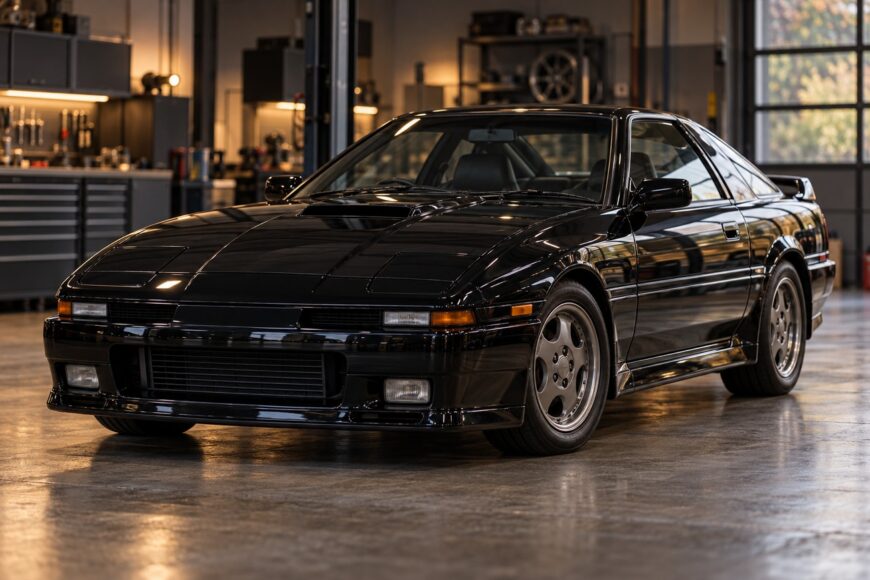
The Toyota Supra 3.0 GT Turbo A carries the prestige of a homologation special, yet buying one today means dealing with an aging MA70 that may have been crashed, modified, or rebuilt several times. The badge can be rare while the car beneath it is mechanically ordinary, structurally compromised, or impossible to authenticate.
Rarity, factory authenticity, mechanical condition, and real-world performance are separate questions. A fast test drive cannot establish identity, and an original specification cannot compensate for a neglected 7M-GTEU. The Turbo A matters because Toyota built it for a competition requirement, not because every surviving example was a race car.
- Why the Turbo A Exists: Homologation Before Hype
- Turbo A vs Regular MA70 Turbo: What Actually Changes
- The 7M-GTEU Specification: Power, Hardware, and Mass
- How to Verify a Genuine Turbo A
- Ownership Reality: 7M Reliability and Parts Scarcity
- Driving Feel, Market Value, and the Myths That Distort It
- Frequently asked questions
- Why does a strong test drive not prove that a Supra is a genuine Turbo A?
- Can standard MA70 parts be used when Turbo A components are unavailable?
- Why is Toyota discontinuing the Supra?
- Which Toyota looks like a Supra?
Why the Turbo A Exists: Homologation Before Hype
The Toyota Supra 3.0 GT Turbo A was a road-going homologation version of the third-generation A70 Supra, also identified by its MA70 chassis code. Toyota produced it around 1988–1989, with reported production of 500–600 cars. That limited run was tied to FIA and JAF Group A competition requirements and Japanese touring-car racing.
Group A regulations required manufacturers to build a defined number of road cars related to the competition machine. The road car therefore had to establish a suitable production basis for the engine, turbocharger, intake system, and other relevant hardware. The Turbo A was the customer-facing result of that process, while the racing versions received further preparation for circuit use.
TOM’S and other teams used related Supra race cars in Japanese championships in the late 1980s. That association gives the Turbo A genuine competition history, but it should not be simplified into the claim that every road-going Turbo A was a race car in disguise. Its importance lies in the factory specification and the reason that specification existed.
The limited production also explains why many examples remained in Japan and why later modifications create such a problem for buyers. A car may have acquired period racing parts, aftermarket electronics, or replacement body panels without becoming more authentic. For a collector, documented continuity is more valuable than an aggressive appearance.
Turbo A vs Regular MA70 Turbo: What Actually Changes
The Turbo A was a distinct specification rather than a regular MA70 Turbo carrying a special badge. The critical differences are concentrated in the engine air path, turbocharger, control electronics, and calibration, so identification requires inspection of the hardware and records together.
| Area | Toyota Supra 3.0 GT Turbo A | Regular MA70 7M-GTE Supra | Why it matters to a buyer |
|---|---|---|---|
| Engine specification | 7M-GTEU inline-six, approximately 3.0 liters | Standard 7M-GTE specification | An engine swap or replacement block does not prove Turbo A identity. |
| Turbocharger | Modified or larger CT26 turbocharger | Regular MA70 turbocharger specification | The turbo must be checked for correct type, condition, and provenance. |
| Intake and intercooler | Revised intake and Turbo A-specific intercooler arrangement | Standard MA70 components | Accident repair and tuning often remove or replace these visible clues. |
| ECU | Different ECU with Turbo A calibration | Regular 7M-GTE ECU | A universal or standard replacement ECU can erase the original specification. |
| Fuel calibration | Revised fuel-system calibration matched to the Turbo A hardware | Regular 7M-GTE calibration | Boost and power claims are meaningless without matching control hardware. |
| Identification | Must correspond with VIN, factory codes or plates, documentation, and hardware | Ordinary MA70 identity | Badges, acceleration, and a modified engine are insufficient evidence. |
The 7M-GTEU Specification: Power, Hardware, and Mass
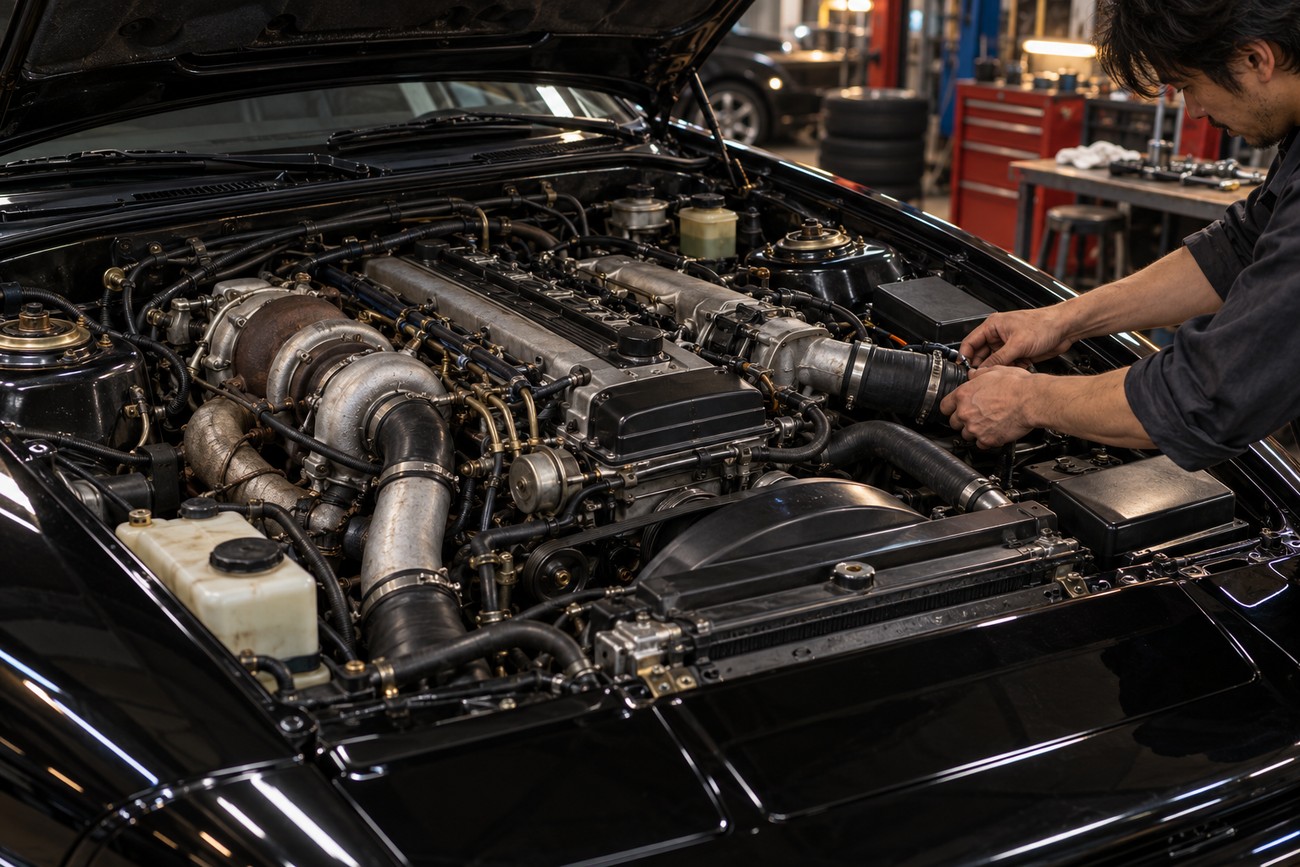
Japanese data reports approximately 270 hp at 5,600 rpm and 358 N·m at 4,400 rpm for the 7M-GTEU Turbo A specification. Period homologation or official documentation is also commonly cited at approximately 260–265 hp, reflecting regulatory treatment and the agreed power limit of the era. These figures should be presented as different documentary references, not forced into one supposedly exact number.
Claims of factory output above 300 hp are not established by the documented figures used here. Numbers above that level generally relate to tuning, measurement differences, or rumor. Modern dyno results are useful for assessing an individual car, but they cannot rewrite the factory specification or authenticate a Turbo A.
The layout is familiar: rear-wheel drive, a five-speed manual transmission, and a three-door liftback body based on the MA70. Reported curb weight is approximately 1,530–1,550 kg. That mass matters on the road because the Turbo A delivers the character of a substantial grand tourer rather than a stripped, lightweight track car.
The revised intake, intercooler, CT26 turbocharger, ECU, and fuel calibration were intended to support the homologation package, not to make the car an effortless modern performance machine. A healthy example can feel forceful and authoritative, but its response depends heavily on boost control, cooling, engine assembly, and the condition of the original systems.
How to Verify a Genuine Turbo A
Start with the car’s identity, not its engine bay. A genuine Turbo A should be supported by the combination of VIN, factory specification, identification plates or codes, surviving documentation, and the correct Turbo A-specific hardware. A Turbo A badge, a replacement 7M-GTEU, or an impressive acceleration run proves none of these points by itself.
Inspect the intake, intercooler, turbocharger, ECU, and fuel-system components as a connected package. One correct-looking part can be fitted to an ordinary MA70, while an authentic car may have lost original components during a mechanical repair. The ECU deserves particular attention because a standard or universal replacement may make the engine run while removing a key part of the factory identity.
Look closely at the front-end structure and cooling details. Grilles, air ducts, and other small aerodynamic or cooling features can disappear during accident repair, especially when a replacement front clip is sourced from a regular Supra. Their absence is not conclusive alone, but it should trigger a deeper comparison with period documentation and factory codes.
Japanese auction listings may describe the vehicle simply as a Supra MA70, so the listing title is not proof that the car is ordinary or special. Conversely, a seller’s claim that the car was “too fast to be standard” is irrelevant. The most defensible purchase has a consistent paper trail, matching identification, and hardware that has not been casually substituted.
Ownership Reality: 7M Reliability and Parts Scarcity
The 7M-GTE family is known for head-gasket and cooling-related problems, and the Turbo A’s rarity makes the consequences more expensive. Before discussing boost or collector value, check compression, cooling-system condition, evidence of correct assembly, and the flatness of the cylinder head. A car that overheated in the past may run well during a short inspection while retaining expensive underlying damage.
Ask for proof of previous head-gasket work rather than accepting a vague statement that the engine was “rebuilt.” The quality of fastener preparation, torque procedure, head machining, and cooling-system repair matters more than the mere existence of a gasket replacement. Temperature control should be evaluated under sustained load, since a calm idle can conceal a marginal radiator, fan system, or pressure leak.
Original Turbo A components can be difficult and costly to source. The ECU, turbocharger, intercooler, and intake parts may be unavailable as straightforward replacements, and an apparently complete engine bay can contain ordinary MA70 hardware. Period aftermarket parts from Japanese racing circles can be interesting, yet they complicate the task of proving what Toyota delivered.
Higher boost, a larger modern turbocharger, or careless chip tuning can quickly overwhelm an inadequately prepared 7M-GTE. Such modifications may improve acceleration while reducing reliability and collector value. If the aim is preservation, reversible work and documented parts are safer than chasing a dyno number.
Driving Feel, Market Value, and the Myths That Distort It
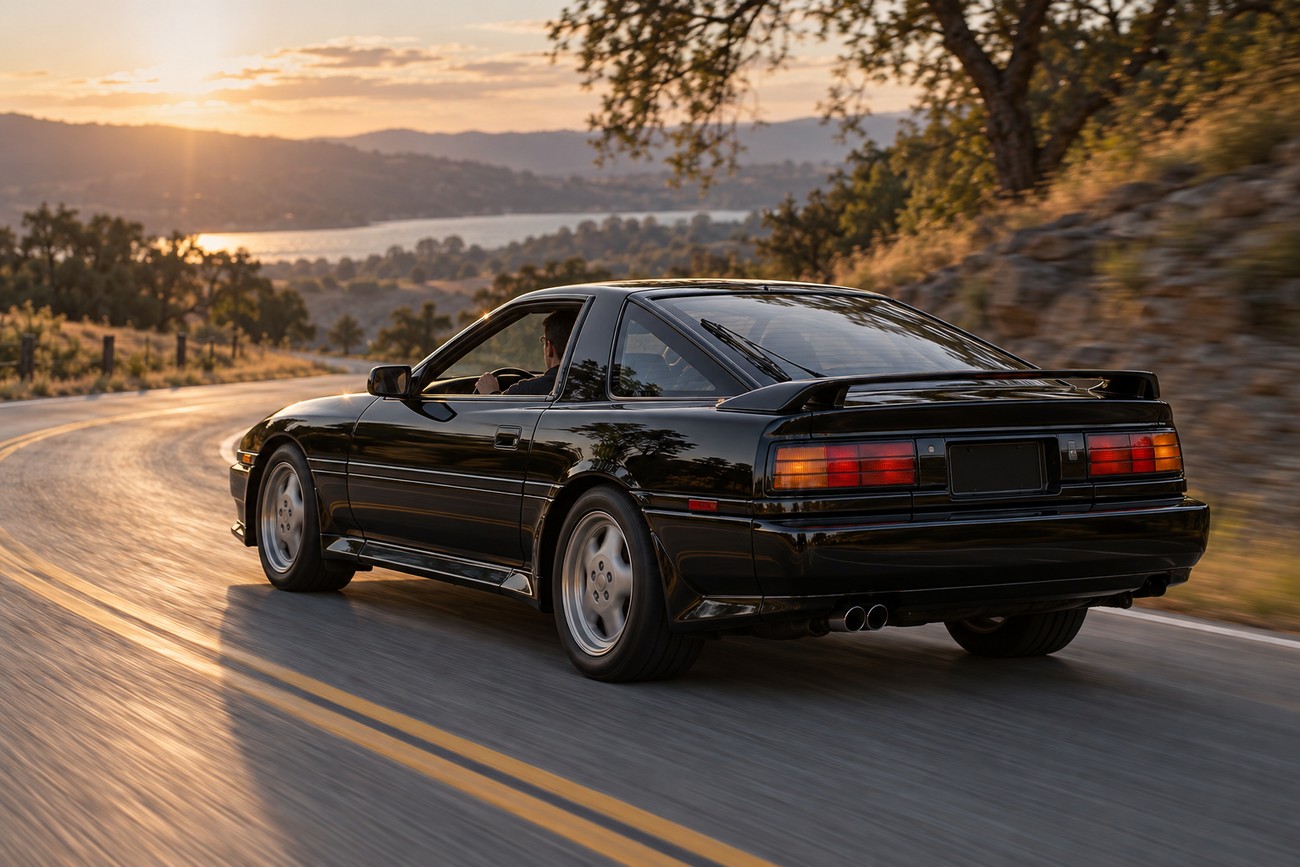
The Turbo A is best understood as a powerful, comparatively heavy GT-style coupe. Its rear-drive layout and manual transmission give it a clear driver focus, but the steering, seating position, and interior reflect the late 1980s. Beside later Supra generations or modern sports cars, the controls can feel heavy and the cabin distinctly dated.
That does not make the car unrewarding. The long liftback body, turbocharged inline-six, and period chassis create a particular sense of speed, especially when the engine is healthy and the boost delivery is properly controlled. The experience is historical and mechanical rather than digitally polished, which is precisely why condition matters more than a dramatic specification sheet.
A well-tuned regular 7M-GTE Supra can deliver comparable performance, and later Supra variants with 1JZ or 2JZ engines may be faster or easier to make reliable. Factory output above 300 hp should therefore be treated skeptically: approximately 270 hp is the reported factory-era figure, while 300-plus claims generally point to tuning or rumor.
The market often confuses rarity with condition. A car with a Turbo A badge, a rebuilt engine, missing original electronics, and extensive body repairs may command a collector price without offering collector-grade evidence. Insurance and registration can also be awkward in some countries because rare specifications create gaps in databases and valuation records.
The sensible verdict is narrow. Pay a premium for a documented factory Turbo A with consistent identification, surviving specific hardware, and sound structure. Do not pay it for a dyno number, a race-inspired body kit, or the assumption that homologation automatically makes the car faster than every later Supra.
Frequently asked questions
The Turbo A is easiest to understand when identity, usability, and historical value are kept separate. These answers address the practical distinctions that are often lost in sales descriptions.
Why does a strong test drive not prove that a Supra is a genuine Turbo A?
Acceleration can come from higher boost, aftermarket engine management, a replacement engine, or a carefully tuned standard 7M-GTE. Those changes may make an ordinary MA70 as quick as, or quicker than, a tired Turbo A.
Authenticity depends on the combination of VIN, factory codes or plates, and documentation, corroborated by the ECU, turbocharger, intake, intercooler, and related hardware. A test drive assesses the current setup; it does not establish what Toyota originally built.
Can standard MA70 parts be used when Turbo A components are unavailable?
Some standard parts can keep the car usable, provided the substitution is mechanically suitable and clearly documented. That approach may be sensible for a driver, particularly when an original component is unsafe or beyond repair.
Replacing the ECU, turbocharger, intake, or intercooler changes the specification and can reduce collectible value. Keep the removed parts, record the change, and distinguish a maintained original car from one that is now a functional conversion.
Why is Toyota discontinuing the Supra?
A decision to end a particular Supra generation does not necessarily mean Toyota has abandoned the name permanently. Sports-car programs are affected by development cost, emissions requirements, platform-sharing arrangements, market demand, and the timing of a model cycle.
The A70 Turbo A belongs to a separate historical period and should not be valued according to assumptions about a newer Supra’s production status. Its significance comes from its documented homologation specification and rarity.
Which Toyota looks like a Supra?
The Toyota Celica is the closest historical answer because the early Supra began as a Celica-based model and was known as the Celica XX in Japan. The A70 is more substantial than a Celica, but the family resemblance explains why the names are often compared.
Among newer Toyota coupes, the GR86 shares a front-engine, rear-wheel-drive layout and some broad proportions, although it is smaller and mechanically different. It is not a substitute for a Supra or a visual continuation of the Turbo A.







