
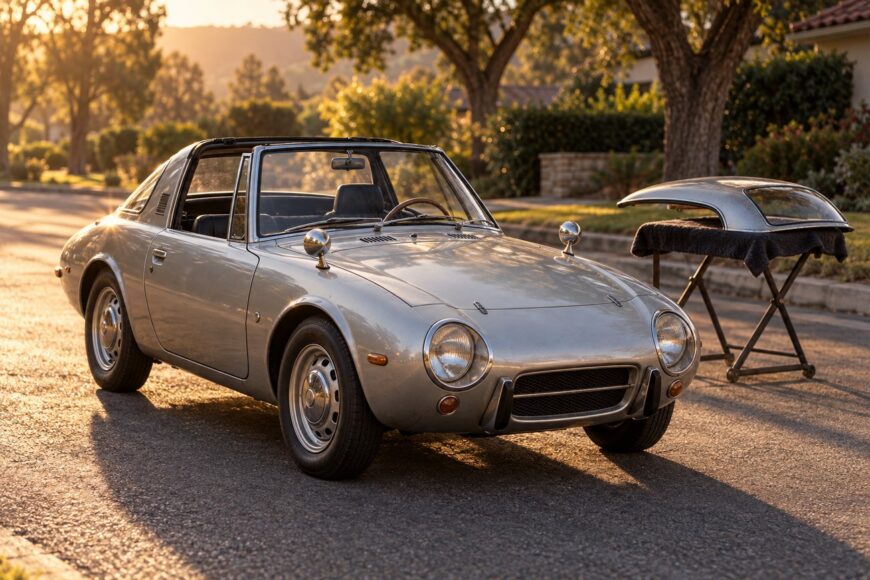
A tiny coupe with a removable roof promises open-air driving. In a Toyota Sports 800, age and rarity make that promise depend on the fit of one panel, the condition of its seals, and whether the panel is still with the car. A pleasant afternoon drive can begin with a careful inspection of the roof.
Known as the Yota-Hachi, the Sports 800 rewards attention to more than its modest power figure or distinctive shape. Its low weight gives it character, while scarce parts and vulnerable old bodywork make condition central to the buying decision. The best example is the one that works as a complete, well-sorted car rather than one that merely looks appealing in photographs.
- From Publica Sports concept to Yota-Hachi
- A removable roof, not a conventional convertible
- Why the small engine still makes for an engaging drive
- The ownership costs hidden behind simple engineering
- What to inspect before buying a Sports 800
- Who will enjoy it—and who should look elsewhere
- Frequently asked questions
- What is an estimated price for a Toyota Sports 800?
- What is the top speed of a Toyota Sports 800?
- How many Toyota Sports 800s were made?
- What does Yota-Hachi mean?
From Publica Sports concept to Yota-Hachi
Toyota showed the Publica Sports concept at the Tokyo Motor Show in 1962. The production Toyota Sports 800 came later, with manufacture running from 1965 to 1969. Keeping those dates separate matters when checking a listing: a car advertised as a “1962 Sports 800” needs clarification rather than an assumption that the production model was already on sale.
The production car brought small-scale sports-car thinking to a compact Toyota. Its proportions, light construction, and restrained engine output reflected an approach in which the whole vehicle mattered more than a headline power figure. Among early Japanese sports cars, it remains distinctive because that approach is apparent both in its shape and from behind the wheel.
Yota-Hachi became the model’s familiar nickname, although Sports 800 is the production model name to look for in period information and vehicle records. Descriptions and model codes can vary across markets and later catalogs, so a seller’s wording alone should never establish a car’s identity. Build details and documents deserve closer attention than a neatly written advertisement.
A removable roof, not a conventional convertible
The Sports 800 has a manually removable central roof panel. The surrounding body structure stays in place, so removing the panel admits air and light without turning the car into a full convertible. “Early targa-style roof” describes the arrangement more accurately than “soft-top” or “roadster,” without implying a claim to a design first.
That distinction has everyday consequences. You need somewhere suitable to keep the panel after removing it, and refitting it requires care rather than a quick flick of a latch. An owner who expects effortless roof-down driving may find the routine less appealing than the open-air sensation itself.
Seals and panel alignment matter as much as the presence of the roof. A panel that sits unevenly may increase wind noise or admit water, while tired rubber can cause trouble even when the surrounding metal looks sound. The roof is therefore part of the car’s usable condition, not merely a desirable accessory to tick off on an inventory.
Before planning regular open-top use, check how the panel comes off, where it can be stored, and how it fits when reinstalled. That simple exercise reveals more about ownership than a photograph with the roof removed. It also makes clear why the Sports 800’s charming silhouette carries a practical compromise.
Why the small engine still makes for an engaging drive
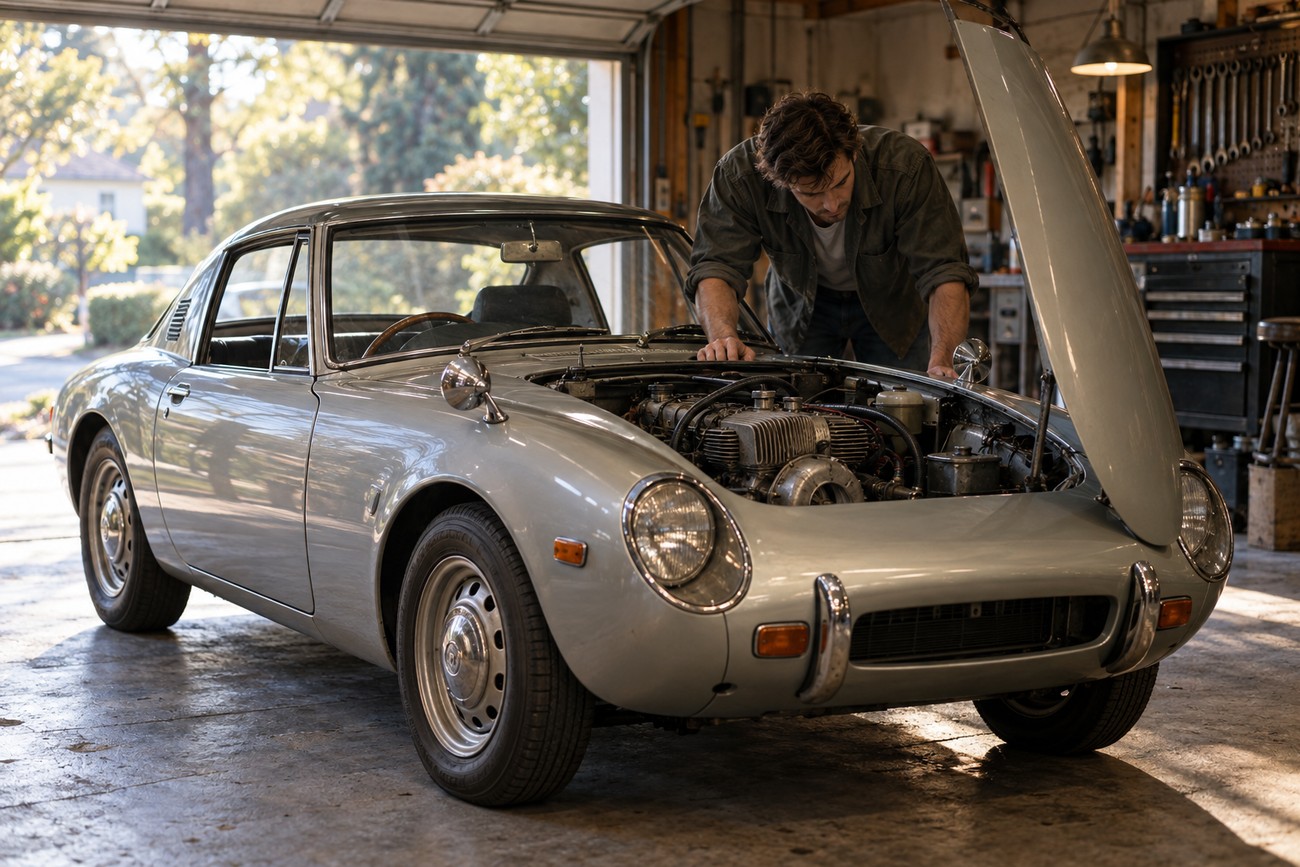
The Sports 800 uses a front-mounted, air-cooled flat-twin engine of about 790 cc, driving the rear wheels. Output is commonly quoted at about 45 hp SAE at roughly 5,400 rpm. Those figures sound modest in isolation, but they describe only part of what the driver feels.
Sources put curb weight at approximately 580–585 kg, with some variation by source and specification. Combined with the compact, aerodynamic body, that low mass lets the engine’s output do useful work without making the car feel dependent on sheer power. The appeal lies in carrying momentum and feeling the response of a small, light machine.
Its front-engine, rear-wheel-drive layout is also worth stating plainly: this is not a rear-engine car. Steering and braking feel belong to its era, and a drive after time in a modern vehicle calls for adjustment. A properly sorted example can be lively, yet its behavior should be judged on the road rather than inferred from its weight alone.
Long highway journeys expose the other side of the design. Noise, a tight cabin, and the effort required by older controls can become tiring, particularly if the roof seals or mechanical tune are poor. A short drive on familiar roads is a better test of its character than expecting it to serve as effortless long-distance transport.
The ownership costs hidden behind simple engineering
A small air-cooled twin has fewer systems than many later engines, but mechanical simplicity does not make a rare Sports 800 inexpensive to maintain. Replacement parts may require searches through clubs, donor cars, and auctions. Before treating a fault as minor, establish whether the piece needed to fix it can actually be sourced.
Dependable running rests on details that are easy to overlook in a polished car. Carburetion, ignition, temperature control, electrical connections, and seals all need to be in order. A poorly adjusted engine or deteriorated wiring can turn a straightforward drive into repeated troubleshooting, even if the basic layout is easy to understand.
Body repairs present a different problem: damaged metal needs sound work and accurate panel fit, and a rare shell gives a restorer little margin for shortcuts. The apparent saving on an inexpensive project can disappear once corrosion and missing pieces are addressed. A detailed repair assessment is more useful than assuming a small car will need a small restoration budget.
Safety deserves the same clear-eyed treatment. The Sports 800 reflects the standards of its period and offers substantially less protection than a modern car. Anyone considering regular use should weigh that limitation alongside maintenance demands, rather than treating its compact size as the only practical concern.
What to inspect before buying a Sports 800
Begin beneath the finish. Inspect the floor, structural sections, and the areas around the removable roof’s mountings for corrosion or earlier repairs. Fresh paint can conceal expensive bodywork, so evidence of sound metal matters more than an even shine. If access for a thorough inspection is refused, the car’s condition remains unproven.
Next, examine how the doors, body panels, and roof meet. Uneven gaps, leaks, or persistent vibrations may point to poor assembly or restoration work, although each symptom needs investigation before assigning a cause. The goal is to understand whether the car functions as a coherent structure, not simply whether its exterior looks straight.
Fit the roof panel with its seals in place during an inspection. Gaps or water marks visible only when it is installed can reveal alignment problems that a loose panel will hide.
Check the body and engine numbers against the available documents and trace as much of the car’s history as possible. Small original items, including emblems, instruments, and wheels, also deserve a close look: replacing them can be difficult, and substitutes or ill-judged modifications may reduce collector appeal. A complete, documented car gives you firmer ground for a decision than a glossy one with unanswered questions.
Who will enjoy it—and who should look elsewhere
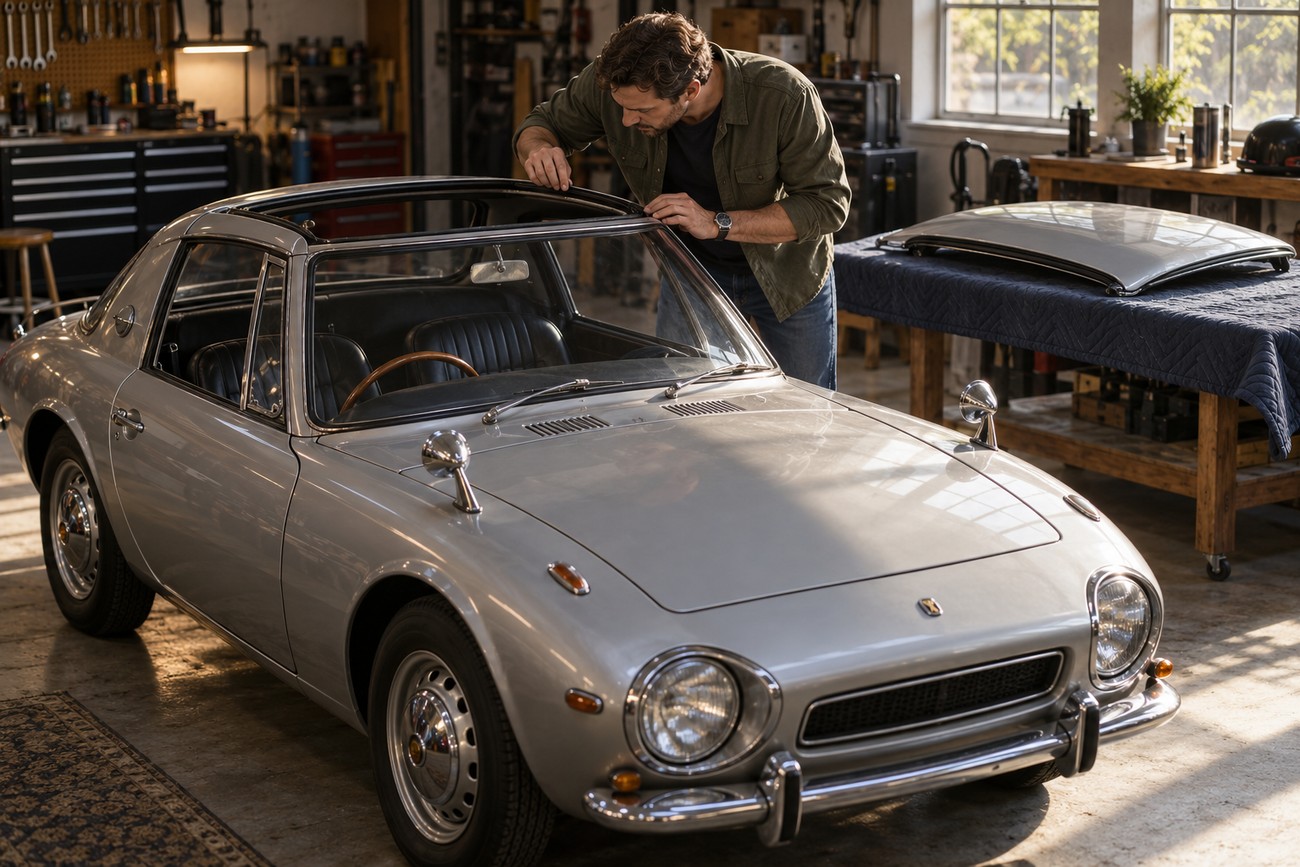
The Sports 800 suits a driver who enjoys the feel of a light car at an unhurried pace and accepts the attention an old machine requires. Its approximately 580–585 kg curb weight is central to that experience. With the roof panel removed, a familiar road feels more exposed, although the panel and its seals remain part of the day’s planning.
It is a less comfortable match for someone seeking cheap daily transport or a convertible that asks nothing of its owner. Parts searches can take time, body repairs demand care, and highway noise and cabin space limit its usefulness on longer trips. None of those issues cancels its appeal; they define the circumstances in which it is enjoyable.
Choose an example by the condition of its body, the completeness and fit of its roof, and your access to people who can maintain it. Those factors will shape ownership more directly than the power figure or the gloss of its paint. A well-sorted Sports 800 makes its modest specifications meaningful every time it is driven.
Frequently asked questions
Published specifications offer useful reference points for the Sports 800, but surviving cars differ in condition and documentation. The answers below distinguish those reference points from what a particular car can deliver or be worth.
What is an estimated price for a Toyota Sports 800?
There is no reliable universal price without current, comparable sales. Start with confirmed sales of similar cars in the same market, then account for corrosion, roof completeness and fit, originality, condition, and documents. An asking price on its own is weaker evidence than a completed sale, especially for a car with unusual repair needs.
What is the top speed of a Toyota Sports 800?
About 140 km/h is a commonly quoted top-speed figure. It is a reference, not a promise for a surviving example: engine tune, mechanical condition, and driving conditions all affect the result. A buyer will learn more from how a car runs and responds during a careful inspection than from attempting to reproduce a period figure.
How many Toyota Sports 800s were made?
Approximate production is usually given as 3,000–3,100 cars across the 1965–1969 production period. That range describes the number built, not the number still surviving. It should not be used to infer how many complete, documented examples are available in a particular market.
What does Yota-Hachi mean?
Yota-Hachi is a nickname formed from Toyota and the Japanese word hachi, meaning “eight.” It refers to the Sports 800 rather than naming a separate official model. When reviewing paperwork or listings, identify the actual vehicle and its records rather than relying on the nickname alone.







