
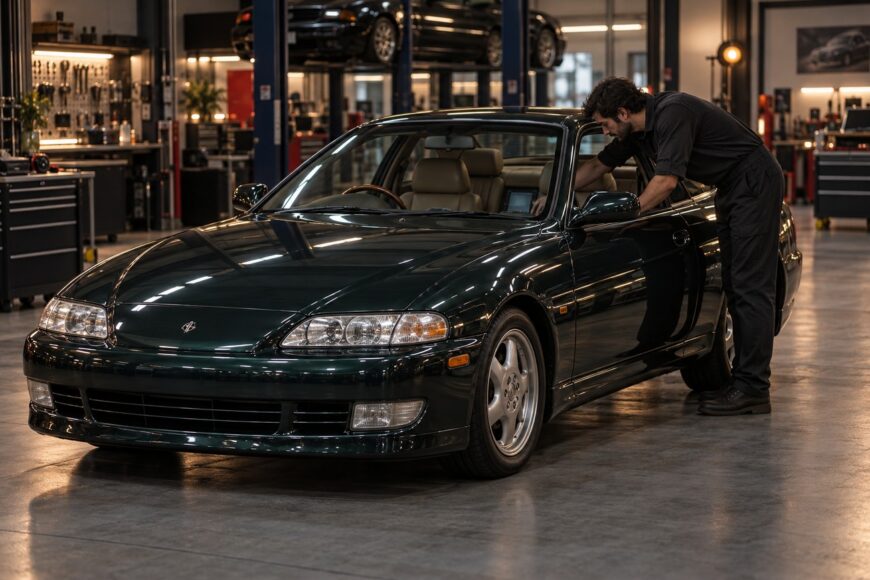
The Toyota Soarer looks like a Japanese-market Lexus SC and carries the reputation of the JZ and UZ engine families. That combination can hide the real buying risks: specification confusion, aged electronics, neglected suspension, and modifications that make a once-expensive coupe difficult to assess.
A good Soarer purchase starts with the chassis code, not the badge or an advertised horsepower figure. JZZ30, JZZ31, UZZ30, and UZZ31 describe different engines, drivetrains, suspension systems, and inspection priorities. The right car can be a compelling grand tourer; the wrong one can turn its famous engine into a distraction from costly secondary faults.
- The Soarer Is Not Simply a Right-Hand-Drive Lexus SC
- Toyota Soarer Engine and Chassis Matrix
- JZZ30 Turbo: The Twin-Turbo Detail Enthusiasts Get Wrong
- The Age-Related Failures Hidden by the JZ and V8 Reputation
- How to Inspect a Soarer Before Buying
- Soarer Myths, Compatibility Traps, and Modified Cars
- Frequently asked questions
- Why are Lexus SC 430 models so expensive compared with older Soarers?
- How much horsepower can a Lexus SC400 safely handle?
- What does the JZZ or UZZ code tell you before you inspect a Soarer?
The Soarer Is Not Simply a Right-Hand-Drive Lexus SC
The Soarer was the Japanese-market relative of the Lexus SC300 and SC400, but it was not merely an SC with the steering wheel moved. Toyota configured the Soarer for Japan with different engine choices, trim levels, electronics, suspension equipment, and market-specific features.
That distinction matters most inside the cabin and underneath the car. Japanese navigation and multimedia systems were designed around Japanese infrastructure, so they may need conversion or replacement outside Japan. Electrical compatibility, connectors, displays, and control modules can differ even where the body and general platform look familiar.
The suspension specification also changes the ownership calculation. UZZ30 uses conventional springs, while UZZ31 uses electronically controlled air suspension. A seller describing either car simply as a “V8 SC” leaves out the component that may determine whether the car is affordable to keep.
Use the chassis code to establish the car’s identity before ordering parts or comparing it with an American-market Lexus. JZZ30, JZZ31, UZZ30, and UZZ31 are more useful than a broad “Lexus SC” description because the code points you toward the correct engine family, suspension layout, wiring, and parts catalog.
Toyota Soarer Engine and Chassis Matrix
This matrix separates the four commonly confused specifications. Factory output varies by version, especially on later VVT-i cars, so treat the figures as identification data rather than proof of a present car’s condition.
| Chassis | Engine | Displacement and aspiration | Factory output where specified | Transmission or drivetrain | Suspension |
|---|---|---|---|---|---|
| JZZ30 | 1JZ-GTE inline-six | 2,491 cc, twin turbo | Commonly listed as 280 PS | Rear-wheel drive; 4-speed automatic offered, with 5-speed manual in selected turbo versions | Specification-dependent; verify the individual car |
| JZZ31 | 2JZ-GE inline-six | 2,997 cc, naturally aspirated | Early: 225 PS and 285 N·m; later VVT-i: 230 PS and 304 N·m | 3.0 GT specifications associated with a 4-speed automatic | Specification-dependent; verify the individual car |
| UZZ30 | 1UZ-FE V8 | 4.0 liters, naturally aspirated | Not specified here | Verify the individual specification | Conventional springs |
| UZZ31 | 1UZ-FE V8 | 4.0 liters, naturally aspirated | Not specified here | Verify the individual specification | Electronically controlled air suspension |
JZZ30 Turbo: The Twin-Turbo Detail Enthusiasts Get Wrong
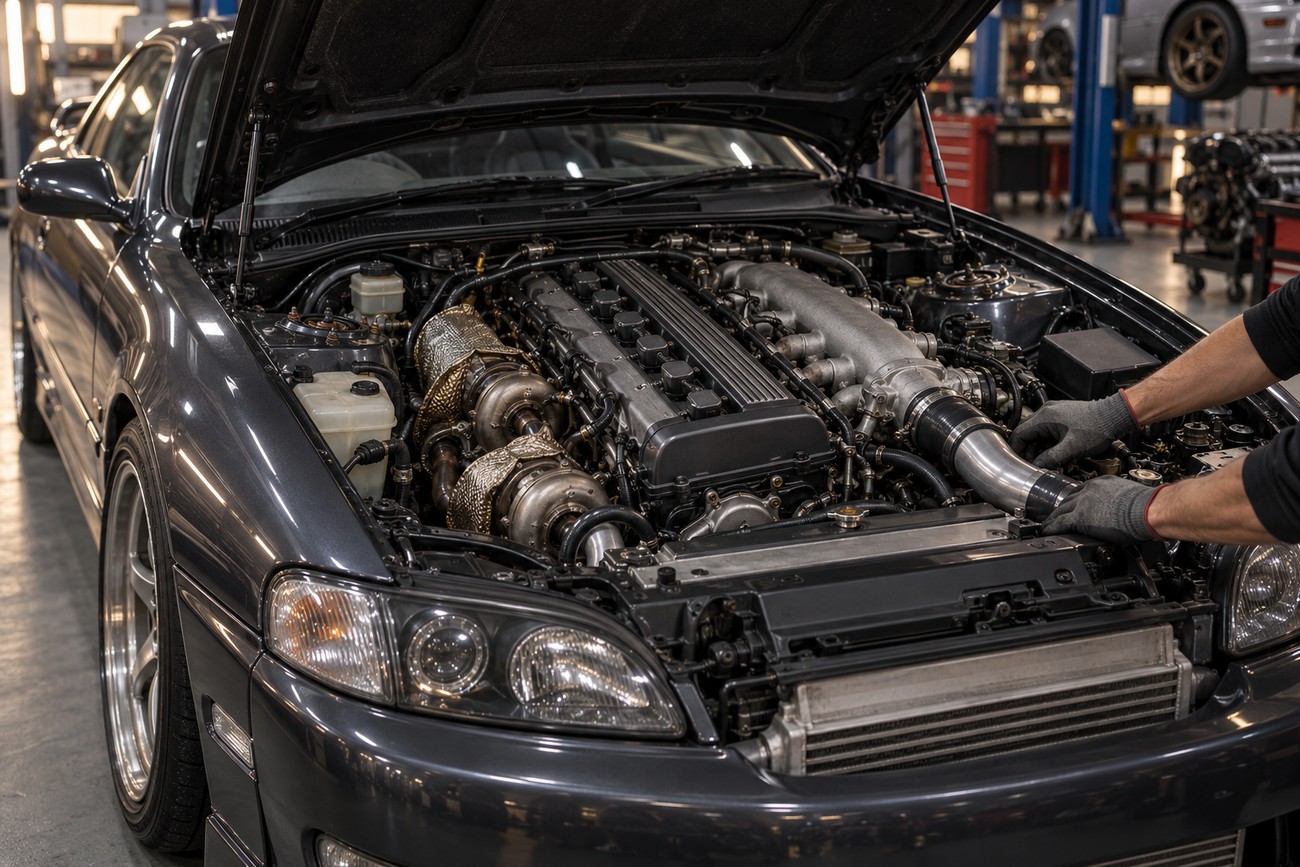
The JZZ30 uses the 2,491 cc 1JZ-GTE inline-six, rear-wheel drive, and, in early descriptions, two parallel turbochargers. They work together rather than following the sequential twin-turbo logic associated with the Supra. Importing Supra assumptions can therefore lead to incorrect expectations about boost response, plumbing, and parts.
Turbo versions were commonly listed at 280 PS. Later VVT-i catalog specifications also list 280 PS and 377.6 N·m at 2,400 rpm. Those are factory reference figures, not a dyno result for the individual Soarer parked in front of you.
Before accepting the number, check compression, boost behavior, fueling corrections, cooling performance, wiring, and turbo condition. A car can retain a healthy-looking 1JZ block while suffering from tired turbochargers, poor calibration, restricted cooling, or an automatic transmission that has not tolerated years of modified use.
Modified JZZ30s deserve a more skeptical inspection than stock examples with clear records. A list of injectors, controllers, exhaust parts, or a replacement ECU says nothing by itself about the tune, fuel delivery, heat management, wiring quality, or the legality of the conversion. Unknown work makes the diagnosis harder and the purchase decision less predictable.
The Age-Related Failures Hidden by the JZ and V8 Reputation
The engines attract attention, but the age of these cars makes secondary systems equally important. Electrolytic capacitors inside the factory ECU can leak, producing airflow-meter errors, limp mode, and unstable running. Leakage may also damage circuit-board traces, so a car that starts and idles during a short viewing can still need electronic repair.
Capacitor replacement is only a complete repair when the board has also been checked for electrolyte damage around traces, solder joints, and nearby connectors.
Age-related electrical faults can reach the cabin as well. Factory navigation and multimedia systems may restart spontaneously, and Japanese-market equipment may already require conversion for use abroad. These symptoms are easy to dismiss as old-car annoyances, yet they can indicate deteriorated components, wiring, or connectors rather than a single failed screen.
Power-steering leaks and worn steering components are common inspection concerns on cars with unknown maintenance. A tired suspension may show itself through float, squeaks, or bottoming even when the body is polished and the wheels are attractive. Rubber parts, seals, fuel hoses, and plastic connectors also deteriorate with age, regardless of a low indicated mileage.
UZZ31 adds a separate risk through its electronically controlled air suspension. Leaks, compressor failure, and faulty sensors can lower the car or produce inconsistent ride height. One failed component may force the compressor to work harder, allowing a local fault to become a broader repair bill; UZZ30 avoids that particular air-suspension system but still needs a full chassis inspection.
How to Inspect a Soarer Before Buying
Begin with the chassis code and suspension type, then compare the equipment with the claimed version. Confirm whether the car is JZZ30, JZZ31, UZZ30, or UZZ31 before interpreting its engine, gearbox, factory options, or likely replacement parts. A clean body does not prove that the steering, cooling system, wiring, or underside is healthy.
Inspect the ECU for capacitor leakage and damaged circuit-board traces, and scan the car for stored faults where compatible equipment allows. On a turbocharged or modified car, add compression testing, boost checks, fueling corrections, cooling-system evaluation, wiring inspection, and a close look at the turbochargers. Do not treat a smooth idle as evidence that the full system is sound.
Road-test the automatic transmission for delayed engagement, slipping, harsh shifts, and abnormal behavior under load. If a five-speed manual is advertised, verify that it belongs to a selected turbo specification rather than assuming every JZZ30 could have left the factory that way. For UZZ31, test ride height, air leaks, compressor operation, and sensors separately.
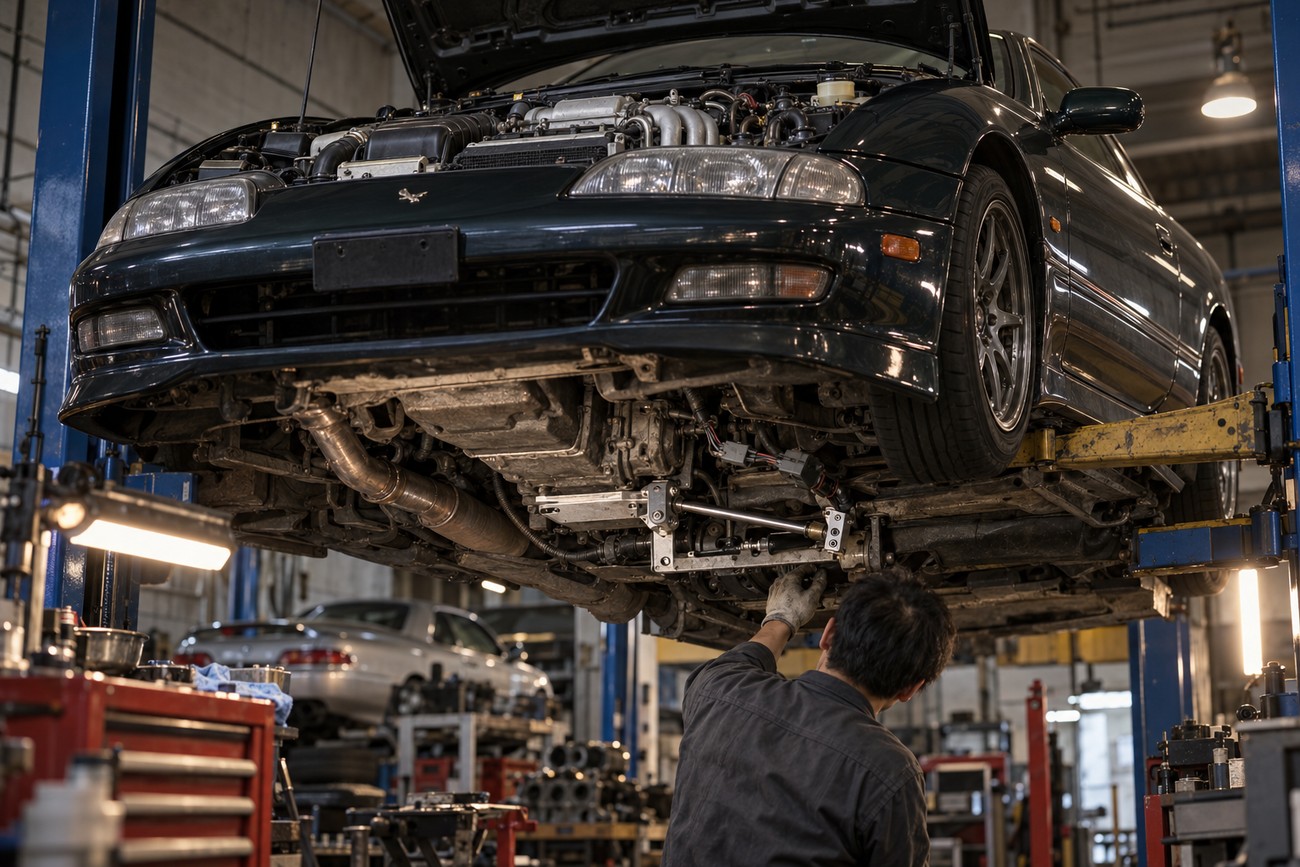
Finish underneath the car. Look at power-steering components, suspension joints, bushings, seals, hoses, connectors, and signs of fluid contamination or repeated impact. Documented, mostly stock work is easier to validate than a heavily modified example with unknown wiring and calibration, even if the modified car appears faster on a short drive.
Soarer Myths, Compatibility Traps, and Modified Cars
Myth: every JZ-powered Soarer is turbocharged. Reality: JZZ31 uses the naturally aspirated 2JZ-GE, and the cited 3.0 GT specifications use a 4-speed automatic. Early factory figures are 225 PS and 285 N·m; later VVT-i catalog figures are 230 PS and 304 N·m. Neither figure should be applied to every JZZ31 year.
Myth: every JZZ30 is manual. Reality: the 4-speed automatic was offered, while the 5-speed manual appeared only in selected turbo versions. A manual conversion may be well executed, but it should be identified as a conversion unless documentation proves the factory specification.
Myth: every 1JZ-GTE makes 280 PS today. Reality: 280 PS is the commonly listed factory rating, while the present car may have worn turbos, low compression, poor fueling, cooling faults, or an unsuitable tune. Engine-family reputation cannot replace measurements.
Myth: Soarer and Lexus SC parts are automatically interchangeable. They are related Japanese- and American-market models, but market differences affect engines, electronics, suspension, and equipment. Match parts by catalog number and market, especially for control modules, navigation hardware, suspension components, and engine management.
Frequently asked questions
Why are Lexus SC 430 models so expensive compared with older Soarers?
The Lexus SC430 is a later model with a different market position, specification, and ownership context from the JZZ30, JZZ31, UZZ30, and UZZ31 generations. Its price should therefore be judged against other SC430s, not used as a direct benchmark for an older Soarer.
Age, condition, originality, documentation, and local demand can move older Soarer prices in opposite directions. A cheap example may carry deferred ECU, suspension, steering, electrical, or cooling work that the asking price does not reveal.
How much horsepower can a Lexus SC400 safely handle?
There is no honest universal horsepower figure for an SC400. The answer depends on the specific 1UZ-FE, transmission, cooling system, fueling, tune, maintenance history, and quality of the modifications.
Before judging a power target, inspect compression, cooling, wiring, fuel delivery, transmission behavior, and the condition of the drivetrain. A lower-output car with sound systems can be a safer purchase than a more powerful car with undocumented calibration and neglected supporting components.
What does the JZZ or UZZ code tell you before you inspect a Soarer?
The code identifies the engine family and helps establish the suspension context that determines which failure points and parts catalogs apply. JZZ30 points to the 1JZ-GTE turbo inline-six, JZZ31 to the naturally aspirated 2JZ-GE, and UZZ30/UZZ31 to the 1UZ-FE V8.
The final digits also matter because UZZ30 uses conventional springs while UZZ31 uses electronically controlled air suspension. Decode the car first, then inspect the systems that belong to that exact specification rather than relying on a seller’s Lexus comparison.







