
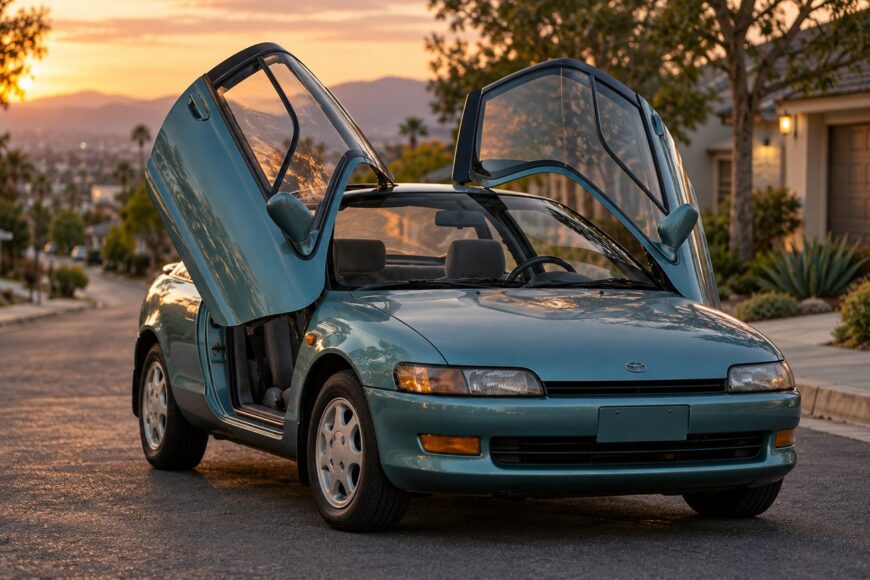
Factory butterfly doors in a tiny Japanese coupe remain the Toyota Sera’s strongest appeal. The car is light, compact, and visually far more exotic than its ordinary Toyota mechanical basis suggests. For buyers who want an unusual JDM without moving into exotic-car territory, that combination can look remarkably approachable.
The purchase price tells only part of the story. Door struts, hinges, seals, glass, alignment work, and specialist repairs can dominate ownership costs once an aged example needs attention. The Sera deserves evaluation as a complete vehicle with a documented history and realistic parts support, rather than as a styling feature with an engine attached.
- Toyota Sera: The Budget Butterfly-Door Idea
- How the Sera’s Butterfly Doors Actually Work
- What to Inspect Before Buying a Toyota Sera
- Living With a Sera: Leaks, Heat, and Winter Problems
- Safety, Practicality, and the Myths Around the Doors
- Is a Toyota Sera Really Cheap to Own?
- Frequently asked questions
- What is the cheapest car that has butterfly doors?
- How much does it cost to get butterfly doors installed?
- What is the average cost of a Toyota Sera?
- Which Toyota has butterfly doors?
Toyota Sera: The Budget Butterfly-Door Idea
Toyota built the Sera in Japan from 1990 to 1995, producing approximately 15,000–16,000 cars. It was not officially exported, so most surviving examples are right-hand-drive JDM imports. That limited supply explains both the car’s unusual presence outside Japan and the wide variation in condition between individual cars.
The appeal comes from a rare balance of scale and theater. With approximately 910–930 kg of curb weight, the Sera is a small, light coupe rather than a heavy grand tourer. Its compact dimensions make it easy to place on a narrow street, while the glass-heavy cabin and upward-opening doors give ordinary journeys a sense of occasion.
Toyota designed the doors into the production body from the beginning. Reinforced sills, pillars, and mounting points support the mechanism, so the factory system should not be confused with a universal aftermarket conversion. That distinction matters: a door added to another budget car may require extensive fabrication and still lack the structural engineering of the Sera.
The car also needs to be judged in its period context. It does not deliver modern supercar performance, contemporary crash protection, or the refinement of a newer coupe. Its value lies in factory originality, low mass, unusual visibility, and a driving experience built around a design that remains rare even at car events.
How the Sera’s Butterfly Doors Actually Work
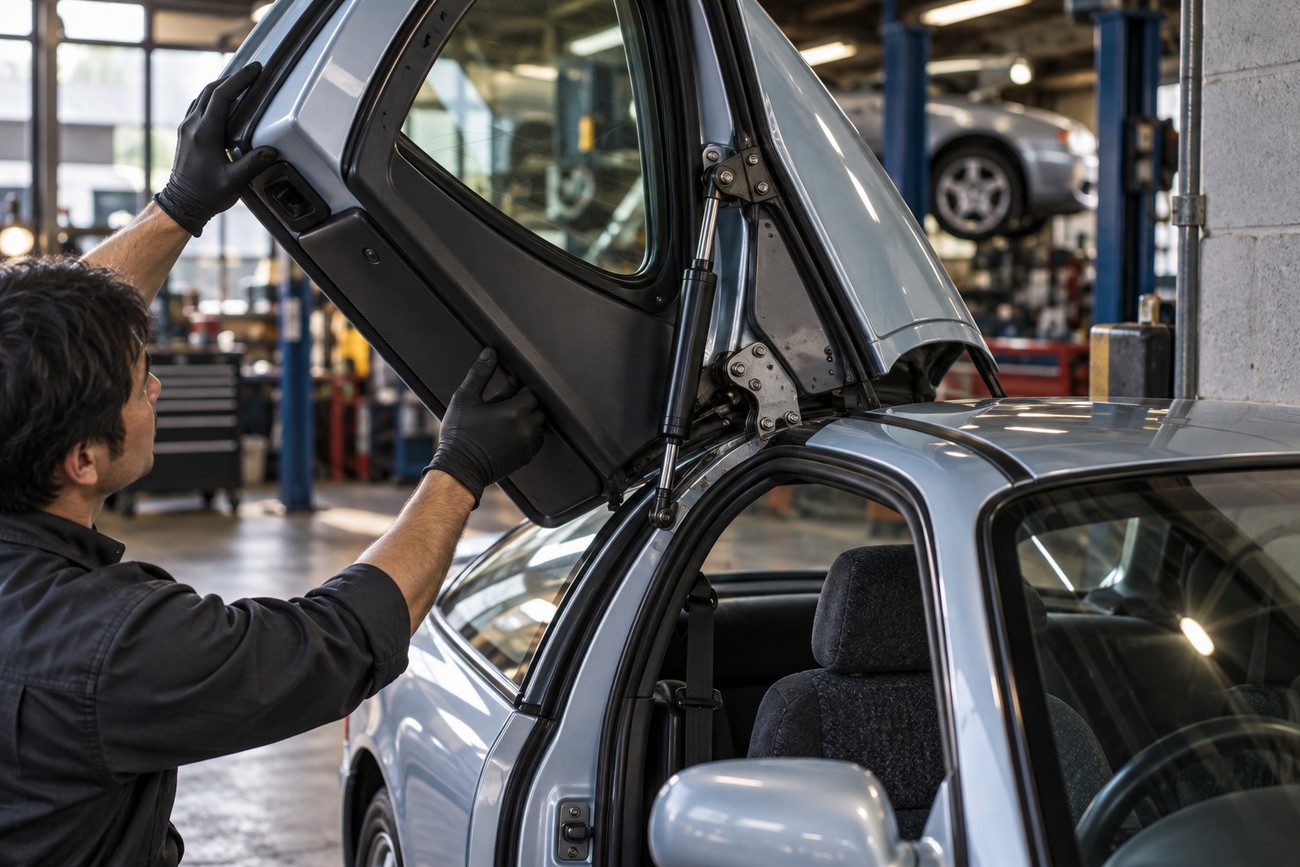
Each door uses a hinge positioned in the roof-pillar area. The panel moves upward and slightly outward, giving it the characteristic butterfly-style motion. Gas struts help support the door through its movement and keep it open, while the hinges and mounting hardware carry the load of the door, glass, and repeated use.
This arrangement can be genuinely useful beside a wall or in a tight garage. A conventional door needs a broad arc at waist height, whereas the Sera’s panel rises away from the opening. Clearance is still required beside and above the car, however. A low ceiling, a wall close to the roof, a high curb, or accumulated snow can turn the door’s visual advantage into a practical limitation.
The doors are relatively light for their size, yet they contain several glass sections and substantial hinge hardware. That combination places importance on the gas strut specification. Replacement struts need the correct force, length, and operating speed; a part that merely fits physically may still open the door too aggressively or fail to hold it securely.
Body reinforcement makes the factory layout possible, but it does not make the system maintenance-free. Hinge wear, weak struts, seal compression, and small changes in alignment affect how much effort the latch needs. A healthy Sera door should move predictably, close without being forced, and engage the latch without rubbing across the surrounding bodywork.
What to Inspect Before Buying a Toyota Sera
Start with the doors before being distracted by paint, wheels, or the novelty of the cabin. Open each one fully and check whether it stays up without assistance. A failed gas strut can leave the panel unsupported, making entry and exit unsafe and placing extra stress on the person holding the door.
Next, examine hinge movement and the areas around the mounting points. Look for play, cracked paint, evidence of welding, distorted metal, or repairs that were carried out without restoring the original geometry. Operate the doors several times, checking for rubbing, creaking, uneven gaps, and a latch that needs a hard slam. Misalignment can affect closing effort, body contact, latch engagement, and water tightness at the same time.
Gas struts should be matched by force and stroke speed, rather than replaced with the strongest available part. Excessive lifting force can overload hinges and mounting points even if the door appears to open more easily.
Inspect every glass section for cracks, chips, cloudy edges, and signs of previous replacement. Then lift the carpets and check the footwells, door bottoms, and surrounding trim for dampness, staining, or a persistent musty smell. A dry day does not prove that the cabin is watertight, so a controlled water test is useful when the seller permits it.
Parts availability should influence the offer before money changes hands. Seals, glass, hinges, and quality replacements can be difficult and costly to source outside Japan. Japanese owner clubs report that original hinges are no longer in regular production, with remaining stock and NOS parts serving as the main original-source options. A damaged hinge or unusual glass panel can therefore represent a large share of the vehicle’s value.
Finally, ask what happened after previous bodywork or seal replacement. Removing or refitting a door, replacing weatherstripping, or repairing a mounting area normally requires subsequent adjustment. The cheapest-looking repair may have left the door functional in a driveway while compromising its alignment, sealing, or long-term load distribution.
Living With a Sera: Leaks, Heat, and Winter Problems
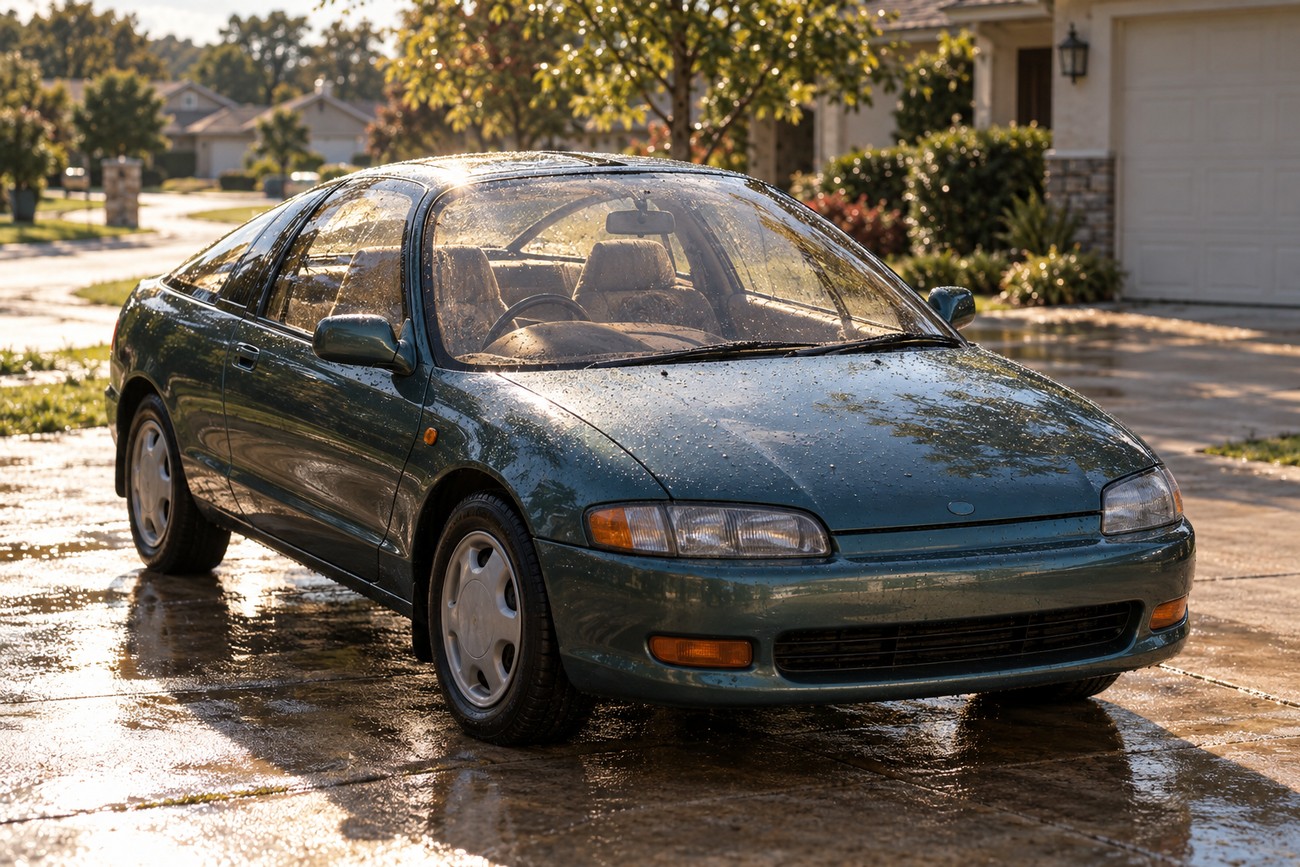
The Sera’s bubble-canopy glazing provides broad visibility, yet it also exposes a large area of the cabin to sunlight. Factory thermal insulation is limited by modern standards, so the interior can become extremely hot in a sunny climate. Air conditioning may cool the car once moving, while a parked cabin can still heat plastic, fabric, and occupants quickly.
That glass should be assessed as part of the climate-control burden, not only as a visibility feature. Ultraviolet exposure can fade upholstery and interior plastics, while heat accelerates deterioration in seals and trim. A clean-looking dashboard does not guarantee that hidden door materials or mounting areas have aged equally well.
Water ingress is a separate concern. Door seals and glass joints can leak into the carpet, leaving dampness that causes window fogging and slowly affects the interior. Check under mats, behind trim where accessible, and around the lower edges of the doors instead of relying on a dry surface immediately after the car has been cleaned.
Cold climates add another layer of risk. Ice can obstruct locks, freeze seals, and prevent the door from moving normally; road salt can accelerate corrosion around hinges and related hardware. The Sera can be used in such conditions when properly protected, but an example already suffering from brittle seals, seized mechanisms, or neglected mounting areas has less margin for seasonal abuse.
Safety, Practicality, and the Myths Around the Doors
A well-maintained Sera can be easier to enter beside a wall than a car with conventional outward-swinging doors. That is a real urban advantage, especially in a narrow garage. The benefit depends on the entire space, though: the roof-pillar mechanism still needs room above the vehicle, and the door’s slight outward movement requires usable clearance around the sides.
High curbs, piled snow, ice, and walls can restrict the opening path. A person also needs a clear route to step out, so the doors do not remove every parking limitation. Public attention creates another practical issue. People may try to pull the doors, lean on them, or handle the glass for photographs, which gives the owner an additional reason to supervise access and park carefully.
Rollover escape remains a disputed subject. The factory structural design and reinforced mounting areas support the idea that Toyota engineered the doors as part of the body rather than treating them as a cosmetic accessory. There are no official Sera crash tests covering the specific rollover-escape scenario, however, so claims that the doors are definitively as safe or unsafe as conventional doors go beyond the available evidence.
That uncertainty should be handled without panic or complacency. A maintained latch, sound structure, and unobstructed interior are sensible priorities, while emergency planning should account for the possibility of a damaged or blocked door. The Sera’s design also should not be copied casually onto another budget car: conversions may create stiffness problems, cracking, poor alignment, and safety risks because the original reinforced structure is absent.
Is a Toyota Sera Really Cheap to Own?
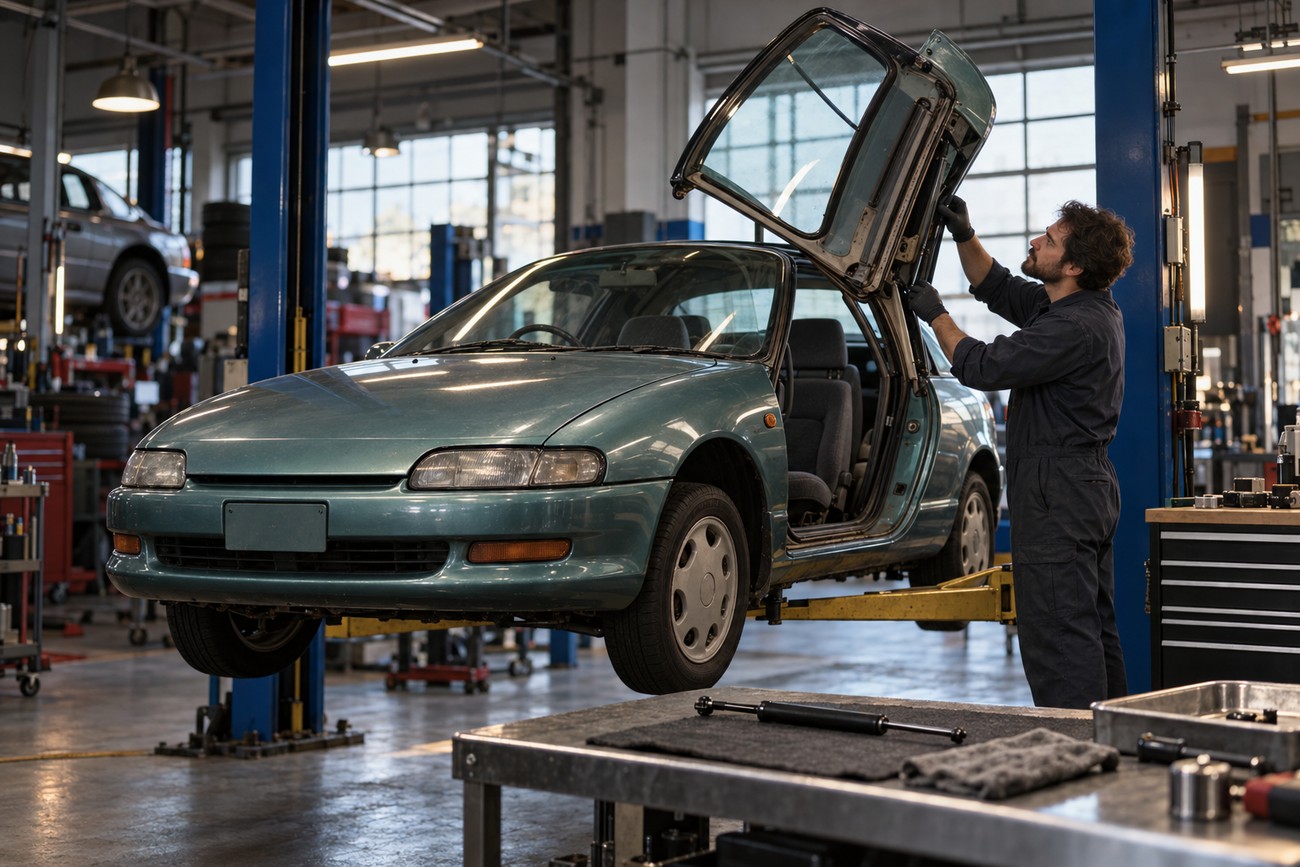
The Sera can offer factory butterfly doors at a lower entry point than exotic cars, which explains its reputation as a budget route to an unusual design. That description applies most reliably to the initial purchase. It does not establish the cheapest ownership proposition once an imported, aging coupe needs specialist work.
Most examples are right-hand-drive Japanese imports, and their histories can vary widely. Shipping, registration requirements, previous climate exposure, and the quality of repairs all affect the real starting position. A car that has spent years in a dry environment with correctly adjusted doors may be a better financial decision than a cheaper example with hidden moisture and improvised hinge work.
Rare seals, hinges, glass, and shipping can make ownership more expensive than that of a mass-produced coupe. Labor also matters because door alignment is a skilled process rather than a simple bolt-on service. The cost of an aftermarket butterfly-door conversion is equally variable: fabrication, reinforcement, paint, alignment, and safety work prevent a used Sera part or a generic kit from serving as a reliable price comparison.
The most useful buying rule is simple: choose a documented, dry, correctly aligned car over the cheapest available example. Inspect the door system before committing to cosmetic improvements, and reserve money for parts that may need to come from Japan. The Sera can be rewarding when its unusual hardware is healthy; deferred door, seal, and body repairs can turn the apparent bargain into the expensive choice.
Frequently asked questions
The Sera is unusual enough that buyers often compare it with both exotic cars and homemade conversions. These answers separate the factory Toyota from the wider butterfly-door market and focus on the ownership details that affect a real purchase.
What is the cheapest car that has butterfly doors?
There is no dependable worldwide answer because asking prices vary by country, condition, import status, and parts needs. The Toyota Sera is often considered one of the more affordable factory-built cars with butterfly-style doors, especially compared with exotic models that use a similar visual feature.
Purchase price alone does not make it the cheapest car to own. A Sera with weak struts, damaged hinges, leaking seals, or missing glass can require costly sourcing and specialist labor. A sound, complete example may offer better value than a cheaper car that needs immediate door and body repairs.
How much does it cost to get butterfly doors installed?
Installation pricing depends heavily on the base car and the quality of the work. A serious quote should account for structural reinforcement, fabrication, hinge and strut selection, door alignment, paint correction, and safety validation, rather than covering only the visible hinges and panels.
Used Sera parts cannot provide a reliable conversion price. The Sera was designed with reinforced sills, pillars, and mounting points from the factory, while another budget car may need substantial engineering before the doors can operate safely and remain aligned. A low initial quote can exclude the work that determines durability and safe operation.
What is the average cost of a Toyota Sera?
There is no single globally reliable average Sera price. Interpret an asking price through the car’s condition, import history, door-system health, and parts completeness. A complete car with dry carpets, sound glass, working struts, and correctly aligned doors deserves a different assessment from a cosmetically attractive example with unknown water ingress.
Also check whether the vehicle includes usable seals, original hardware, and evidence of careful repairs. Rare replacement parts and shipping can change the ownership budget substantially after purchase, so the lowest advertised price may conceal the highest total cost.
Which Toyota has butterfly doors?
The Toyota Sera is the notable production Toyota directly associated with factory butterfly-style doors. It was built in Japan from 1990 to 1995 and used a roof-pillar hinge with upward-and-outward door movement.
Other Toyota vehicles may appear with aftermarket door conversions, but those installations are not equivalent to the Sera’s factory design. The Sera’s reinforced structure, original mounting points, and integrated hardware are part of what makes its doors a production system rather than a cosmetic modification.







