
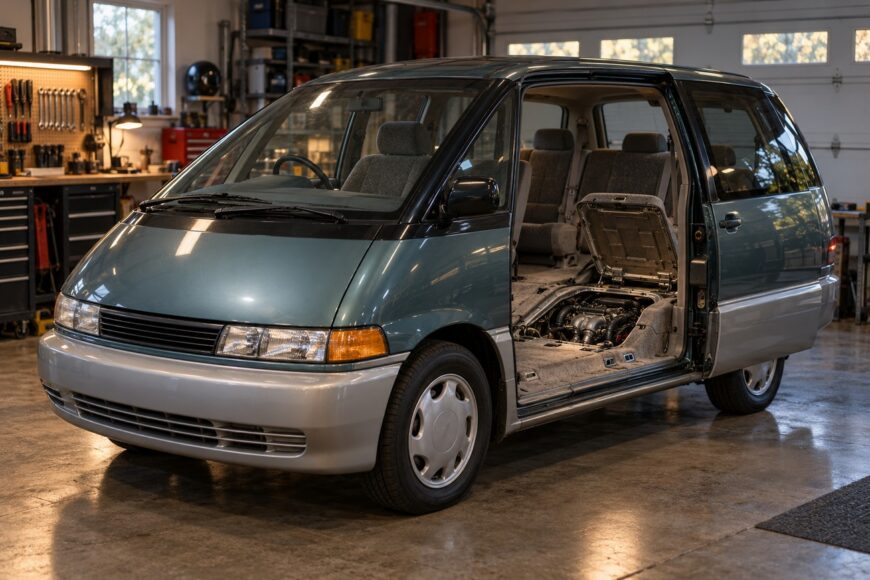
The Toyota Previa’s egg-shaped, mid-engine design gives it unusual balance, a roomy cabin, and seating flexibility that many conventional vans cannot match. The same layout places the engine beneath the sloping floor, where routine repairs take more time, require more dismantling, and often cost more than owners expect.
That makes the Previa a condition-sensitive purchase. A genuinely well-kept example can still be a practical and durable family van, while a clean-looking vehicle with neglected cooling-system maintenance or hidden corrosion can become an expensive project. Rarity and originality add interest, yet neither proves mechanical health.
- What Made the Toyota Previa So Unusual?
- First-Generation Toyota Previa: Key Specifications
- How the Previa Drives—and What the Mid-Engine Layout Costs
- The Previa’s Biggest Ownership Risks
- What to Inspect Before Buying a Toyota Previa
- Safety, Comfort, and Practicality by Modern Standards
- Frequently Asked Questions
- What was the Toyota Previa’s biggest engineering innovation?
- Why was the Toyota Previa discontinued?
- How much is a 1991 Toyota Previa worth today?
- What is another name for the Toyota Previa?
What Made the Toyota Previa So Unusual?
First-generation global production ran from 1990–1999, while U. S. model years were 1991–1997. The body used a unibody, one-box structure with a rounded profile and a short-looking nose. Its shape was driven by packaging efficiency, giving passengers a large cabin within a relatively compact exterior footprint.
The engine was mounted longitudinally under the sloping floor between the front axle and the passenger compartment. This is a mid-engine arrangement, not a rear-engine layout like the classic Volkswagen Bus. The engine sits ahead of the cabin’s main seating area and behind the front axle, with its mass concentrated near the center of the vehicle.
That location improves weight balance and can give the Previa an unexpectedly car-like cornering response compared with conventional vans. Steering and body control can feel more natural than the tall, front-heavy shape suggests. The benefit depends on suspension condition and tire quality, so a worn example may erase much of the design’s advantage.
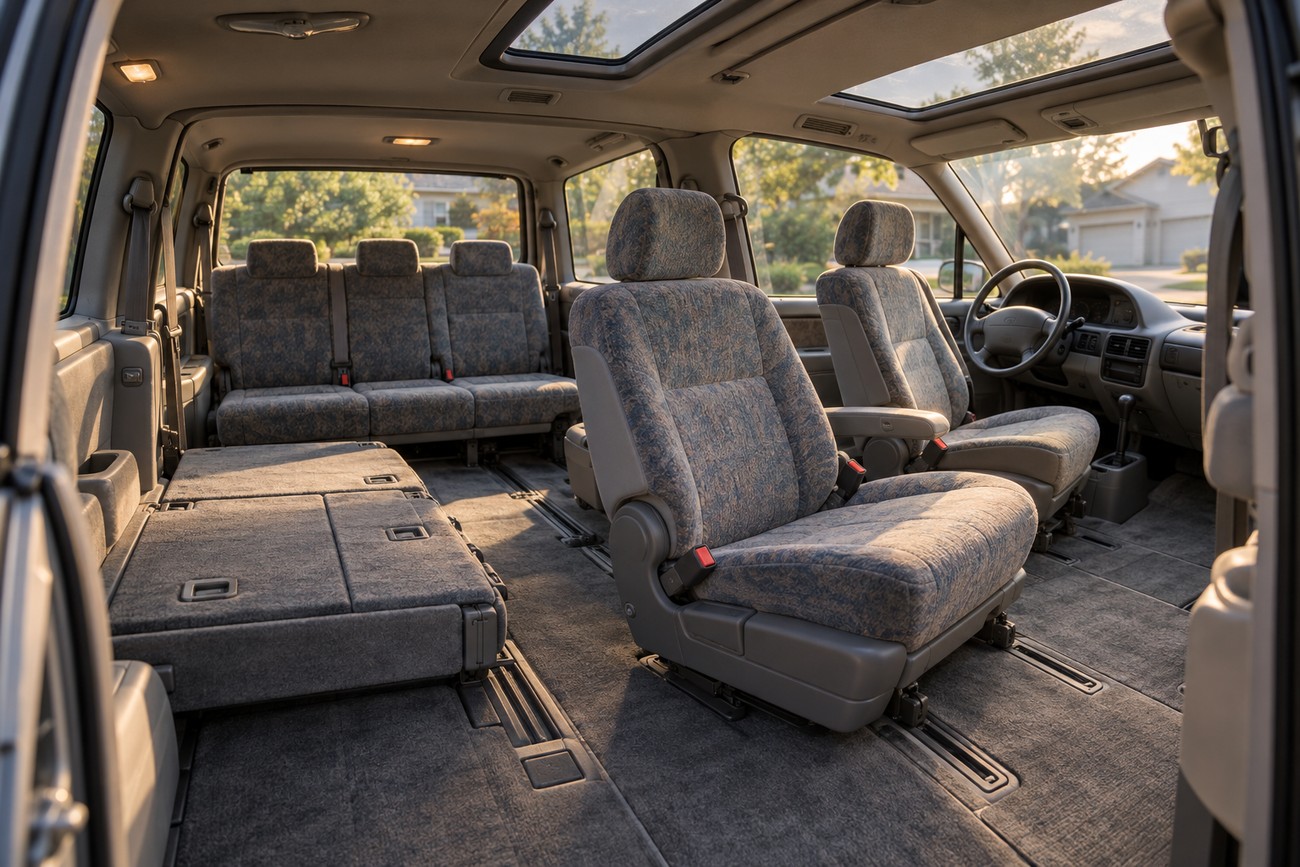
The packaging also enabled flexible seating, including configurations with captain’s chairs, benches, folding functions, and, on some early versions, seats that could be turned around. The cost appears in service access: engine work may involve removing seats, carpet, and access covers. A clever engineering solution therefore creates a less convenient ownership routine.
First-Generation Toyota Previa: Key Specifications
Specifications varied by market and equipment level. Fuel figures below are owner-reported real-world consumption rather than laboratory test data.
| Item | First-generation Toyota Previa |
|---|---|
| Global production | 1990–1999 |
| U. S. model years | 1991–1997 |
| Main gasoline engine | 2.4-liter Toyota 2TZ-FE |
| Gasoline output | Approximately 135–150 hp, depending on market |
| Diesel options | Some markets received 2.2- or 2.4-liter diesels, including the 2C-T |
| Transmissions | 5-speed manual or 4-speed automatic |
| Drivetrain | FWD or All-Trac/4WD, with a connectable front differential on 4WD versions |
| Seating | Typically 7–8 seats, depending on the seating configuration |
| Gasoline fuel economy | Approximately 12–15 L/100 km in city driving and 9–11 L/100 km on the highway, based on owner reports |
| Diesel fuel economy | Generally more economical than gasoline versions, but diesel Previas are rare |
How the Previa Drives—and What the Mid-Engine Layout Costs
The central engine placement gives the Previa a balanced feel that is easy to underestimate from the driver’s seat. On a sound suspension, it turns with less of the nose-heavy reluctance associated with some older vans. The seating position remains high, but the vehicle can respond with surprising composure on winding roads.
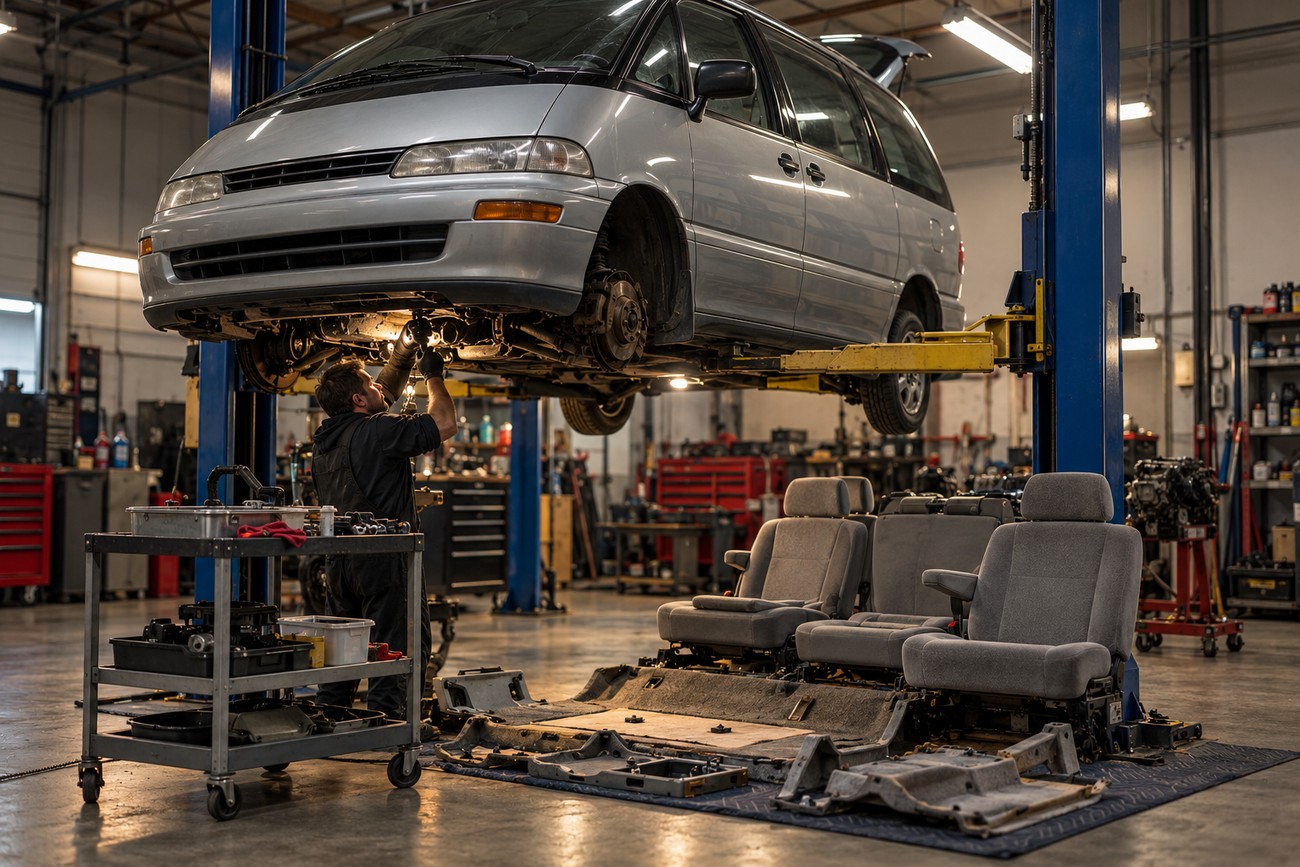
Maintenance is the price of that balance. Engine access may require removal of seats, carpet, and access covers, and careless work can damage trim or fasteners. Some belt, timing, and sensor operations are more convenient from underneath than through the cabin access hatch, so a competent technician plans the job around a lift rather than treating the vehicle like a conventional front-wheel-drive minivan.
Heat from the engine beneath the floor can add useful warmth in winter. During hot weather, the same arrangement may contribute unwanted heat around the cabin floor, especially when ventilation is weak. The large glass area and one-box body also expose occupants to wind and road noise that feels dated by current standards.
Heating and air conditioning can struggle to condition the entire cabin evenly, particularly around the outer seats and rear rows. Flexible early seating remains a practical advantage: a family can rearrange the interior for cargo or occasional camper-style use without major conversion work. That versatility works best when the seat mechanisms, floor fittings, and interior trim have not been abused.
The Previa’s Biggest Ownership Risks
The cooling system deserves priority because the engine is connected to the front-mounted radiator by long coolant pipes. Blocked radiators, restricted pipes, aged hoses, or poor maintenance can reduce cooling performance. Continued overheating may cause cylinder-head or head-gasket damage, turning an otherwise serviceable engine into a major repair.
Corrosion can be equally serious. Inspect the sills, lower door sections, underside, and rear body structure, especially on vehicles used in regions with road salt. A Previa may look presentable above the beltline while structural rust develops underneath. Surface cosmetics are relatively easy to improve; weakened mounting points and extensive underside corrosion can make the vehicle uneconomical to restore.
Parts availability becomes more difficult as the vans age. Propeller shafts, 4WD components, glass, trim, and body panels may require specialist suppliers, used parts, or long searches. A minor collision or cracked windshield can therefore create a disproportionate bill when the correct part is scarce.
Specialist Previa technicians are also limited in many markets. A general repair shop may be able to perform routine work, yet unfamiliarity with the mid-engine access procedure can increase labor time or lead to damaged interior panels. The van is repairable when its structure and mechanical systems are sound, but cheap purchase prices often conceal deferred maintenance.
Owner-reported engine and transmission life can reach approximately 300,000–400,000 km without a major overhaul when properly maintained; this is not guaranteed. The figure depends heavily on cooling-system care, oil service, loading, and previous repair quality. A documented high-mileage van can be a safer purchase than a low-mileage example with an unknown overheating history.
What to Inspect Before Buying a Toyota Previa
Start underneath, before spending time on paint, wheels, or a freshly cleaned engine bay. Check the sills, floor, lower doors, rear body structure, suspension mounting areas, and coolant lines for corrosion, repairs, leaks, or deformation. In salted-road regions, a clean exterior can conceal severe underside rust.
Inspect the cooling system cold and hot. Look for evidence of coolant loss, crusted joints, hardened hoses, staining, an unstable temperature gauge, or a radiator that has been replaced without a clear explanation. Review service records for regular coolant maintenance and investigate any signs of previous overheating before assuming the engine is healthy.
Raise the van before diagnosing it as a simple front-wheel-drive minivan. Access from underneath often reveals cooling-line condition, driveline wear, and structural corrosion that cabin inspection cannot show.
Drive the vehicle long enough to assess automatic transmission behavior, steering, braking, suspension noise, and vibration under acceleration. On 4WD versions, inspect the propeller shaft, center support bearing, front hubs, suspension, transmission components, and related driveline parts. A low-quality aftermarket center support bearing can produce vibration and fail quickly, leading to repeat labor.
Check the cabin access covers, carpet, seat mounts, and trim for broken clips, missing fasteners, or evidence of rough engine work. Ask who performed previous repairs and whether the shop understood the Previa’s layout. Regular overloading or towing can accelerate suspension and brake wear, so the vehicle’s working history matters as much as its odometer reading.
Safety, Comfort, and Practicality by Modern Standards
Early-1990s official crash testing was considered satisfactory by the standards of its time. That historical result should be kept separate from present-day expectations. By modern standards, passive safety is weak, with fewer protective systems, no modern side-airbag coverage, and less contemporary structural reinforcement than current minivans.
The Previa still offers useful passenger space, typically accommodating 7–8 people depending on configuration. Flexible rear seating supports family use, cargo carrying, and camper-style layouts. Seat condition and locking mechanisms deserve inspection because heavy commercial or family use can leave the interior worn even when the body looks respectable.
Gasoline versions typically use approximately 12–15 L/100 km in city driving and 9–11 L/100 km on the highway according to owner reports. That consumption is substantial beside newer minivans and crossovers. Diesel versions can be more economical, although they are rare and may bring their own parts and service complications.
Long trips expose the Previa’s age through wind noise, road noise, and uneven cabin temperature. The engine’s underfloor position can help winter warmth while adding heat in summer. For buyers who value flexible space and distinctive engineering, those compromises may be acceptable; families prioritizing modern crash protection, quietness, and low fuel use should weigh them carefully.
Frequently Asked Questions
The questions below cover the Previa’s unusual engineering, production history, current value, and regional naming. Together, they help place its strengths and ownership risks in context.
Condition, maintenance history, and market specification remain important when applying any general answer to a particular van.
What was the Toyota Previa’s biggest engineering innovation?
The defining innovation was the combination of a longitudinal mid-mounted engine with a one-box passenger cabin. The engine sat under the sloping floor between the front axle and passenger compartment, allowing Toyota to concentrate mass near the vehicle’s center while preserving a spacious interior.
This arrangement also separated the Previa from rear-engine vans. It improved balance and supported a more car-like driving response, while creating difficult access for routine maintenance. The engineering achievement was therefore a packaging solution with a clear service penalty.
Why was the Toyota Previa discontinued?
U. S. sales ended after the 1997 model year, while global first-generation production continued through 1999. The different dates reflect market-specific product cycles rather than a single worldwide shutdown.
As safety requirements, emissions expectations, and minivan competition changed, sustaining an unusual mid-engine design became harder. The layout demanded more specialized service, while newer vehicles offered easier maintenance, stronger modern safety provisions, improved refinement, and more efficient powertrains. The Previa’s production end does not by itself indicate poor durability; it reflects a changing market around an unconventional design.
How much is a 1991 Toyota Previa worth today?
A 1991 Previa has no single universal value. Rust, cooling-system history, drivetrain, originality, documentation, location, and access to specialist parts influence the price more than the model year alone.
A documented, structurally sound example with a healthy cooling system can command a substantial premium over a cosmetically tidy van with hidden corrosion or an overheating history. FWD and 4WD versions may appeal to different buyers, while rare equipment can raise interest without reducing repair costs. Independent inspection is essential before treating a low asking price as a bargain.
What is another name for the Toyota Previa?
The first-generation Previa was sold as the Toyota Estima in Japan. Related regional versions included the Estima Emina and Estima Lucida.
These names are useful when searching for parts, service information, import records, and comparable vehicles. Equipment, engines, trim, and drivetrain details can vary by market, so the chassis code, engine code, and exact specification remain more reliable than the badge alone.







