
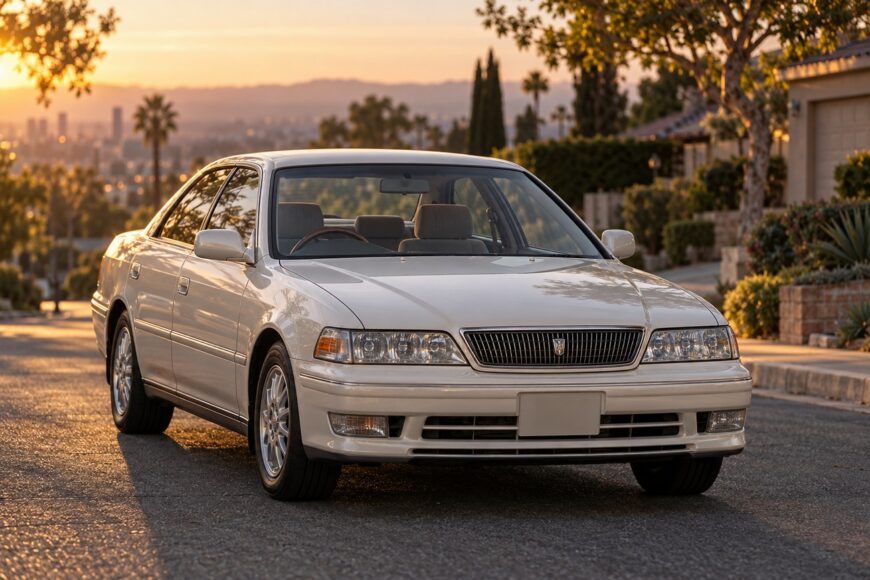
The Toyota Mark II Grande occupies an appealing middle ground in the JDM market. Its front-engine, rear-wheel-drive layout, inline-six engines, and restrained sedan shape suggest understated performance, while the Grande specification was generally a richer, comfort-oriented trim. It can feel quick and composed on the road, yet the badge alone does not make it a factory sports sedan.
Most surviving examples now belong to the X80, X90, X100, or X110 generations and have lived through decades of use, repairs, storage, and sometimes modification. Engine reputation matters less than the condition of the body, cooling system, automatic transmission, wiring, and suspension. A clean, documented stock car may be an excellent quiet highway sedan; a polished example with hidden rust and improvised repairs can become an expensive project.
The right way to evaluate a Grande is practical. Confirm the exact generation and engine, inspect the shell from underneath, test the drivetrain when fully warm, and treat every undocumented swap or electrical alteration as a cost risk. Nostalgia can explain the appeal, but inspection determines whether the car deserves your money.
- What the Toyota Mark II Grande Actually Is
- Mark II Grande Engines: Output, Character, and Risk
- Mark II Grande Engines: A Practical Comparison
- Why the Grande Feels Sporty Without Being a Sports Sedan
- The Age-Related Problems That Matter Most
- How to Inspect a Used Mark II Grande Before Buying
- What Determines a Toyota Mark II Grande’s Value Today
- The Myths That Make Grande Ownership Expensive
- Frequently asked questions
- How much is a Toyota Mark II Grande worth today?
- Which Toyota Mark II Grande problems should make a buyer walk away?
- What is the three-year car rule in Japan, and does it prove a Mark II is better?
What the Toyota Mark II Grande Actually Is
The Toyota Mark II is a mid-size front-engine, rear-wheel-drive sedan family spanning the X80, X90, X100, and X110 generations. Its layout and long wheelbase gave the car a calm highway character. It also created a strong following among buyers who wanted a refined sedan with more mechanical character than a typical front-wheel-drive family car.
Grande was generally a high-grade, comfort-oriented Mark II trim. Equipment could include a more finished interior, additional convenience features, and a softer overall presentation, depending on generation and market. The Grande badge therefore says more about specification and equipment level than about a dedicated performance chassis.
Japanese catalogs and auction sheets may describe Grande as a high-grade comfort trim, although the wording and equipment details vary by market and year. A Grande with a naturally aspirated 1G-FE is mechanically different from one with a 1JZ-GE, and both may differ from later or market-specific applications. The badge should always be read alongside the chassis code, engine code, transmission, and factory equipment.
Surviving condition matters more than the model’s original brochure position. A stock car with intact trim, factory wiring, and a straight body can deliver the quiet, discreet character that made the Grande attractive. A modified car may have more visual drama while offering less certainty about its original engineering and future repair costs.
Mark II Grande Engines: Output, Character, and Risk
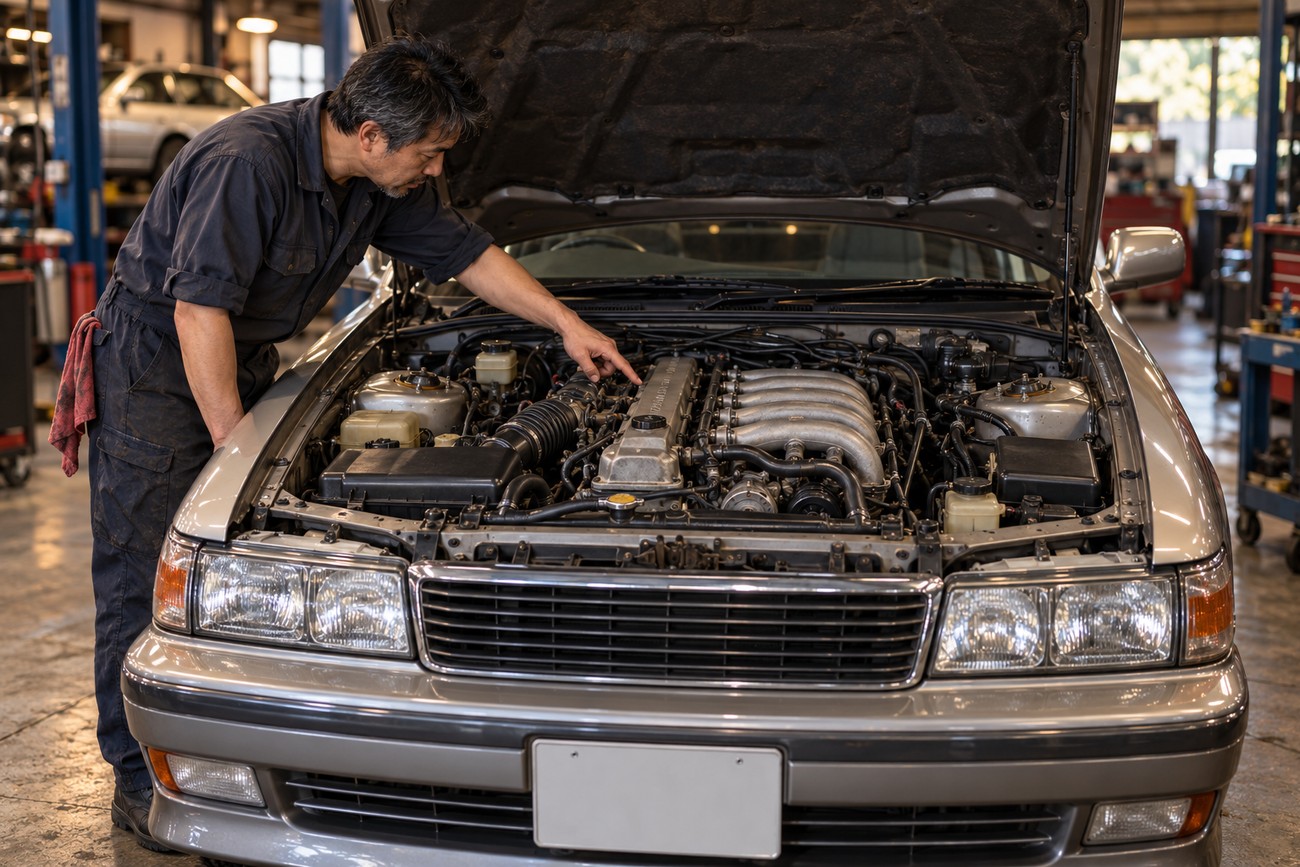
The familiar engine options are the 1G-FE 2.0-liter inline-six and the 1JZ-GE 2.5-liter inline-six. Both are naturally aspirated applications in this context, with smooth delivery and the refined sound associated with an inline-six. Exact availability depends substantially on generation and market, so a seller’s description should never replace verification of the engine code.
The 1G-FE suits an owner who values smooth everyday operation and a relatively modest engine package. The 1JZ-GE offers more displacement and a stronger mid-range impression, which helps a heavy, automatic-equipped sedan feel less strained during highway driving. Its typical output is approximately 180–220 hp, depending on year, emissions specification, and market.
Some later or market-specific cars used the 1JZ-FSE or 2JZ-GE. These engines are not universal Grande equipment, and their presence affects parts research, diagnostic procedures, and assumptions about the fuel and engine-control systems. The naturally aspirated 1JZ-GE is not the turbocharged 1JZ-GTE.
Age changes the buying equation for every engine in the range. Oil consumption can appear on aged 1G and 1JZ engines even when compression remains acceptable, so a compression test alone is incomplete. Cold-start behavior, warm oil pressure, smoke under acceleration and overrun, leaks, cooling performance, and service records provide a more useful picture of the engine’s condition.
Mark II Grande Engines: A Practical Comparison
The table below separates the common engine identities from market-dependent applications. It is a buying guide rather than a substitute for checking the actual engine code and documentation.
| Engine | Displacement and type | Character | Typical role in a Grande | Age-related buying concern |
|---|---|---|---|---|
| 1G-FE | 2.0-liter naturally aspirated inline-six | Smooth, quiet, and adequate for relaxed driving | Comfort-focused daily and highway sedan | Oil consumption, cooling neglect, leaks, and age-related electrical faults |
| 1JZ-GE | 2.5-liter naturally aspirated inline-six | Stronger and more effortless than the smaller six-cylinder | Higher-output comfort specification with better highway reserve | Oil consumption, overheating history, neglected maintenance, and incorrect assumptions that it is turbocharged |
| 1JZ-FSE | Market-dependent 2.5-liter inline-six application | Specification and operating details depend on the vehicle and market | Later or market-specific Grande application | Fuel-system and engine-management complexity, parts availability, and uncertain swap history |
| 2JZ-GE | Market-dependent naturally aspirated inline-six application | Torque-oriented and smooth, with details varying by market | Later or market-specific higher-displacement application | Verification of originality, cooling condition, wiring, and transmission compatibility |
The 1G-FE is often the easiest engine to misunderstand. Its smoothness can make a tired example feel healthy during a short drive, while oil use or cooling weakness remains hidden. A quiet idle is useful evidence, though it does not establish compression, oil pressure, or long-term reliability.
The 1JZ-GE gives the Grande a more convincing fast-road character, but its reputation can inflate expectations. A naturally aspirated 1JZ-GE does not provide the response or power delivery of a turbocharged 1JZ-GTE, and a worn example can cost more to restore than its specification initially suggests.
Market-dependent engines require extra caution because parts catalogs and online advice may assume a different fuel system or control strategy. Confirm the engine code, intake and fuel equipment, wiring condition, and transmission pairing before ordering components. A replacement engine may run correctly while leaving the car with undocumented modifications that complicate future diagnostics.
Why the Grande Feels Sporty Without Being a Sports Sedan
The Grande’s sporty impression begins with its FR layout. Rear-wheel drive, a long wheelbase, and an inline-six engine give the car a settled posture and a distinctive sense of mechanical balance. On a highway, that combination can feel more composed and engaging than the car’s comfort-oriented trim would suggest.
The suspension is generally tuned for comfort, with a soft response that absorbs ordinary road imperfections. This helps the car cover distance quietly, though it also permits more body roll and less immediate steering response than a purpose-built sports sedan. Worn dampers and bushings exaggerate those traits until the car feels vague rather than simply relaxed.
Factory braking and suspension configurations are generally biased toward normal road use rather than sustained track loads. Repeated hard braking can expose tired fluid, old pads, worn components, or insufficient heat management, while long cornering sessions can reveal excessive roll and deteriorated suspension geometry.
A clean stock Grande can therefore be satisfying as a quiet fast-road sedan. It offers rear-drive behavior and refinement without demanding an aggressive driving style. Track use requires substantial attention to brakes, tires, dampers, bushings, cooling, and chassis setup, and the Grande badge itself provides no evidence that those systems were designed for that duty.
The Age-Related Problems That Matter Most
Engine oil consumption is a symptom that deserves measurement rather than instant diagnosis. An aged 1G or 1JZ may use oil while still showing acceptable compression, so the inspection should include smoke at startup, acceleration, and overrun, visible leaks, crankcase behavior, and warm oil pressure. A seller who cannot explain the oil level between services has left a significant part of the engine’s condition unknown.
Automatic-transmission behavior is often more financially important than a modest difference in engine output. Delayed or harsh 2–3 and 3–4 shifts can be associated with dirty fluid, overheating, internal wear, or unknown maintenance history. A flare, where engine speed rises before the next gear engages, is especially concerning because it can indicate more than a simple adjustment issue.
Transmission testing should continue until the car is fully warm; delayed 2–3 or 3–4 shifts and flare can be less obvious during a short cold drive.
Cooling-system neglect creates a further risk. An old radiator, incorrect coolant, a weak thermostat, or evidence of previous overheating can turn a durable engine into a major repair. Check coolant condition, temperature stability, hoses, fans, radiator surfaces, and signs of past overflow or sealant use before treating a smooth engine as healthy.
Chassis complaints commonly involve front-end knocks, wandering, excessive roll, worn bushings, tired dampers, and compromised alignment. The soft ride can hide those faults because the car still feels calm at low speed. A road test over uneven pavement, followed by an inspection of suspension mounting points and steering components, is more revealing than a visual check of the tires alone.
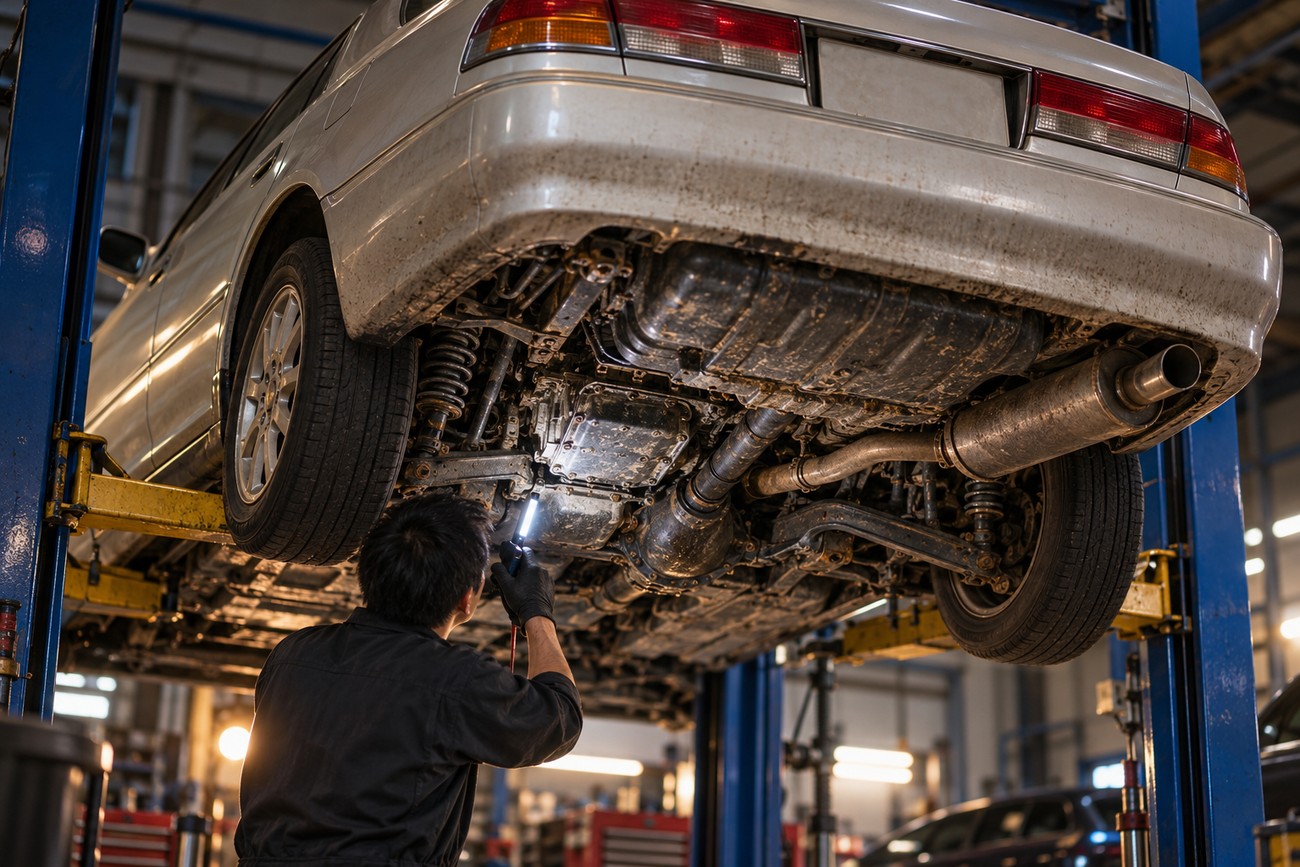
Corrosion commonly appears underneath, around wheel arches, in structural or suspension mounting areas, and in previously repaired concealed sections. Electrical faults can be equally persistent: window regulators, climate controls, instrument clusters, sensors, wiring, and connectors may develop intermittent problems. Age, moisture, and improvised repairs often combine to create faults that do not appear during a brief handover drive.
How to Inspect a Used Mark II Grande Before Buying
Begin by verifying identity. Match the chassis and engine codes with the registration documents, auction history, and the seller’s description, then confirm whether the engine appears original or replaced. Compression, smoke, warm oil pressure, and transmission history deserve more attention than trim badges or an impressive exhaust system.
Inspect the body from underneath before judging the paint. Check the underside, wheel arches, floor areas, suspension and structural mounting points, and concealed sections around previous repairs. A clean exterior can conceal corrosion or poor metalwork, particularly on cars that have spent time in regions using road salt or have been stored badly.
Test the cooling system as a system rather than checking only the coolant reservoir. Look at the radiator, thermostat, hoses, fans, coolant quality, and evidence of past overheating. During the inspection, allow the engine to reach normal operating temperature and watch for unstable temperature, pressure buildup, leaks, or cooling fans that fail to operate correctly.
Road-test the car through gentle and moderate acceleration, including repeated 2–3 and 3–4 shifts when fully warm. Listen for driveline vibration, differential noise, suspension knocks, and changes in steering direction over uneven pavement. Check electrical equipment repeatedly, since a window, climate-control panel, or instrument cluster that works once may still have an intermittent fault.
Auction history and Japanese inspection sheets can reveal previous damage, mileage inconsistencies, equipment changes, or corrosion repairs more clearly than polished seller photographs. Be cautious with replacement engines, swaps, improvised wiring, and cheap universal suspension or brake parts. Such repairs may function today while reducing reliability, parts compatibility, and resale confidence.
What Determines a Toyota Mark II Grande’s Value Today
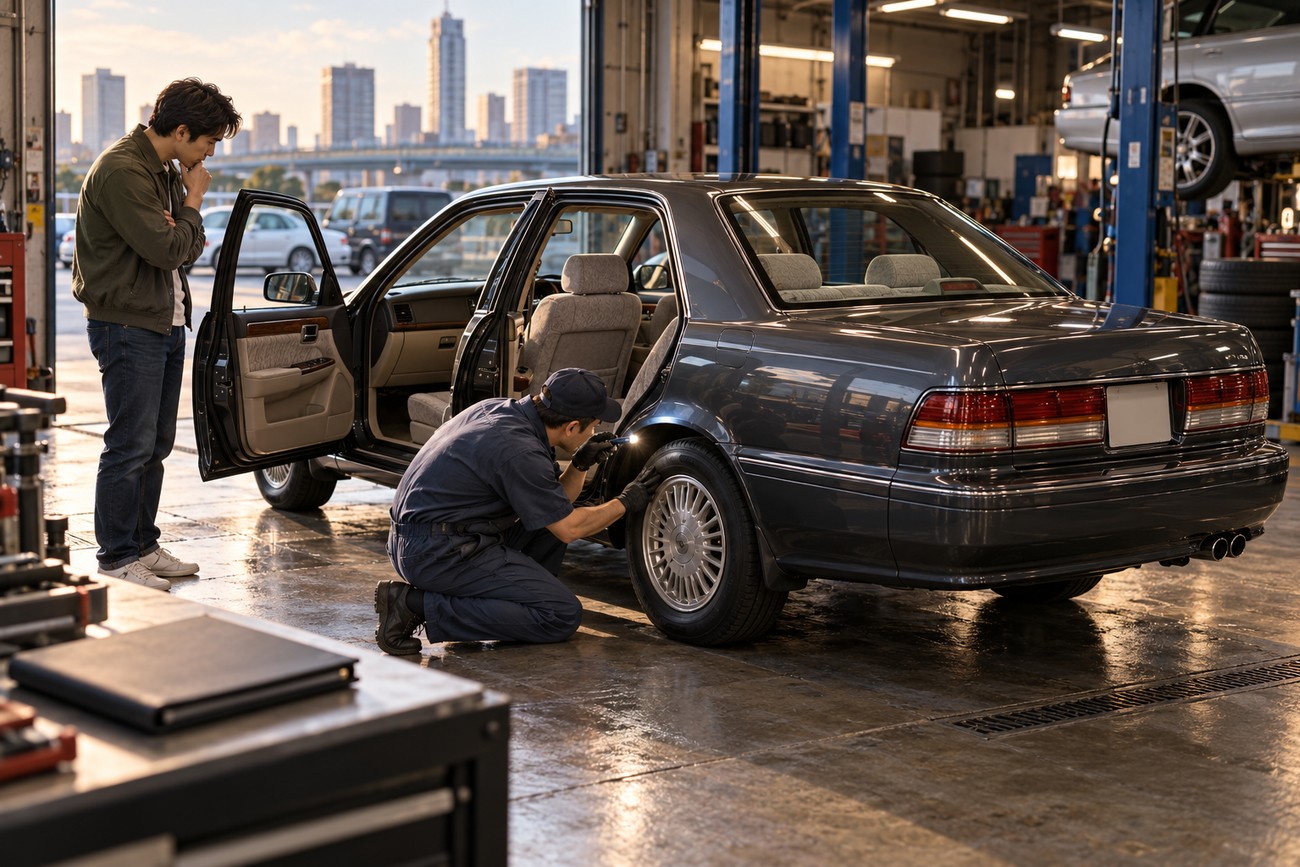
There is no single reliable value for every Toyota Mark II Grande. Generation, market, import status, provenance, rust, originality, engine condition, transmission condition, documentation, and interior completeness all change the financial picture. A desirable specification with poor records can be worth less in practical terms than a less celebrated car with a straight shell and a documented service history.
The automatic transmission deserves special weight in any valuation. A healthy transmission supports immediate usability, while a car with major shift problems can require a repair that approaches the value of the vehicle. This is why a small difference in engine output often matters less than clean engagement, stable temperatures, and evidence of fluid maintenance.
A rust-free body, intact factory wiring, and an unmodified interior may be more valuable than body kits, oversize wheels, or a loud exhaust. Cosmetic modifications can conceal repairs and make future parts matching harder, while a stock car usually gives the next owner a clearer baseline for diagnosis.
The JZ reputation should also be kept in proportion. The value of a Grande is determined by its present condition and documentation, not by the general durability associated with one engine family. A careful inspection can justify a premium for a clean car; attractive photographs alone cannot.
The Myths That Make Grande Ownership Expensive
The first myth is that Grande automatically means factory sports sedan. In reality, it is primarily a comfort-oriented FR trim, and its sporty impression comes from rear-wheel drive, refinement, and available inline-six engines. Buying one for track use without evaluating brakes, suspension, and cooling can turn a comfortable sedan into a costly preparation project.
A second myth treats every Grande as a turbocharged JZ car. Most Grande applications were naturally aspirated, while turbo models were separate versions or market-specific variants. Confirming the engine code prevents incorrect expectations about power, parts, fuel systems, and transmission behavior.
Old JZ engines are also described as maintenance-free because they can be durable. Durability does not cancel the effects of age, overheating, oil neglect, degraded seals, wiring faults, or poor repairs. A durable engine that has been overheated or poorly maintained can still require expensive work.
Japanese origin is no guarantee of a corrosion-free shell. Rust depends on the car’s region, storage, use, and repair history, and imported vehicles may have passed through several climates before reaching you. Underbody inspection and documentation remain essential even when the exterior looks unusually clean.
Frequently asked questions
These questions cover value, problems that may justify walking away, and the commonly cited three-year rule in Japan. In each case, the car’s history matters more than a general claim about the model. Inspect the vehicle itself before relying on its reputation.
How much is a Toyota Mark II Grande worth today?
Its value depends on provenance, auction history, originality, rust, engine condition, transmission condition, documentation, and market. There is no meaningful universal price for all Grande cars because an original, rust-free example with a healthy automatic transmission belongs to a different buying category than a modified or repaired project.
Use auction sheets and inspection records to establish what the car was before import, then price the present vehicle rather than the model’s reputation. Budget separately for immediate needs such as cooling-system work, suspension renewal, electrical faults, and transmission service. A lower purchase price has little value if it conceals major structural or drivetrain risk.
Which Toyota Mark II Grande problems should make a buyer walk away?
Structural corrosion should receive the highest priority, especially around suspension or body mounting areas and concealed previous repairs. Evidence of overheating, unstable operating temperature, or major transmission flare may also justify walking away unless the repair scope and cost are clearly understood.
Undocumented wiring changes are a serious risk when combined with multiple electrical faults, engine swaps, or improvised fuel and cooling systems. Minor cosmetic defects and tired interior trim are usually manageable; structural rust, repeated overheating, and major automatic-transmission problems can change the entire economics of ownership.
What is the three-year car rule in Japan, and does it prove a Mark II is better?
The commonly mentioned three-year rule refers to Japan’s vehicle-inspection and export-market assumptions. It does not prove that a Mark II is better, establish a quality guarantee, or mean that every car was discarded because it had reached a fixed ownership age.
Inspection history still matters, but it must be read alongside the vehicle’s condition. Check the shell, engine, cooling system, transmission, wiring, and repair records directly. The rule provides context for how Japanese cars may enter export markets, not a substitute for examining the car in front of you.







