
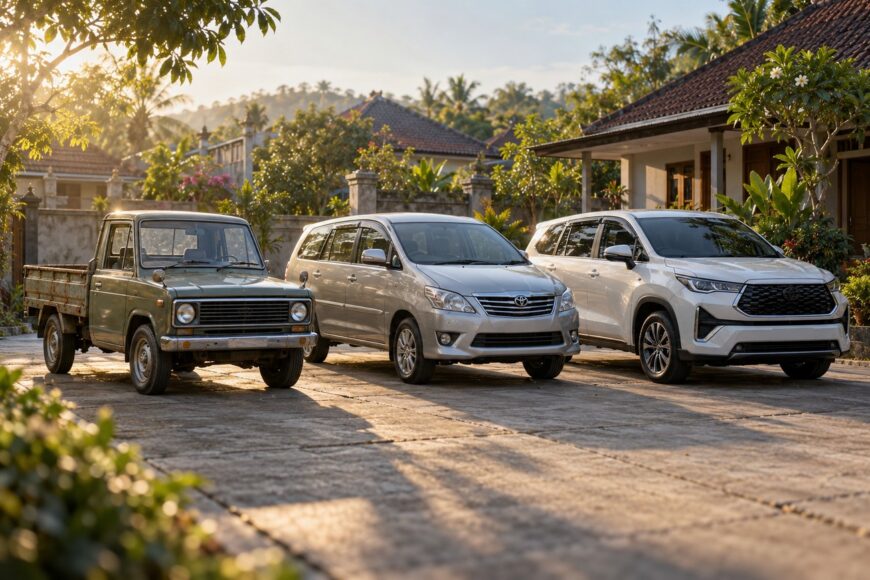
The Toyota Kijang is closely associated with family travel in Indonesia, yet the name has covered vehicles built for different jobs. An early cargo-oriented Kijang, an IMV-based Innova, and a front-wheel-drive Zenix do not offer the same layout, road manners, or ownership trade-offs. Their shared reputation is a useful starting point, but a poor substitute for identifying the vehicle in front of you.
For a used-car buyer, that distinction affects everything from structural checks to luggage space and fuel expectations. The Kijang’s place in Indonesian life began with practical transport needs rather than the comforts now associated with a family people mover.
- 1977: A utility vehicle built for Indonesia
- How a workhorse became a national people mover
- Kijang, Innova, and Zenix: What the badge covers
- Where newer family comfort changes the bargain
- Used Kijang inspection: Look past the reputation
- Choosing a Kijang for the roads and people you carry
- Frequently asked questions
- What does Kijang mean?
- How can I confirm the safety equipment on a specific Zenix?
- What is the 3-in-1 rule in Jakarta?
- What is Toyota Kijang?
- What is the most popular car in Indonesia?
1977: A utility vehicle built for Indonesia
The Toyota Kijang debuted in Indonesia in June 1977 as a Basic Utility Vehicle (BUV), and production began that year. Its brief reflected local transport and industrial needs: a vehicle had to carry goods and serve businesses as well as move people. The family-oriented identity came later.
The first model had a 1,166 cm³ engine rated at 61 SAE hp, a 2,500 mm wheelbase, and a stated 855 kg payload. That payload helps explain its working-vehicle design. Those figures describe the original Kijang; they cannot be used to judge the carrying ability or performance of later models.
Simple, utility-first design made sense for an owner who needed one vehicle for varied work. It also meant that the first Kijang should not be judged by the comfort, cabin layout, or safety expectations of a modern MPV. Its appeal began with adaptability, not with a purpose-built third row.
How a workhorse became a national people mover
As the Kijang developed, passenger-focused versions gave households a way to carry relatives and their belongings in one vehicle. That gradual change matters: its family reputation grew out of a working platform and successive adaptations, rather than arriving fully formed with the first model.
Kijang exports began in 1987, extending the vehicle’s reach beyond its home market. Toyota reported one million Kijangs produced by 2003, a milestone that illustrates its importance to Indonesian manufacturing. It does not establish where the model ranks in sales today.
Production and sales of the IMV-based Kijang Innova began in September 2004. This was more than a change of body shape: the Innova belonged to Toyota’s international IMV project, so buyers should treat it as a distinct vehicle when comparing parts, engines, and driving characteristics with earlier Kijangs.
Calling the Kijang “Indonesia’s national people mover” describes its cultural role, not an official legal designation. The phrase captures how widely the name became associated with family transport, while leaving room for a practical truth: the badge continued across vehicles built for different purposes.
Kijang, Innova, and Zenix: What the badge covers
The name alone does not identify an engine, drivetrain, or safety package. These broad eras show what to verify before treating one owner’s experience as a guide to another vehicle.
| Vehicle | Purpose and architecture | Buyer’s key question |
|---|---|---|
| Original Kijang | Utility-first BUV intended for work and mixed use. | Are its structure and mechanical condition sound? |
| Later Kijangs | Increasingly family-oriented vehicles; specifications vary by version. | Does this particular cabin meet your passenger and cargo needs? |
| Kijang Innova | IMV-based family vehicle introduced in September 2004. One configuration offers a 2.4-litre 2GD-FTV diesel with a six-speed automatic. | Which engine and gearbox does this example have? |
| Kijang Innova Zenix | Different, front-wheel-drive architecture, with a hybrid version available. | Does its road clearance and equipment suit your routes? |
Where newer family comfort changes the bargain
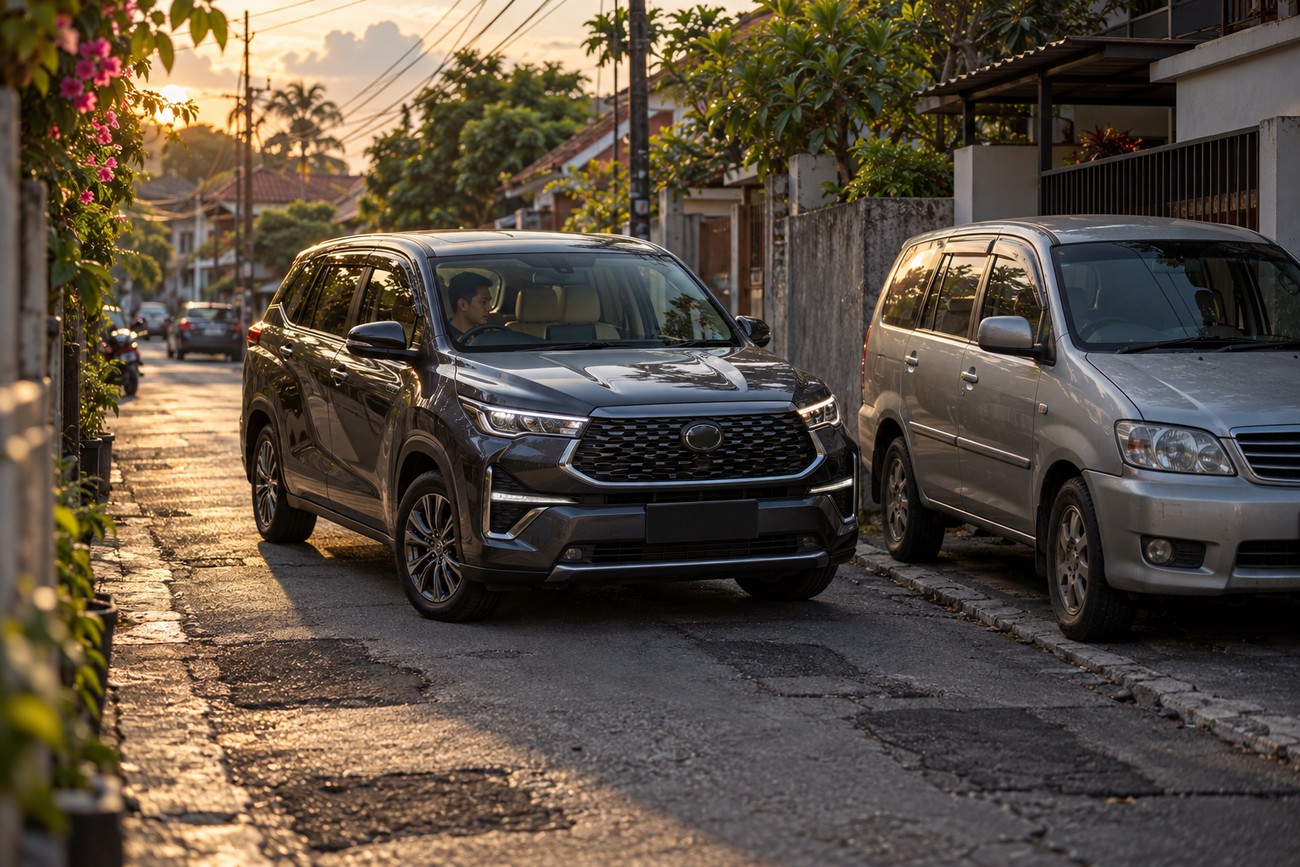
A diesel Innova can suit a household that values its established family-vehicle layout, but some owners report more noise and vibration from a cold engine than they expect from petrol or hybrid alternatives. That is a driving impression to assess on a cold start, not a measured failure rate. Any large Kijang also deserves a parking test on the narrow streets you actually use.
The Zenix brings a different, front-wheel-drive architecture. A driver accustomed to an older, utility-oriented Kijang or the preceding Innova should not assume it will feel equally suited to broken roads or exposed underbody conditions. Check the route and the vehicle’s clearance rather than treating the shared name as proof of rough-road ability.
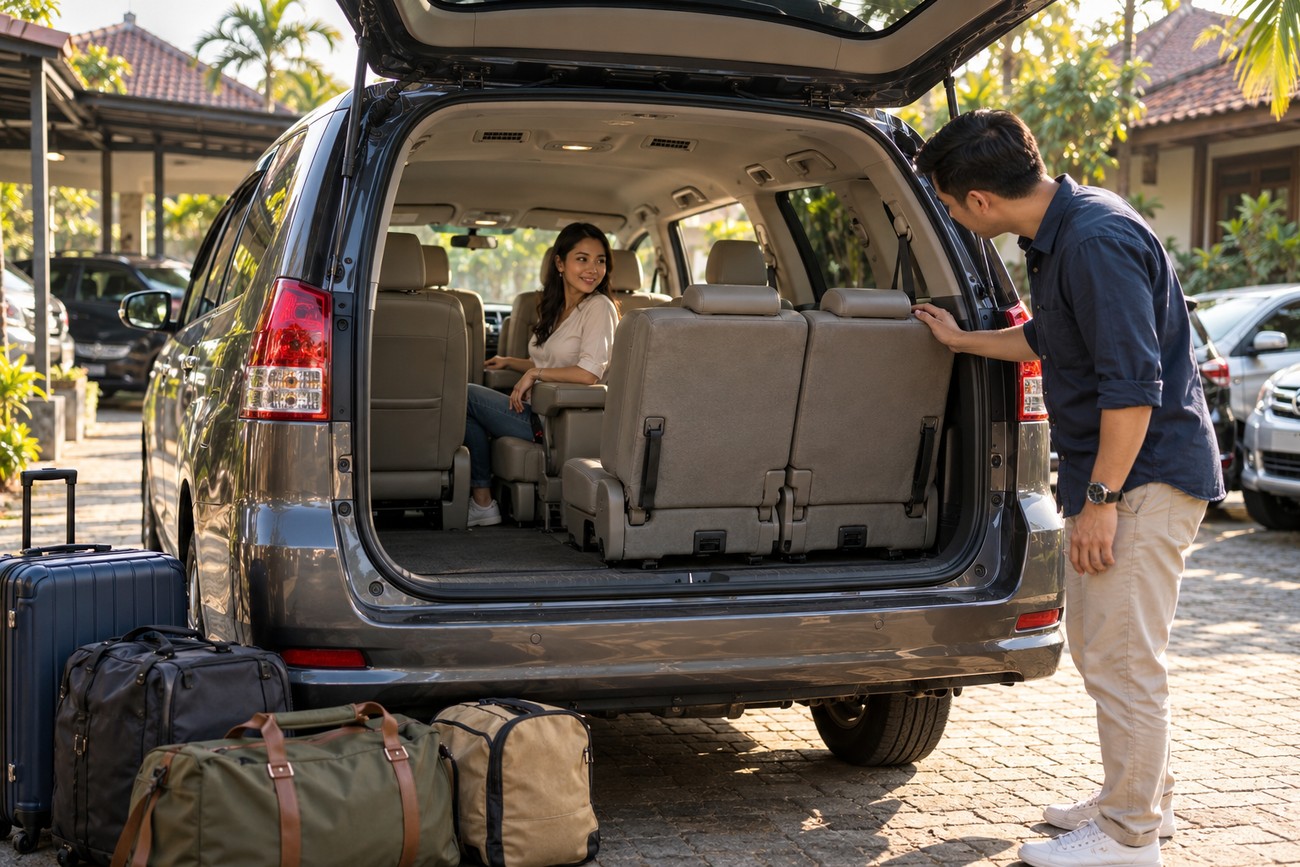
Three rows increase passenger capacity, but seating everyone can leave less usable luggage room. Move the second row to a position its occupants can live with, then assess the space behind the third row. A roomy-looking cabin in an empty showroom may be a tighter fit with people and bags aboard.
Toyota Safety Sense and six SRS airbags are specified for relevant Zenix grades; equipment depends on grade and model year. The hybrid Zenix has also been promoted with consumption of up to 1:21. Treat that as a claimed maximum, not an expectation for every trip: load, traffic, air conditioning, tires, and driving style can change the result.
Used Kijang inspection: Look past the reputation
Begin an older Kijang inspection with its cooling system and a drive long enough to reveal signs of overheating. Look for oil leaks, suspension wear, and corrosion, including areas that affect the body’s or frame’s structural condition where applicable. Age-related problems vary with the generation and its upkeep; a clean exterior cannot establish either.
Service records help connect what you see to work that has actually been done. An engine bay that looks tidy after cleaning still needs a cold start, a temperature check on the drive, and an inspection for fresh leaks afterward. Record gaps deserve questions about maintenance rather than automatic conclusions.
A sound-looking outer panel can hide a costly decision. Establish whether the vehicle has overheated and inspect structural corrosion before bargaining over paint or trim.
On a used Innova, check automatic-transmission operation through gentle and firmer shifts, then run the air conditioning and test the electrical equipment. Faults in these systems can be more consequential to repair than routine servicing. Confirm the exact engine, gearbox, and drivetrain before arranging an inspection, so the checks match the vehicle.
Toyota’s reliability reputation is a reason to consider a Kijang, not a diagnostic result for a particular example. A documented, thoroughly checked vehicle is a stronger prospect than one bought because its badge is familiar. If the seller cannot explain an important symptom, allow for further diagnosis before committing.
Choosing a Kijang for the roads and people you carry
A small-business user may appreciate why the original Kijang was designed around work: its stated 855 kg payload belonged to that first model. It says nothing about what a later passenger Kijang can safely carry. Match any candidate’s actual load rating and cabin arrangement to the goods and people it will transport.
For a family that regularly fills three rows, bring the usual passengers to a viewing if possible. Check access to the rear seats, second-row legroom at a realistic setting, and the luggage left over. Space that works for a short outing may be inadequate for a longer trip with bags.
Rough-road drivers should test the intended route and pay particular attention to the Zenix’s different front-wheel-drive architecture and underbody clearance. An urban commuter considering the hybrid has another priority: maneuvering and fuel use in familiar traffic. Neither buyer benefits from assuming a newer Kijang directly replaces an older one in every setting.
Compare fuel consumption only across similar routes, loads, and driving conditions. The hybrid Zenix’s promoted up-to-1:21 figure is a maximum claim, not a guaranteed outcome to set against an owner’s diesel or petrol records. A representative test drive will tell you more about fit, visibility, and ride than the badge will.
Frequently asked questions
The Kijang name appears in questions about language, Jakarta driving rules, safety, and sales. Each needs its own context: a model name can remain familiar long after the vehicle or rule being discussed has changed.
What does Kijang mean?
“Kijang” is an Indonesian word for a muntjac, a small deer. The animal name predates the vehicle’s family-car identity; it does not describe a seating format or a particular mechanical design.
How can I confirm the safety equipment on a specific Zenix?
Identify the vehicle’s grade and model year, then compare its documentation with the applicable Toyota specification for that Indonesian-market version. Check the listed airbags and driver-assistance functions individually: Toyota Safety Sense and six SRS airbags are specified for relevant grades, not every Zenix.
What is the 3-in-1 rule in Jakarta?
Jakarta’s former “3-in-1” rule required at least three occupants in a car using designated roads during specified periods. The rule was discontinued; Jakarta subsequently used odd-even license-plate restrictions on designated roads instead. Drivers should check current routes and hours before traveling.
What is Toyota Kijang?
Toyota Kijang is a vehicle name that began with an Indonesian Basic Utility Vehicle in 1977 and continued through later family-oriented models, including the Innova and Innova Zenix. It identifies a lineage, not one unchanged model or platform.
What is the most popular car in Indonesia?
There is no timeless answer: the leader depends on the sales period and whether the comparison covers models, nameplates, or vehicle categories. Toyota reported one million Kijangs produced by 2003, which shows the name’s historical reach but does not establish a current best-selling-car ranking.







