

The Toyota iQ is only 2,985 mm long, yet Toyota designed it around a 2+2 seating layout. That combination makes the car look like a clever answer to urban congestion: short enough for tight streets, wide enough to avoid feeling like a narrow microcar, and theoretically capable of carrying four people. In practice, the central question is whether the iQ is genuinely ingenious or simply too compromised for ordinary ownership.
Its story also explains why Aston Martin created the Cygnet. The luxury derivative borrowed the iQ’s basic platform and closely related technical foundation, then added premium trim, branding, and exclusivity. This article separates the useful engineering from the badge-driven mythology, because the iQ and Cygnet are more closely related in substance than their images suggest.
- Why the Toyota iQ Was More Than Just a Small Car
- How the iQ Feels in the City—and Where the Packaging Bites
- Engines, Gearboxes and Everyday Running Costs
- The iQ’s Real-World Compromises and Common Buying Mistakes
- Aston Martin Cygnet: What Was Actually Borrowed from the iQ
- Toyota iQ or Cygnet: Which Idea Makes Sense Today?
- Frequently asked questions
- Why did Toyota discontinue the iQ?
- How many Aston Martin Cygnets are left?
- Was the Aston Martin Cygnet partly created to help with the brand’s emissions targets?
- Which Toyota iQ version is most commonly listed for the Russian market?
Why the Toyota iQ Was More Than Just a Small Car
Toyota’s design problem was unusually specific: create an urban car shorter than three meters while preserving useful occupant space and acceptable road manners. The iQ is a three-door A-segment hatchback measuring 2,985 mm in length, 1,680 mm in width, and 1,500 mm in height. Those dimensions give it a remarkably small footprint without making it as narrow or visually fragile as some conventional city cars.
The packaging solution was a 2+2 layout. That means two primary front seats plus two restricted rear positions, rather than four equally usable seats. The arrangement allowed Toyota to claim occasional rear-seat capacity while prioritizing the people who would use the car most often. It was a more ambitious solution than simply shrinking a conventional hatchback, but it was never a promise of family-car flexibility.
Much of the iQ’s character comes from how tightly its mechanical components are arranged. The short body and unusual cabin layout leave limited scope for carrying passengers and luggage at the same time. A buyer who treats the rear seats as an occasional reserve will understand the concept; someone expecting a conventional four-seat hatchback will quickly find its limits.
How the iQ Feels in the City—and Where the Packaging Bites
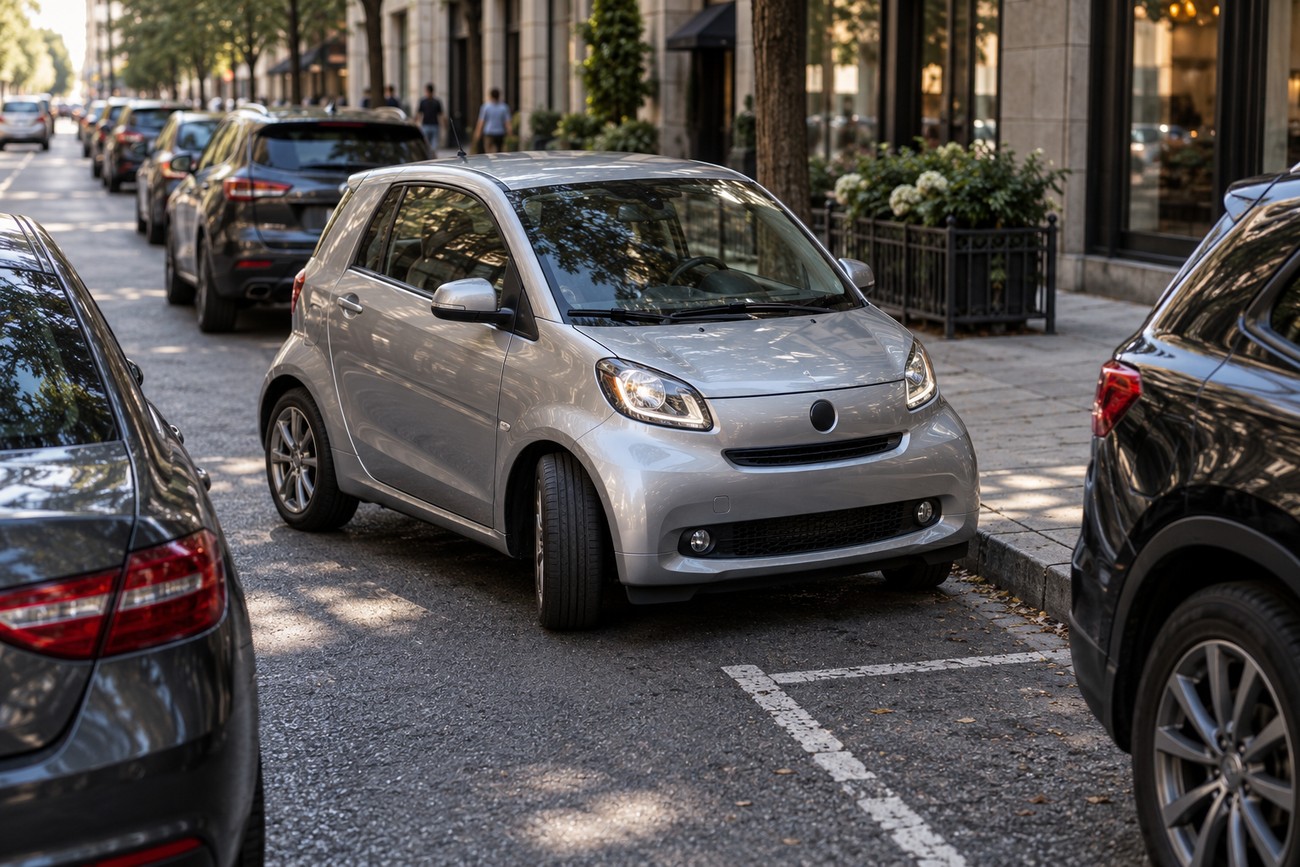
The iQ’s 2,000 mm wheelbase helps explain its urban agility. A published turning radius of 7.8 m makes low-speed maneuvering and tight parking spaces central to the car’s appeal. Its compact footprint is useful in dense areas where the ability to place the car accurately matters more than outright speed.
That short wheelbase also contributes to the car’s distinctive feel. The iQ responds readily to small steering inputs, and its dimensions make parallel parking less intimidating than it is in a larger hatchback. The benefit is most obvious during short trips through crowded streets, where the car’s size reduces the need to plan every maneuver in advance.
The compromise appears when the trip involves people or luggage. The rear seats are best understood as occasional 2+2 accommodation, mainly for children or short journeys, while adult use is highly restricted. The boot and cabin are poorly suited to large shopping loads, pushchairs, or tall luggage, so the iQ cannot replace a normal family hatchback for bulky everyday tasks.
That distinction is easy to miss during a brief test drive. With one or two occupants, the iQ can feel more practical than its exterior suggests. Load it with four adults or try to combine rear passengers with substantial cargo, and the clever packaging becomes a firm physical limitation.
Engines, Gearboxes and Everyday Running Costs
The main petrol choices were a 1.0-liter engine rated at 68 hp and a 1.3-liter engine rated at 98 hp. Both suit the car’s urban mission, but they give it different personalities. The 1.0-liter emphasizes modest running costs, while the 1.3-liter feels noticeably more usable for short accelerations and gives the car more reserve in busy traffic.
Depending on the version, the iQ was offered with a manual gearbox or a continuously variable transmission. A manual can feel more direct and predictable to drivers who prefer to manage the engine themselves. The CVT suits stop-and-go traffic and removes clutch work, although buyers should assess the condition and behavior of any used transmission rather than assuming that a city-car drivetrain has had an easy life.
Stated combined fuel consumption is approximately 4.3–5.1 L/100 km depending on version. That is a useful advantage in regular urban use, particularly when the car is driven within the conditions for which it was designed. The 32-liter fuel tank is small, however, so active use can mean more frequent refueling than the consumption figure alone might suggest.
Specifications found in one market should not be treated as the complete global range. For example, Russian catalogues commonly list the 1.3-liter, 98-hp CVT configuration, while other markets also received different engine and transmission combinations. Checking the actual car’s specification, documentation, and parts compatibility matters more than relying on a generic online listing.
The iQ’s Real-World Compromises and Common Buying Mistakes

The iQ is primarily a city car, and its weaknesses become clearer as speeds and journey lengths rise. High-speed driving can be noisy, with the compact body and limited sound insulation making motorway travel less relaxed than it is in a larger hatchback. Longer trips are possible, but they are not where the iQ delivers its strongest argument.
Loading is another common source of disappointment. The rear seats may expand the theoretical passenger count, yet they do little to solve the need for luggage space. A buyer who regularly carries a pushchair, tall bags, or large grocery loads should test that exact use before purchase rather than judging practicality from the exterior dimensions.
Pre-purchase checks should use real seating positions, rear-seat access, visibility, boot use, and motorway noise as decision points. A 2+2 label and a favorable fuel-economy figure cannot reveal whether the car suits your daily routine.
Some discussions also mention an unusual seating position or restricted visibility. The available direct evidence for those points is limited, so they should remain individual inspection issues rather than universal defects. Sit in the actual car, adjust the wheel and seat, check sightlines at junctions, and make sure rear access is acceptable before committing.
The most damaging buying mistake is treating the iQ as a normal four-seat daily car. It makes sense when compact dimensions and parking ability outweigh cabin flexibility; it becomes frustrating when regular adult rear passengers, bulky loads, or quiet highway travel are essential. The right test is practical, not theoretical: bring the people and objects the car must carry.
Aston Martin Cygnet: What Was Actually Borrowed from the iQ
Aston Martin produced the Cygnet from 2011 to 2013. It was based on the Toyota iQ’s basic platform and retained essentially the same technical foundation, including closely related powertrains. That makes the Cygnet a premium, image-led derivative of the iQ rather than a wholly separate Aston Martin engineering concept.
The differences centered on presentation and positioning. Higher-grade materials, Aston Martin styling details, and exclusivity changed the cabin atmosphere and the product’s social meaning. They did not transform the underlying city-car proportions into those of a sports car or remove the iQ’s restrictions on rear-seat space and luggage capacity.
The project’s commercial reality was stark. Reports indicated that approximately 4,000 cars per year were expected, but around 300 Cygnets were produced across the 2011–2013 period. That gap shows how narrow the market was for an expensive, highly distinctive city car whose basic technical identity remained close to a Toyota.
The Cygnet therefore makes more sense as a brand and regulatory project than as a miniature performance Aston Martin. Its small-car format also had a reported role in helping Aston Martin respond to fleet-average emissions and regulatory pressures. That context explains why such a vehicle appeared in the range, even though its engineering relationship with the iQ remained obvious.
Toyota iQ or Cygnet: Which Idea Makes Sense Today?
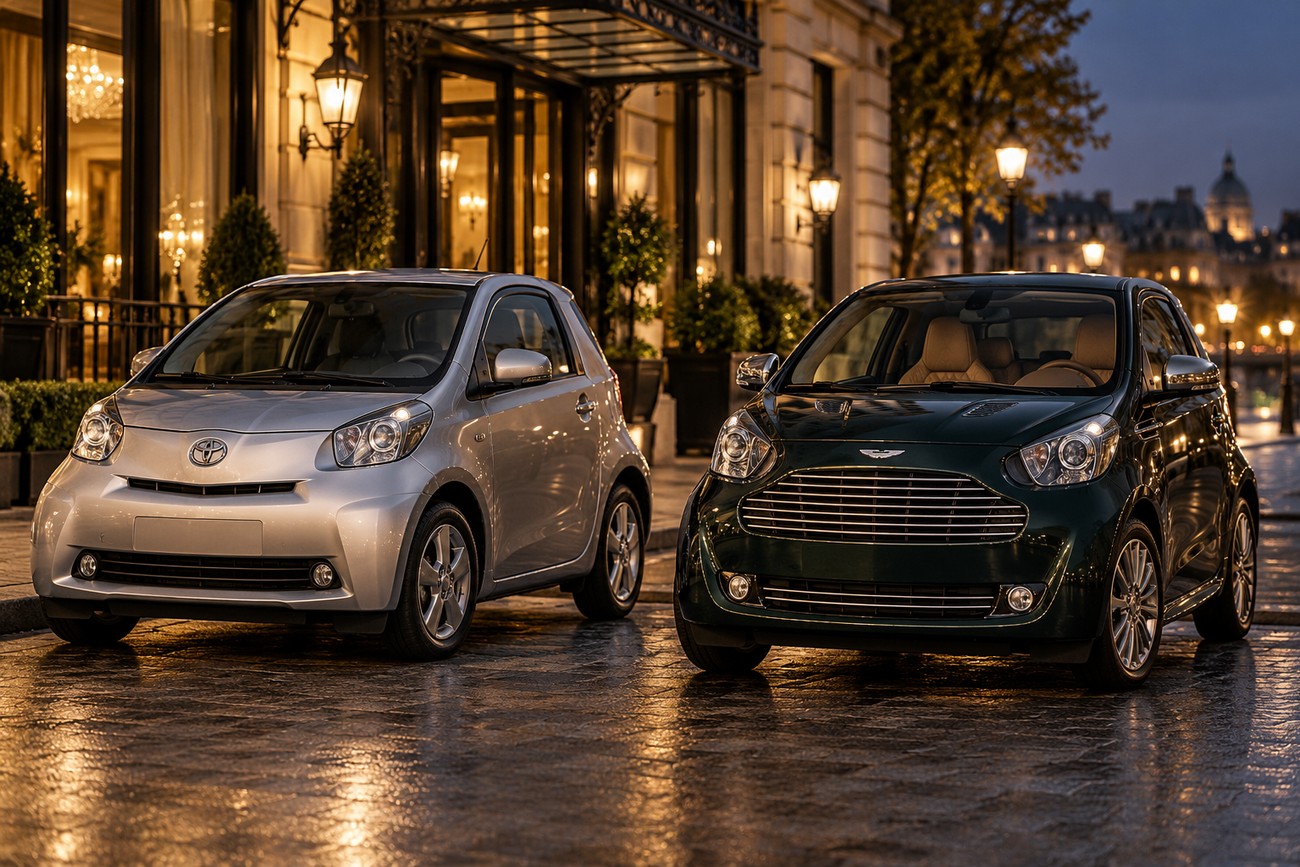
The Toyota iQ can be a rational choice for an urban driver who values a small footprint, easy parking, and occasional rear-seat use above cargo capacity. Its 2+2 layout is workable for limited situations, but it should not be used to justify the purchase if four adults will travel regularly. The car’s strengths are highly specific, and its compromises are equally specific.
The Cygnet appeals for different reasons. Its main distinction is premium positioning, trim, and branding rather than a wholly separate engineering concept. Buyers should expect rarity and presentation, not a fundamentally different driving machine. The badge adds significance and exclusivity, while the underlying city-car format remains close to the Toyota.
Niche production can complicate ownership. The available pool of sound examples may be limited, and replacement body or trim parts can be harder to source than ordinary iQ components. That does not automatically make either car a poor purchase, but it raises the importance of inspecting condition, confirming provenance, and checking parts availability before treating an attractive example as an easy bargain.
Choose the iQ when its urban dimensions solve a real problem in your life. Consider the Cygnet only if its rarity, premium finish, and Aston Martin identity are the main objectives. Neither car should be bought on the assumption that the 2+2 layout, fuel economy, or luxury badge erases the limits imposed by the compact package.
Frequently asked questions
The iQ and Cygnet are easy to misunderstand because their unusual proportions invite simple labels. These answers separate confirmed production facts, market-specific information, and conclusions that remain more cautious.
Why did Toyota discontinue the iQ?
The available evidence supports a niche-demand and practicality explanation, but it does not establish one definitive official cause that should be presented as fact. The iQ solved a specific urban packaging problem, yet its 2+2 layout, limited luggage capacity, and weaker long-distance comfort restricted its audience.
That narrow use case helps explain why the concept was difficult to sustain as a mainstream small car. It was effective when compact dimensions mattered most, but less convincing for buyers who expected one vehicle to handle passengers, shopping, and highway travel equally well.
How many Aston Martin Cygnets are left?
The reported production total is around 300 cars, built between 2011 and 2013. That figure describes how many were produced, not how many survive today.
An exact current survival count is not established by the supplied evidence. It is therefore inaccurate to use the production total as a present-day registry figure or to assume that every surviving car is available for purchase.
Was the Aston Martin Cygnet partly created to help with the brand’s emissions targets?
Yes, the project had a reported regulatory and fleet-average emissions context alongside its branding role. A small city car could help Aston Martin respond to fleet-average emissions and wider regulatory pressures in a way that a conventional performance model could not.
That context does not make the Cygnet a purely compliance-driven vehicle. It was also presented as a premium urban model, but its appearance in the range makes more sense when regulatory objectives are considered alongside its commercial and image-led ambitions.
Which Toyota iQ version is most commonly listed for the Russian market?
Russian catalogues commonly list the 1.3-liter, 98-hp CVT version. That is a useful market-specific clue for buyers searching local listings, parts information, or registration records.
It does not represent the complete global range. The iQ was also offered with a 1.0-liter engine rated at 68 hp, and transmission availability varied by version and market, including manual and CVT options.







