
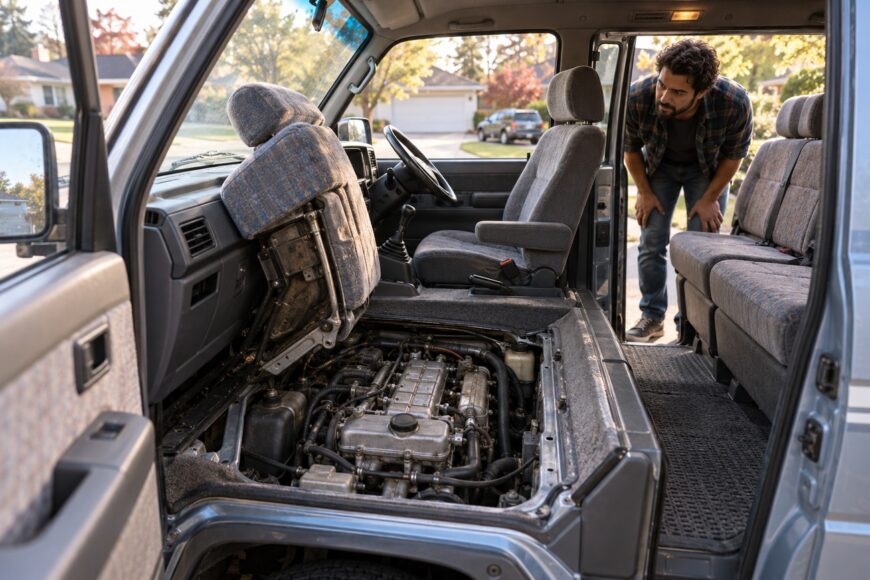
The Toyota HiAce Super Custom occupies an unusual place in the imported-van market. It offers the comfort, flexible cabin, and distinctive character of a Japanese-market people carrier, while some versions add four-wheel drive and a durable-feeling diesel drivetrain. That combination explains its lifestyle appeal: one vehicle can serve family travel, camping, and everyday transport without looking like a conventional modern minivan.
Ownership becomes more serious once the van’s age and mechanical layout are considered. Many used examples have the 1KZ-TE 3.0-liter electronically controlled turbo-diesel, an automatic transmission, and 4WD, but overheating, restricted engine access, aging electronics, and parts delays can turn a cheap import into a demanding project. Registration, lighting, emissions, right-hand-drive, and import rules also depend on the country where you plan to use it.
- What the HiAce Super Custom Actually Is
- The Imported Van Lifestyle: Why People Still Want One
- The 1KZ-TE Heat Problem Is the Ownership Fault Line
- What Ages First: Parts, Electronics, and Imported-Spec Problems
- How to Inspect One Before You Buy
- The First Service After It Arrives
- Is the Super Custom a Sensible Long-Distance Van?
- Import, Registration, and Right-Hand-Drive Reality
- Frequently asked questions
- How can I identify the exact Super Custom specification before ordering parts?
- Why might a Super Custom fail to start after a fuel-filter change?
- What should I monitor on a 1KZ-TE during a mountain trip?
- Which replacement parts are worth importing before the van breaks down?
What the HiAce Super Custom Actually Is
The Super Custom is a Japanese-market, right-hand-drive HiAce variant rather than one fixed specification. The name covers different years, chassis codes, engines, transmissions, drivetrains, and equipment levels. Two vans carrying the same badge can therefore require different parts and offer different driving characteristics.
The 1KZ-TE is a 3.0-liter electronically controlled turbo-diesel commonly found in used Super Custom examples. A340F automatic transmissions and 4WD are also frequently encountered configurations. They are common combinations, not universal specifications, so a seller’s description should never replace verification of the individual vehicle.
Before ordering parts or comparing one van with another, identify the chassis code, engine, transmission, drivetrain, and equipment. The VIN or chassis information should be checked against the catalog number for each component. The generic word “HiAce” is too broad to establish compatibility.
This distinction matters because imported vehicles are often advertised with simplified specifications. A stated engine size may be correct while the transmission, 4WD system, electrical equipment, or body version differs. Treat the vehicle’s records and identification numbers as the specification, and the badge as a starting point.
The Imported Van Lifestyle: Why People Still Want One

The Super Custom’s appeal comes from its combination of passenger space, upright visibility, and a cabin designed around people rather than a large cargo box. Higher-specification examples can feel more like compact touring vehicles than basic commercial vans. Sliding doors, flexible seating, and the availability of 4WD in some versions make the layout useful for family travel and camping.
The 3.0-liter diesel can carry passengers confidently, but it is not designed for modern high-speed highway performance. Acceleration becomes more modest with a full cabin, luggage, a trailer, or long climbs. Planning overtaking and allowing extra time on fast roads are part of using the vehicle safely and comfortably.
Cab-over packaging places the engine beneath the front seats. This creates useful cabin space within a compact exterior, but it also leaves less distance between the front occupants and the front structure than in a conventional long-nose vehicle. That is an important safety trade-off, especially for buyers comparing the Super Custom with newer vans.
Compact dimensions also do not guarantee inexpensive ownership. Universal claims about fuel economy, payload, or ground clearance are unreliable across all Super Customs because equipment, drivetrain, engine, tires, and model year vary. The lifestyle works best for an owner who values the layout and accepts specialist maintenance.
The 1KZ-TE Heat Problem Is the Ownership Fault Line
The 1KZ-TE has a strong durability reputation, but that reputation should not be confused with immunity to overheating. Owner experience frequently links overheating with cylinder-head cracking or other head damage. Once the cooling system has failed, the resulting repair can outweigh the apparent bargain of the imported van.
Thermal stress rises during heavy-load operation, mountain driving, hot weather, large-wheel use, towing, and prolonged highway driving. A van that behaves acceptably on a short test drive may show its weakness only after sustained climbing or extended high-speed travel. That makes the cooling system more important than a clean engine bay or a low claimed odometer reading.
Inspection should include the radiator, cooling hoses, water pump, and viscous fan coupling. Evidence of previous cylinder-head work deserves careful examination, including what caused the original failure and whether the cooling system was properly restored. A temperature gauge that appears normal during a brief drive does not prove that the system is healthy under load.
Separate temperature monitoring can provide earlier information than relying only on the factory gauge, particularly for owners who regularly drive in mountains or hot conditions. The practical lesson is simple: cooling-system condition should be treated as a purchase decision, not as a minor service item after the sale.
What Ages First: Parts, Electronics, and Imported-Spec Problems
Age affects more than the engine. Cooling leaks, deteriorated power-steering hoses, air-conditioning faults, and seized brakes are commonly reported on older examples. Rubber components and hydraulic parts can fail even when the body presents well and the odometer reading appears reassuring.
The high equipment level found in some Super Customs adds more systems to maintain. Curtains, electric functions, radio equipment, warning lights, and control modules can develop faults. Parasitic battery drain and ECU-related problems may be difficult to trace because an intermittent electrical issue can look like a battery, charging, or sensor failure.
Parts availability is more nuanced than the claim that every Toyota component is easy to obtain. Filters and some engine parts are generally easier to source, while body panels, electronic modules, steering components, interior items, and selected 4WD parts may require overseas ordering. Availability does not guarantee immediate delivery, low cost, or a local equivalent.
Modern or left-hand-drive HiAce parts are not automatically compatible. Differences in generation, chassis, engine, wiring, steering layout, transmission, and 4WD hardware can make an apparently similar component unsuitable. A useful ownership plan includes a supplier who can work from the exact VIN or chassis code rather than from the word “HiAce” alone.
How to Inspect One Before You Buy
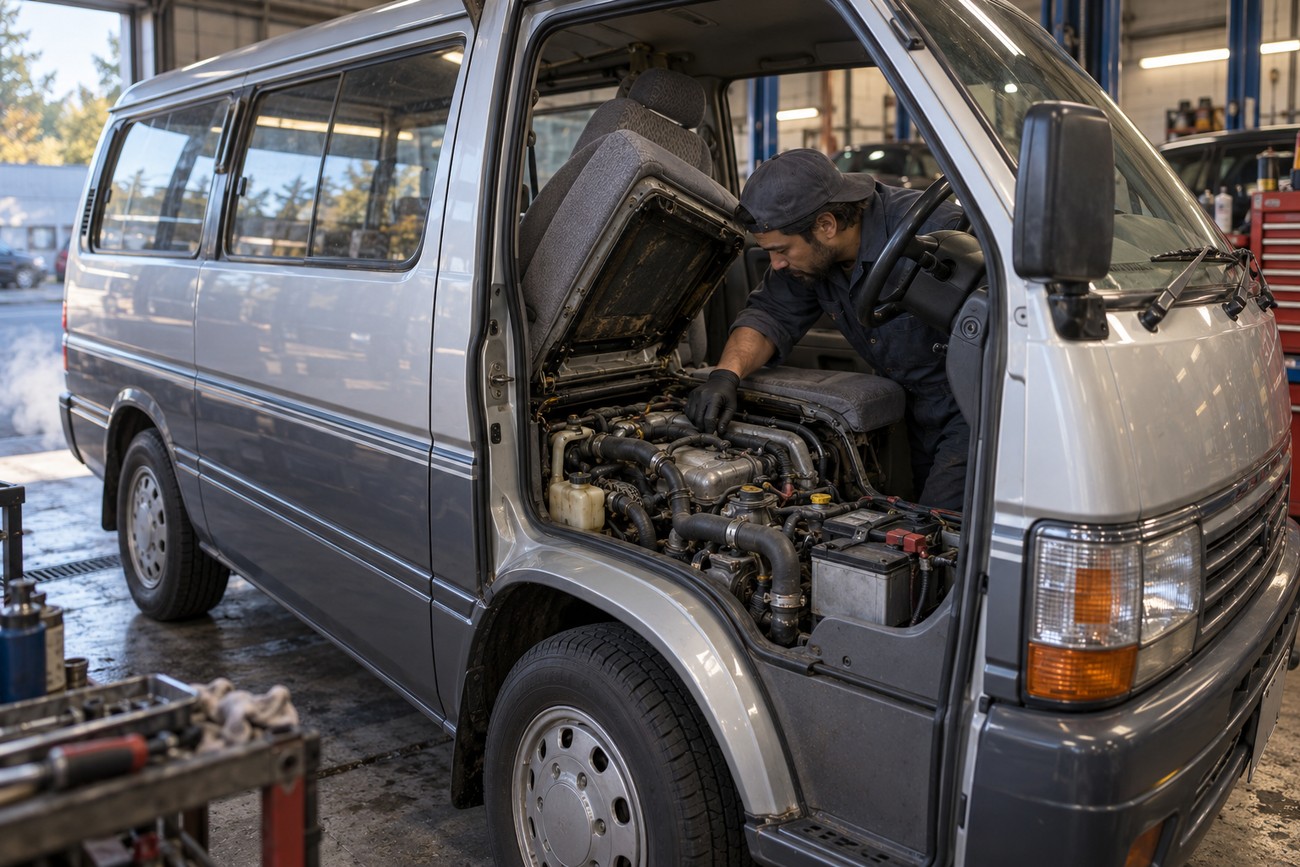
Start with a genuinely cold engine. Check how it starts, whether it produces abnormal smoke, and whether the seller has warmed it before your arrival. A cold start gives more information about combustion, battery condition, glow-system behavior, and possible wear than a polished engine-bay presentation.
Inspect the cooling system for pressure behavior, leaks, hose condition, radiator condition, water-pump evidence, and viscous-fan operation. Ask for documentation or credible evidence of cylinder-head history. The inspection should also include belts, rollers, fuel-filter condition, brake operation, and signs that age-sensitive maintenance was completed after import.
Drive the automatic transmission through its operating ranges and observe engagement, shift quality, vibration, leaks, and behavior under load. Test the 4WD system rather than assuming that the switch, lever, or warning light proves operation. Abnormal drivetrain noise or vibration can turn a supposedly minor fault into a long parts search.
Give corrosion priority over a low odometer reading. Examine the underside, structural members, brake lines, sills, suspension mounting areas, and repaired bodywork. A vehicle with higher documented mileage and sound structure may be a safer purchase than a low-mileage import with hidden corrosion and incomplete records.
Finally, compare the inspection result with the intended use. A van for occasional local trips has a different risk profile from one expected to climb mountain roads fully loaded. The more demanding the use, the more important cooling evidence, transmission behavior, corrosion inspection, and parts support become.
The First Service After It Arrives
An auction description or Japanese service record should establish a starting point, not end the maintenance process. After arrival, verify or replace age-sensitive belts, rollers, the water pump, hoses, fuel filter, and brake components according to their actual condition and documented history. This baseline reduces uncertainty before the van is used for long trips.
Diesel fuel-filter replacement requires particular care. Manual priming is often required afterward, and air entering the fuel system can produce difficult starting or running symptoms. The resulting behavior may resemble a failed pump or injector problem, leading to unnecessary parts replacement if the system was not properly primed and checked first.
After fuel-filter service, technicians can separate trapped air from a genuine pump or injector fault by confirming the priming procedure, checking for renewed air ingress, and observing whether the symptom changes as the system is correctly bled before replacing expensive components.
Keep compatible filters and critical consumables available before they are needed. Match each item by VIN or chassis code, engine, drivetrain, transmission, and catalog number. A small reserve can reduce downtime when local parts shelves do not carry the correct specification.
Is the Super Custom a Sensible Long-Distance Van?
The answer depends on the route and the owner’s tolerance for preparation. Family travel and camping can suit the Super Custom well when the vehicle is mechanically sound and the pace is moderate. Mountain routes, hot climates, heavy loads, large wheels, towing, and sustained highway work place greater thermal demands on the engine and cooling system.
Owner-reported fuel-economy estimates are often around 22–26 mpg, but measurement methods and units are not standardized. Treat those figures as informal reference points rather than a promise for a particular van. Tires, drivetrain, load, maintenance, driving speed, and terrain can all change the result.
For demanding travel, separate temperature and exhaust-gas monitoring can be more informative than relying only on the factory gauge. Watch for rising temperature, changes in smoke, loss of power, unusual coolant behavior, or a need to reduce speed on climbs. Load management and planned cooling stops are sensible precautions, not signs that the vehicle has failed.
The Super Custom suits buyers who can arrange specialist maintenance, tolerate slower performance, and accept waiting for imported parts. It is a poor match for someone who needs modern acceleration, universal local parts support, and low-friction ownership. The lifestyle benefit is real, but it depends on treating the van as an aging specialist vehicle rather than a maintenance-free Toyota.
Import, Registration, and Right-Hand-Drive Reality
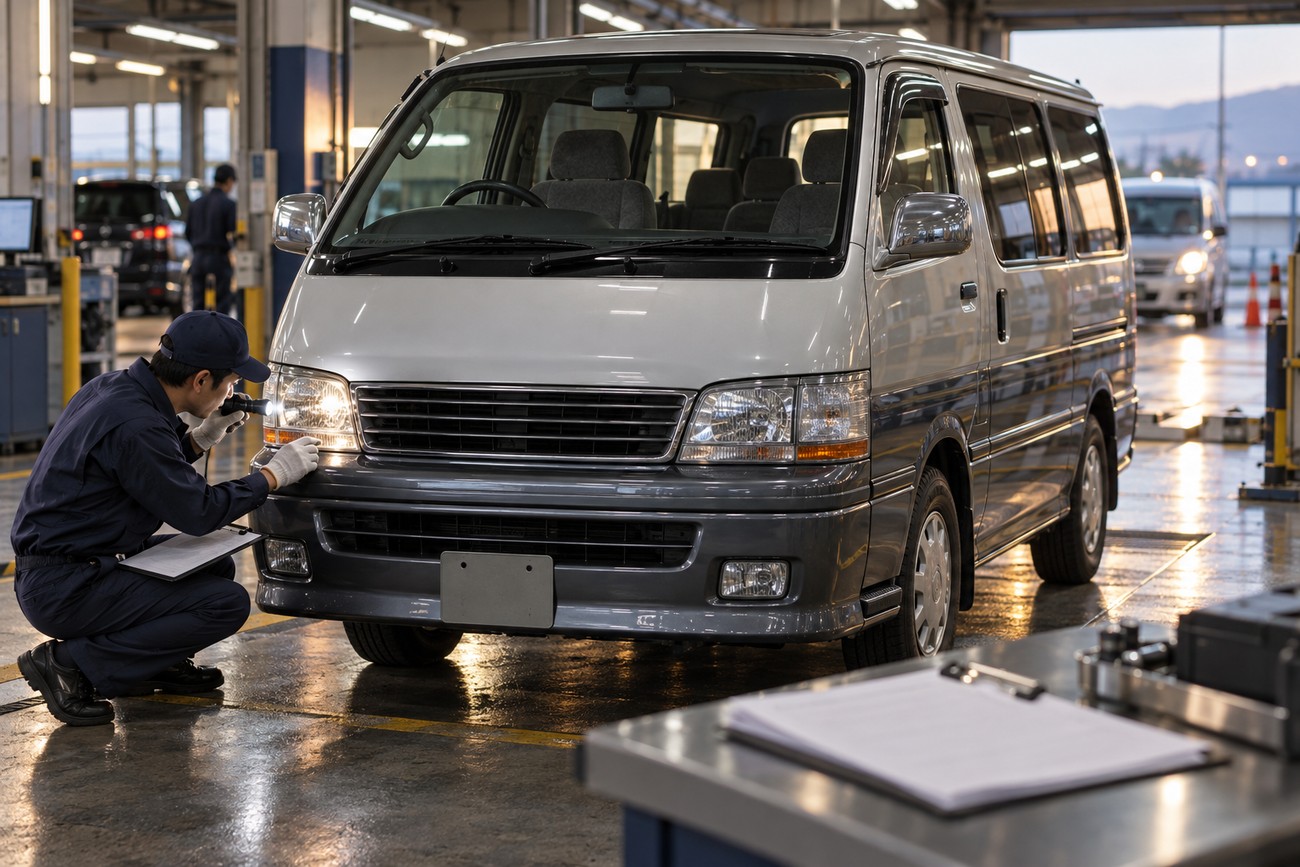
Legal requirements vary by destination country and jurisdiction. Right-hand-drive rules, lighting standards, emissions, registration, import eligibility, and certification can all affect whether a particular Super Custom may be used legally. There is no single legal conclusion that applies to every importing country.
Confirm the requirements before bidding or paying a deposit. Check whether the specific year and specification are eligible, which lighting or emissions changes may be required, and what documents authorities will accept. A vehicle that can be shipped into a country may still require substantial certification work before registration.
Include customs charges, taxes, certification, storage, port delays, and possible transport complications in the ownership calculation. Delays can create costs even when the mechanical purchase price looks attractive. Budgeting only for the auction price and shipping leaves out some of the least predictable expenses.
Arrange a mechanic familiar with the exact specification before the van ships. Identify a parts supplier who can source by chassis code and catalog number, and establish how urgent components will be handled. This preparation can determine whether a minor failure becomes a manageable repair or a prolonged period off the road.
Frequently asked questions
The following questions address identification, troubleshooting, trip monitoring, and parts planning. Specification-dependent advice should always be checked against the van’s VIN or chassis code.
How can I identify the exact Super Custom specification before ordering parts?
Begin with the VIN or chassis code, then confirm the engine, drivetrain, transmission, model year, and relevant equipment. Use those details to obtain the catalog number for the required component. The generic HiAce name is insufficient because Super Custom versions can differ in wiring, steering, suspension, transmission, and 4WD hardware.
Ask the supplier to confirm compatibility against the complete identification data, especially for electrical, interior, body, and 4WD parts. Save the successful part numbers and supplier references in the vehicle’s records. This creates a usable parts history for future servicing.
Why might a Super Custom fail to start after a fuel-filter change?
Air may have entered the diesel fuel system during filter replacement. Manual priming is often required, and a leak at the filter housing or connection can continue introducing air. Hard starting, repeated cranking, or temporary running followed by stalling can point toward this issue.
Check the filter installation, seals, connections, and priming procedure before assuming that the pump or injectors have failed. If correct priming does not resolve the symptom, investigate fuel delivery and electrical faults systematically. Replacing expensive injection components without first checking for air can waste time and money.
What should I monitor on a 1KZ-TE during a mountain trip?
Plan for increased thermal load on climbs, particularly with passengers, luggage, large wheels, a trailer, or hot weather. Watch for rising temperature, unusual smoke, loss of power, coolant loss, or changes in the engine’s behavior. Reduce load and speed if temperatures rise rather than continuing to preserve your schedule.
Independent temperature and exhaust-gas monitoring can reveal changes that the factory gauge may not show clearly. Check the radiator, hoses, viscous fan, and coolant condition before departure. A mountain trip should begin with a known cooling-system baseline, not only a normal short-drive gauge reading.
Which replacement parts are worth importing before the van breaks down?
Prioritize routine filters and age-sensitive consumables that are specific to the engine and chassis, along with practical service items such as belts, hoses, and other critical maintenance components when their compatibility is confirmed. Keep the relevant catalog numbers with the vehicle records so replacements can be ordered accurately.
Do not stock expensive specification-sensitive electronics, body panels, or 4WD components without first confirming the exact failure risk and part identity. Those items may be costly to store and can differ between versions. A sensible reserve targets parts that are likely to be needed, difficult to find locally, and straightforward to verify by VIN or chassis code.







