

The Toyota FJ40 earned its reputation in difficult terrain, yet its road manners are primitive. Leaf springs transmit sharp bumps, the cabin lets in wind and drivetrain noise, and the gasoline engines require patience at highway speeds. Its appeal is real, but so is the effort of driving one.
Before buying, decide whether you want an authentic collector vehicle, a working off-off-roader, or a restomod. That choice shapes what you should inspect and which compromises you can accept. Rust can overwhelm a restoration budget, drum brakes on some examples demand respect, and fuel use, scarce parts, and modified-vehicle complexity can make an appealing purchase difficult to keep on the road.
- How the FJ40 Built the Land Cruiser Legend
- FJ40 Specifications and Variants at a Glance
- What an FJ40 Is Really Like to Drive
- Buying an FJ40: The Inspection Points That Matter
- Original FJ40 or Restomod: Choosing the Right Kind of Legend
- Ownership Costs, Parts, and the Best Use Case
- Frequently asked questions
- How much is a Toyota Land Cruiser FJ40 worth?
- What is the rarest Land Cruiser?
- How can I verify whether an FJ40 restoration is genuinely original?
How the FJ40 Built the Land Cruiser Legend
The FJ40 is the short-wheelbase member of the Land Cruiser 40 series. Its reputation grew through use in places where simple, repairable construction mattered more than refinement. A ladder frame, solid axles, leaf springs at both ends, four-wheel drive, and low-range gearing gave it a straightforward way to carry loads and keep moving over rough ground.
That layout also made the vehicle relatively easy to understand. Mechanical simplicity did not mean every repair was easy or cheap, but it gave owners and workshops a clear set of components to maintain. The short wheelbase helped off-road maneuverability, while the upright body and basic cabin put function ahead of quiet travel.
The J40 series was produced roughly from 1960 to 1984 in most markets. Some reports indicate later production or supplies into the early 2000s in individual markets; that should not be taken as a production history for every J40. If a vehicle is advertised with an unusually late date, verify its identification and market records rather than relying on a general timeline.
The legend is best understood as a record of useful work across different markets, not a promise that an old example will remain dependable without attention. Decades of corrosion, repairs, and mechanical wear matter more to a prospective owner than the toughness of the original design.
FJ40 Specifications and Variants at a Glance
These figures describe a typical short-wheelbase FJ40; equipment and specifications vary by year and market.
| Item | Typical specification |
|---|---|
| Wheelbase and dimensions | About 2285 mm wheelbase; about 3840 mm long, 1665 mm wide, and 1930–1950 mm high |
| F gasoline engine | 3.9-liter inline-six; about 125 hp and 283 Nm; used before 1975 |
| 2F gasoline engine | 4.2-liter inline-six; about 135 hp and 290 Nm; used after 1975 |
| Diesel families | B-series four-cylinder and H-series six-cylinder diesels, primarily available outside the United States; B-series output approximately 70–90 hp, depending on version |
| Chassis and drive | Ladder frame, solid axles, leaf springs at both ends, four-wheel drive, and low-range gearing |
| Body styles | Open three-door body or hardtop; longer FJ43 and FJ45 variants belong to the wider 40-series range |
| Seating | Approximately 4–7 seats, depending on configuration |
| Base FJ40 curb weight | Approximately 1480–1600 kg |
| Ground clearance | Approximately 200–224 mm |
The badges matter when comparing advertisements. FJ40 identifies the short-wheelbase gasoline model; FJ43 and FJ45 refer to longer variants with different practical uses and proportions. A longer vehicle offered more room, but an asking price or parts list for one should not automatically be applied to an FJ40.
BJ and HJ designations point to diesel-equipped members of the family. Those vehicles may appeal to buyers who favor diesel economy and low-speed torque, yet their engines and service needs differ from those of the gasoline FJ40. Confirm the actual engine and vehicle identification before ordering parts or judging a claimed specification.
Market of origin deserves similar attention. Some J40 vehicles were locally assembled, which may affect equipment, metal quality, and electrical details. A component that fits a familiar export-market example may therefore be wrong for a vehicle assembled elsewhere; photographs, identification records, and the parts already fitted to the vehicle are useful cross-checks.
What an FJ40 Is Really Like to Drive
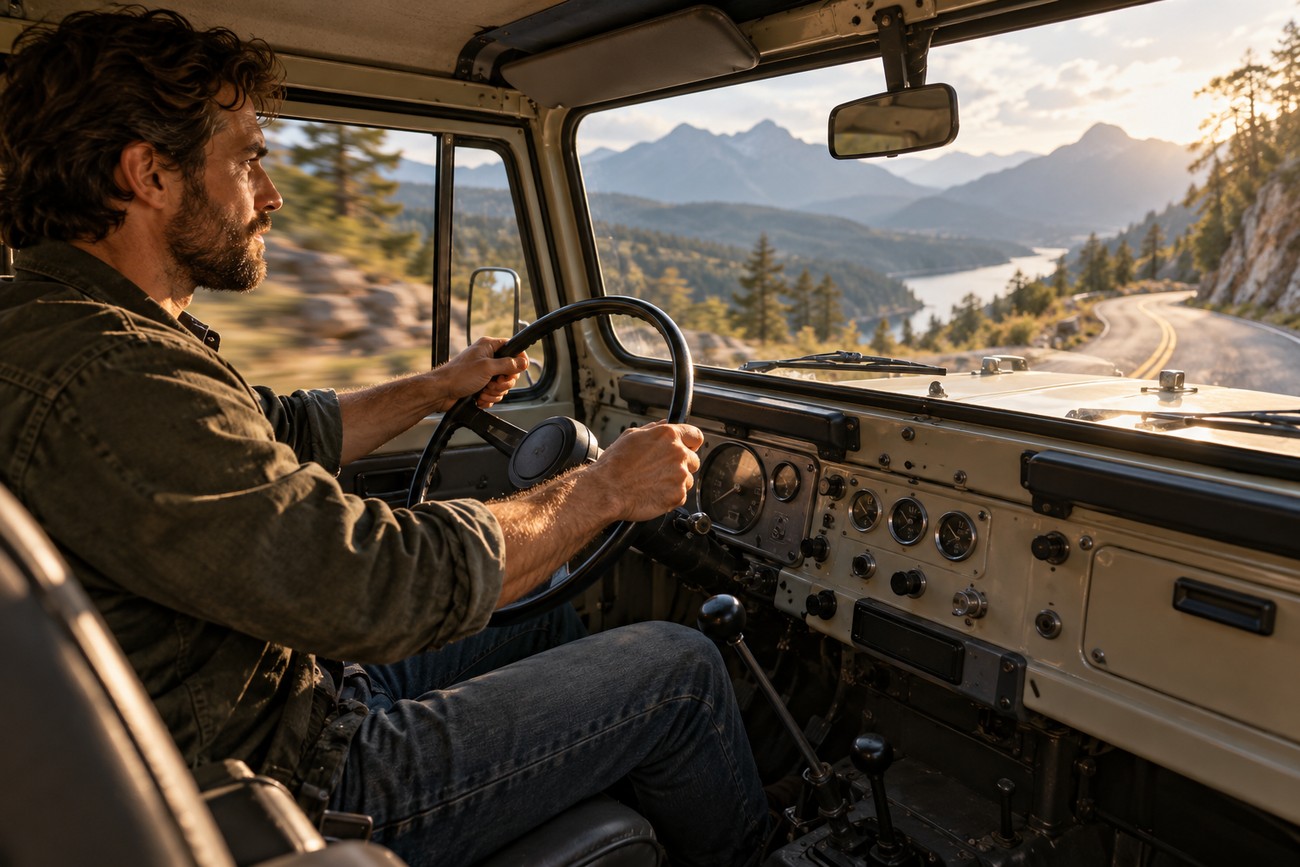
On pavement, the leaf-spring ride can feel tractor-like, especially during a long trip on uneven roads. The short body responds abruptly to bumps, and the basic seats and driving position offer limited relief. Buyers expecting the relaxed travel of a modern SUV should spend meaningful time behind the wheel before committing.
The naturally aspirated F and 2F gasoline engines deliver modest acceleration for a vehicle of this weight. Keeping pace on hills or at higher road speeds can require frequent gear changes. Fuel consumption can also be high, particularly in city use or after fitting larger tires that add rolling resistance and alter the gearing felt by the driver.
Thin metal and limited insulation leave wind, drivetrain noise, and vibration close to the occupants. Steering is slow and vague by modern standards, and even with an approximately 5.3 m turning radius, the FJ40 can feel cumbersome in tight urban spaces. These traits are part of the original driving experience, though they can become tiring in traffic.
Off-road, the compact dimensions, solid axles, and low range make more sense. Even there, capability depends on working brakes, sound steering, and healthy driveline components. An FJ40 that looks ready for a trail may first need substantial mechanical work.
Buying an FJ40: The Inspection Points That Matter
Start with the frame, then examine the sills, floor, underside, and lower door sections. Rust in these areas can be more consequential than blemishes in visible paint because structural repairs demand careful metalwork. Check both sides of the vehicle and look for differences that suggest one area has been rebuilt.
A glossy restoration calls for evidence, not automatic confidence. Hidden welds can conceal distorted repairs or cracks, while fresh coatings can make it harder to judge the metal underneath. Ask what was repaired, how it was repaired, and whether photographs show the vehicle before paint and during the work.
Inspect the frame from the inside where access permits, and trace how repaired sections meet the original structure. Paint finish and panel gaps are poor substitutes for sound metal and correct repair geometry.
Test the brakes with the vehicle’s age and specification in mind. Some FJ40s retain drum brakes and may have long stopping distances; uneven response or pulling needs investigation before regular road use. Check the steering and suspension at the same time, since worn parts can obscure what the vehicle should feel like.
Listen to the axles, transfer case, and engine on a proper test drive, and confirm that four-wheel drive and low range engage as intended. Their condition determines real off-road ability more directly than the Land Cruiser badge. For a collector purchase, inspect original emblems, gauges, glass, and hardware as well: missing details can be difficult to replace convincingly.
A genuine survivor may show wear yet preserve more trustworthy evidence of its history than a cosmetically restored shell. Neither description guarantees condition. A specialist familiar with the 40 series can assess structural repairs, mechanical wear, and claims of originality before money changes hands.
Original FJ40 or Restomod: Choosing the Right Kind of Legend
An original or carefully preserved FJ40 offers the clearest connection to the vehicle’s design, including its limitations. That can matter to collectors, particularly when period-correct emblems, gauges, glass, and hardware survive. Replacing those details with reproductions may make a vehicle look complete while reducing interest from buyers who value authenticity.
A restomod can make an FJ40 easier to drive, but the quality of the engineering matters more than the list of new components. A modern engine such as the 1GR-FE can improve performance while adding weight and electrical complexity. Future repairs may depend on understanding custom wiring, mounts, and interfaces rather than following a standard factory specification.
Large wheels and suspension lifts need the same scrutiny. Without appropriate attention to steering, gearing, and axle loads, they can worsen handling and reliability. A seller’s claim of original-style dependability with modern comfort should be checked through build records and a thorough road test.
High-quality restored or restomod FJ40s can reach approximately $200,000, but a large build bill does not establish market value or repairability. Decide which compromises serve your intended use. A sympathetic, lightly modified vehicle may be easier to maintain than an ambitious build whose custom parts are poorly documented.
Ownership Costs, Parts, and the Best Use Case
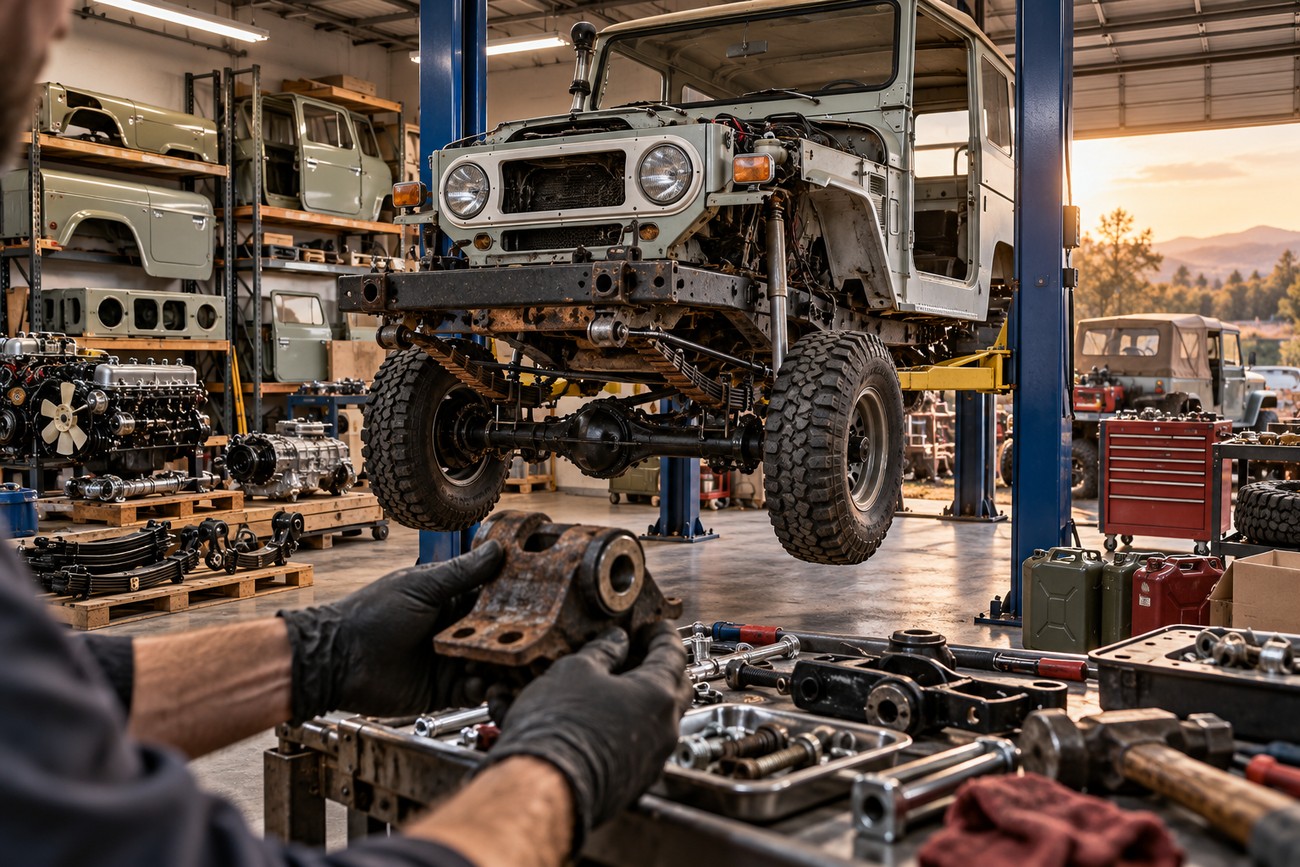
Purchase price is only the start. Fuel, specialist labor, restoration parts, insurance, and registration all affect what an FJ40 costs to keep. Original body and interior parts can be scarce, reproduction quality varies, and finding a technician who knows the 40 series may take time.
Diesel BJ and HJ variants appeal to some expedition users for economy and torque. Their appeal depends partly on where the vehicle will live: diesel parts and knowledgeable service may be readily accessible in one country and difficult to find in another. Confirm support for the specific engine before treating a rare import as a practical long-distance choice.
Paperwork also belongs in the buying calculation. Heavily modified or diesel vehicles may face registration and insurance complications in Europe and the United States, depending on the vehicle and jurisdiction. Check the proposed vehicle’s documents and local requirements before paying for a conversion or an import.
For most owners, a stock or lightly modified FJ40 makes more sense as a hobby vehicle than as a modern daily driver. Its harsh ride, noise, fuel use, and demands in traffic are easier to accept on a chosen trip than on every commute. Keeping a sound example ready for occasional use is a more realistic goal than expecting an old utility vehicle to behave like a current SUV.
Frequently asked questions
Value and identity are easiest to judge vehicle by vehicle. These checks help separate a credible FJ40 from an appealing description.
How much is a Toyota Land Cruiser FJ40 worth?
An FJ40’s worth depends on structural condition, originality, restoration quality, documentation, and the market where it is sold. Modifications can add value when they are well engineered and documented, or narrow the pool of interested buyers when their quality is uncertain. Compare vehicles with similar body styles and condition, then account for the work the particular example still needs.
Ask for photographs of structural repairs, receipts for major work, and a clear account of which components remain original. A high asking price reflects the seller’s expectations, not proof that hidden rust or custom engineering has been resolved.
What is the rarest Land Cruiser?
There is no universal rarest Land Cruiser. Rarity changes with the country being considered, body style, engine, production market, and how many examples survive in credible condition. An unusual specification may be hard to find locally while remaining familiar elsewhere.
Rarity alone does not guarantee value. Buyers also care about condition, desirability, and whether the vehicle’s unusual specification can be verified and maintained. Establish exactly what makes an advertised example uncommon before paying a premium for the claim.
How can I verify whether an FJ40 restoration is genuinely original?
Check whether the body, trim, gauges, glass, drivetrain, and other claimed period-correct components are consistent with the vehicle’s identification and production market. Request restoration photographs that show the structure before repairs, along with receipts that identify the work and parts used. These records are more useful than a finished-vehicle photo album alone.
Look for consistency across the evidence. A vehicle may be faithfully restored while using replacement components; that is different from retaining original parts. Have a 40-series specialist review any important originality claim, particularly when the asking price depends on it.







