
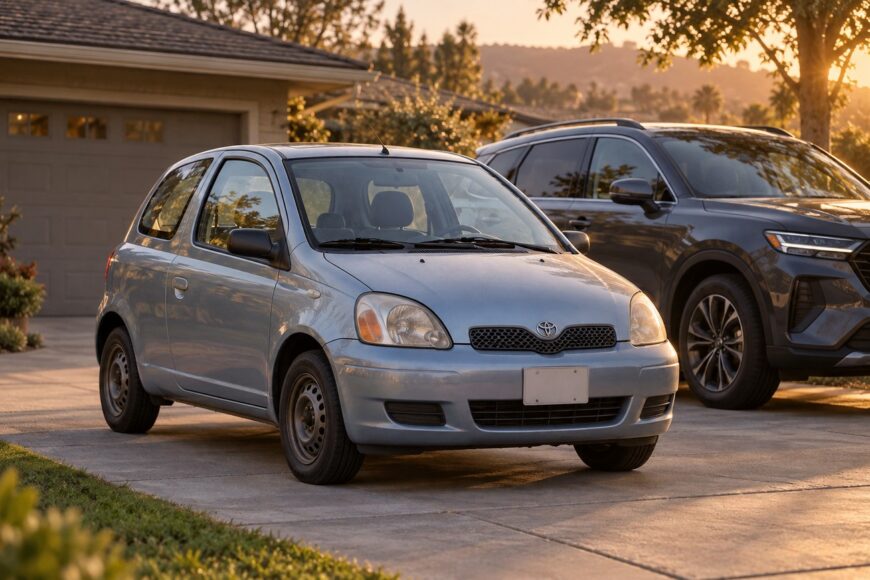
The Toyota Echo is tiny by modern standards, yet its reputation has lasted far longer than that of many larger, more expensive cars from the same period. Its appeal is easy to understand: a light body, a simple naturally aspirated engine, modest fuel consumption, and mechanical access that does not intimidate an independent repair shop or a careful DIY owner.
That reputation needs a time adjustment. The Echo was sold in the United States from 2000 through 2005, so every example is now an older used car. A healthy engine can still make the car useful, but the buying decision increasingly depends on rust, suspension, rubber parts, electrical faults, lighting, accident history, and safety equipment. The famous Toyota durability story describes the mechanical design more accurately than it describes the condition of every surviving vehicle.
A good Echo remains a practical city runabout and can be remarkably inexpensive to operate. A neglected one can consume its purchase-price advantage through body repairs, tires, brakes, suspension work, and hard-to-source trim. The difference is made during inspection, not by the badge on the hood or a low odometer reading.
- Why the Toyota Echo Still Has a Following
- The Simple Mechanical Package Behind the Reputation
- City-Friendly, Highway-Noisy: What Driving an Echo Is Really Like
- The Real Reliability Story: What Ages Before the Engine
- Safety Depends on the Year, Market, and Equipment
- How to Inspect a Used Toyota Echo Before Buying
- Ownership Costs: Cheap Fuel Is Not the Same as Cheap Ownership
- Toyota Echo Claims vs. Reality
- Frequently asked questions
- What is Toyota’s smallest vehicle?
- What is the “unkillable Toyota truck” people talk about?
- What should be repaired first after buying a cheap Toyota Echo?
- Why can two Toyota Echos with similar mileage have very different values?
Why the Toyota Echo Still Has a Following
The Toyota Echo was sold in the United States from 2000 through 2005, occupying the small-car end of Toyota’s North American range. The name was used for cars related to the first-generation Toyota Platz/Vitz/Yaris family, although the exact body style, equipment, and safety specification varied by market. The car was later effectively replaced by the Toyota Yaris in the United States, which is why international listings can create confusion when buyers search for parts or compare specifications.
Its strongest appeal is functional rather than emotional. The Echo is light, compact, and mechanically uncomplicated, so it fits easily into crowded streets and small parking spaces. The cabin and materials reflect its budget purpose, but the same simplicity can make routine servicing easier than on newer small cars loaded with turbocharging, complex electronics, and expensive integrated systems.
The model also arrived at a useful point in the market. It offered the basic advantages of a small hatchback or sedan without requiring the owner to accept a complicated powertrain. Low weight helped fuel economy and made the car feel responsive enough at urban speeds, even though the engine was never intended to deliver strong highway performance.
That is why the Echo still attracts sensible buyers. It works as a second car, a student vehicle, a short-distance commuter, or basic urban transportation when the example has been maintained properly. It is less convincing as a modern all-rounder, especially for frequent high-speed travel, heavy loads, or buyers who expect current levels of quietness, comfort, and active safety.
The long-running “unkillable Toyota” description is therefore only partly useful. It explains why the car’s basic mechanical package can survive neglect better than some rivals, but it does not stop steel from corroding or rubber from hardening. The best Echo is a sound, maintained car with a favorable history, not simply the oldest and cheapest one carrying a Toyota emblem.
The Simple Mechanical Package Behind the Reputation
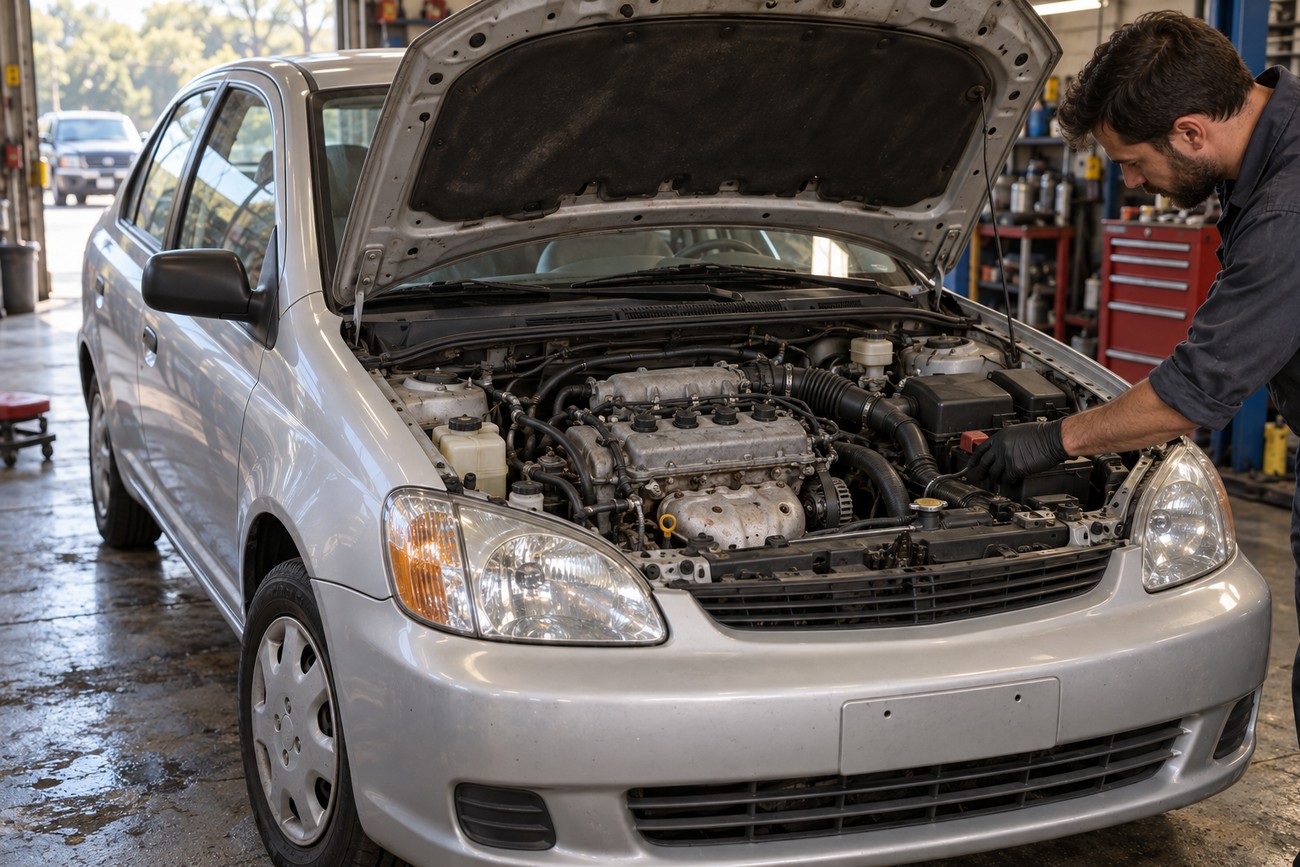
U. S.-market Echos commonly used a 1.5-liter 1NZ-FE inline four-cylinder engine with DOHC and VVT-i. Output was commonly listed at approximately 108 hp. That figure is adequate for a small, light car in town, but it should be read alongside the car’s age and intended role rather than treated as evidence of strong performance.
Typical curb weight was approximately 900–1,000 kg, depending on body style and equipment. That low mass reduces the work required from the engine during ordinary urban driving and contributes to the Echo’s useful fuel economy. EPA estimates for many versions were approximately 35–42 mpg combined, although actual consumption depends on traffic, tires, maintenance, weather, and driving style.
The engine’s naturally aspirated layout is central to the car’s reputation. Basic versions avoid a turbocharger and generally avoid the high-tech systems that can make newer small cars expensive to diagnose. That does not mean the engine is maintenance-free. Oil changes, cooling-system care, ignition components, sensors, seals, and exhaust equipment still matter, particularly in a vehicle old enough for several previous owners to have made different repair decisions.
Low weight can reduce loads on brakes and some suspension components, while the relatively accessible layout can make ordinary work straightforward. A mechanic can often reach the relevant parts without dealing with the packaging complexity found in newer vehicles. This is valuable when labor costs are high, but it does not make every repair cheap: seized fasteners, corrosion, poor previous repairs, and low-quality replacement parts can turn a simple job into a difficult one.
The practical distinction is between durability and neglect tolerance. A durable design may continue running after years of modest maintenance, yet the car around it can become unsafe or unpleasant. A smooth cold start, stable idle, and healthy oil pressure are useful signs, but they cannot compensate for a corroded shell, worn tires, failing brakes, or a damaged suspension mounting point.
City-Friendly, Highway-Noisy: What Driving an Echo Is Really Like
The Echo makes immediate sense in town. Its compact dimensions simplify parking, its low mass makes low-speed maneuvering easy, and its modest footprint is less stressful on narrow streets or crowded lots. Visibility and the basic controls are generally suited to simple urban use, although individual seating position and interior condition vary considerably between cars.
Highway travel exposes the compromises. Owners commonly criticize road and engine noise at speeds above approximately 100 km/h, and the light body does little to isolate occupants from coarse pavement. The 1.5-liter engine is generally adequate in town, yet it can feel weak during a highway pass or on a sustained hill, especially with passengers, luggage, or an aging engine and exhaust system.
The same low weight that helps parking can make the car more sensitive to crosswinds, road grooves, and heavy loading. A well-maintained Echo should not feel unsafe simply because it is small, but worn tires, tired struts, loose bushings, poor alignment, or incorrect tire pressures can magnify its nervous responses. A test drive should include uneven pavement and a faster road where legal, because a quiet residential loop hides too much.
Lighting and ergonomics deserve more attention than their low cost might suggest. Some owners report weak factory lighting, which becomes a practical concern on dark roads or in poor weather. Taller drivers may find the seating position or steering-wheel relationship awkward, and a buyer should spend enough time behind the wheel to check legroom, headroom, visibility, and access to the controls.
The Echo is at its best when its speed and environment match its design. It can be a pleasant, economical urban tool, but it is not a quiet long-distance cruiser. Expecting modern sound insulation, effortless passing, or a planted feel in strong wind leads to disappointment even when the car is mechanically sound.
The Real Reliability Story: What Ages Before the Engine
The 1NZ-FE engine can remain serviceable for a long time, which helps explain the Echo’s durable reputation. The rest of the vehicle follows ordinary aging laws. Corrosion, tired suspension, hardened rubber, leaking seals, brittle plastics, and electrical faults increasingly determine whether an individual car is worth owning.
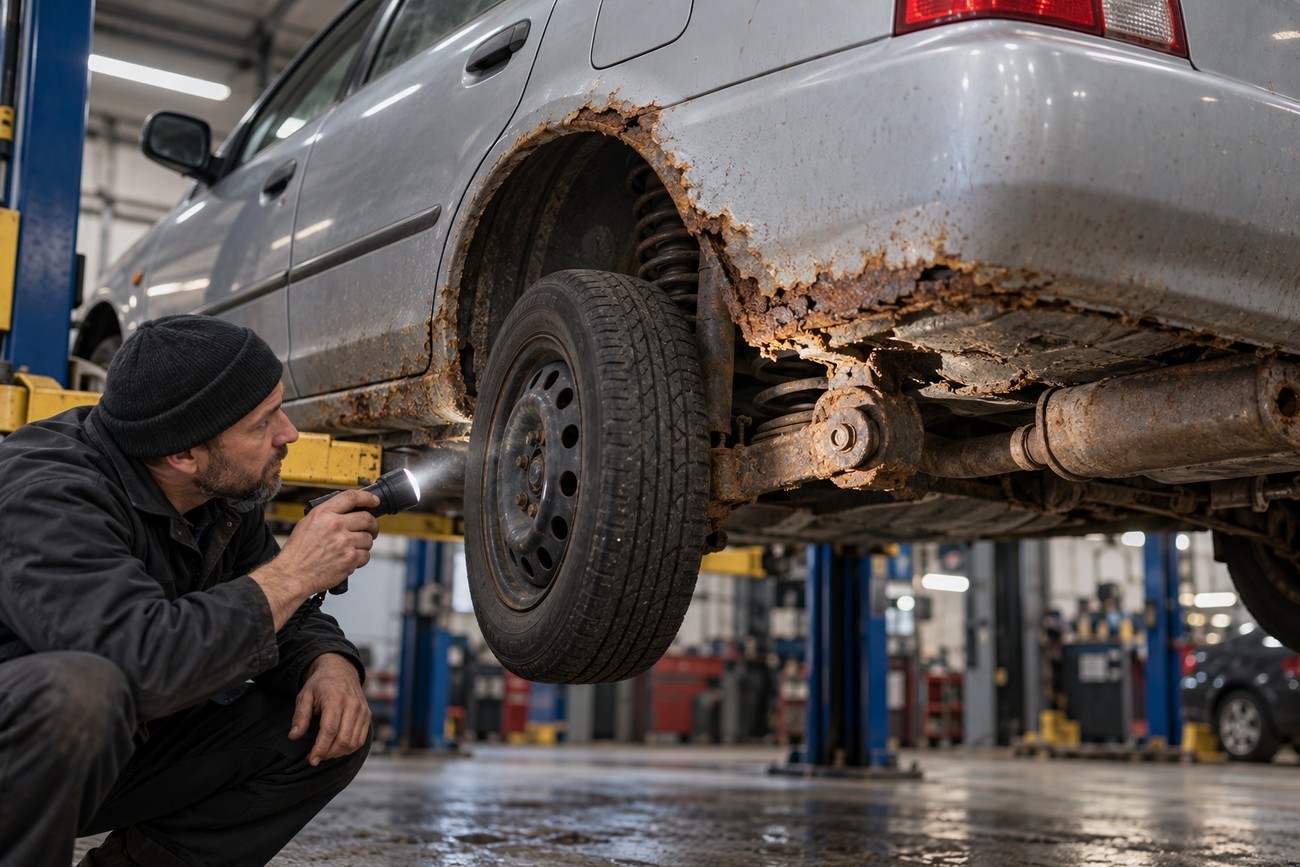
Rust deserves priority because it can limit the car’s useful life more decisively than engine wear. Inspect the wheel arches, sills, underbody sections, and mounting points, including areas where suspension or structural loads are carried. Surface corrosion may be manageable, while corrosion around structural seams, fasteners, and mounting areas can make repairs expensive or compromise the value of the vehicle.
Before praising a healthy-sounding 1NZ-FE, inspect the shell, mounting points, suspension fasteners, and the quality of previous replacement parts. A strong engine does not rescue a car that cannot be repaired cleanly underneath.
Age-related faults commonly include leaks, worn bushings, tired struts, wheel bearings, ignition coils, sensors, seals, and electrical components. None of these automatically makes an Echo a bad purchase. Their importance lies in accumulation: several modest faults can produce the vibration, rattles, poor alignment, warning lights, and unreliable starting that buyers often mistake for a single major failure.
Old seals and plastics create a second layer of annoyance. They can contribute to air leaks, condensation, squeaks, rattles, and persistent interior noise. A door seal or brittle trim piece may appear minor, but repeated small defects reduce daily usability and can be difficult to match when original interior details become scarce.
Replacement-part quality also affects the ownership story. A cheap component may fit initially yet create recurring noise, premature wear, or another visit to the repair shop. The lowest invoice is not necessarily the lowest total cost if a poor-quality part must be replaced again. A careful buyer should ask what has been replaced, which parts were used, and whether the repair addressed the cause rather than only the symptom.
Safety Depends on the Year, Market, and Equipment
The Echo’s safety baseline was modest by modern standards. It was designed in an earlier period, before today’s widespread use of driver-assistance systems, and it should be assessed as an early-2000s small car rather than compared casually with a current vehicle.
Side airbags, curtain airbags, ABS, and electronic stability control were not present on every version or in every market and year. Equipment can also differ between body styles and imported vehicles. The Toyota name does not establish the actual safety specification of the car in front of you.
Verify the vehicle by VIN, market specification, model year, and the physical equipment fitted to that particular example. Check the airbag markings, warning-light behavior, ABS hardware where applicable, seat-belt condition, and whether any safety system has been removed or altered after a collision. A seller’s description based on a generic online listing may refer to a different market or trim.
Modern ADAS features should not be expected. The Echo will not provide the collision warnings, lane support, blind-spot monitoring, or automatic emergency functions associated with many newer cars. That does not make it unusable, but it changes the level of attention and risk management required from the driver.
Safety condition also includes tires, brakes, lighting, and structural integrity. A car with the correct number of airbags can still be a poor purchase if it has corroded mounting points, damaged seat belts, weak headlights, or mismatched worn tires. The right question is whether the complete vehicle is sound enough for its intended use and whether its limitations are acceptable to the buyer.
How to Inspect a Used Toyota Echo Before Buying

Start with the body before allowing a clean engine bay or a low price to influence the decision. Look closely at the arches, sills, floor and underbody sections, suspension mounting areas, and seams where dirt and moisture collect. Use a flashlight and, where possible, inspect the car on a lift. Fresh underseal can hide repairs, so ask what was applied and why.
Accident history deserves equal weight. Compare panel gaps, paint texture, glass markings, fasteners, and the alignment of doors, hood, and trunk. A repaired car is not automatically unacceptable, but unclear collision work can conceal corrosion, damaged mounting points, or missing safety equipment. The seller should be able to explain major repairs with documentation rather than relying on a vague statement that the car was “looked after.”
Insist on a cold start. A warm engine may have been prepared to hide difficult starting, smoke, noise, or warning lights. Listen during the first moments of operation, observe the idle, check the exhaust, and look for visible leaks. Compression testing can add useful evidence when the engine’s condition is uncertain, while the catalytic converter and the rest of the exhaust should be inspected for damage, rattles, leaks, or evidence of previous improvised repairs.
During the road test, pay attention to suspension movement, steering response, braking, and bearing noise. Worn bushings, tired struts, wheel bearings, and other rubber components can create clunks, vibration, pulling, or an unsettled feel over rough pavement. Check the tires for age, uneven wear, sidewall damage, and mismatched types. Poor alignment may be a simple adjustment, or it may point to worn parts or previous impact damage.
Test every electrical function you can reach: exterior lights, instrument illumination, wipers, heater controls, windows, locks, charging behavior, warning lights, and the audio system if fitted. Inspect the headlights in darkness or poor light if possible, because weak illumination is a practical complaint on some cars. Confirm the airbags and ABS warning lights follow the expected start-up sequence and do not remain illuminated.
- Check the shell and structural areas for corrosion and accident repairs.
- Start the engine cold and inspect leaks, exhaust behavior, and idle quality.
- Assess compression, catalytic-converter condition, and exhaust integrity when needed.
- Drive over varied surfaces to identify suspension, bearing, tire, and alignment problems.
- Verify lighting, electrics, warning systems, safety equipment, service records, and VIN details.
A low odometer reading should never replace a condition assessment. A lightly used car can still suffer from age, long storage, corrosion, hardened rubber, and neglected fluid changes. Conversely, a higher-mileage Echo with clear maintenance records and a solid body may be the more rational purchase.
Ownership Costs: Cheap Fuel Is Not the Same as Cheap Ownership
The Echo can reduce routine costs through its fuel economy and straightforward mechanical design. A naturally aspirated engine with relatively simple systems is easier for many independent shops to service than a newer small car with turbocharging and complex electronics. Consumables such as tires, brakes, and fluids are still necessary, though, and their condition should be included in the buying budget.
Age can erase the savings quickly. Suspension work, wheel bearings, leaks, electrical faults, exhaust repairs, and bodywork may cost more than expected, especially when corrosion turns a routine repair into a fabrication or replacement job. Fuel consumption is only one part of total ownership cost, and a car that saves at the pump can still be expensive if it needs several deferred repairs immediately after purchase.
Parts availability also changes with age. Mechanical components may remain obtainable, while original trim, interior pieces, seals, and small fittings can be harder to find or may require used parts. A buyer who wants an immaculate restoration should expect more searching and less predictable costs than someone who only needs reliable transportation.
The sensible financial approach is to buy condition rather than bargain pricing. A healthy Echo can make sense as a city runabout or second car, particularly when highway use is limited. A cheap example requiring body repair, tires, brakes, suspension work, and electrical diagnosis is closer to a restoration project than inexpensive transport.
Budget for an initial service even when the seller claims the car needs nothing. Replace or verify fluids, inspect the brakes and tires, address safety issues, and establish a maintenance baseline. Cosmetic improvements can wait; structural, braking, steering, tire, and lighting concerns should determine the first spending decisions.
Toyota Echo Claims vs. Reality
The Echo’s reputation contains useful clues, but every claim must be checked against the individual vehicle.
| Claim | What is true | What the buyer must verify |
|---|---|---|
| “The Echo is unkillable.” | The basic engine and naturally aspirated mechanical package can be durable and repairable. | Check corrosion, leaks, suspension, rubber parts, electrical faults, and the condition of the body before trusting the engine’s reputation. |
| “It is cheap in every respect.” | Routine servicing can be straightforward, and fuel consumption can be modest. | Price tires, brakes, suspension, body repairs, electrical work, and scarce trim pieces for the actual car. |
| “Low fuel consumption means low ownership cost.” | Fuel economy can reduce regular running expenses. | Allow for age-related repairs, deferred maintenance, corrosion, and replacement parts. |
| “108 hp is enough for everything.” | The engine is generally adequate for urban driving in a light car. | Expect modest passing performance, hills, highway noise, and greater sensitivity to heavy loading. |
| “Toyota guarantees superior safety.” | The Echo was built by a manufacturer with a strong general reputation. | Verify airbags, ABS, stability control, market specification, year, and the condition of the safety systems. |
| “The cheapest Echo is the best deal.” | A low asking price can be attractive for basic transportation. | Compare shell condition, history, tires, brakes, suspension, and electrical operation. The soundest example is usually the better buy. |
The badge explains why the Echo deserves consideration, but condition and specification decide whether it deserves your money. A maintained car can justify the reputation; a corroded or neglected one can disprove it quickly.
Frequently asked questions
What is Toyota’s smallest vehicle?
There is no single timeless answer because Toyota’s smallest vehicles have varied by market, model year, and body style. In North America during its sales period, the Echo belonged to Toyota’s smallest passenger-car offerings and was sold in the United States from 2000 through 2005.
The Echo was related to the first-generation Toyota Platz/Vitz/Yaris family, but those names do not guarantee identical equipment. Buyers comparing imported cars should use the VIN and market specification rather than assuming that every small Toyota with a similar shape is the same vehicle.
What is the “unkillable Toyota truck” people talk about?
The phrase usually refers to Toyota pickup trucks and similar utility vehicles with a separate, global reputation for durability under demanding work conditions. That reputation belongs to a different class of vehicle and should not be transferred directly to the Echo.
The Echo can have a durable small-car drivetrain, especially when maintained, but it lacks the truck’s purpose, structure, load capacity, and operating context. Its condition is now more likely to be limited by corrosion, suspension, rubber, plastics, electrics, and safety equipment than by the basic engine design alone.
What should be repaired first after buying a cheap Toyota Echo?
Repair structural and braking concerns first. Corrosion around mounting points, damaged seat belts or airbags, weak brakes, unsafe tires, steering faults, and serious lighting problems take priority over comfort or appearance.
Next, address tires and suspension, including worn bushings, struts, wheel bearings, and alignment. Then deal with leaks and drivability faults such as difficult starting, ignition problems, exhaust issues, or warning lights. Cosmetic trim, paint, and interior improvements should come last unless they are connected to water entry or visibility.
Why can two Toyota Echos with similar mileage have very different values?
Odometer readings do not show climate exposure, corrosion, maintenance quality, accident history, or the quality of replacement parts. A car used in a damp or salty environment may have a much shorter useful life than one with similar mileage from a dry climate, while long storage can also age seals, tires, and plastics.
Market specification matters as well. Airbags, ABS, stability equipment, body style, and parts availability can differ between cars carrying the same Echo name. A solid shell, clear history, working safety equipment, and documented maintenance can outweigh a lower odometer reading on a neglected example.







