
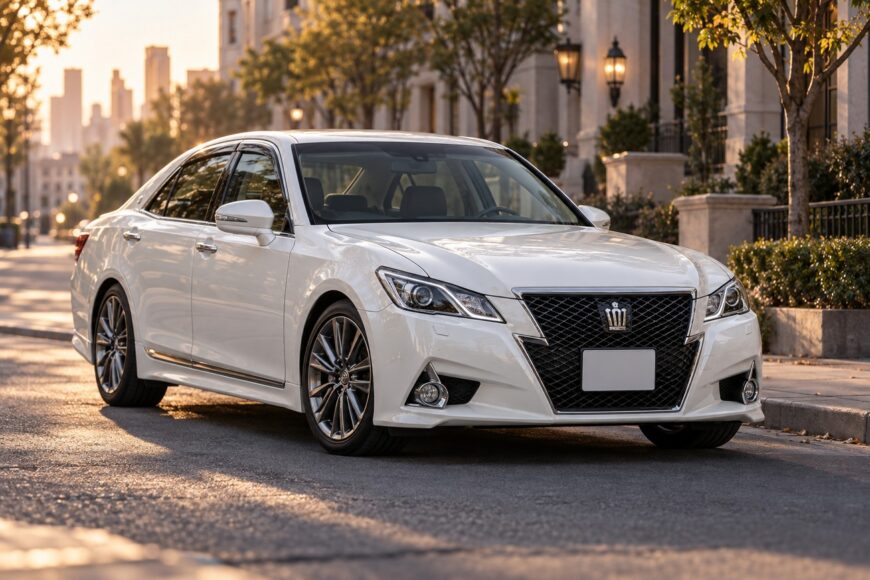
A Japanese executive sedan with a sportier edge is a distinctive proposition, and the Toyota Crown Athlete delivers that appeal without giving up the space and composure expected of a Crown. Depending on the version, it pairs its firmer suspension with a V6, a turbocharged four-cylinder, or a hybrid powertrain. It is a quick executive sedan, however, rather than a Japanese equivalent of a BMW M5.
For an import buyer, the choice extends beyond engine and trim. These are aging, right-hand-drive Japanese-market cars, and condition, local parts supply, and access to capable diagnostics can matter more than the badge on the trunk. A well-documented Athlete can be rewarding to own; an attractive example with uncertain history can become difficult to support once it leaves Japan.
- What makes a Crown an Athlete?
- S180, S200, and S210 Crown Athlete: key differences
- How sporty is it on the road?
- Choosing an engine: V6, turbo, or hybrid
- Inspecting a used Crown Athlete before you buy
- The ownership costs that do not appear in the advert
- Who should actually buy one?
- Frequently asked questions
- Why do Crown Athletes attract fewer buyers outside Japan?
- How much does a Toyota Crown Athlete cost to import?
- Can I register a right-hand-drive Crown Athlete where I live?
What makes a Crown an Athlete?
Athlete is the sportier branch of the Crown range covered here: S180 (2003–2008), S200 (2008–2012), and S210 (2012–2018). It sits alongside more comfort-oriented Crown variants, with a different emphasis on steering response and body control. The name does not indicate a single, fixed equipment package across those years.
The clearest mechanical distinction is firmer suspension tuning than on the more comfort-oriented Crowns. Springs, dampers, and other suspension components can differ by version, so an Athlete may feel more settled through a bend while transmitting more of a poor road surface into the cabin. Its sportier presentation reinforces that character, although wheels, features, and powertrains vary by car.
Japanese-market Crown Athletes are right-hand drive. They were offered with rear-wheel drive, while certain versions have all-wheel drive; the badge alone does not establish which layout you are viewing. For buyers outside Japan, the steering position also has practical consequences at toll booths, parking entrances, and when overtaking on roads where visibility is limited.
Underneath the styling and firmer setup, the Athlete remains a substantial executive sedan. That is its strength for someone who wants comfortable travel with sharper responses than a comfort-focused Crown. Buyers seeking the immediacy of a dedicated performance model should keep the distinction in mind before choosing a car on appearance alone.
S180, S200, and S210 Crown Athlete: key differences
The generation sets the starting point for an engine search, although availability depends on the model year and specification. Confirm the engine code on an individual car rather than treating every powertrain listed for its generation as standard equipment.
| Series | Years | Relevant powertrain choices |
|---|---|---|
| S180 | 2003–2008 | 2.5L 4GR-FSE V6; 3.5L 2GR-FSE V6 |
| S200 | 2008–2012 | 2.5L 4GR-FSE V6; 3.5L 2GR-FSE V6 |
| S210 | 2012–2018 | 2.5L 4GR-FSE V6 and 3.5L 2GR-FSE V6 in relevant versions; also a 2.0L 8AR-FTS turbo and a hybrid using the 2.5L 2AR-FSE |
The S210 broadens the choice most clearly by adding turbo and hybrid options. That makes engine identification especially important when comparing advertisements: two S210 Athletes can offer quite different driving and maintenance propositions.
Age matters as much as the generation label. An older car with credible service records and a sound inspection may be a better purchase than a newer one with unexplained repairs or gaps in its history. Use the table to narrow the search, then judge each example on its own specification and condition.
How sporty is it on the road?
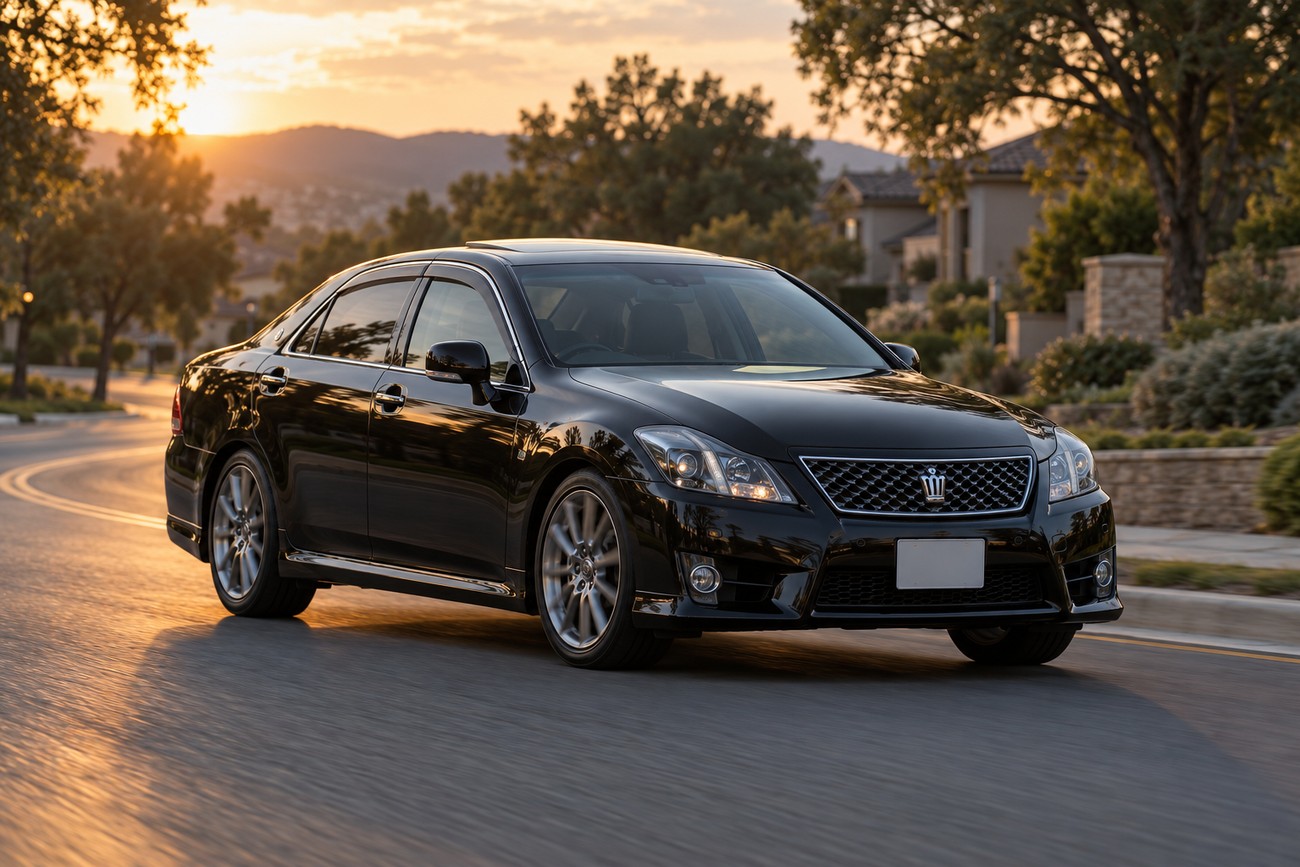
The Athlete earns its sporty description relative to a comfort-oriented Crown. Firmer suspension tuning gives it a more controlled feel, and the stronger engine choices provide the pace to match. It can cover distance with little effort while feeling more attentive to driver inputs than a softer executive sedan.
Most versions weigh roughly 1,600–1,800 kg, which shapes the experience. The car has the mass, dimensions, and underlying priorities of an executive sedan, even when its engine feels strong. Expect brisk progress and composed handling rather than the responses of a dedicated sports car or an M or AMG performance flagship.
Wheel and tire choices also affect how an Athlete feels. Some owners move from 18-inch wheels to suitable 17-inch wheels with taller-profile tires to improve ride comfort and reduce the impact of rough roads. Any change still needs to meet the car’s fitment, load, brake-clearance, and local approval requirements.
Cheap, excessively stiff coilovers can work against the original balance. They may make a test drive feel dramatic on smooth pavement while leaving the car unsettled, noisy, and tiring on ordinary roads. If a modified Athlete rides harshly, inspect the suspension installation and condition rather than assuming that discomfort is inherent to the model.
Choosing an engine: V6, turbo, or hybrid
The 2.5L 4GR-FSE V6 produces approximately 215–230 hp, depending on version. It suits buyers who want the Crown’s smooth executive-sedan character without prioritizing the strongest acceleration. As with any used example, service history and how it runs today should carry more weight than a general reputation for Toyota durability.
The 3.5L 2GR-FSE V6, at approximately 296–315 hp depending on version, gives the Athlete its most convincing effortless pace among the V6 choices. Check for carbon-related running issues and signs of oil consumption, particularly where maintenance records are thin. Those are inspection concerns, not faults to assume on every engine.
In the S210, the 2.0L 8AR-FTS turbo makes approximately 235–245 hp. Its appeal is a different power-delivery character from the V6 cars, but fuel quality, oil-service history, and turbo condition deserve close attention. Evidence of timely maintenance is more useful than a seller’s assurance that the turbo has never caused trouble.
The S210 hybrid uses the 2.5L 2AR-FSE and offers another route into Athlete ownership. Assess the complete hybrid system with someone equipped to diagnose it, rather than judging the car solely by how its gasoline engine sounds. Its fuel-saving potential is relevant, but the condition and complexity of the particular used car remain part of the calculation.
Fuel figures need context. Japanese test-cycle figures are roughly 8–10 L/100 km for V6 cars and 4–6 L/100 km for hybrids, against owner-reported real-world figures of roughly 10–13 and 6–8 L/100 km respectively. Neither range predicts an individual car’s consumption: specification, traffic, weather, and driving style can all change the result.
Inspecting a used Crown Athlete before you buy
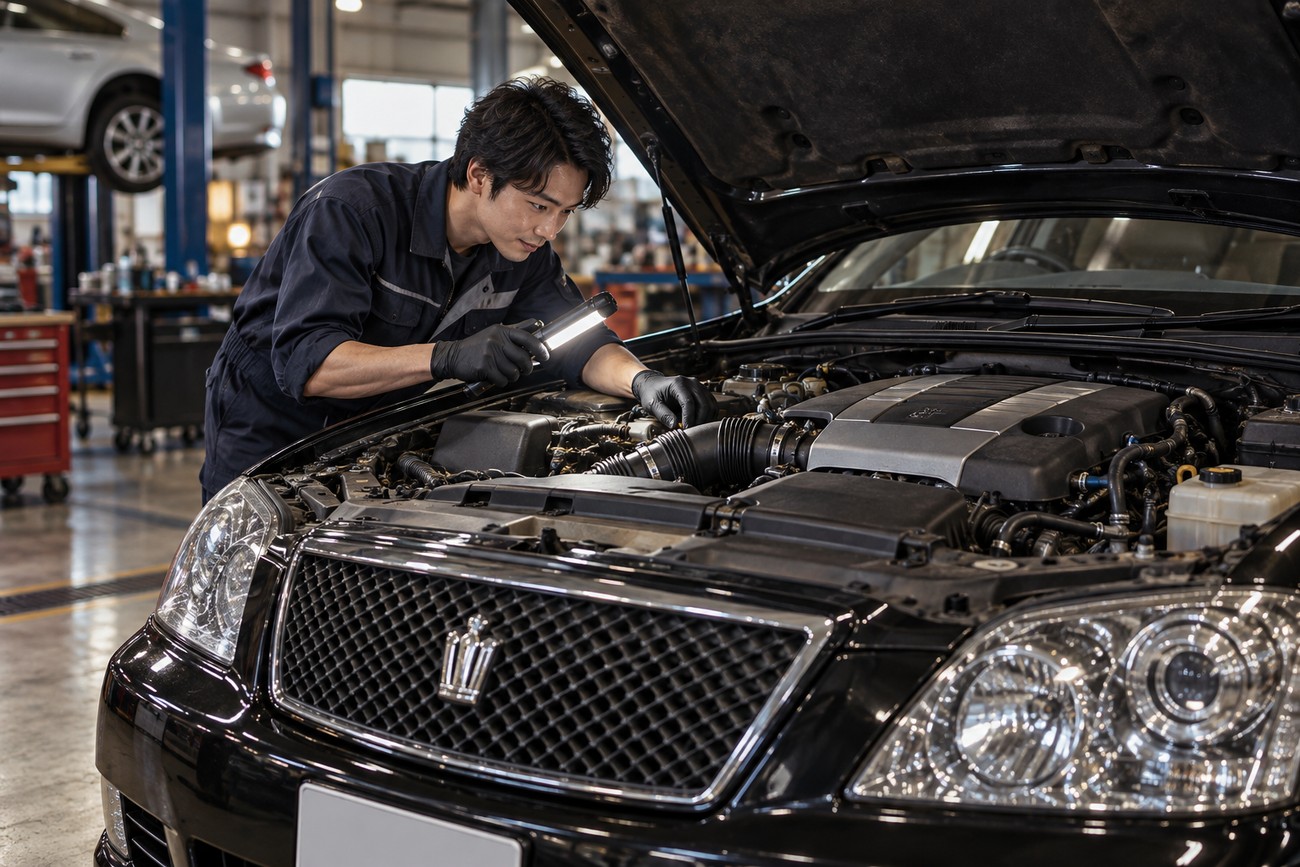
Start with identity and history. Many available examples have covered roughly 150,000–250,000 km, so compare the displayed odometer with auction records, service documents, and the car’s physical condition. Check accident and repair records where available, then inspect panel fit, paintwork, and the structure rather than accepting a clean cabin as proof of careful ownership.
Next, assess the engine and transmission on a cold start and a proper road test. Look for uneven running, smoke, fluid leaks, oil-consumption clues, and hesitant or rough shifts. A specialist engine inspection, including an internal inspection when symptoms or uncertain history justify it, can be sensible on a costly example; it is more targeted than buying solely on mileage.
After collision repairs, check that fitted PCS, LKA, or adaptive-cruise functions can be diagnosed and operate as intended. A dashboard without warning lights does not establish that sensors, control units, and calibration are correct.
Work through the electronics deliberately. Test the climate controls, multimedia, cameras, and every driver-assistance feature actually fitted to the car. Where a system behaves oddly or repairs are documented, seek a workshop familiar with JDM Toyota diagnostics; a generic scan that reports no obvious fault may leave important questions unanswered.
Finally, inspect modifications as carefully as wear. Poorly executed ECU changes or wiring repairs can complicate diagnosis and affect how linked systems operate. Ask what was changed, look for supporting paperwork, and budget for an independent assessment if the seller cannot establish that the car retains its intended functions.
The ownership costs that do not appear in the advert
Outside Japan, a Crown Athlete will generally reach buyers through independent import channels rather than a dedicated local sales and service network. That can make a capable specialist and a reliable parts supplier essential to ownership. Before committing, find out who can service the specific powertrain and diagnose its electronics near you.
Toyota branding does not make Crown-specific components as easy to obtain as parts for a mass-market Camry. Body panels, lighting, suspension pieces, and electronic units may need to come from Japan, with possible waits of weeks or months. A minor collision can therefore create substantial downtime even if the mechanical repair is straightforward.
Japanese navigation, radio frequencies, and interface settings may also be awkward outside their home market. Check what works in your country before assigning value to a sophisticated-looking dashboard. Adaptation options vary, and replacing or bypassing factory equipment may affect other integrated functions.
Cosmetic and road-condition costs are easy to overlook. Owners report paint chips and abrasion on the front of cars used on harsher roads, while limited practical clearance and the long wheelbase can make steep entrances, speed bumps, and winter ruts troublesome. Inspect the underside and front bodywork, then consider whether your regular routes suit the car.
Insurance deserves the same advance work as parts sourcing. In some countries, insurers or assessors may have limited comparable local sales on which to value an imported Athlete, particularly after damage. Obtain a country-specific quotation and understand how a claim would be valued, including the possibility of waiting for replacement components.
Who should actually buy one?
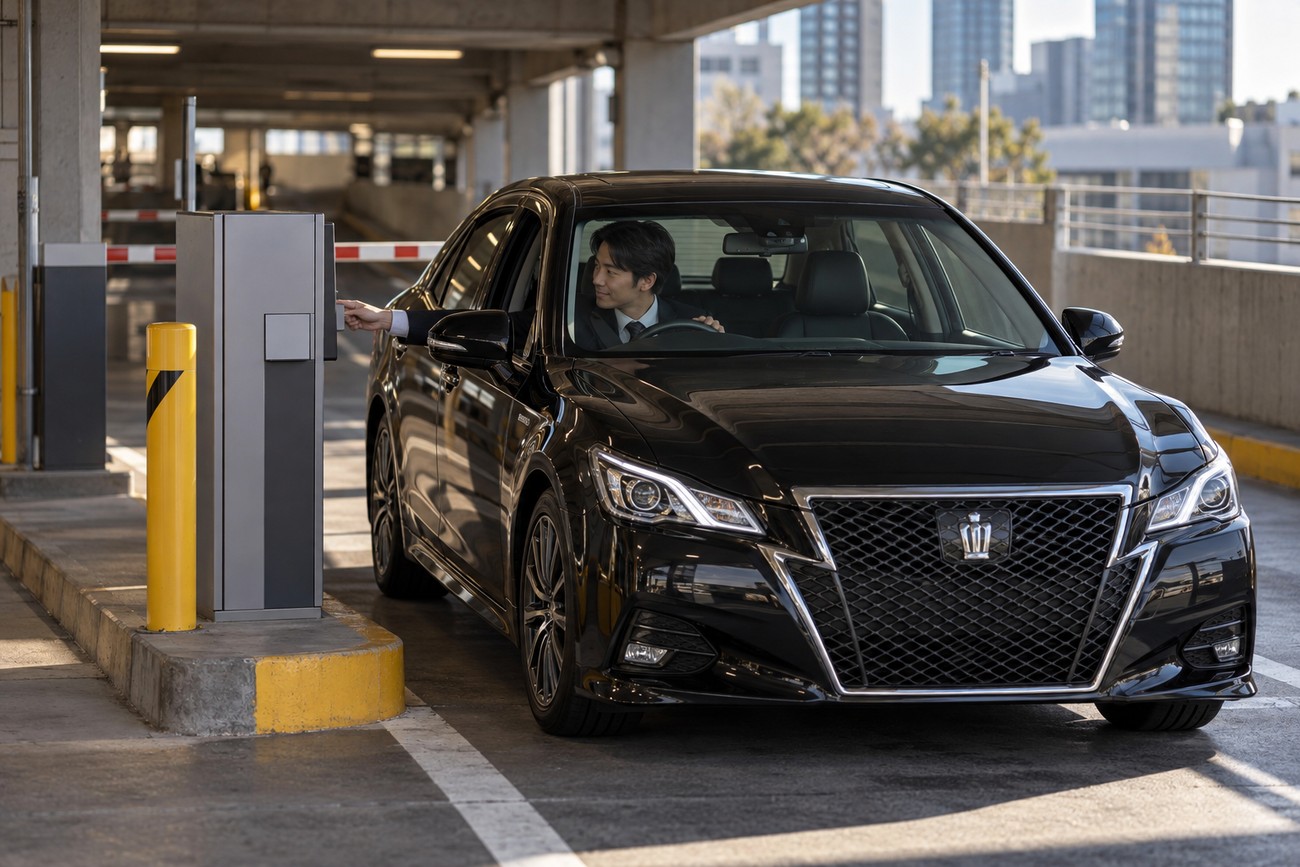
A Crown Athlete makes sense for someone who values a distinctive JDM executive sedan, wants a firmer drive than a comfort-oriented Crown provides, and has access to competent local support. Its appeal is the combination of composed travel and useful performance. Most versions weigh roughly 1,600–1,800 kg, so a quick executive sedan is the right expectation.
Right-hand drive should be an everyday decision, not a novelty considered only during a test drive. Think through the overtaking visibility, toll facilities, parking arrangements, and road conditions you actually encounter. Rough surfaces and winter routes may make tire choice and ground clearance more important than the most powerful engine.
A locally sold car with easier parts and diagnostic access may suit a buyer who needs predictable repair turnaround or has no nearby JDM specialist. The Athlete can also be a poor fit if the purchase leaves no room in the budget for initial maintenance, appropriate tires, and an unexpected electronic or bodywork repair.
Set a firm go/no-go rule before shopping: buy only an example with verifiable history, a satisfactory specialist inspection, and a workable local plan for parts and service. If one of those is missing, the cleanest-looking exterior or strongest engine is not a sound substitute.
Frequently asked questions
Import rules and market demand differ widely, so the answers below are starting points for local checks. Establish the legal and financial details before paying for a car abroad.
Why do Crown Athletes attract fewer buyers outside Japan?
The Athlete appeals to a narrower group because it combines Japanese-market specification with right-hand drive and the practical demands of importing an aging executive sedan. A buyer seeking locally familiar equipment or straightforward servicing may choose something else. That is a distinction about the Athlete’s overseas audience, not a claim that other Toyota Crown models have no demand.
How much does a Toyota Crown Athlete cost to import?
There is no useful universal import price. Build a landed-cost quote for your country by adding the vehicle purchase price, inland and international transport, shipping insurance where applicable, duties and taxes, port and broker fees, required compliance work, registration, and initial maintenance. Ask the importer to identify which amounts are fixed and which may change before the vehicle clears customs.
Can I register a right-hand-drive Crown Athlete where I live?
That depends on your jurisdiction. Before paying a deposit, check its rules on vehicle age and right-hand-drive registration, then confirm lighting, emissions, inspection, and documentation requirements for the exact car. An import agent’s ability to ship it does not establish that you can register it for road use.







