
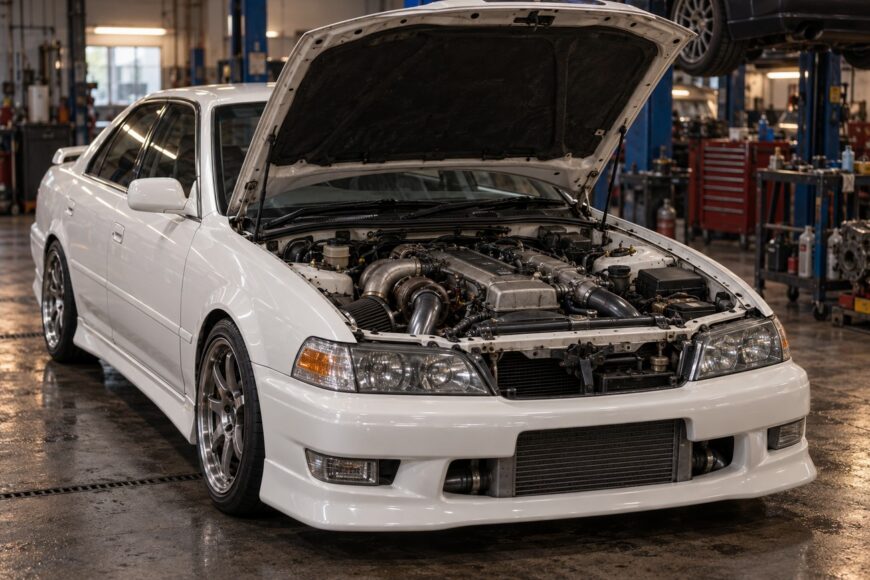
The Toyota Chaser JZX100 looks like a restrained four-door sedan, yet its reputation rests on a turbocharged 1JZ platform that has become highly desirable among tuners. Rear-wheel drive, a substantial inline-six, and a chassis with strong aftermarket interest give it a character that ordinary executive sedans rarely offer.
The buying problem is that many examples are now old, modified, and incorrectly advertised. The important decision is not simply finding a JZX100 or a car wearing a Tourer V badge. You need to verify the exact engine version, turbocharger, transmission, documentation, and mechanical condition before treating the advertised specification as credible.
- Why Tuners Still Want the Toyota Chaser JZX100
- JZX100 1JZ-GTE VVT-i vs. Early Twin-Turbo
- How to Inspect a Used JZX100 Before Buying
- The Tuning Mistakes That Turn a Good 1JZ Into an Expensive One
- Ownership Reality: Age, Parts, and Hidden Costs
- How to Decide Whether a JZX100 Is Worth Chasing
- Frequently asked questions
- Which year was the best for the Toyota Chaser JZX100?
- What is the 0-to-60 time of the Toyota Chaser JZX100?
- Why are Toyota Chasers so sought after?
Why Tuners Still Want the Toyota Chaser JZX100
The Chaser’s appeal comes from combining sedan practicality with a rear-wheel-drive performance layout. It offers usable cabin and trunk space while retaining the mechanical character that attracts people to Japanese performance cars. That balance makes it suitable for a street build, a drift-oriented project, or a carefully preserved collector car.
At the center of the appeal is the 1JZ-GTE: a 2,492 cm³ inline-six gasoline engine with a cast-iron block, aluminum cylinder head, DOHC, and 24 valves. The architecture has the durability and service familiarity that tuners value, although those advantages do not remove the effects of age, previous modifications, or poor maintenance.
The later JZX100-era engine is the 1JZ-GTE VVT-i, which combines an intake-cam phase-control system with a single CT15B turbocharger. Its torque arrives earlier than that of the early twin-turbo version, giving the car stronger low- and mid-range response in normal driving. That delivery can make a healthy stock car feel more flexible without requiring aggressive boost settings.
A Japanese factory rating of 280 PS helps explain the model’s reputation, but it does not certify the condition of an individual engine. Worn turbo hardware, weak ignition, restricted fuel delivery, cooling problems, or unknown ECU calibration can all change actual output. A clean dyno sheet is useful evidence only when you also understand the car’s hardware and test conditions.
JZX100 1JZ-GTE VVT-i vs. Early Twin-Turbo
The later JZX100 specification should be separated from the early non-VVT-i engine. The figures below show why a “twin-turbo JZX100” description requires verification rather than automatic acceptance.
| Specification | Later 1JZ-GTE VVT-i | Early non-VVT-i 1JZ-GTE |
|---|---|---|
| Engine architecture | 2,492 cm³ inline-six; DOHC, 24 valves | 2,492 cm³ inline-six; DOHC, 24 valves |
| Turbocharger layout | Single CT15B | Twin CT12A turbochargers |
| Valve timing | Intake-cam VVT-i | No VVT-i |
| Torque rating | About 378 N·m at 2,400 rpm | 363 N·m at 4,800 rpm |
| Compression ratio | 9.0:1 | 8.5:1 |
| Factory power figure | 280 PS, a Japanese factory rating | 280 PS, a Japanese factory rating |
| Meaning of the power figure | Actual output depends on engine condition, fuel, exhaust, and ECU settings. | |
How to Inspect a Used JZX100 Before Buying
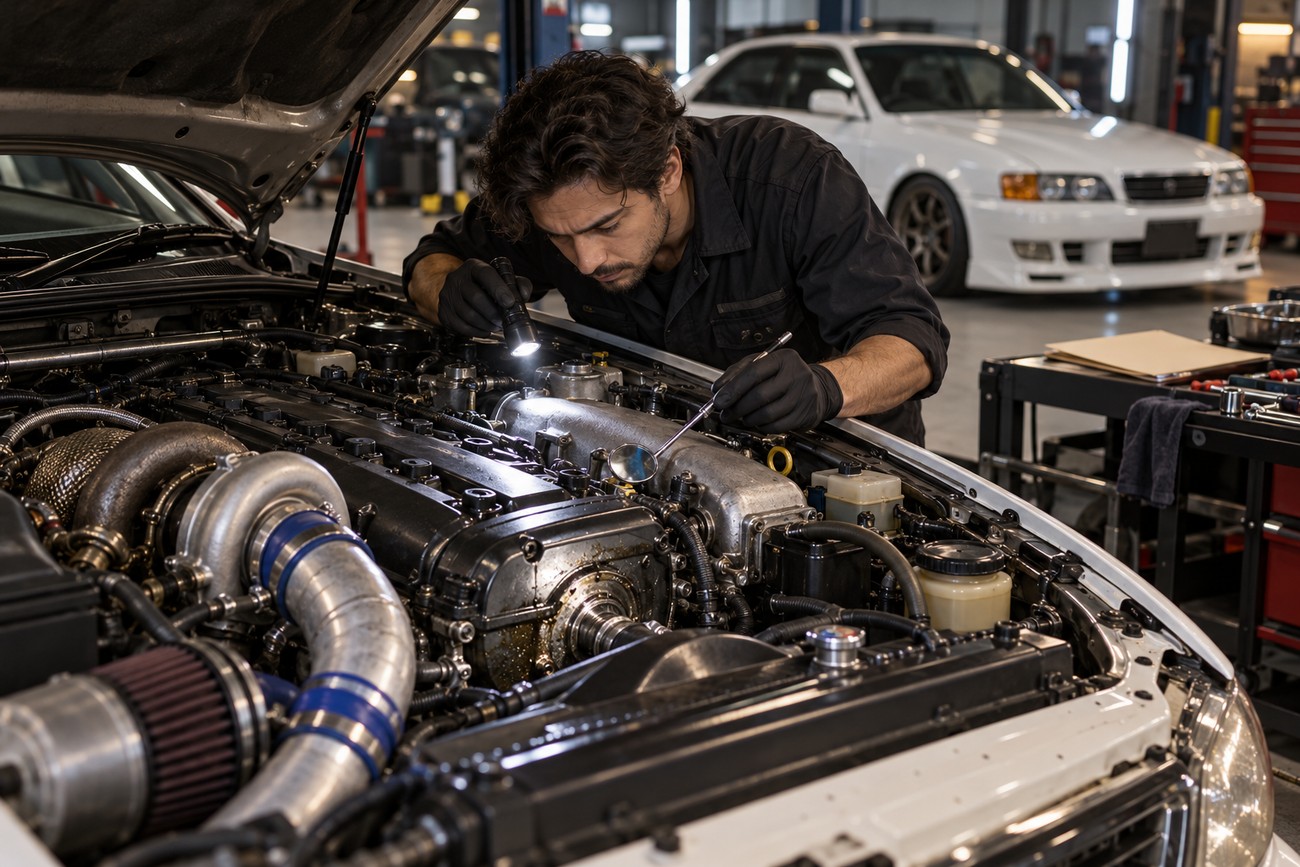
Start with identity, not appearance. Confirm the engine code, the presence of the correct turbocharger, the gearbox, and the documentation that supports the advertised trim. A JZX100 badge or Tourer V label is insufficient proof of the current drivetrain, especially on cars that have been swapped, repaired, or modified.
Inspect the engine for oil around the front oil seal, valve covers, and VVT-i area. These leaks may appear separately, yet age can make them part of one larger resealing job. A dry-looking engine bay deserves a closer look if it has recently been washed, because cleaning can temporarily hide oil tracks on the engine and underside.
A freshly washed engine bay is a reason to inspect seals, the VVT-i area, and the underside more carefully, not evidence of a clean repair history.
Check the turbocharger for oil leakage and listen for signs of abnormal operation. Inspect the radiator, hoses, and other cooling-system components for leaks or evidence of overheating. Owners also report heater-valve problems, while the PCV system, injectors, spark plugs, and ignition coils deserve attention on cars with unknown service histories.
Before agreeing on a price, obtain compression information where possible and ask directly about overheating, ECU changes, fuel-system work, and previous turbo repairs. Modified cars can carry unknown calibration and cooling histories even when their cosmetic presentation is excellent. A test drive should confirm stable temperature, clean boost behavior, consistent ignition, and normal operation of the heater and electrical systems.
The Tuning Mistakes That Turn a Good 1JZ Into an Expensive One
The common mistake is increasing boost immediately after purchase. A baseline inspection should come first: compression, lubrication, oil leaks, cooling, fuel delivery, ignition, turbocharger condition, and ECU history all affect whether the engine can safely support additional load.
The later VVT-i setup uses a single CT15B and has a different torque character from the early twin-CT12A configuration. Treating the two engines as interchangeable can lead to unsuitable assumptions about response, control strategy, fueling, and component selection. The higher factory compression ratio of the VVT-i engine also reinforces the need to identify the exact version before choosing a tune.
Parts research must specify 1JZ-GTE VVT-i rather than relying on the generic name “1JZ.” HKS warns that some components intended for non-VVT-i 1JZ-GTE engines are incompatible with VVT-i versions. That warning does not establish a universal parts list, so compatibility should be checked against the engine version and the manufacturer’s application data.
Prior modifications deserve as much scrutiny as the hardware itself. An aftermarket ECU, altered fuel system, unknown injectors, or evidence of past overheating can make a supposedly simple boost increase expensive. Restore a reliable baseline first; performance tuning becomes much easier to evaluate when the engine’s health and calibration are documented.
Ownership Reality: Age, Parts, and Hidden Costs
The Chaser’s desirability does not make it a low-maintenance sedan. Age-related oil leaks may involve the front oil seal, valve covers, and VVT-i area at the same time, turning several small observations into one substantial repair visit. The same applies to cooling work when a radiator leak is found alongside old hoses or other neglected components.
A leaking or worn turbocharger can progress to complete turbo failure, while weak ignition or fuel delivery can reduce performance and create misleading tuning symptoms. Radiator work, heater-valve replacement, injectors, PCV components, spark plugs, and coils may each look manageable in isolation. Together, they can change the purchase budget quickly.
Some owners also report difficulty finding original parts and dealing with age-related electrical faults. Reports of weak window regulators, dim lighting, deteriorating trunk seals, aging ECCS, and dashboard-plastic damage exist, but these claims have limited independent confirmation and should not be treated as universal defects.
Parts availability is therefore part of the ownership calculation, especially for a car intended to remain close to factory specification. A vehicle with documented repairs and sensible replacement components may be a better buy than a cheaper example that appears original but has deferred maintenance hidden behind clean trim.
How to Decide Whether a JZX100 Is Worth Chasing
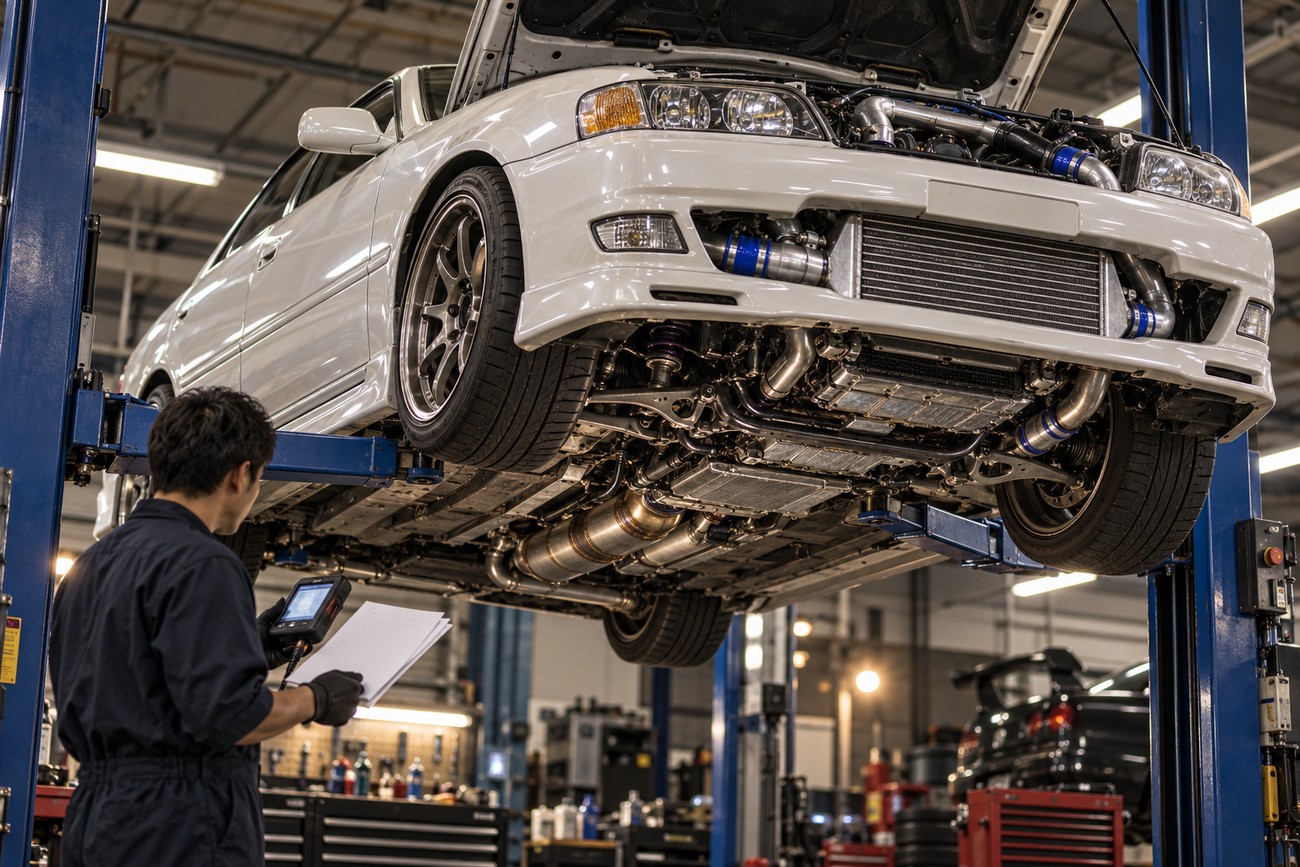
A documented, mechanically healthy VVT-i example deserves a different valuation from a cheaper modified car with unknown history. Give greater weight to service records, inspection evidence, cooling-system condition, ECU calibration, and the correct engine specification than to cosmetic upgrades or a claimed power figure.
The 280 PS figure is a Japanese factory rating, not a guarantee of present-day output. Condition determines what the car can deliver now, while fuel, exhaust, and ECU settings influence the result. A dyno number without supporting information about the turbocharger, injectors, ignition, and calibration is incomplete evidence.
Originality is valuable when it preserves traceable history, but an extensively modified car is not automatically a bad purchase. A documented build with known parts and a coherent ECU calibration can be easier to assess than an apparently stock car with concealed repairs. In either case, the VVT-i specification must guide parts selection and performance expectations.
Change your offer substantially, or walk away, when you find several of these conditions together:
- The engine code, turbocharger, gearbox, or documents do not match the advertised specification.
- Freshly cleaned surfaces conceal oil around the front seal, valve covers, VVT-i area, or underside.
- There is no credible account of overheating, compression, ECU calibration, or fuel-system changes.
- The turbocharger leaks oil, the cooling system shows neglect, or ignition faults remain unresolved.
- The seller relies on the 280 PS claim or a trim badge instead of providing inspection evidence.
Frequently asked questions
Which year was the best for the Toyota Chaser JZX100?
No single best year can be selected from the supplied specifications alone. Individual condition matters more than a year-based shortcut because these cars have aged, changed owners, and often received modifications long after leaving the factory.
Rank candidates by documented maintenance, factory-correct drivetrain specification, current cooling-system health, ECU history, and evidence of proper repairs. A well-documented VVT-i car with sound mechanical systems is generally a stronger purchase than a cosmetically impressive example chosen only by year.
What is the 0-to-60 time of the Toyota Chaser JZX100?
There is no single defensible 0-to-60 mph figure in the supplied data. Gearbox, traction, tires, tune, vehicle condition, and test method can all change the result, particularly on an older modified car.
The 280 PS figure is a Japanese factory rating, not an acceleration test. It also does not confirm the present output of the engine, so quoting one number without the car’s specification and test conditions would create false precision.
Why are Toyota Chasers so sought after?
They combine the practicality and understated shape of a sedan with rear-wheel drive and a turbocharged inline-six platform. The 1JZ-GTE offers a strong tuning foundation, while the later VVT-i version provides about 378 N·m at 2,400 rpm, giving it useful response in ordinary road driving.
The appeal is strongest when the car retains a clear mechanical identity and a documented history. Scarcity, age, and modification culture also mean that buyers must evaluate condition carefully rather than assume every JZX100 has the same engine or performance.







