
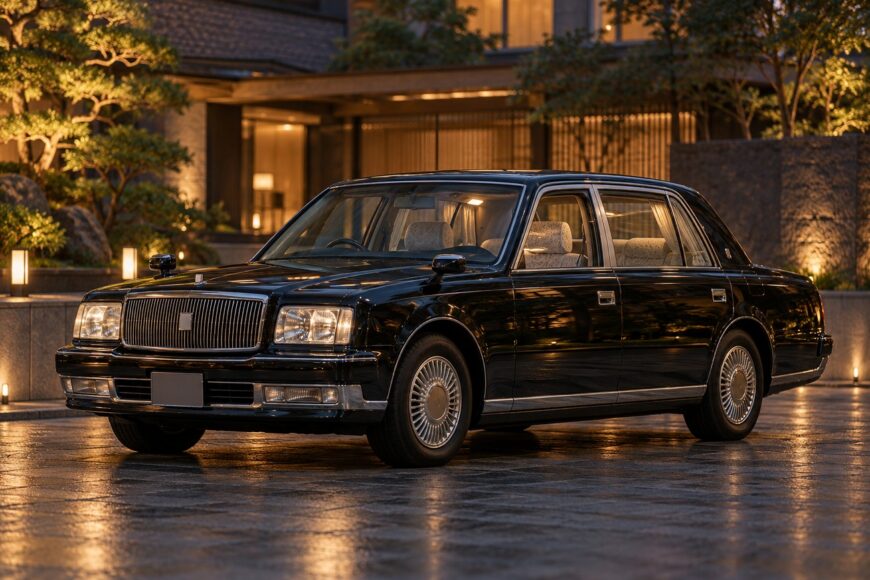
The Toyota Century combines discreet, chauffeur-focused luxury with the mechanical complexity of an aging Japanese V12. Its quiet exterior and conservative power delivery can suggest an unusually simple ownership experience, yet a G50 imported outside Japan demands specialist knowledge, patience, and a realistic parts budget.
Introduced as a cultural institution rather than a conventional executive sedan, the Century served Japan’s government, imperial court, and business elite. This article assesses the G50 through its engineering, rear-seat purpose, maintenance risks, originality, and collector value. Acceleration is a minor part of the story.
- Why the Toyota Century Became Japan’s Quietest Status Symbol
- The G50 V12: Smoothness Over Showmanship
- A Limousine Built for the Rear Seat
- G50 or G60: The V12 Icon Versus the Hybrid Successor
- The Hidden Cost of Owning a Century V12 Abroad
- How to Buy an Authentic, Usable G50
- Frequently asked questions
- How much does a Toyota Century V12 cost?
- What car does the Emperor of Japan drive?
- What is the 0 to 100 time of a Toyota Century V12?
Why the Toyota Century Became Japan’s Quietest Status Symbol
Toyota introduced the first Century in 1967. The name honored the centenary of the birth of Toyota founder Sakichi Toyoda, but the car’s role quickly became larger than a commemorative model. It became a formal transport choice for senior business figures, government officials, and members of Japan’s imperial sphere.
The Century’s status comes from restraint. Its upright proportions, discreet grille, subdued badging, and carefully finished cabin avoid the visual competition associated with many luxury sedans. Production was carried out in small numbers with a level of hand finishing that separated the model from ordinary Toyota volume cars.
Official sales were limited to a small circle of Japanese dealers, and export was not provided as a normal international sales channel. Cars found overseas generally arrived through grey-import channels. That limited distribution helped preserve the Century’s domestic exclusivity while creating serious documentation and parts challenges for later owners abroad.
The design brief centered on the passenger seated behind the driver. Curtains, quiet running, generous rear accommodation, and a cabin arranged like a private office mattered more than aggressive styling or driver involvement. Treating the Century as an unusually large Toyota sedan misses the cultural function that shaped its engineering.
The G50 V12: Smoothness Over Showmanship
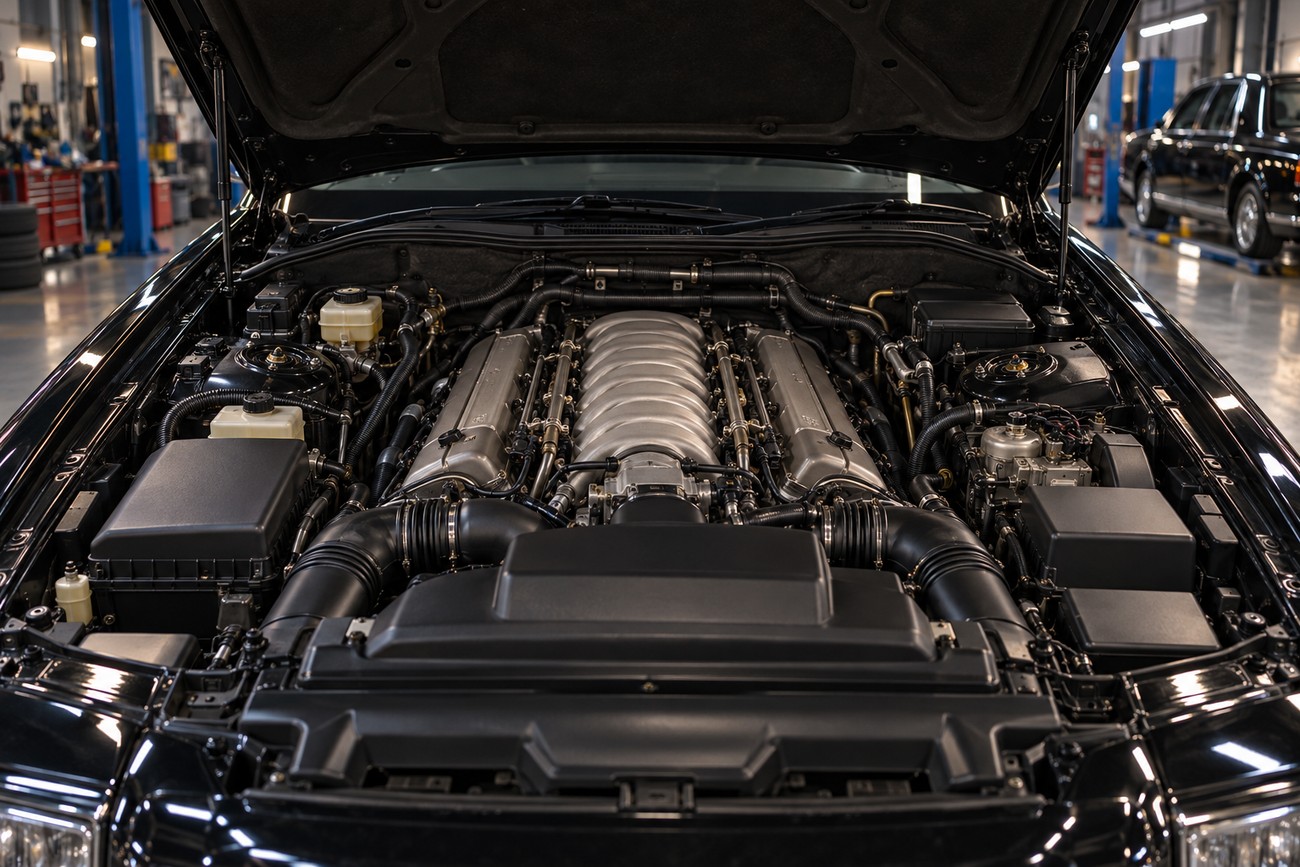
The G50 generation was produced approximately from 1997 to 2017 and used Toyota’s 1GZ-FE, a 5.0-liter V12. Its official output was approximately 280 hp, a figure associated with Japan’s gentleman’s agreement. The engine was calibrated for quiet, smooth limousine operation, with controlled delivery that favored refinement over theatrical response.
This explains why claims of a factory 350-hp Century V12 are misleading. The 1GZ-FE may have potential beyond its official figure, and some owners modify or reprogram these engines, but the standard car was never engineered as a high-output performance sedan. Its long, even power delivery suits a chauffeur who must keep passengers comfortable.
The engine bay is tightly packaged. Access to ignition, cooling, and other service points can require substantial labor, so a repair that appears routine on a V6 may become expensive on the Century. A workshop that understands Toyota generally may still lack the experience, Japanese documentation, and diagnostic discipline required for this particular V12.
The automatic transmission follows the same philosophy. It was designed for smooth limousine use rather than aggressive driving. Repeated hard launches, rapid kickdowns, or performance modifications can expose weaknesses in an aging drivetrain, especially when maintenance history is incomplete.
A Limousine Built for the Rear Seat
The Century prioritizes rear passengers over the driver. Typical equipment includes curtains, an ottoman, and rear audio and climate controls, creating a quiet compartment for reading, conversation, or work. The front seat and dashboard are functional by comparison because the driver’s task is to deliver a composed ride.
Individual factory orders produced substantial variation in upholstery, wood, seat configurations, and equipment. Two cars from the same production period can therefore differ in cabin details without either being incorrect. This makes a careful inspection of the factory specification more valuable than a quick judgment based on color or mileage alone.
Rear-seat condition can be excellent while the driver’s seat shows heavier wear. That pattern is logical: the rear cabin received ceremonial attention, while the driver’s position handled daily use. It can also help identify whether a car’s history matches its presentation, particularly when the seller describes it as a formal-use vehicle.
Collectors often prefer original factory paint, unmodified rear trim, and cars without aftermarket tint. Repainting a deep-black body or retrimming the cabin may improve its appearance for a private owner, yet it can reduce respect and value among enthusiasts who judge authenticity closely. On a Century, originality is part of the vehicle’s identity.
G50 or G60: The V12 Icon Versus the Hybrid Successor
The G60 remains a flagship Century, but its technical formula reflects newer regulatory and efficiency priorities. The comparison below shows why enthusiasts usually treat it as a different interpretation of the nameplate.
| Category | G50 | G60 |
|---|---|---|
| Production period | Approximately 1997–2017 | Produced since 2018 |
| Powertrain | 5.0-liter Toyota 1GZ-FE V12, approximately 280 hp | 5.0-liter hybrid V8 |
| Passenger mission | Rear-seat limousine comfort with a quiet, traditional character | Rear-seat flagship comfort with newer technology and packaging |
| Emissions strategy | Traditional naturally aspirated V12 architecture | Hybrid assistance emphasizing emissions compliance and fuel economy |
| Enthusiast appeal | Regarded as the distinctive V12 Century and a specialist import | Recognized as the modern flagship, though not a continuation of the V12 formula |
The Hidden Cost of Owning a Century V12 Abroad
Core mechanical durability can be strong, but age-related faults now define many G50 ownership decisions. Climate control, audio systems, seat heating, wiring, and control modules can develop faults that are difficult to diagnose without the correct Japanese-market information. English-language factory documentation is limited or unavailable, so owners may depend on specialist translations, forum archives, or imported manuals.
Original parts for older G50 cars may require Japanese dealers or dismantlers. Delivery can take weeks or months, particularly for body trim, glass, lighting, seals, and interior electronics. Some suspension and brake components may be shared with contemporary Toyota or Lexus models, but compatibility must be confirmed by exact catalog and chassis information rather than visual similarity.
Suspension, wiring, and control modules should be diagnosed as one system before isolated parts are replaced. Generic Toyota fault assumptions can send a repair in the wrong direction, especially when a low ride height or warning light has several possible causes.
Late G50 cars used pneumatic or hydropneumatic suspension with active control, tuned for softness rather than sporty handling. Leaks, tired compressors, control faults, and aged hydraulic components can produce a sagging corner or an uneven ride. Poor roads add another problem: low clearance and soft calibration can lead to bottoming, squeaks, or underbody damage.
Fuel use is another practical constraint. Reported city consumption can exceed 20 L/100 km even with calm driving, and taxes or insurance in some countries may be calculated from the 5.0-liter V12 rather than from the car’s gentle mission. A buyer should obtain local ownership quotes before importing because the annual running cost can alter the entire purchase decision.
The expensive surprise is often deferred maintenance rather than one spectacular engine failure. A car that needs suspension work, electrical diagnosis, rare trim, and cooling-system attention at the same time can quickly exceed the value of a cheaper purchase. The Century rewards a prepared owner with a suitable workshop; it punishes assumptions based on ordinary Toyota servicing.
How to Buy an Authentic, Usable G50
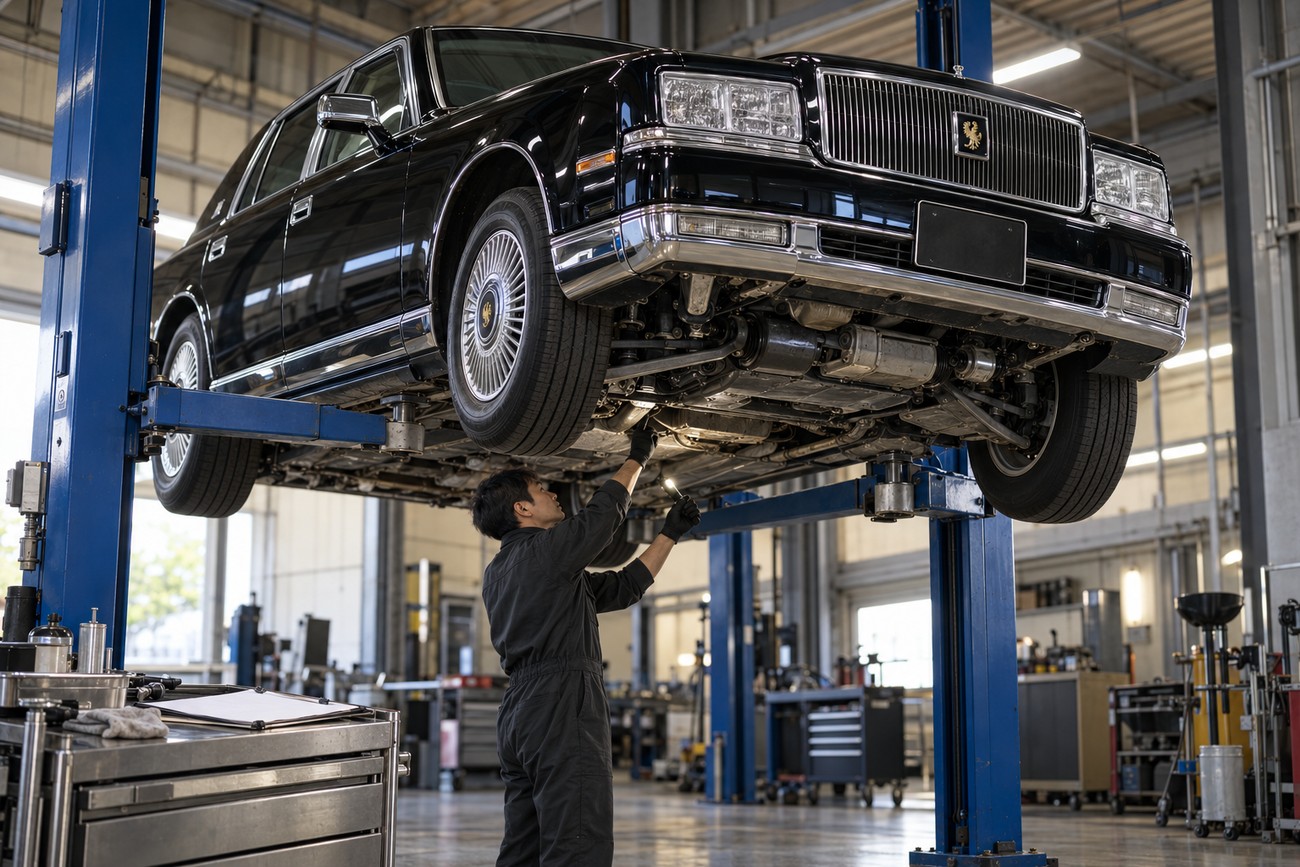
Begin with the Japanese service history, auction records, and chassis information. A clean-looking body can conceal accident repairs, underside corrosion, or worn suspension, particularly after years of storage or use on salted roads. Inspect the lower body, suspension mounting points, hydraulic components, and signs of uneven paint before judging the cabin.
Test the suspension from cold and after the car has been parked. Observe ride height, compressor operation, warning lights, steering behavior, and any change in stance after several hours. A smooth test drive is insufficient if the car slowly settles afterward. Diagnostic equipment capable of communicating with the relevant systems is essential.
Service the 1GZ-FE as a specialist V12, not as an ordinary V6 or V8. Confirm the correct oils, filters, fluids, ignition parts, and cooling-system procedures. Cheap filters or unsuitable fluids can create problems in the transmission and suspension hydraulic systems, while limited access in the engine bay increases the cost of correcting an earlier shortcut.
Inspect originality as carefully as mechanics. Aftermarket retrimming, repainting, heavy tint, audio changes, or modified suspension may suit personal use, but these alterations can reduce collector value. Before import, verify registration, taxes, insurance, and the legal description of the engine and power output. Incorrect declarations can create inspection and registration problems, regardless of how attractive the car appears.
Frequently asked questions
How much does a Toyota Century V12 cost?
There is no single universal international price for a Toyota Century V12. The purchase price is only the first line of the budget; import shipping, customs or taxes, registration, inspection, deferred maintenance, suspension repairs, and scarce trim or body parts can materially change the final cost.
A documented, original car with sound suspension may be financially safer than a cheaper example with an attractive interior and incomplete history. Ask for a complete landed-cost estimate and reserve funds for specialist diagnosis before comparing listings.
What car does the Emperor of Japan drive?
The Century nameplate has been used within Japan’s imperial and governmental sphere, but that does not mean every Century represents an imperial vehicle. Specific ceremonial and official duties may involve specially prepared cars whose equipment, body configuration, and protocol role differ from those of an ordinary privately imported sedan.
Private ownership of a Century should therefore be judged on the individual car’s specification and history. Its association with the imperial court explains the model’s cultural status, while the actual vehicle in front of you may have served a business, government, or private chauffeur role.
What is the 0 to 100 time of a Toyota Century V12?
Acceleration figures for the Century V12 are inconsistent and secondary to its purpose. Published results can vary with market, testing method, vehicle condition, transmission behavior, tire choice, and passenger load, while factory presentation focused on smooth progress rather than headline performance.
The 1GZ-FE delivers quiet, linear thrust, and the automatic transmission favors gentle shifts. A healthy car can feel effortless in normal driving, yet its gearing, comfort tuning, and conservative calibration explain why it should not be evaluated like a sports sedan.







