
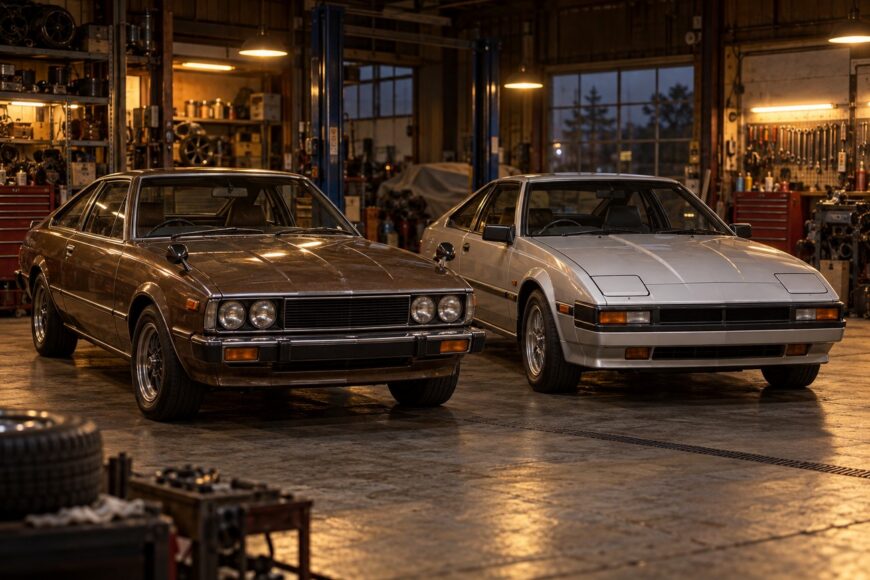
The Toyota Celica XX is where the Supra story began in Japan, yet treating the two names as interchangeable can send a buyer toward the wrong engine, the wrong parts, or the wrong expectations. Toyota sold the XX in its home market and used the Supra name for its export-market counterpart. Their shared origins matter, but so do the differences across generations, equipment lists, and markets.
Launched as a six-cylinder, rear-wheel-drive grand tourer, the XX gave the Celica Liftback idea a more substantial character. It remains appealing because it occupies an unusual space: recognizably a Celica, closely related to an early Supra, and distinctly Japanese-market in its details. For anyone considering one now, that identity is part of the attraction and part of the work involved in owning it.
- Why the Celica XX was the Supra before the Supra
- The 1978 original: familiar silhouette, different purpose
- Celica XX engines and generations at a glance
- The second generation: sharper GT, multiple personalities
- Japan-only equipment—and why the badge is not a parts catalog
- Buying one today: inspect the shell before chasing a badge
- Frequently asked questions
- Which is a better fit for a driver: a regular Celica or a Celica XX?
- How can I verify a manual Celica XX advertised as a factory Turbo?
- What should I send a supplier before ordering Celica XX parts?
- What should I check before importing a right-hand-drive Celica XX?
Why the Celica XX was the Supra before the Supra
Toyota launched the first Celica XX in Japan on 13 April 1978. It was a rear-wheel-drive, six-cylinder GT based on the Celica Liftback, while related export cars carried the Supra name. The naming history explains the familiar “Supra before the Supra” description, provided it does not erase the XX’s Japanese-market specification.
The regular Celica supplied a recognizable starting point, but a six-cylinder GT served a different driver. Its appeal lay in covering distance with an inline-six and the versatility of a liftback, rather than relying on the Celica name alone. That distinction still helps a prospective owner decide whether the car’s character warrants the extra effort of finding model-specific parts.
Market identity is the first boundary to keep in mind. Engines, trim, electrical equipment, and catalog numbers can differ between a Japanese XX and an export Supra of a similar age. A part advertised simply for an “early Supra” is therefore a lead to investigate, not confirmation that it will fit.
There is no single Celica XX specification, either. The name spans two generations and several substantially different six-cylinder engines. Establishing a car’s year, engine, and original configuration is more useful than judging it by its badges or by a description borrowed from an export-market brochure.
The 1978 original: familiar silhouette, different purpose
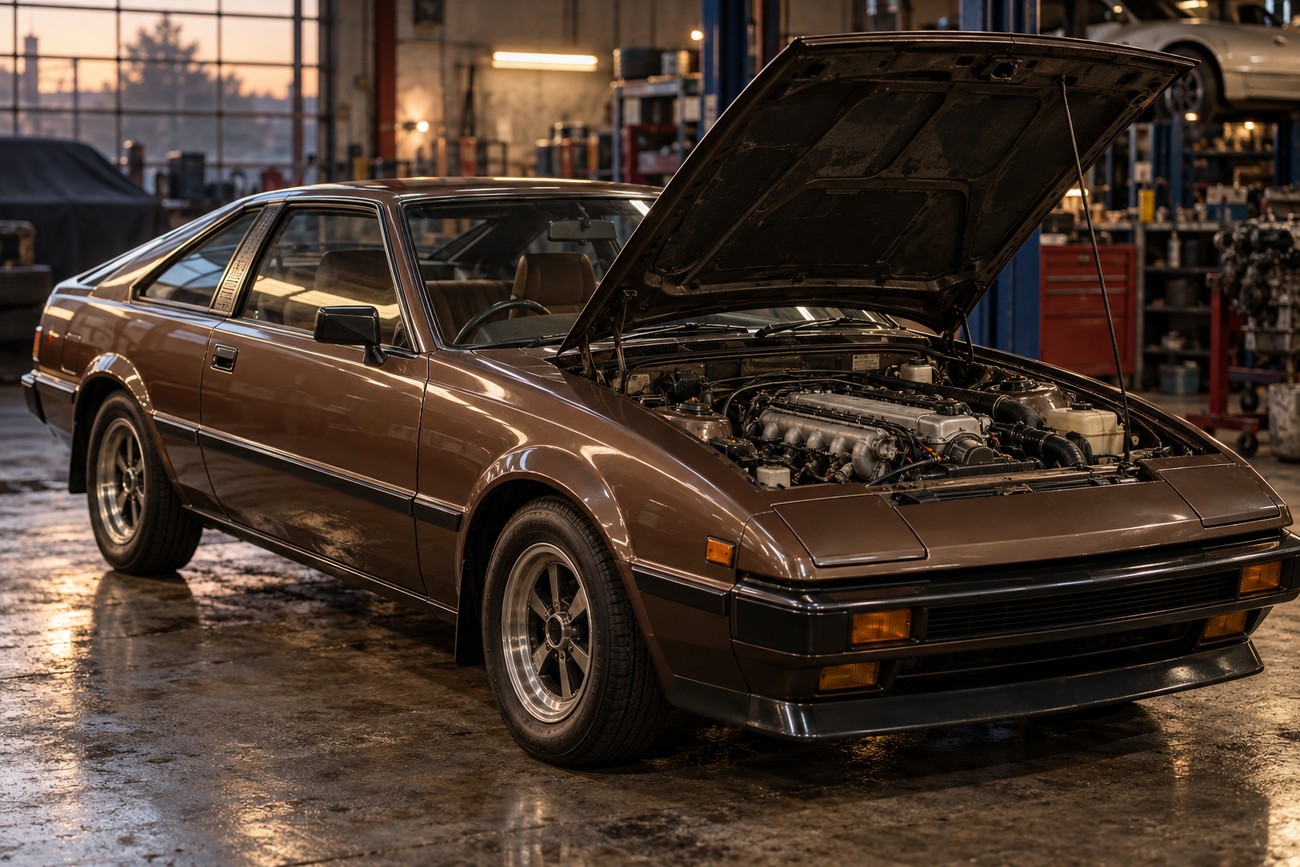
The first XX retained the Celica Liftback family resemblance while establishing a grand-touring role of its own. Its six-cylinder layout is the mechanical detail that defines it: this was a car conceived for drivers seeking a different sort of Celica, rather than a trim package with a grander name. Today, that distinction also warns against assuming ordinary Celica mechanical parts will interchange.
At launch, Japanese buyers could choose the 1,988 cm³ M-EU or the 2,563 cm³ 4M-EU inline-six. Both used electronic fuel injection and a three-way catalyst to meet Japanese emissions requirements. The engine code matters when identifying a surviving car, because “first-generation XX” alone does not establish which of those two engines is under the hood.
Early transmission choices were a five-speed manual or a four-speed automatic with overdrive. A rear stabilizer bar was standard, a useful chassis detail that says more about Toyota’s intentions than a generic GT label. For a buyer, the relevant question is whether that equipment and the rest of the suspension remain complete and sound after decades of use.
Period factory figures deserve context rather than a direct comparison with a modern road test. Japanese-market measurement methods and the condition of an individual car both affect what those numbers mean today. An original engine designation identifies the specification; a cooling-system inspection, fuel-system check, and proper drive reveal much more about how that particular XX behaves.
Celica XX engines and generations at a glance
This Japanese-market guide separates launch engines from later additions; availability and transmission pairings should still be checked against the individual car.
| Generation | Introduction | Engine | Displacement | Defining specification |
|---|---|---|---|---|
| First | April 1978 launch | M-EU | 1,988 cm³ | Fuel-injected inline-six with three-way catalyst |
| First | April 1978 launch | 4M-EU | 2,563 cm³ | Fuel-injected inline-six with three-way catalyst |
| Second | July 1981 range | 1G-EU | 1,988 cm³ | Earlier 2.0-liter six, rated at 125 PS |
| Second | July 1981 range | 5M-GEU | 2,759 cm³ | Larger-displacement six |
| Second | Later addition | M-TEU Turbo | 1,988 cm³ | 145 PS; factory four-speed automatic with overdrive |
| Second | 1982 2000GT | 1G-GEU | 1,988 cm³ | DOHC, 24 valves, 160 PS |
The second generation: sharper GT, multiple personalities
Introduced in July 1981, the second-generation Celica XX gave Toyota’s six-cylinder liftback a sharper identity. It measured 4,660 mm long, 1,685 mm wide, and 1,315 mm high, on a 2,615 mm wheelbase. Listed weight ranged from 1,165 to 1,235 kg depending on version, so even the basic dimensions should not be mistaken for a single, uniform driving specification.
The range included the 1,988 cm³ 1G-EU and 2,759 cm³ 5M-GEU, with other engines added later. In particular, an early 2.0-liter second-generation car is not automatically a 2000GT: the earlier 1G-EU was rated at 125 PS. Confirming the engine code prevents a common mistake when an advertisement uses “2.0” and “2000GT” as though they meant the same thing.
The 1G-GEU-powered Celica XX 2000GT arrived in 1982. Its 1,988 cm³ DOHC, 24-valve six was rated at 160 PS at 6,400 rpm and 18.5 kg·m at 5,200 rpm. Those are period Japanese-market factory claims for that engine, rather than an output figure for every XX—or a promise about what an unrestored example produces now.
The later 1,988 cm³ M-TEU Turbo offered a different combination: 145 PS and 21.5 kg·m, paired in factory specification with a four-speed automatic with overdrive. Toyota also distinguished the XX from the related Soarer, positioning the Soarer as more luxurious and the XX as more sporting. A shared platform connection is useful historical context, though it is no substitute for checking the tuning and equipment of the car in front of you.
Japan-only equipment—and why the badge is not a parts catalog
The Celica XX was built for the Japanese domestic market. An export Supra can be its close relative while differing in engine, trim, electrical equipment, or catalog number. That becomes an ownership issue when a replacement is listed under “Supra” but its connectors, mounting points, or application years do not match the Japanese car.
Cabin equipment deserves as much attention as the drivetrain. Aging digital instruments and climate-control components can present a harder repair problem than a familiar mechanical service item, particularly if replacement units are scarce. Test every fitted function before purchase, and record what works while original components are still installed.
Navicom illustrates both the XX’s period ambition and the danger of reading modern meanings into old equipment. Available on selected second-generation versions, Toyota describes it as the world’s first in-car navigation system. It was not modern GPS navigation, and its presence should never be assumed from a model badge or a general equipment list.
For parts research, the safest starting point is the Japanese car’s own identifying information. Match the body and engine identifiers, production period, trim, and transmission to a relevant catalog before treating an export Supra listing as compatible. This takes more effort than searching by model name, but it can prevent an expensive mistake with a rare electrical unit or piece of trim.
Buying one today: inspect the shell before chasing a badge
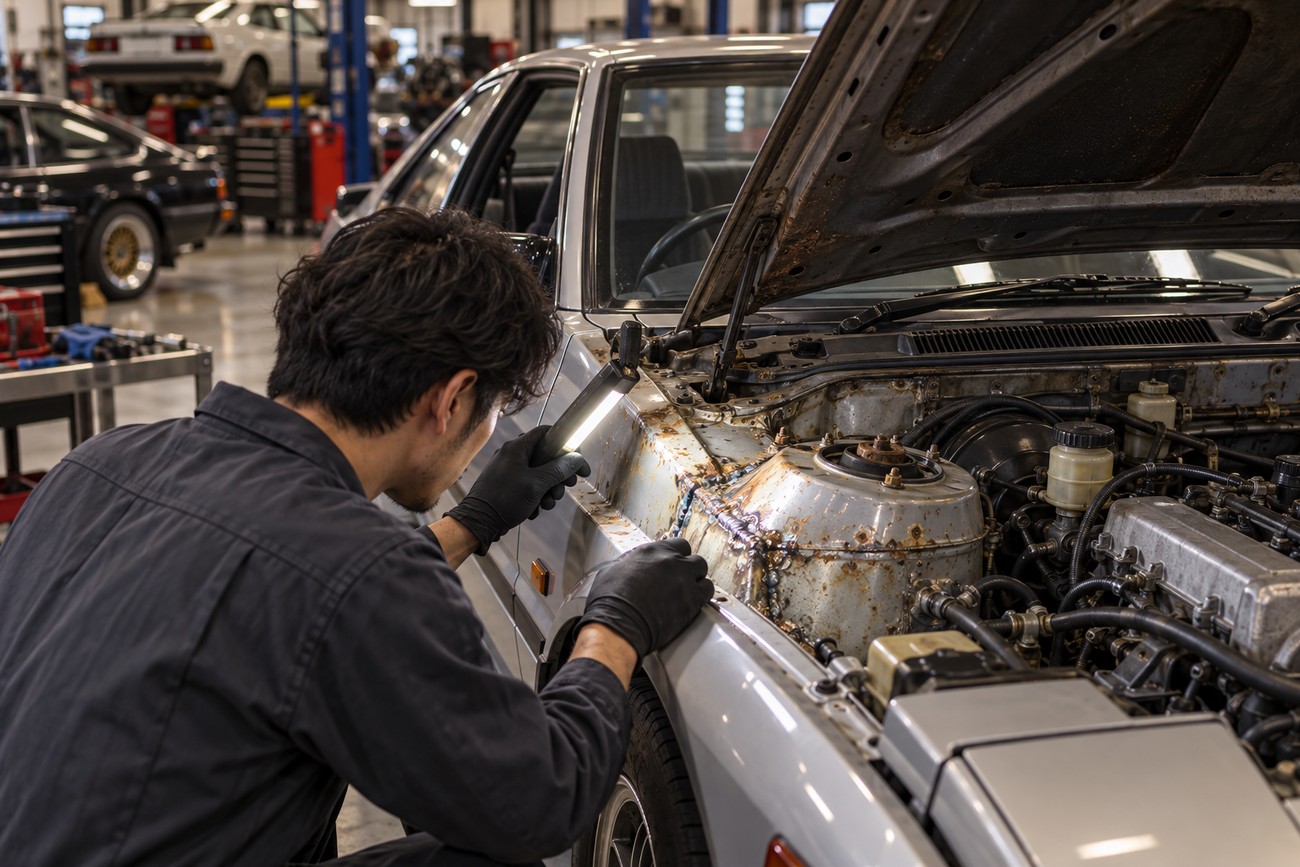
Start by confirming what the car is. Compare the body and engine identifiers, build plate, year, and transmission with any claim that it is a 2000GT or a factory Turbo. A badge, engine swap, or confident advertisement does not establish an original specification; documentation and the car’s identifiers give you a firmer basis for valuing it.
Next, inspect structural seams, floors, strut towers, and suspension mounting points for corrosion and poor earlier repairs. Look beyond fresh finishes to the underlying metal and the quality of any work already done. A sound shell gives you restoration options; hidden structural damage can absorb the budget before an engine or interior fault is addressed.
Once the structure passes scrutiny, assess the mechanical and electrical systems as a whole. Aging 1G, M, and 5M cars may need cooling-system, vacuum-line, wiring, and seal work even if they start readily. Check for evidence of overheating, examine fuel-system condition, and test the transmission through a proper drive rather than relying on an idle demonstration or a quoted factory power figure.
An M-TEU Turbo warrants particular attention to oil supply, cooling, turbocharger condition, overheating history, and the factory automatic transmission. Then price the missing or damaged pieces: XX-specific body panels, moldings, glass, and original lighting can be scarce, while interchange with an ordinary Celica or export Supra is limited and specification-dependent. Reports of particular failures come from scattered owner and restoration accounts, not an established model-wide failure-rate study; use them to guide inspection, not to predict the fate of every car.
Frequently asked questions
The best decision depends on the specific car available and the work required to keep it usable. These checks help turn the XX’s unusual history into a practical buying plan.
Which is a better fit for a driver: a regular Celica or a Celica XX?
Choose according to how you intend to use the car and the condition of the examples you can inspect. The XX offers the character of a six-cylinder GT, while a regular Celica may present a simpler parts-sourcing proposition. A sound, complete car of either type is generally a better starting point than a rarer badge attached to substantial corrosion or missing trim.
How can I verify a manual Celica XX advertised as a factory Turbo?
Check the build plate, body and engine identifiers, and transmission information against period documentation for that car. The factory M-TEU Turbo specification paired the engine with a four-speed automatic with overdrive, so inspect a manual example for records and physical evidence of a later conversion. A converted car may still be appealing; the claim of factory originality needs proof before you value it as such.
What should I send a supplier before ordering Celica XX parts?
Send the body and engine identifiers, production period, trim, and transmission details, along with clear photographs of the installed part. Include its connectors and mounting points where relevant. Ask the supplier to confirm compatibility with the Japanese-market specification rather than accepting a listing based only on “Celica” or “Supra.”
What should I check before importing a right-hand-drive Celica XX?
Before paying for the car, confirm registration eligibility, headlamp compliance, and insurance availability in the destination jurisdiction. Also establish a realistic source for Japanese-market replacement parts, particularly lighting and glass. Requirements vary by location, so obtain current local guidance for the specific car and its documents rather than assuming that another owner’s import experience applies.







