
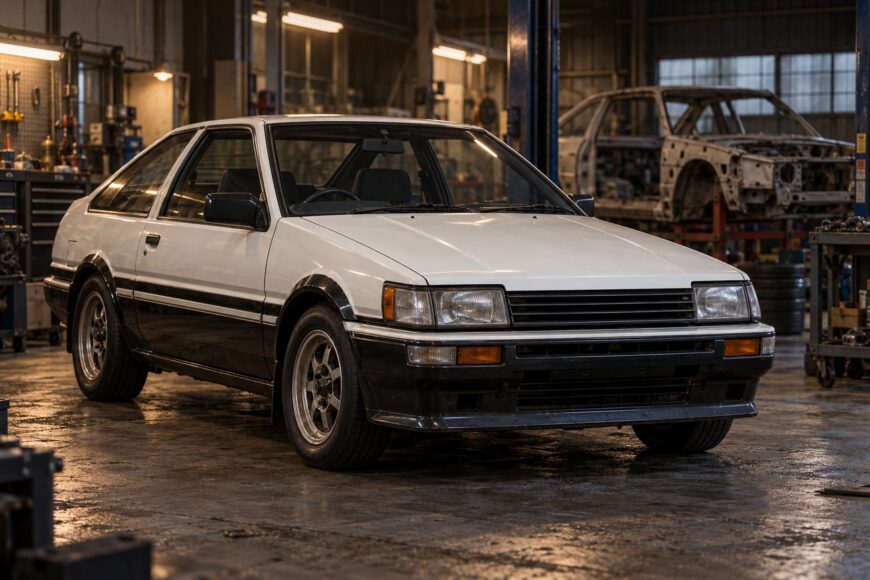
A lightweight 1980s Corolla can cost more than a modern sports car while still needing major restoration. Recent Japanese auction indications put clean grade 4 Levin examples above roughly $30,000–$40,000, with rare or highly developed cars reaching roughly $60,000–$70,000.
That price reflects a real shortage of straight, documented cars, yet hype often blurs the difference between a preserved chassis and an abused drift shell. A Toyota AE86 Levin with original structure, credible history, and scarce trim can justify serious money; a rusty car with a cage, swap, and fresh paint may simply be an expensive repair project.
The useful distinction is condition rather than mythology. The Levin’s engineering still makes sense for drifting and time attack, but the market now charges collector prices for many examples whose mechanical and structural condition reflects decades of hard use.
- Why the AE86 Levin Became So Expensive
- What You Are Actually Paying For: The Levin Formula
- Levin Versus Trueno: When the Icon Costs More Than the Better Car
- The Biggest Trap: Paying Collector Money for a Drift-Worn Shell
- Why Restoration and Parts Costs Spiral
- Stock, Modified, or Swapped: Which Levin Is Worth the Money?
- The AE86 Myths That Make Buyers Overpay
- A Sensible Buying Standard for a Toyota AE86 Levin
- Frequently asked questions
- What does “Levin” mean in AE86?
- Why has the Toyota AE86 become so expensive?
- How much does an AE86 cost now?
Why the AE86 Levin Became So Expensive
Toyota produced the AE86 from 1983 to 1987, so even the newest cars are now decades old. Time has removed many examples through crashes, corrosion, track use, and parts harvesting. The surviving pool is smaller still when you filter for straight structure, minimal rust, original panels, and a credible service history.
The fixed-headlamp Levin hardtop was produced in smaller numbers than the pop-up-headlamp Trueno. That makes a good Levin rarer in practice, especially because many were modified for drifting or dismantled to keep other cars running. The scarcity is therefore concentrated in minimally modified, structurally sound examples rather than in every AE86 carrying the Levin name.
Demand comes from several directions at once. Drifters value the rear-drive chassis, collectors value originality, and JDM buyers respond to the car’s cultural status. Initial D strengthened demand for the AE86 family, while international import markets turned Japanese auction results into reference points for cars that may never have been common locally.
Recent Japanese auction indications show clean grade 4 Levin examples exceeding roughly $30,000–$40,000. Rare or highly developed examples can reach roughly $60,000–$70,000, although those figures describe particular cars and market conditions rather than a guaranteed value for every Levin. Rust, accident history, poor modifications, and incomplete documentation can leave an expensive car difficult to sell.
What You Are Actually Paying For: The Levin Formula
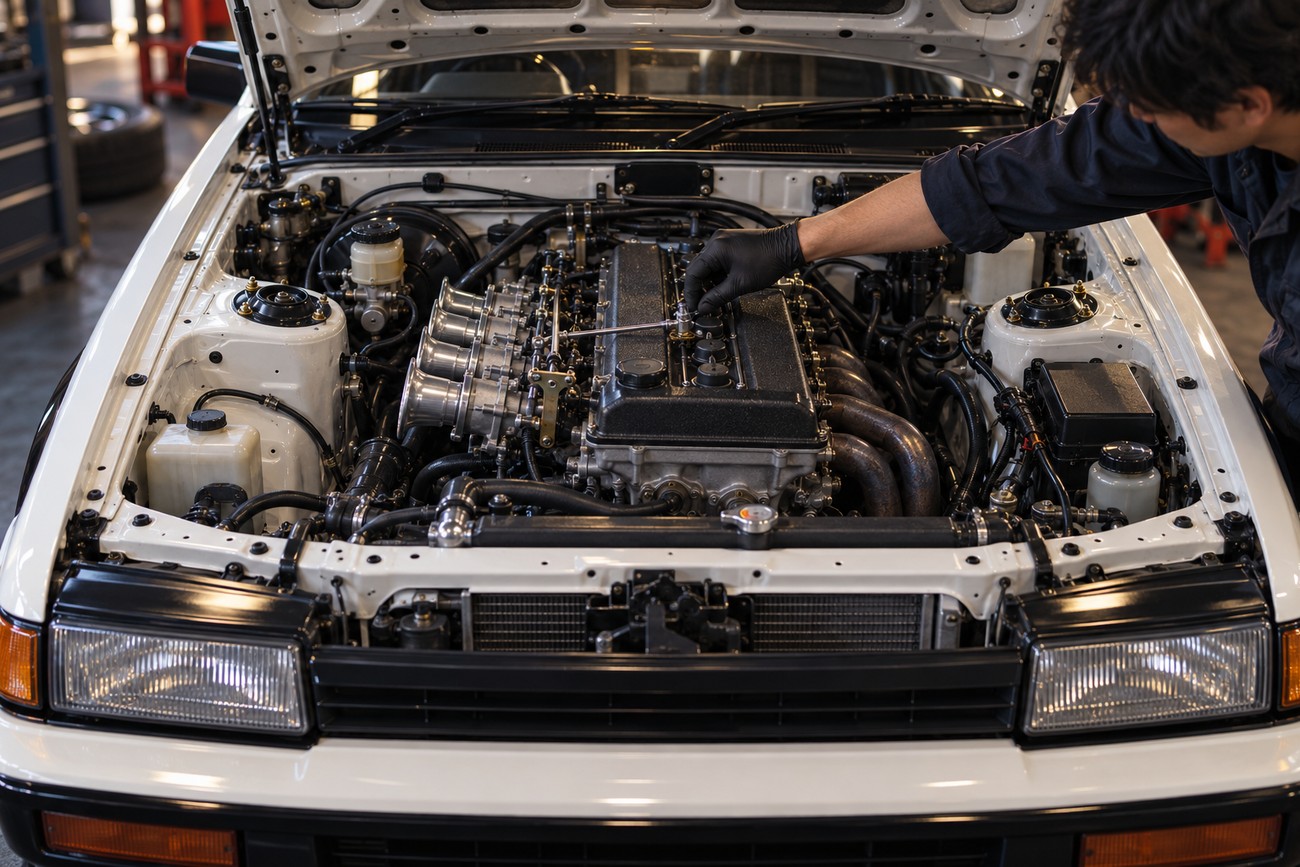
The factory Levin used a 1.6-liter DOHC inline-four 4A-GE. Japanese-specification output was up to about 130 hp at approximately 7,200 rpm, and factory manuals place the redline around 7,600–7,800 rpm. That combination rewards precise gear selection and allows a driver to use engine speed rather than relying on large torque reserves.
Factory curb weight was approximately 940–980 kg, depending on specification. The result is a strong power-to-mass relationship for its era, with less inertia for the suspension and tires to control. Every steering input and throttle change has a clear effect, provided the chassis remains straight and the suspension is in proper condition.
The drivetrain is rear-wheel drive with a live rear axle. JDM GT-V and GT-Apex versions could have a mechanical or disc-type LSD, which helps produce predictable rear-end behavior for drifting and improves traction when exiting corners. The live axle is simple and durable, although its behavior still depends heavily on bushings, alignment, dampers, and tire choice.
Engine power alone does not create the AE86’s reputation. Low mass, chassis geometry, mass distribution, steering condition, suspension condition, and correct alignment determine how readable the car feels. A tired 4A-GE in a sound shell can be a useful starting point; a fresh engine in a bent or poorly aligned shell will not reproduce the famous balance.
Levin Versus Trueno: When the Icon Costs More Than the Better Car
Levin identifies the fixed-headlamp AE86 body style, while Trueno identifies the pop-up-headlamp version. Their shared platform creates substantial mechanical common ground, but their visual identities carry different prices. The Trueno’s connection with Initial D and wider JDM culture often creates a premium that has little to do with measurable performance.
The Levin can be a rational starting point for drift or time-attack use when its condition and price are favorable. Fixed headlights are mechanically simpler than pop-up units, and the body style has its own aerodynamic and parts advantages. Those details do not make the Levin universally superior, but they can make it the better tool for a buyer choosing a car by function.
Paying extra for a Trueno makes sense when the buyer specifically values its styling, provenance, or collector appeal. It makes less sense when the intended use involves cutting, cage installation, wide wheels, or repeated track damage. A sound Levin with reversible modifications may deliver more useful chassis for the money than a visually famous Trueno with hidden corrosion.
Original body panels, glass, badges, and trim materially affect the calculation. Rare factory options, color and interior combinations, and complete original details can support a collector premium, while replacing them with incorrect parts may reduce value even if the car performs well. The right body style depends on the intended use, the shell’s condition, and how much originality matters to the buyer.
The Biggest Trap: Paying Collector Money for a Drift-Worn Shell
A drift-ready appearance proves very little about structural health. Years of sideways loads can fatigue the metal without leaving obvious crash damage, and a clean paint finish can hide repairs, corrosion, or distorted suspension geometry. Chassis rails and suspension mounting points deserve more attention than wheels, seats, or the visual quality of a roll cage.
Inspection should include the chassis rails, suspension pickup points, seat mounts, belt mounts, pedal areas, and roll-cage attachment points. Corrosion inside the cabin is easy to miss, particularly around seat and belt mounting areas. A full inspection on a frame machine is preferable to judging straightness from panel gaps or a test drive around the block.
Inspectors check pickup points, seat and belt mounts, and cage welds before compression numbers because a straight, safe shell is harder and costlier to recover than a tired engine.
Previous cage work deserves close scrutiny. Poor welding, thin reinforcement, cracked seams, and modifications that transfer loads into already fatigued metal can create safety and geometry problems. A large engine, aggressive differential, or competition suspension cannot compensate for a shell that has moved.
Electrical work creates a separate risk. Original wiring can develop brittle insulation, while amateur additions for gauges, ignition systems, fuel pumps, or cooling fans may introduce unreliable connections and fire hazards. “Everything works” is only a starting observation; the harness, grounds, fuses, and routing need an actual inspection.
Before discussing engine upgrades, verify the shell, geometry, and mounting points. A compression test is useful, but it cannot tell you whether the car tracks straight, whether the cage is safely attached, or whether the rear axle is loading a fatigued body.
Why Restoration and Parts Costs Spiral
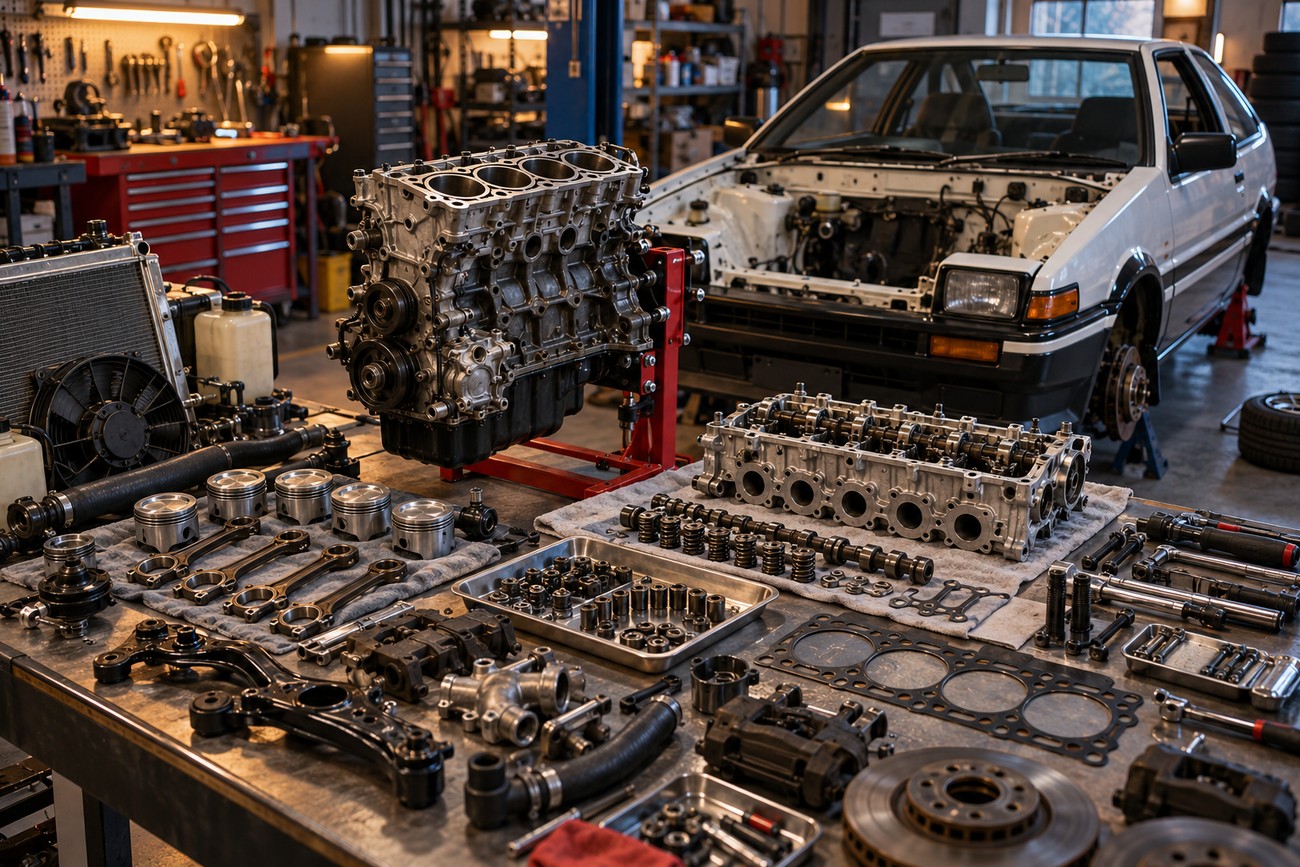
An apparently affordable Levin can exceed its purchase price in repairs because the initial fault is rarely isolated. A tired engine may need machine work, fuel-system attention, cooling repairs, and correct ancillary parts. Many original 4A-GE engines have unknown histories, uneven compression, or components sourced from multiple donor engines.
Parts availability is often misunderstood. Some suspension and brake components overlap with mass-market Corollas of the period, despite enthusiast claims that every component is unique and expensive. That overlap can reduce the cost of routine repairs, but it does not guarantee that the correct specification, a quality replacement, or a direct bolt-on part will be available locally.
Owners commonly combine JDM catalog parts, aging OEM stock, used components, and aftermarket equipment. Dimensions, mounting details, and specifications can differ, so a part that appears compatible may require modification. Local inventories vary considerably, and desirable original components may require Japanese import or used-parts sourcing.
Original Levin panels, glass, badges, and trim are scarce and highly valued by the JDM community. A reproduction may be adequate for a competition car, while an incorrect panel can materially reduce the value of a collector-oriented build. Previous-owner modifications add another layer of cost when brackets, wiring, fuel systems, or suspension parts must be removed before correct equipment can be installed.
Stock, Modified, or Swapped: Which Levin Is Worth the Money?
The safest purchase is often a lightly modified, documented shell rather than a dramatic build. Reversible suspension work, sensible cooling upgrades, and clearly recorded maintenance are easier to evaluate than an undocumented engine swap. The buyer should be able to identify what was changed, why it was changed, and how the work can be repaired.
High-power swaps such as SR20 or 1JZ conversions require a complete systems approach. The chassis, brakes, suspension, cooling, fuel delivery, differential, driveshaft, and safety equipment must support the added output. Installing an engine without matching those systems can remove the predictable balance that makes the AE86 valuable in the first place.
Widebody conversions, swaps, and extensive structural changes can reduce collector value even when they improve track performance. That is not automatically a problem for a dedicated competition car, but the price should reflect the intended use. A modified Levin should not be priced like an untouched example simply because the parts list is long or the fabrication looks dramatic.
Service records, manuals, and Japanese auction paperwork improve credibility and market value. Rare factory options such as an oil cooler, disc LSD, and specific color or interior combinations may also add value. A buyer should verify those claims against identification plates, parts, documentation, and physical inspection rather than accepting a seller’s specification list.
The AE86 Myths That Make Buyers Overpay
The first myth is that every AE86 is cheap and beginner-friendly. The chassis may be approachable to drive, yet ownership requires careful inspection, parts research, and fabrication judgment. Even a car purchased for drifting can become expensive once corrosion, geometry, wiring, and previous modifications are corrected.
The second myth is that every Levin is an investment asset. Rusty, crashed, poorly tuned, or structurally compromised cars can remain difficult to sell despite ambitious asking prices. Market value follows history, originality, and condition; a high listing price does not establish a completed sale or a reliable future return.
Another misconception credits the 4A-GE alone for the car’s handling magic. The engine’s rev range and response are part of the experience, but low mass, geometry, mass distribution, suspension condition, steering condition, and alignment matter just as much. A neglected car can feel ordinary until those supporting systems are restored.
Parts are also not necessarily available everywhere. Some replacement components are shared with mass-market Corollas, while correct Levin-specific panels, glass, trim, and certain used OEM items may require long waits or international sourcing. Pricing varies sharply with local JDM culture, and some markets value the badge far beyond the car’s practical performance.
A Sensible Buying Standard for a Toyota AE86 Levin
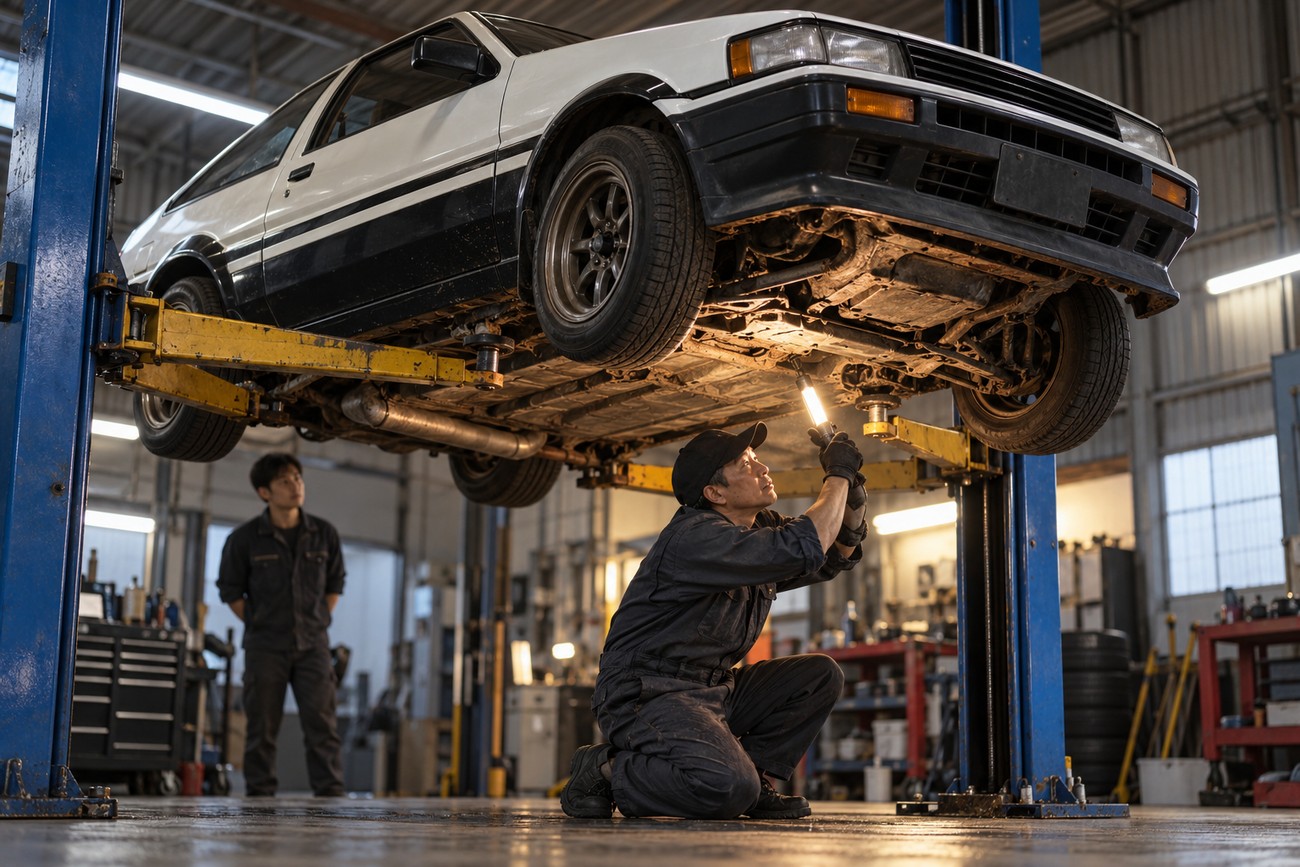
Start with structure and rust before cosmetics or drift equipment. Inspect the chassis rails, suspension mounting points, floor, seat mounts, belt mounts, pedal area, and cage attachments. If the seller resists independent inspection or frame-machine measurement, the asking price should be treated as compensation for unknown risk.
Mechanical checks should cover engine compression, oil pressure where appropriate, cooling behavior, gearbox operation, differential noise, steering-rack condition, and suspension bushings. A quiet test drive is useful, but it cannot replace lifting the car and examining leaks, cracks, play, improvised brackets, and uneven tire wear.
Correct alignment and fresh suspension components are essential to experiencing the AE86’s intended handling. Excessive camber, incorrect toe, worn rack bushings, and tired dampers can make a good chassis feel unstable. These issues also make it harder to distinguish the car’s genuine behavior from the effects of neglect.
Let the intended use determine the acceptable level of originality. A competition build can justify a cage, swap, and non-original bodywork, while a collector-oriented Levin needs reversible changes and complete documentation. Reject any car priced for collector status when its structure, history, and mechanical condition describe a drift-worn project.
Frequently asked questions
The answers below separate terminology, market indications, and inspection standards so the badge does not obscure the actual condition of the car.
What does “Levin” mean in AE86?
Levin is Toyota’s designation for the fixed-headlamp AE86 body style. It is separate from the pop-up-headlamp Sprinter Trueno, rather than being an engine code or a simple performance trim.
Both belong to the AE86 family and share the basic rear-drive platform, but body panels, lighting, trim, and market demand differ. In listings, confirming the body style and original specification helps prevent confusion between a genuine Levin and a converted or re-bodied car.
Why has the Toyota AE86 become so expensive?
Prices rose because the supply of straight, minimally modified cars became small while demand expanded among drifters, collectors, and international JDM buyers. The Levin’s lower surviving supply, fixed-headlamp identity, and cultural association with the AE86 helped intensify that demand.
The price is also a bet on condition and provenance. Original panels, documentation, rare factory specifications, and a sound shell can command a premium, while a rusty or heavily altered car may carry a high asking price without having comparable market value.
How much does an AE86 cost now?
Recent Japanese auction indications place clean grade 4 Levin examples above roughly $30,000–$40,000. Rare or highly developed examples can reach roughly $60,000–$70,000, while damaged, rusty, or poorly modified cars may fall well below those levels or remain unsold.
Those figures are market indications rather than a universal retail price. Import costs, local JDM demand, documentation, originality, and independent inspection can change the final value substantially.







