
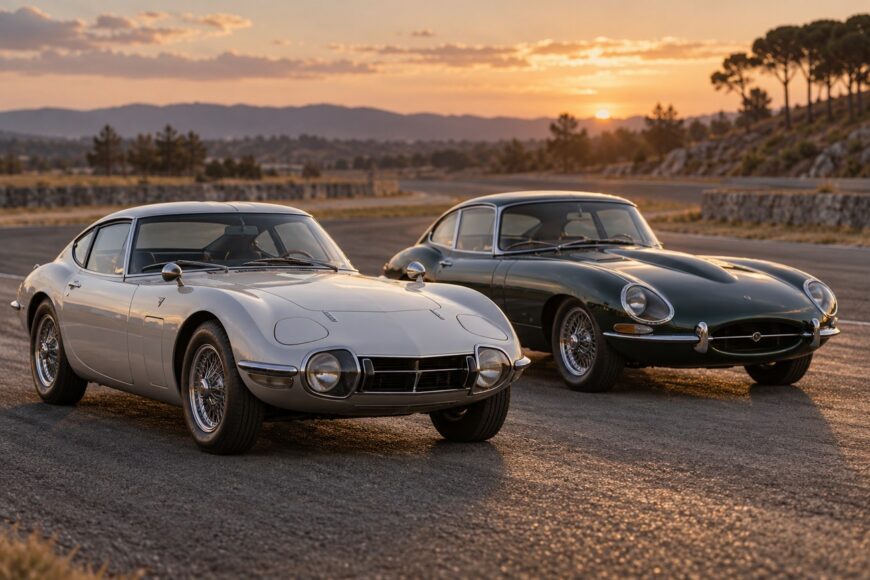
The Toyota 2000GT unsettled established assumptions about Japanese cars during the Jaguar E-Type era. Its low, carefully proportioned body, independent suspension, four-wheel disc brakes, and serious straight-line performance placed it in the conversation surrounding Europe’s best grand tourers. The comparison with Jaguar was understandable, even though no confirmed official statement shows that Toyota conceived the car specifically as an answer to the E-Type.
That achievement creates a difficult ownership paradox. The 2000GT is light, balanced, and mechanically compelling, yet its scarcity makes every repair, modification, and mile significant. A collector may buy a superb GT and discover that ordinary use involves specialist labor, rare parts, difficult insurance, and constant concern over original materials.
- Why the Jaguar E-Type Comparison Caught On—and Where It Fails
- The Engineering That Made the 2000GT Credible
- What Period Performance Actually Proves
- Rarity, Auction Prices, and the Cost of Originality
- What Driving and Maintaining One Really Involves
- How to Avoid a Costly 2000GT Purchase Mistake
- Frequently asked questions
- How much did a Toyota 2000GT cost when new?
- Was an automatic Toyota 2000GT ever sold?
- How should an owner choose tires for a road-driven 2000GT?
Why the Jaguar E-Type Comparison Caught On—and Where It Fails
The visual comparison began with proportion and intent. The 2000GT had the long-hood, low-roof stance expected of a European grand tourer, with a restrained body that looked purposeful rather than merely exotic. Its compact dimensions and disciplined detailing gave Toyota credibility in a category then dominated by established European manufacturers.
Specification strengthened the comparison. A lightweight aluminum body over a steel frame, independent suspension at both ends, and four-wheel disc brakes described a sophisticated sports car by late-1960s standards. Period performance figures also placed it within the broad European GT conversation, rather than leaving it as an attractive design with modest mechanical substance.
The Jaguar E-Type served as a useful contemporary benchmark because it represented the combination of style, speed, and sporting identity that international buyers associated with a serious GT. That makes comparisons understandable in road tests and later histories. It does not establish a direct Toyota-Jaguar rivalry, a formal engineering target, or a documented plan to defeat the E-Type.
The safer historical reading is that Toyota was entering the broader European GT segment. The “Japanese answer to the E-Type” description is principally a journalistic framing that became more persuasive as the 2000GT gained rarity and status. For a buyer, the distinction matters: the car should be judged on its own engineering, condition, and provenance rather than on an imagined factory contest.
The Engineering That Made the 2000GT Credible
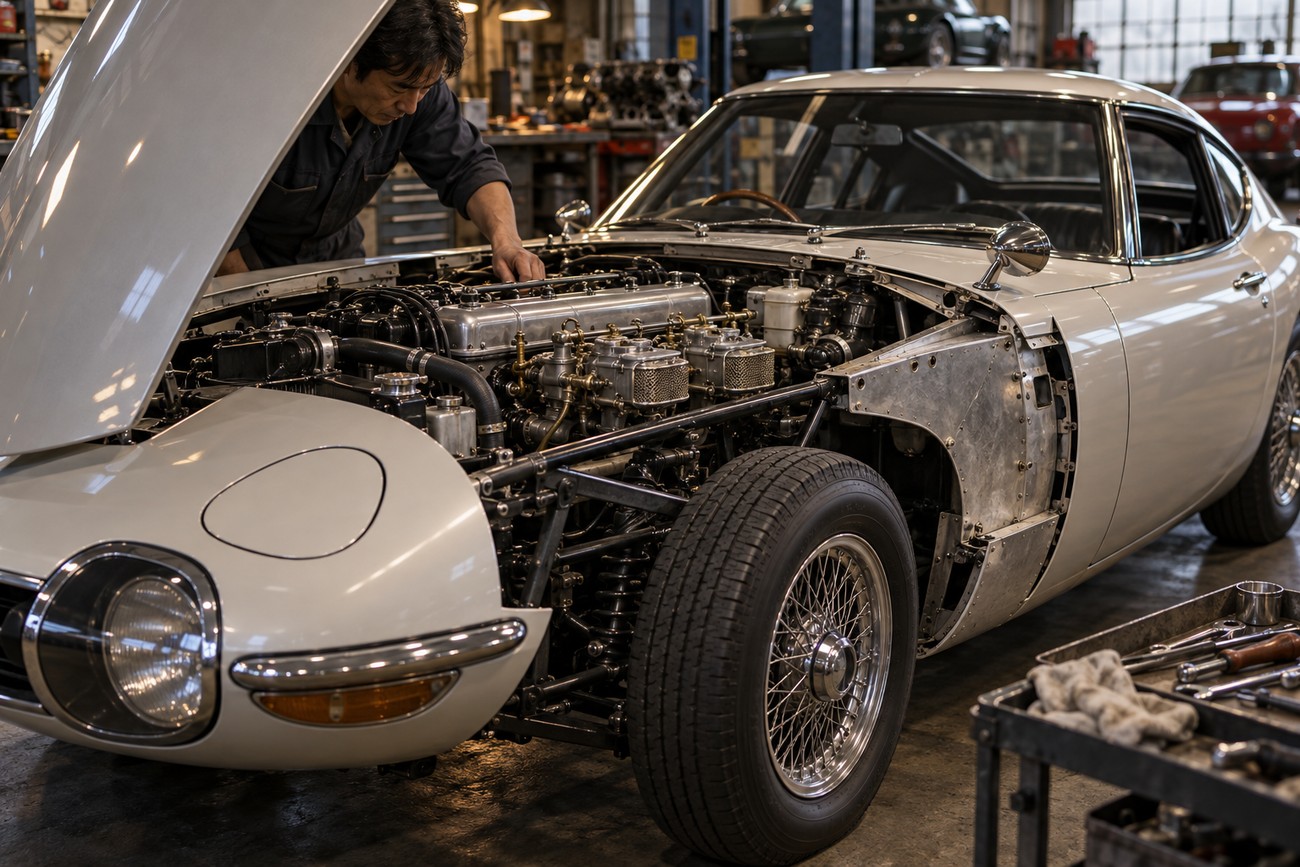
The 2000GT’s structure explains much of its character. It used an aluminum body on a steel frame and weighed approximately 1,100–1,120 kg. Weight distribution was described as close to 50:50, giving the car a sound platform for predictable handling and helping Toyota pursue the balanced feel expected of a serious grand tourer.
Its engine was equally important. The car used a Toyota-derived 2.0-liter inline-six with a jointly developed Yamaha–Toyota DOHC head, Solex carburetors, and approximately 150–152 hp in standard form. Yamaha did not design the entire engine independently; the project combined Toyota’s production-engine base with specialist development of the cylinder head and related work.
Suspension design gave the performance claims substance. Independent double-wishbone suspension was used front and rear, while four-wheel disc brakes provided a level of control that matched the car’s intended speed. Those choices affected more than a specification sheet: they helped the 2000GT remain composed under cornering and braking, where a powerful engine alone could not establish GT credibility.
The construction story requires careful wording. Some accounts state that every car was hand-assembled at Yamaha, while others describe final assembly at Toyota facilities and assign Yamaha a major role in engine and body work. The available evidence supports Yamaha’s significant contribution, yet the exact division of final assembly should be treated as a documented point of disagreement rather than a settled fact.
The result was an unusually integrated package for Toyota at the time. The car’s appeal came from the relationship between low mass, a balanced chassis, a sophisticated engine, and strong braking hardware. That combination explains why the 2000GT still feels historically important even when its performance is viewed through modern expectations.
What Period Performance Actually Proves
Period tests recorded approximately 215–220 km/h and 8.5–9.0 seconds from 0–100 km/h. With approximately 150–152 hp, those figures were substantial for a 2.0-liter GT in the late 1960s. They demonstrate that the 2000GT was capable of sustained high-speed touring and brisk acceleration, rather than serving mainly as a styling exercise.
Old test results should still be read as ranges. Tire condition, fuel, road surface, measurement method, temperature, and the mechanical health of the test car could all affect the result. A surviving example with tired carburetors, incorrect ignition settings, worn suspension, or unsuitable tires may feel significantly slower or less settled than the figures suggest.
Acceleration tells only part of the story. Independent double-wishbone suspension at both ends helped the car use its power effectively through changing roads, while four-wheel disc brakes supported repeated high-speed driving with greater confidence than many ordinary cars of the period. These features explain why the 2000GT’s comparison with European GTs extended beyond maximum speed.
The evidence supports a capable and technically serious grand tourer, not a guaranteed modern sports-car experience. Its period performance was impressive partly because the car combined moderate power with low mass and a carefully developed chassis. That balance remains more important to its character than any single headline number.
Rarity, Auction Prices, and the Cost of Originality
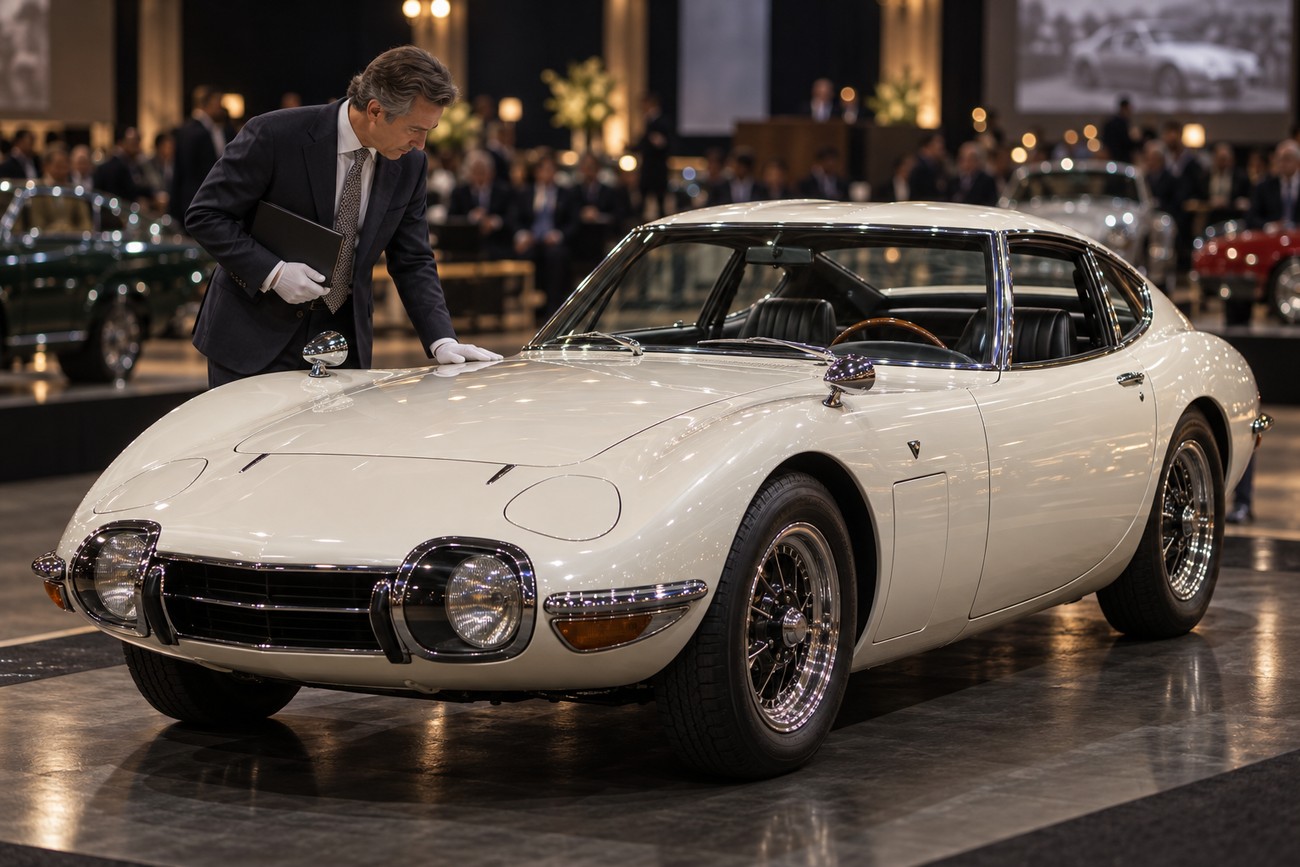
Approximately 351–356 coupes were built from 1967 to 1970, with approximately 62 left-hand-drive. That small pool makes every documented example significant, especially in markets where left-hand-drive cars are easier to use and sell. It also means that buyers have little freedom to dismiss an imperfect car and simply find another equivalent one.
Post-2010 auction sales span roughly $700,000 to more than $2 million, depending on history and condition. This is a historical range rather than a fixed current valuation. A car’s result can be shaped by documented ownership, restoration quality, market-specific specification, originality, and the confidence that its structure has not been compromised.
Earlier restorations deserve close scrutiny. Some used non-original materials, colors, or interior details that appeared acceptable decades ago and now reduce historical accuracy. Specification-correct examples are particularly prized because returning a car to the correct finish, trim, instruments, and hardware can cost far more than the original restoration.
Modifications create a similar dilemma. A modernized fuel system, altered suspension, or heavily changed engine may improve usability for a particular owner, yet it can weaken collector appeal and complicate future recommissioning. The strongest buying decision usually preserves reversible improvements while protecting original components and documenting every change.
What Driving and Maintaining One Really Involves
A well-sorted 2000GT offers the qualities its specification promises: low mass, balanced responses, a responsive six-cylinder engine, and a sense of mechanical connection that modern grand tourers often filter out. The experience is intimate and deliberate. It also reflects 1960s sports-car ergonomics more than contemporary daily-driver convenience.
Owners describe a tight cabin and difficult entry for taller drivers. The short door opening, compact seating position, heavy low-speed steering, long clutch-pedal travel, and less convenient shift action can make city use tiring. Heat around the floor and transmission tunnel is also reported, while ventilation and air conditioning may feel inadequate in hot climates.
Cooling behavior depends strongly on condition and environment. A car with an excellent radiator, clean passages, correct tuning, and a properly functioning cooling system may perform well, while an example used in slow traffic with neglected components can show overheating tendencies. These complaints should be treated as condition- and climate-dependent warnings rather than universal factory defects.
Original carburetors can reward careful calibration more than wholesale conversion to modern fuel injection. Preserving the factory arrangement protects the car’s character and often avoids creating a new set of tuning and originality questions.
Parts supply is a more serious limitation than basic mechanical design. Original body panels, lighting components, DOHC head parts, carburetor components, instruments, wooden trim, and seats are difficult to replace. Mechanical durability depends on proper care, yet age, scarcity, and specialist labor make the 2000GT a demanding classic rather than an ordinary dependable Toyota.
Insurance and storage can decide whether the car is actually driven. Some insurers impose strict conditions or decline coverage, while climate-controlled storage helps reduce condensation, corrosion in hidden frame areas, and damage to rare interior materials. The best ownership plan treats use, maintenance, security, and preservation as one connected responsibility.
How to Avoid a Costly 2000GT Purchase Mistake
Begin with identity and history. Confirm the chassis number, market specification, ownership record, restoration invoices, and previous sale history. Specialist and club records can help cross-check identity, past transactions, and market-specific details, including lighting, emblems, and other equipment differences.
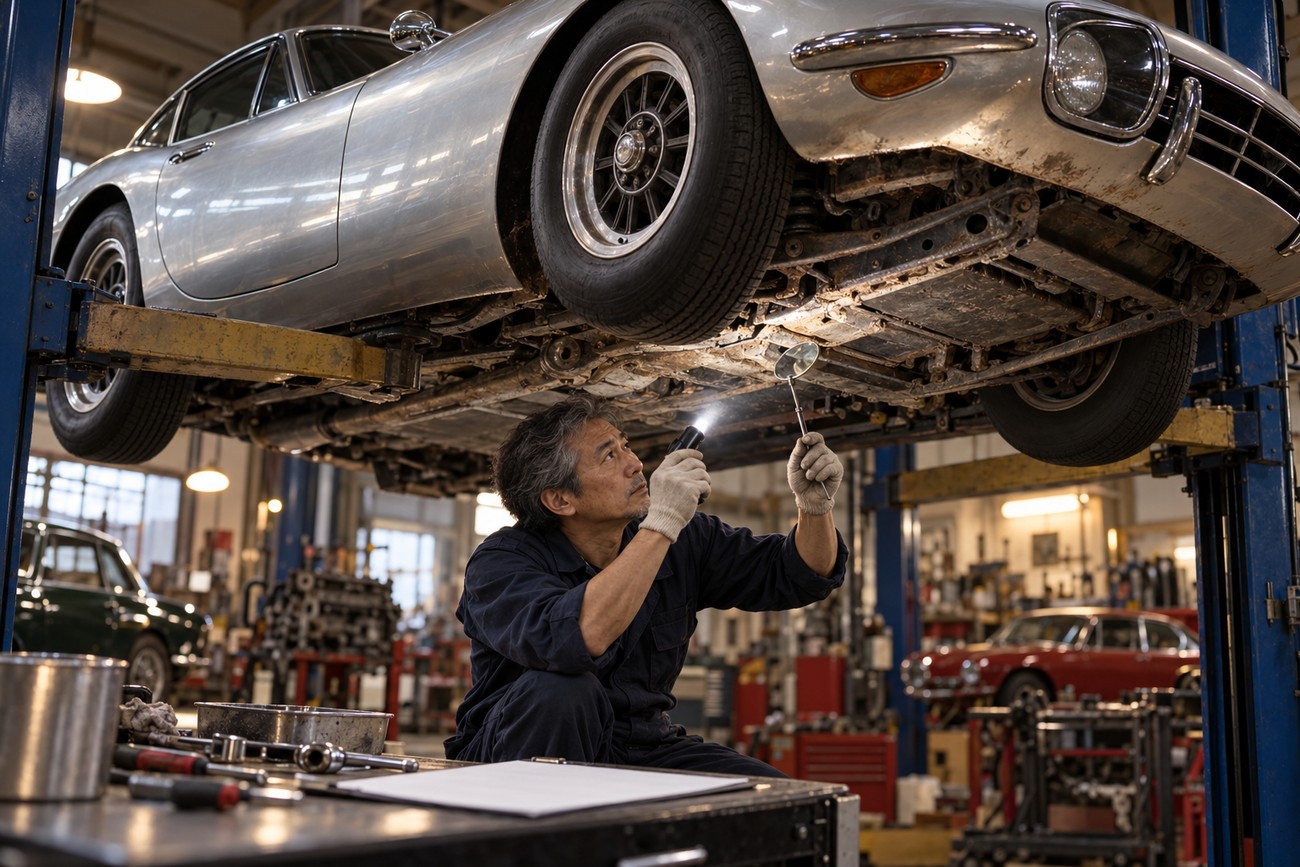
Then inspect the car in person with appropriate specialists. A photo-only auction purchase can conceal corrosion repairs, incorrect frame geometry, poor aluminum-panel work, or distorted gaps. The steel frame deserves the same attention as the visible body because a polished exterior can disguise structural problems.
Aluminum repairs require suitable skills and equipment. Poor work can leave distorted surfaces, incorrect gaps, and a restoration that becomes difficult or impossible to correct economically. Original panels and lighting are hard to replace, so a seemingly inexpensive car with compromised bodywork may carry a much larger liability than its purchase price suggests.
Mechanical inspection should cover the DOHC cylinder head, carburetors, cooling system, ignition, transmission, suspension, and brakes. A generic Japanese-car workshop may understand Toyota components without understanding the setup requirements of this rare engine and chassis. Correct tuning of the Solex carburetors and valvetrain systems is especially important.
Finally, separate reversible improvements from permanent alterations. Non-original colors, interiors, engine changes, modern fuel systems, and suspension modifications may affect future collector appeal. A low price can reflect the cost of returning the car to a credible factory specification, so the purchase decision should include specialist labor, rare parts, insurance, storage, and documentation.
Frequently asked questions
How much did a Toyota 2000GT cost when new?
The available evidence here does not establish a verified original selling price tied to a specific market and year. A launch-price figure should therefore be quoted only from a period source that identifies the country, currency, model year, and whether taxes or delivery charges were included.
Later auction results, including sales from roughly $700,000 to more than $2 million, describe collector-market behavior and cannot be used to reconstruct the original retail price.
Was an automatic Toyota 2000GT ever sold?
No officially offered automatic Toyota 2000GT is established in the available record. Production cars were manual-transmission grand tourers, consistent with their sporting purpose and period engineering.
The two open cars built for a James Bond film were prototypes based on the coupe. They were not production convertibles and do not represent an automatic or regular factory body style.
How should an owner choose tires for a road-driven 2000GT?
Start by verifying the original tire size, wheel specification, and the requirements of the particular market and year. The 2000GT’s light weight and period suspension make tire construction and sidewall behavior unusually influential, so a wider modern tire should not be assumed to improve the car.
Suitable modern replacements can be considered where original tires are unavailable, provided their dimensions, load rating, construction, and speed capability suit the car. Preserve the original wheels and record any change so that the handling decision remains reversible and understandable to a future owner.







