
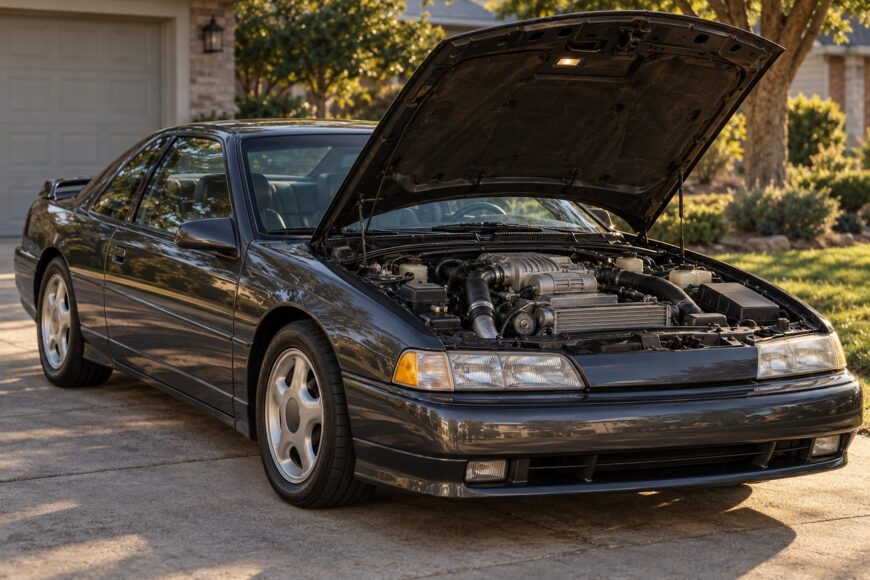
The Thunderbird Super Coupe delivers the easy shove of a supercharged V6 in a large, rear-drive coupe, and that combination still has real appeal. It can cover distance quietly, gather speed with little effort, and feel more special than its ordinary Thunderbird relatives.
Keeping one healthy is a different proposition. Age, heat, complex suspension, scarce SC-specific parts, and questionable modifications can turn an attractive listing into an expensive mechanical project. Condition, service records, and a proper inspection matter far more than polished paint or an impressive horsepower claim.
- The grand tourer behind the Super Coupe badge
- Strong low-end torque, with a horsepower-number trap
- Thunderbird SC specifications: 1989–1993 vs. 1994–1995
- Why it cruises better than it corners
- The expensive faults a clean exterior can hide
- Buying for enjoyment rather than a restoration bill
- Frequently asked questions
- How can you estimate what a 1990 Thunderbird Super Coupe is worth?
- How can you confirm a Thunderbird is a genuine Super Coupe?
- What should you do before driving a long-stored Super Coupe?
The grand tourer behind the Super Coupe badge
The Thunderbird Super Coupe was the performance-oriented version of the tenth-generation Ford Thunderbird, sold for the 1989–1995 model years. That distinction matters because not every tenth-generation Thunderbird is an SC. The badge identifies a particular drivetrain, chassis specification, and equipment package.
Its defining hardware is a supercharged and intercooled 3.8-liter Essex V6 with an Eaton Roots-type supercharger and rear-wheel drive. The engine gives the car strong low-speed response, while the long body and substantial cabin preserve the relaxed character expected of a personal luxury coupe.
Ford offered the SC with either a five-speed manual or a four-speed overdrive automatic. The manual suits drivers who want more involvement from the chassis and engine, while the automatic makes the car an effortless highway cruiser. Neither version turns the Thunderbird into a lightweight sports car.
The appeal lies in the balance. The SC has more urgency than a standard Thunderbird, yet its ride, dimensions, and seating position encourage long journeys rather than constant attack on a winding road. That makes a sound example distinctive among American coupes of the period.
Strong low-end torque, with a horsepower-number trap
The Eaton supercharger shapes the SC’s character by building useful torque early in the rev range. Acceleration feels immediate in ordinary traffic, and the engine does not need constant high-rpm work to move the car briskly. This low-end response is one reason the SC can feel quicker than its horsepower figure suggests.
Factory and period-publication ratings identify 1989–1993 cars at 210 hp and 315 lb-ft of torque. For 1994–1995, the published rating rose to 230 hp and 330 lb-ft. These figures should be tied to the model year, because later advertising claims and online listings often blur the distinction.
Some automotive catalogs list 234 hp for the supercharged V6. The cited Ford and period-publication SC ratings are 210 hp for 1989–1993 and 230 hp for 1994–1995, so 234 hp should not be presented as a confirmed factory SC rating.
Stock testing has recorded 0–60 mph in approximately 7.4 seconds. That is a useful period reference, rather than a promise for every surviving car: transmission, tires, maintenance, weather, testing method, and accumulated wear all affect the result. A neglected engine may feel considerably slower even when its specification sheet looks correct.
Thunderbird SC specifications: 1989–1993 vs. 1994–1995
The two rating periods share the same basic supercharged drivetrain concept, with the later cars receiving the higher factory output.
| Specification | 1989–1993 | 1994–1995 |
|---|---|---|
| Model years | 1989–1993 | 1994–1995 |
| Rated horsepower | 210 hp | 230 hp |
| Rated torque | 315 lb-ft | 330 lb-ft |
| Engine configuration | Supercharged and intercooled 3.8-liter Essex V6 | Supercharged and intercooled 3.8-liter Essex V6 |
| Transmission choices | Five-speed manual or four-speed overdrive automatic | Five-speed manual or four-speed overdrive automatic |
Why it cruises better than it corners
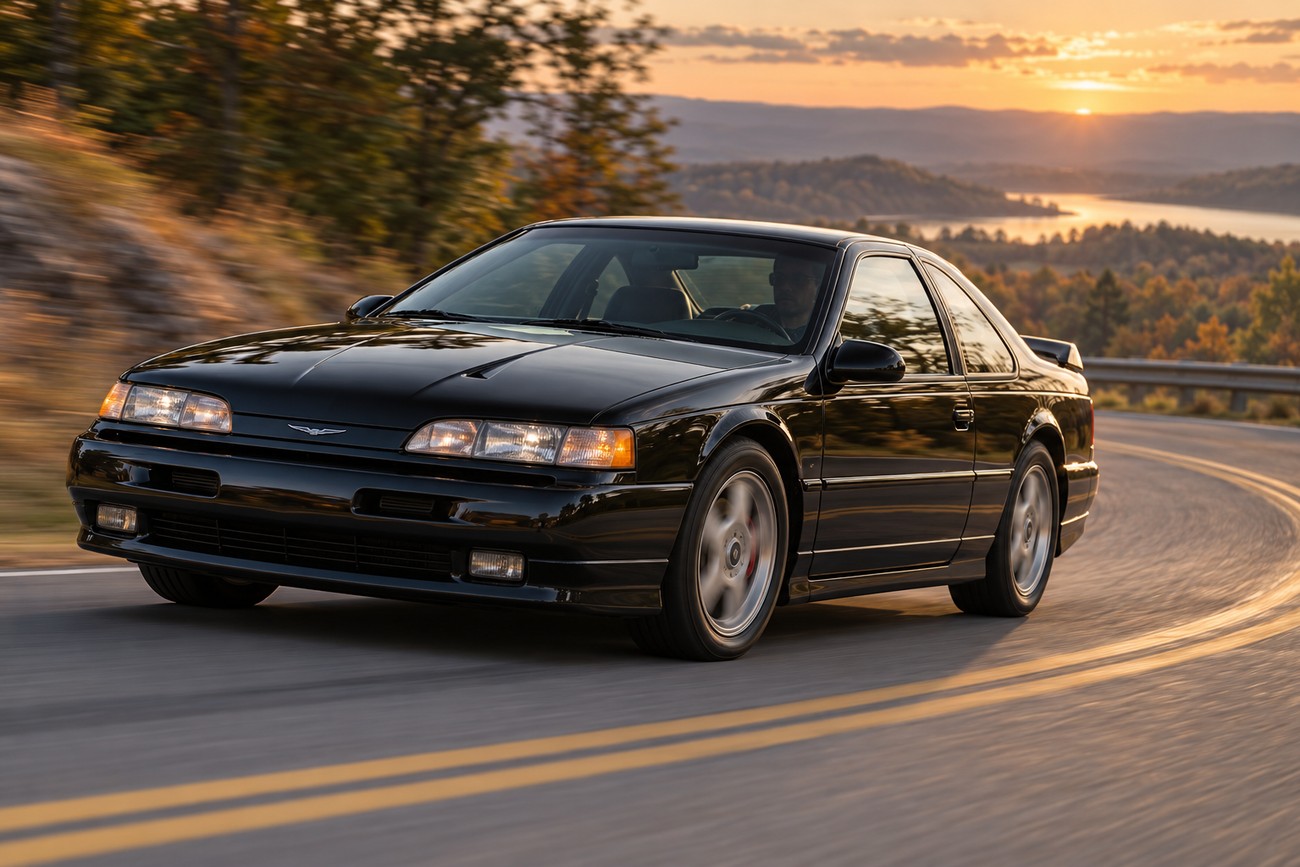
The SC’s chassis was sophisticated for an American coupe of its era. Independent suspension at all four wheels, four-wheel disc brakes, and 16-inch wheels give it a stronger technical foundation than the car’s boulevard image might suggest. Those components help stability and braking on the road, especially at highway speeds.
Its roughly 3,500-plus-pound curb weight remains obvious today. The car feels planted and substantial, though its mass slows directional changes and adds work for every suspension and brake component. A healthy SC can be enjoyable on a back road, but its natural rhythm is smoother and more composed than razor-sharp.
Transmission choice changes the experience. A five-speed manual gives the driver better control over the supercharged V6 and is generally the enthusiast’s preferred specification. The four-speed overdrive automatic makes relaxed cruising easier, though an old or poorly maintained unit can dull response and create a significant repair expense.
Fuel use reflects the car’s size, powertrain, and age. The approximate EPA reference is 17 mpg city, 23 mpg highway, and 19 mpg combined, with actual results varying by year, transmission, condition, traffic, and driving style. A buyer should budget for fuel consumption consistent with a heavy performance-oriented coupe rather than a small V6 car.
The expensive faults a clean exterior can hide
Start underneath the car. Northern-climate examples deserve close inspection around the floor, subframes, suspension mounting areas, and sills, where corrosion can threaten structure and make later work uneconomic. Surface rust may be minor; corrosion in load-bearing areas can define whether the car is worth buying.
Next examine cooling and boost-system condition. A cold start should be smooth, with no unexplained smoke, severe noises, or unstable idle. Inspect the radiator, hoses, coolant condition, intercooler, supercharger, and surrounding hardware, because restricted airflow, old fluids, or neglected cooling parts can increase overheating and detonation risk under boost.
A brief idle check can miss faults that appear only after the engine reaches full temperature and sees sustained boost. A proper road test should include warm operation, acceleration under load, temperature monitoring, and a return inspection for leaks or abnormal smells.
Engine health still requires evidence rather than assumptions. Compression and leak-down testing, scan-tool diagnosis, and a review of service records can help identify worn rings, damaged pistons, cylinder-head problems, or ignition faults. A cracked head is not inevitable, yet heat and detonation make a poorly maintained SC especially deserving of careful testing.
Inspect the independent suspension for worn bushings, loose joints, uneven tire wear, and vague steering. A car can look tidy while needing a costly suspension and brake rebuild. During the road test, listen for knocks, assess braking stability, and note whether the car tracks straight and responds consistently.
Finally, check the electrical system and engine sensors. Aging throttle-position sensors, MAF units, ignition modules, wiring, and other electronics can cause fluctuating idle, misfires, or difficult diagnosis in the cramped engine bay. Modified cars require extra caution: increased boost without suitable calibration, cheap exhaust work, removed catalytic converters, or improvised fuel-system changes can create unstable running and shorten engine life.
Buying for enjoyment rather than a restoration bill
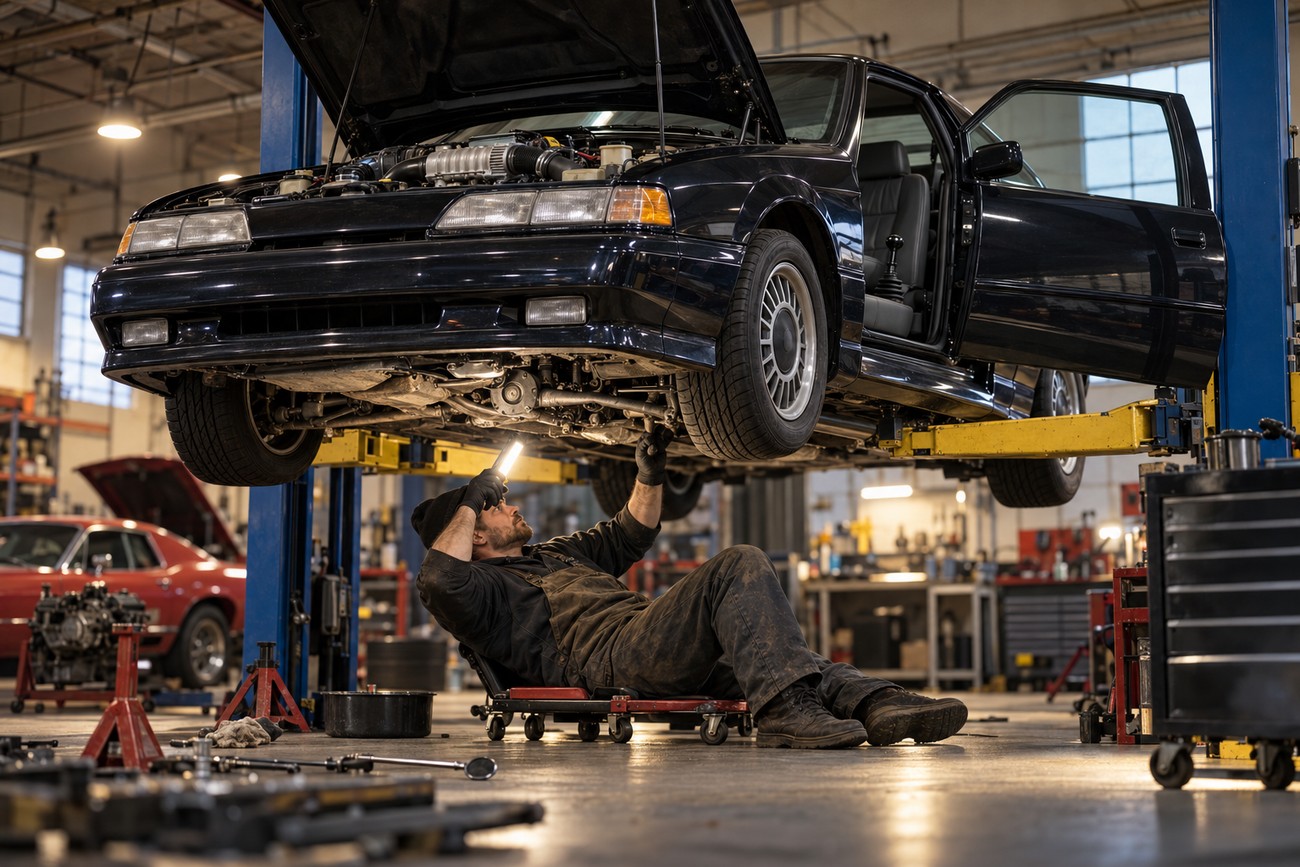
The strongest purchase is usually a documented, structurally sound car with sensible originality. Paint defects, worn trim, or a tired seat can be assessed and repaired progressively. Structural corrosion, neglected cooling, and an abused engine can consume the budget before the car becomes enjoyable.
A five-speed manual has particular appeal to enthusiasts and is harder to replace if the buyer later decides the automatic feels too detached. The four-speed overdrive automatic remains suitable for a cruising-focused owner, provided it shifts properly, shows evidence of maintenance, and does not slip or delay engagement.
Parts availability deserves early research. Ordinary Thunderbird components may be manageable, while SC-specific supercharger parts, suspension pieces, electronic modules, and certain sensors can be harder and more expensive to source. That difference can turn a small fault into a long search, especially when a previous owner has altered the factory system.
Period Mustang comparisons can make the SC look like an overlooked alternative, and some examples may offer strong performance for the money. Insurance, taxes, parts supply, and future values vary by location and market, so no universal bargain or premium should be assumed. The sensible calculation includes an inspection, immediate recommissioning, and a reserve for age-related repairs.
Frequently asked questions
Value depends on condition and comparable sales, not the model year alone. Factory records and equipment help establish whether a car is a genuine Super Coupe. A long-stored example also needs careful checks before its first drive.
How can you estimate what a 1990 Thunderbird Super Coupe is worth?
Use recent comparable sales for genuine Super Coupes, then adjust for structural condition, originality, transmission, documentation, and verified repairs. A 1990 car belongs to the 210-hp, 315-lb-ft rating period, but its model year alone says little about its present value.
Separate cosmetic presentation from mechanical health. A documented car with sound floors, working boost hardware, a healthy engine, and an orderly service history may justify a stronger price than a shinier example with unknown modifications. Without comparable local sales and an inspection, a universal price would be misleading.
How can you confirm a Thunderbird is a genuine Super Coupe?
Cross-check the vehicle’s factory documentation, identification records, original equipment, and model-year specifications. The car should correspond to the SC’s supercharged and intercooled 3.8-liter V6, rear-wheel-drive layout, SC chassis equipment, and period transmission choices.
Badges alone are weak evidence, and a supercharged engine may have been installed later. Compare the paperwork and factory specification with the physical car, and treat inconsistencies as a reason for specialist verification before purchase.
What should you do before driving a long-stored Super Coupe?
Begin with fuel and fluid inspection, checking for stale fuel, contamination, leaks, and degraded engine, transmission, brake, and coolant fluids. Inspect the radiator, hoses, intercooler, belts, battery, tires, and brake system before attempting a road test.
Replace or service suspect components, confirm that the engine turns freely, and start the car while monitoring temperature, oil pressure, charging behavior, and warning lights. The first drive should be short and gentle, followed by another inspection for leaks, overheating, brake problems, or unstable engine operation.







