
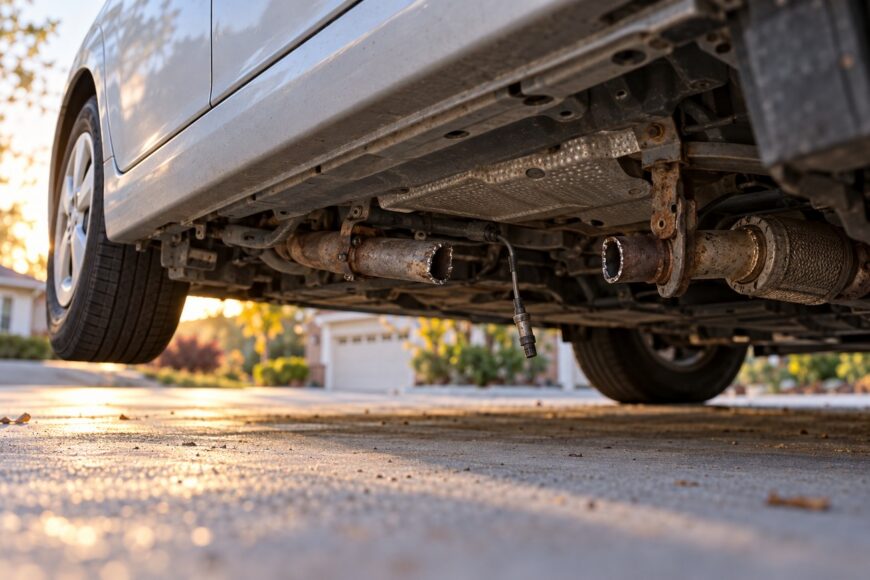
A Prius that suddenly sounds like a straight-pipe vehicle usually has suffered exhaust damage, and a stolen catalytic converter is a common cause. The noise can be startling, especially when the car was quiet moments earlier. Do not drive farther than necessary until the underside has been inspected.
The missing part may be the converter alone or a larger exhaust assembly that includes the exhaust manifold, catalytic converter, and oxygen sensor. That distinction affects the replacement price, the parts you need, and the time required for repair.
The practical goal is to restore the car without paying for the wrong component and without leaving the replacement equally exposed. There is no single universal repair or shield for every Prius generation, market version, and equipment level.
- What the Thieves Took—and Why Prius Catalytic Converters Are Targeted
- What to Do Immediately After a Prius Catalytic Converter Theft
- Choosing a Replacement Without Buying the Wrong Part
- Protection That Addresses the Real Weak Point
- Why Common Anti-Theft Fixes Fail
- Selling or Evaluating the Removed Converter: What the Price Really Means
- Frequently asked questions
- How can I verify a used Prius catalytic converter before buying it?
- Why do thieves steal Prius catalytic converters?
- How do you protect a Prius from catalytic-converter theft?
What the Thieves Took—and Why Prius Catalytic Converters Are Targeted
Prius catalytic converters attract thieves because they combine valuable precious metals with accessible placement beneath the vehicle. Platinum, rhodium, and palladium give the converter secondary-market value; publicly available Prius materials have estimated the part at about $1,000 on that basis. The actual value of a removed unit depends on its condition, composition, and classification.
Access from underneath also makes the theft relatively quick. Owner reports commonly describe a Prius becoming very loud after the converter is cut away, often without anyone needing to enter the cabin or open a door. A warning from the car’s alarm may therefore come too late, especially if the vehicle is parked where underside access is easy.
Owners often use “catalytic converter” to describe the entire missing section, but listings may separate the parts. A used listing can show only the converter or a complete assembly consisting of the exhaust manifold, catalytic converter, and oxygen sensor. Check the photographs, part number, and seller’s description before assuming that every component is included.
Value varies with Prius generation, market origin, configuration, equipment, and condition. Used-parts listings may show about 8,000–25,000 rubles or more, depending on generation and configuration, but those figures are market examples rather than guaranteed prices. A recycle’s offer is a separate calculation and should not be treated as the replacement cost of a complete assembly.
What to Do Immediately After a Prius Catalytic Converter Theft
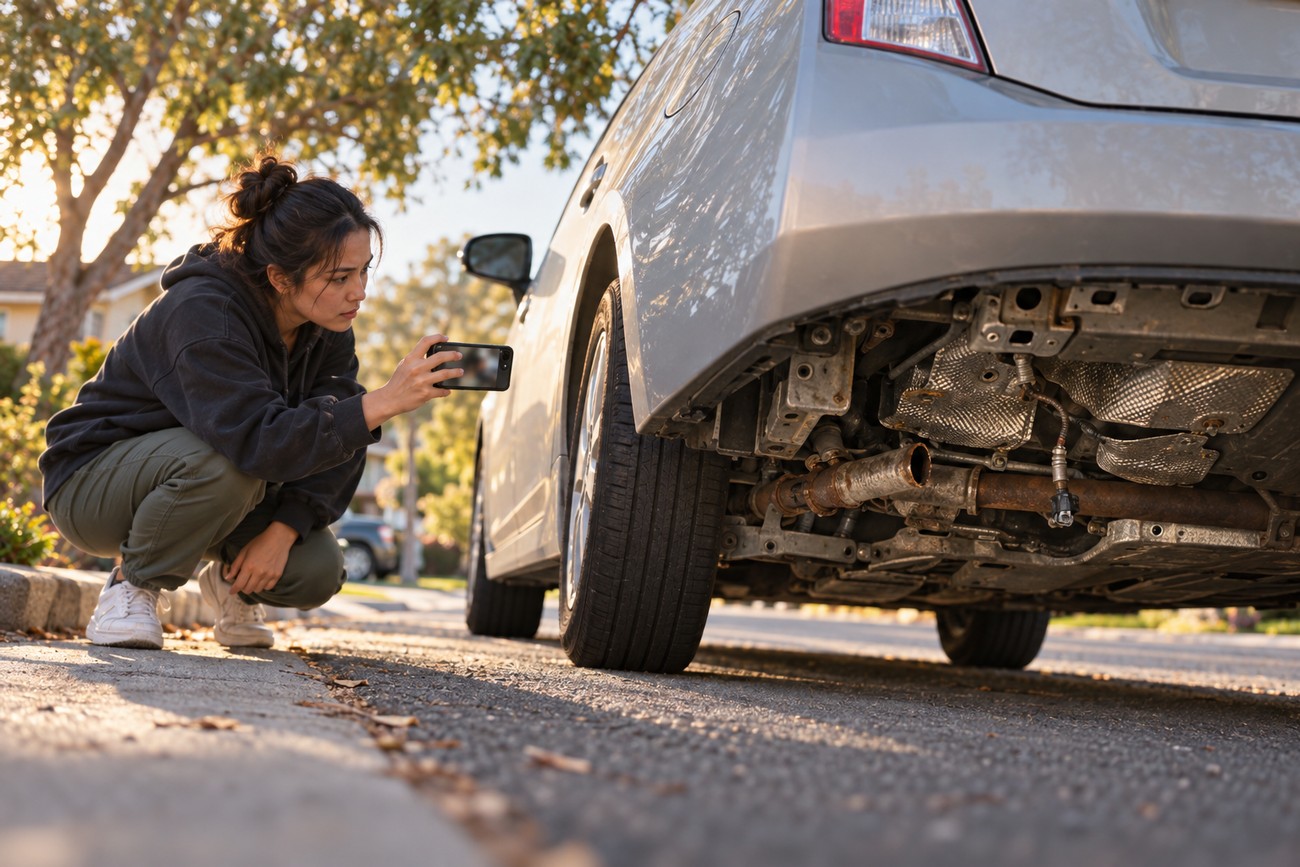
Confirm the problem safely by looking from the side of the vehicle rather than reaching under an unsupported car. A missing converter usually leaves an obvious gap in the exhaust path and produces a harsh, unusually loud exhaust note. If the vehicle must be moved, keep the distance short and avoid treating the noise as a minor muffler issue.
Photograph the underside, cut pipes, missing fasteners, damaged brackets, oxygen-sensor wiring, and nearby heat shields before repairs begin. These images can help a repairer identify the missing components and may support an insurance claim or police report where appropriate. Coverage and reporting requirements depend on the policy and the circumstances of the claim.
Ask the repair shop to inspect more than the converter itself. The exhaust manifold, oxygen sensor, pipes, flanges, studs, brackets, heat shields, and nearby wiring may have been removed or damaged during the theft. Ordering a converter before this inspection can leave you with a part that cannot be installed without additional components.
Obtain a written description of what the estimate includes: parts, gaskets, fasteners, sensor replacement, labor, and any diagnostic work. If the shop proposes a complete assembly, confirm whether it includes the exhaust manifold, catalytic converter, and oxygen sensor. This prevents a low initial quote from becoming a larger bill after disassembly.
Choosing a Replacement Without Buying the Wrong Part
An OEM replacement offers the closest match to the original specification, but the price can be substantial. A used original assembly may reduce the initial cost, while a universal or aftermarket alternative requires closer checking of fitment, emissions compatibility, sensor locations, and local requirements. The correct choice depends on the vehicle and the repair standard available in your market.
Start with the exact Prius generation, model year, market origin, and equipment level. Then compare the part number and physical layout with the vehicle currently in the workshop. A converter that looks similar in a photograph can still have different flanges, sensor ports, pipe geometry, or heat-shield clearance.
Compare the vehicle generation and part number first, then confirm whether the oxygen sensor and manifold are included before accepting the quoted price.
Check whether the listing is for the converter alone or for the complete exhaust manifold, catalytic converter, and oxygen sensor assembly. Used Prius catalytic-converter listings may range from about 8,000–25,000 rubles or more, depending on generation and configuration, but the lower figure may cover only one component. Ask for clear photographs of the substrate housing, flanges, sensor ports, and identifying marks.
A complete assembly can sometimes be more practical than piecing together several parts. It may reduce compatibility questions and avoid the cost of sourcing a separate manifold, sensor, gasket, or fastener set. Before buying, verify visible damage, corrosion, previous repairs, sensor condition, and the seller’s return terms.
Protection That Addresses the Real Weak Point

Catalytic-converter protection is a separate product from engine or oil-pan protection. An engine guard can cover a different area under the car while leaving the exhaust unit accessible. Select a shield designed for the exact Prius generation and confirm that it covers the converter and likely cutting access points.
Model-specific steel shielding generally offers more predictable coverage than a universal panel fitted without checking the underside. Toyota has publicly described an optional catalytic-converter shield for a new Prius at approximately $140 in one case. That example shows that protection may be an accessory or separate installation rather than standard equipment.
Prius owner discussions commonly describe steel plates around 3 mm thick, but this is a private design approach, not a universal standard. Thickness alone does not determine effectiveness. Mounting points, coverage, fastener access, clearance from hot exhaust components, and resistance to removal all matter.
A shield should deter and delay removal rather than be described as theft-proof. It can also affect service access, so the installer should confirm that routine exhaust work remains possible without unnecessary disassembly. Poor fitment may create rattles, contact with hot parts, or a panel that protects one section while leaving another exposed.
Why Common Anti-Theft Fixes Fail
An alarm alone may not stop a catalytic-converter theft because the vehicle can be attacked quickly without opening the cabin. Depending on the alarm’s sensors and settings, the cutting operation may produce no useful warning until the part is already gone. An alarm remains one layer of security, but it should not carry the entire prevention plan.
A random skid plate creates a different problem. It may protect the engine or oil pan while leaving the converter uncovered, or it may fit poorly under a particular Prius generation. A universal shield installed without checking the exhaust route can also obstruct service access, touch the exhaust, or leave openings beside the protected panel.
VIN marking and other identification measures can make a removed component easier to identify and may discourage resale. They do not form a physical barrier and cannot prevent a thief from cutting the part away. The same applies to paint or other markings: useful as identification and deterrence, but limited as a mechanical defense.
A stronger approach combines several modest measures: a correctly fitted catalytic-converter shield, secure parking where the underside is harder to reach, suitable alarm or tilt sensing, and identification marking. The purpose is to increase effort and delay, not to promise absolute protection. After installing a replacement, inspect the shield and mounting hardware periodically so a loose or damaged panel does not create a false sense of security.
Selling or Evaluating the Removed Converter: What the Price Really Means
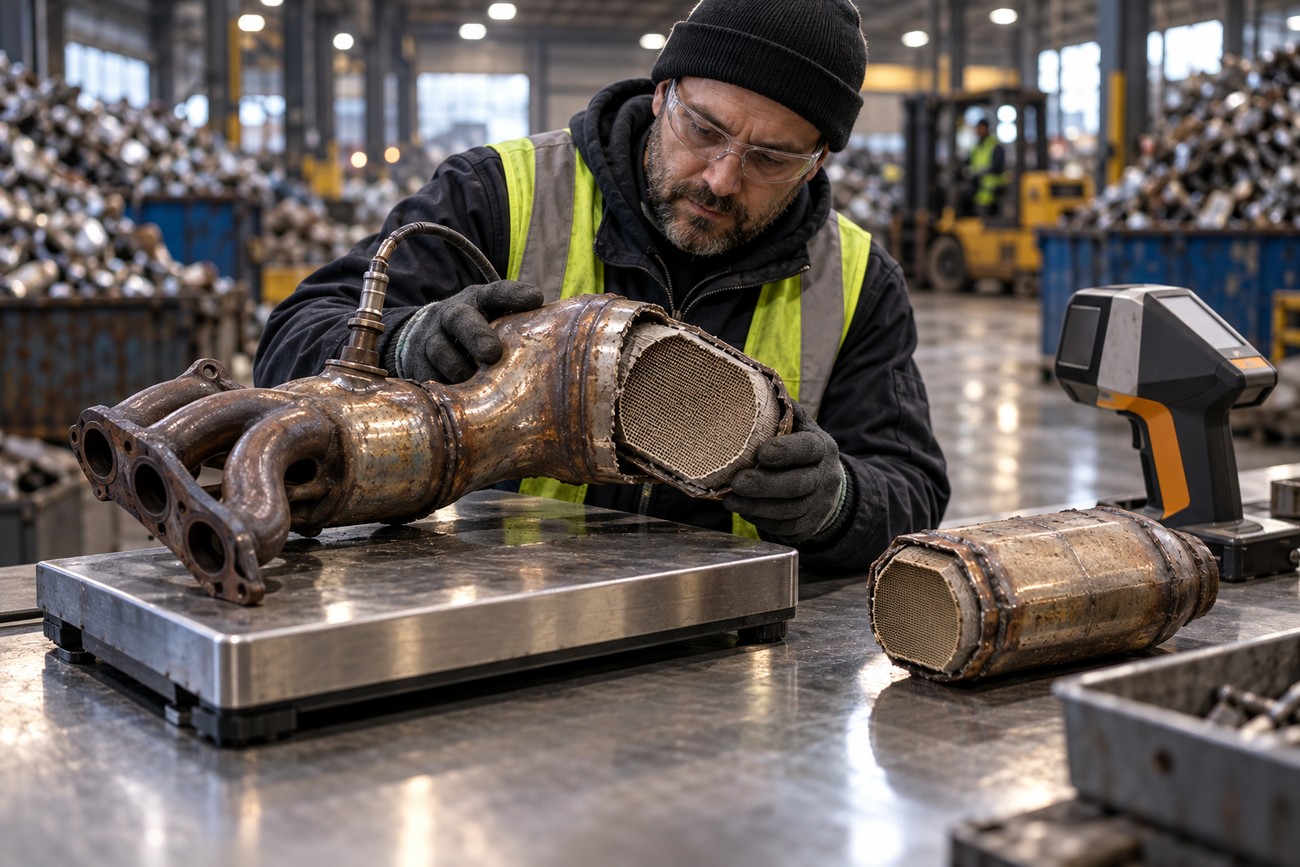
Recycler offers vary because payment may depend on analysis, weight, substrate condition, material, and precious-metal content. The vehicle model is only one part of the classification. A complete assembly may also be evaluated differently from a loose converter, particularly if the manifold, oxygen sensor, or other attached components add weight without adding equivalent recoverable value.
Do not treat a headline “up to” amount as a guaranteed payment. One recycle advertises up to 75,000 rubles per kilogram for Toyota Prius converters; that is a marketing claim from a single source, not an independently confirmed standard price. The final offer may change after inspection or analysis.
The same Prius generation can produce different secondary-market prices because of condition, origin, configuration, and whether the listing concerns a component or a complete assembly. A seller should explain whether the quoted amount is based on a published category, a visual estimate, a weight calculation, or material analysis.
Before handing over a removed part, photograph its markings and record what was included in the assembly. Compare evaluation methods and written terms from more than one established recycle where possible. Use appropriate caution with any part whose origin is unclear, and keep repair or insurance documentation separate from the recycle’s valuation.
Frequently asked questions
How can I verify a used Prius catalytic converter before buying it?
Request the exact part number, the donor vehicle’s Prius generation and market origin, and clear photographs of the housing, flanges, sensor ports, and mounting points. Confirm whether the sale includes only the converter or the complete exhaust manifold, catalytic converter, and oxygen sensor assembly. Compare those details with the damaged vehicle or the workshop’s fitment data.
Ask whether the oxygen sensor is included, whether the substrate housing shows cracks or impact damage, and whether the seller offers a return period if the part does not match. A clean photograph and a low price do not prove compatibility. Written confirmation of the contents and return terms provides useful protection against receiving an incomplete assembly.
Why do thieves steal Prius catalytic converters?
Prius converters contain platinum, rhodium, and palladium, which give the component value in the recycling and used-parts markets. The converter is also accessible from underneath the vehicle, allowing removal without entering the cabin. That combination makes it an attractive target even though the part is specific to the vehicle.
The theft risk varies with Prius generation, location, parking conditions, and the value assigned to the particular converter. A high advertised recycling figure does not mean every removed unit will receive that amount; recycles may classify and analyze the part differently.
How do you protect a Prius from catalytic-converter theft?
Install a catalytic-converter shield designed for the exact Prius generation rather than relying on engine or oil-pan protection. Add practical layers such as secure parking, suitable alarm or tilt sensing, and VIN or other identification marking. These measures increase deterrence and delay, while none guarantees that theft is impossible.
Have the installer check exhaust clearance, fastener access, sensor wiring, and future service access. A shield that rattles, contacts hot components, or leaves part of the converter exposed needs correction. Recheck the mounting hardware after installation and after any exhaust service.







