
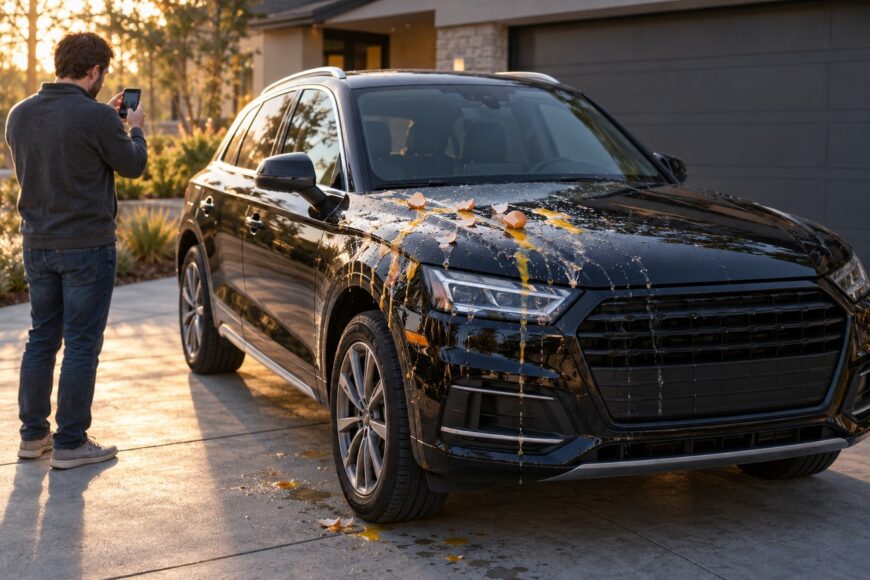
The obvious problem was the mess: egg across the black paint of my Audi Q5, with shell fragments left on the surface. The harder issue was underneath it. A dirty panel can hide dulling, scratches, or chips, and the size of the splatter gives no reliable guide to the repair.
I treated the first decision as two tasks that had to happen together. I documented the car before touching it, then arranged prompt cleaning rather than leaving the residue in place while considering costs or responsibility. Egg residue can mark a finish if left in place; there is no universal safe waiting time.
First, record the mess without letting it dry
I took quick photographs of the Q5 from a distance, then closer images of each affected panel. The photographs showed where the egg landed, how much remained, and whether visible shell pieces were present. I also recorded the condition of the surrounding paint before cleaning.
Those images document what was observed, while assumptions about who threw the eggs belong in a separate category. An egged car does not, by itself, establish a motive or identify anyone responsible. Keeping that distinction clear makes an insurance or property report more useful.
After cleaning, I photographed the same areas again in good light. That second record matters because residue can conceal marks, while washing can reveal scratches or dull patches that were impossible to judge through the mess. Shell fragments can scratch paint when dragged across it, so I avoided wiping across the panel during the initial inspection.
Clean the egg without rubbing shell into black paint
I removed loose shell pieces by lifting them away from the paint rather than sliding them across it. I then rinsed the panel gently and softened any stuck residue with water before washing it with car shampoo and a clean, soft mitt or cloth.
Separate shell pieces from sticky residue before contact washing. A stronger cleaner cannot undo a scratch created by dragging shell across the finish.
Dry rubbing, scraping, and aggressive polishing are poor first responses. They can spread residue or turn a small surface mark into a larger finish problem. Gentle removal comes before any attempt to polish the finish.
If residue will not release with light washing and soaking, I would stop increasing the force and use a professional detailer. Egg residue can mark a finish if left in place; there is no universal safe waiting time. Prompt action reduces the chance of avoidable damage without pretending that every mark can be corrected at home.
Check the clean Q5 before agreeing to paintwork
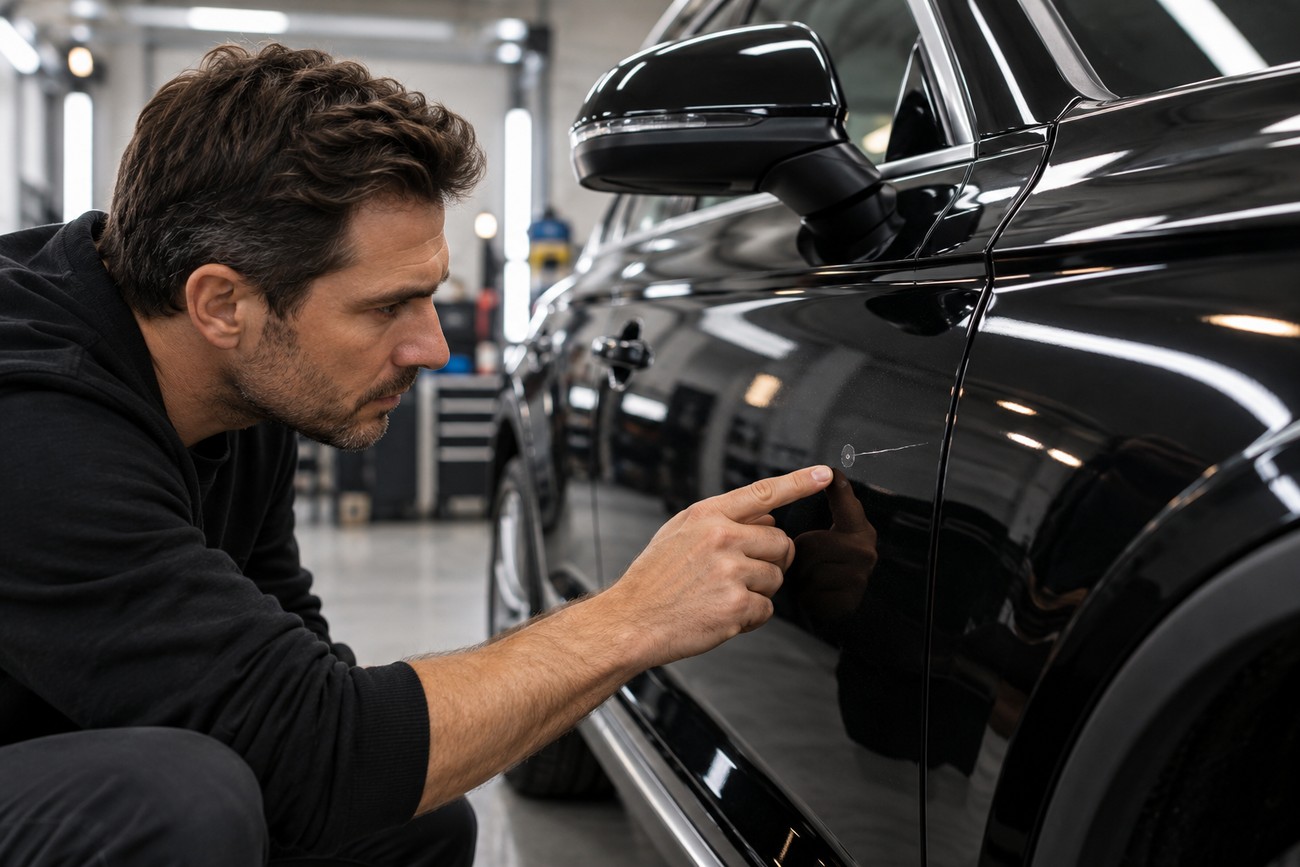
Once the panel was clean and dry, I inspected it in strong, even light from several angles. I looked for remaining film, dull patches, chips, and scratches, including marks near the original impact points. A clean, dry surface is essential because egg residue can conceal marks.
Some findings may justify careful detailing or a professional assessment before any paint is ordered. A deeper scratch, damaged clear coat, chipped paint, or a mark that catches a fingernail deserves a body-shop inspection. Shell fragments can scratch paint when dragged across it, even if the surrounding panel initially looks intact.
I avoided two opposite assumptions: that every visible mark needs repainting, or that every cosmetic mark will be cheap to correct. The appropriate repair depends on an inspection, not the apparent size of the dirty patch. On a Q5, preserving the geometry of panel gaps after any removal and refitting is part of a proper repair decision.
Get a useful estimate before deciding who pays
A useful Q5 estimate should describe the work behind the quoted painting price. It may include preparation, color matching, trim removal, and polishing where needed. Ask whether those items are included, because a low paint figure can exclude the preparation and reassembly that determine the finished result.
The estimate should also identify the affected panels and explain whether the proposed work is cleaning, correction, spot repair, or repainting. The appropriate repair depends on an inspection, not the apparent size of the dirty patch. Photographs can support an initial conversation, but they rarely replace an in-person assessment of the finish.
I would compare the likely direct repair cost with the terms of any applicable vandalism coverage before authorizing work. Insurance payment depends on the policy, deductible, and applicable reporting requirements, so coverage should be confirmed rather than assumed. Keep the before-and-after photographs, the written estimate, and any required report together.
Frequently asked questions
What does it mean if your car gets egged?
It may be a prank or deliberate vandalism, but the act alone does not reveal a motive or prove who did it. The practical response is to document the condition, clean the car promptly, and separate verified observations from speculation.
If the paint is marked, obtain an inspection and a written estimate before deciding how to proceed. Paint protection does not guarantee freedom from impact damage, although the condition of the surface and the product used can affect the result.







