
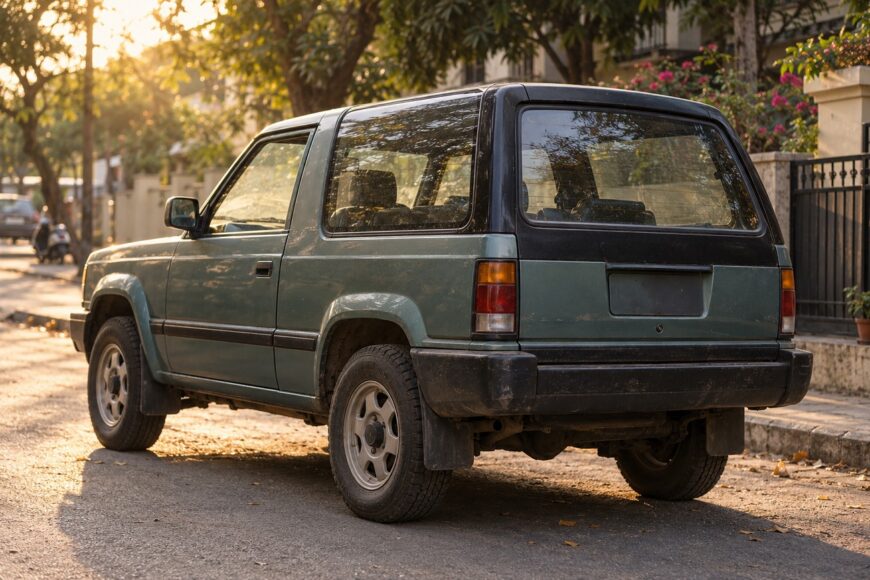
The Tata Sierra is remembered first through its rear glass: the tall Alpine windows that turn an otherwise utilitarian three-door body into something instantly recognizable. They flood the back of the cabin with light and give rear passengers an unusually open view. The same glass can also bring heat, privacy concerns, wind noise, leaks, and difficult sourcing when an old seal or pane needs replacement.
This article concerns the original Sierra produced in India from 1991 to 2003. It was a three-door, body-on-frame vehicle based on the Tata Telcoline pickup, and it belongs to a very different mechanical era from the later five-door vehicle carrying the Sierra name. Its appeal is genuine, but buying one today requires judgment: the shape may be collectible, while the structure, seals, drivetrain, and paperwork can demand more attention than the purchase price suggests.
- How the Original Tata Sierra Became an Indian Icon
- Alpine Windows: The Design That Defines the Sierra
- Under the Skin: Pickup Roots and Diesel Power
- What the Three-Door Sierra Is Like to Use
- Rust, Leaks and Parts: The Costs Behind the Nostalgia
- How to Inspect an Original Sierra Before Buying
- Original Tata Sierra vs Modern Sierra: What Actually Carries Over
- Why the Old Sierra Still Matters—And What Its Name Cannot Promise
- Frequently asked questions
- How can you tell whether a Sierra’s Alpine window has been replaced?
- What paperwork should you request for a Sierra with a swapped diesel engine?
- How can you make the rear cabin more comfortable in hot weather without altering the Sierra’s appearance?
- Why is the original Tata Sierra absent from current top-SUV lists?
How the Original Tata Sierra Became an Indian Icon
The original Tata Sierra was produced in India from 1991 to 2003. Its engineering began with the Tata Telcoline pickup, giving the Sierra a ladder-frame foundation and a practical relationship with commercial-vehicle hardware. Tata adapted that base into a vehicle aimed at personal use, at a time when an Indian-built lifestyle-oriented utility vehicle was still an unusual proposition.
Its three-door layout gave the Sierra a distinct identity. The front doors are long, the roofline is tall, and the rear side glazing extends behind the doors in a shape commonly called Alpine windows. The result was more expressive than the pickup from which it came, while retaining the upright stance and straightforward mechanical character associated with a work vehicle.
The design endured because it was easy to recognize from a distance. The rear glass created a visual signature that did more work than a badge or grille: it made the Sierra look wider, more spacious, and more adventurous than its basic hardware necessarily promised. That visual confidence helped it become culturally significant among Indian enthusiasts and collectors.
Its reputation should still be separated from claims that cannot be established from the supplied specifications. A frame and an upright body do not automatically make a vehicle an exceptional off-road machine, and the Sierra’s place in Indian motoring history does not depend on sales figures or heroic trail stories. Its lasting importance lies in combining a locally built utility platform with a design that looked deliberately personal.
Alpine Windows: The Design That Defines the Sierra
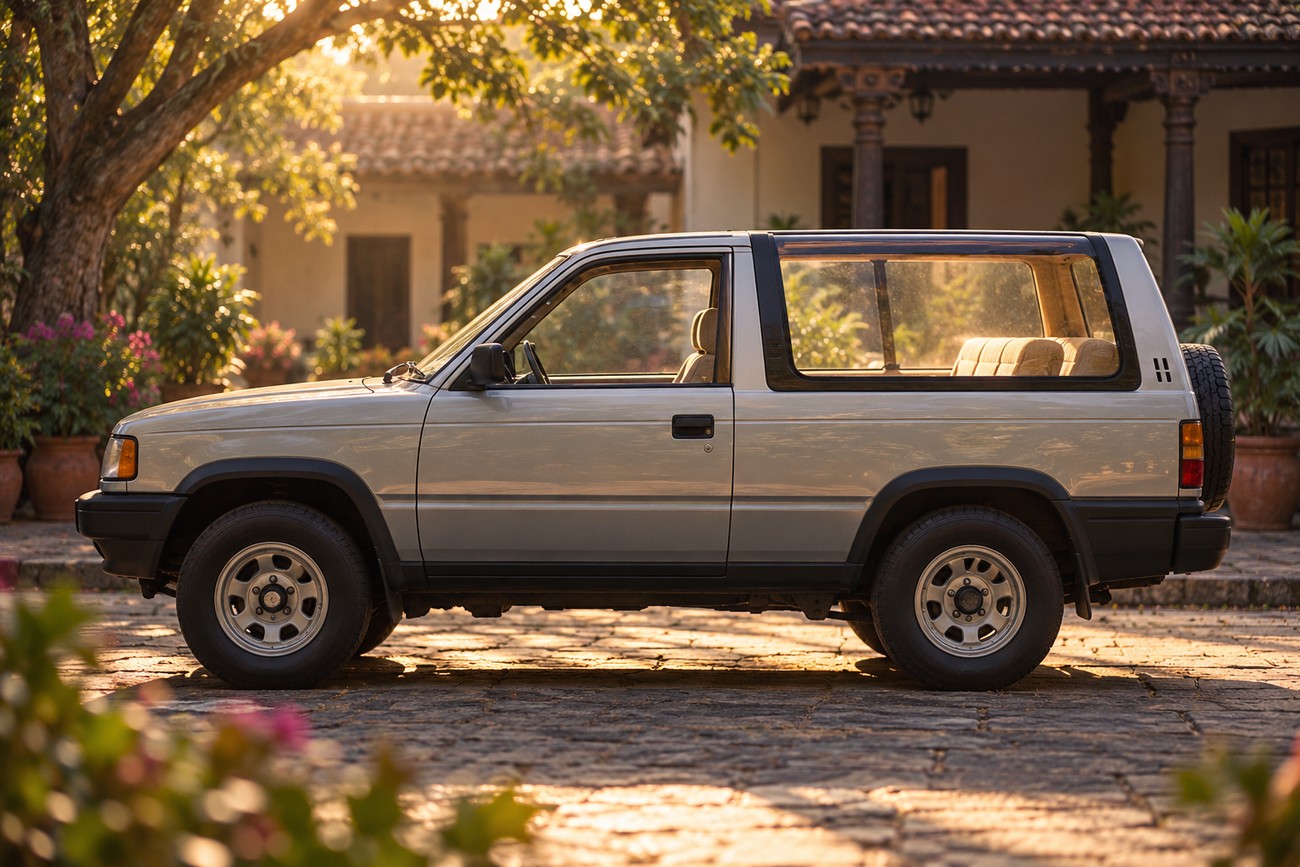
The Alpine windows sit behind the front doors and dominate the Sierra’s side profile. They visually lengthen the cabin, reduce the heavy appearance of the rear pillars, and give occupants a broad outward view. For a three-door vehicle, that glass also makes the rear compartment feel less enclosed than its access arrangements might suggest.
There is a practical cost to such a large glazed area. More glass can increase solar heat gain, especially when the vehicle is parked in strong sunlight. The rear passengers may benefit from daylight and visibility while still facing a warmer cabin, greater demand on the air-conditioning system, and limited privacy unless the glass has an appropriate shade or film.
Age adds another layer of risk. Original or correctly fitted seals can remain serviceable, but aging rubber, previous glass removal, and poor refitting may allow water ingress or create wind noise. A damp headliner, stained trim, or moisture around the rear side panels can point to a sealing problem that is more extensive than a visible crack in the rubber.
Replacement glazing is model-specific and can be difficult to source. That does not mean every damaged pane is impossible to obtain, yet the search may take longer and cost more than a buyer expects for an old utility vehicle. A poorly fitted replacement can also compromise the Sierra’s defining appearance, cabin quietness, and resistance to rain.
Under the Skin: Pickup Roots and Diesel Power
The Sierra’s body-on-frame construction means the body sits on a separate ladder frame, reflecting its Telcoline pickup roots. This arrangement was well suited to a vehicle expected to handle uneven roads and practical use, and it remains easier to understand mechanically than many modern integrated-body designs. It also means that frame condition matters as much as the visible bodywork.
Typical original Sierra specifications describe rear-wheel drive and a 2.0-liter diesel producing approximately 68–90 hp, depending on version. That output was adequate for steady transport, yet the engine’s character is closer to a commercial diesel than to a modern passenger-car powertrain. Noise, vibration, and slow responses are part of the period experience, while the condition of each individual engine determines how harsh or tired the vehicle feels today.
Commonly cited dimensions are approximately 4,400 × 1,730 × 1,770 mm, with a 2,400 mm wheelbase. Some published listings instead give 4,410 × 1,710 × 1,770 mm, so dimensions should be treated as approximate and potentially version-dependent. The tall body gives the cabin an upright layout, while the short wheelbase and rear-drive layout contribute to the Sierra’s compact, upright stance.
Those specifications do not establish full four-wheel-drive capability. A typical Sierra is rear-wheel drive, and the original design lacks the traction and stability systems expected in a current SUV. Tire choice, load, surface condition, and driver skill therefore have a substantial effect on what it can do away from paved roads.
What the Three-Door Sierra Is Like to Use
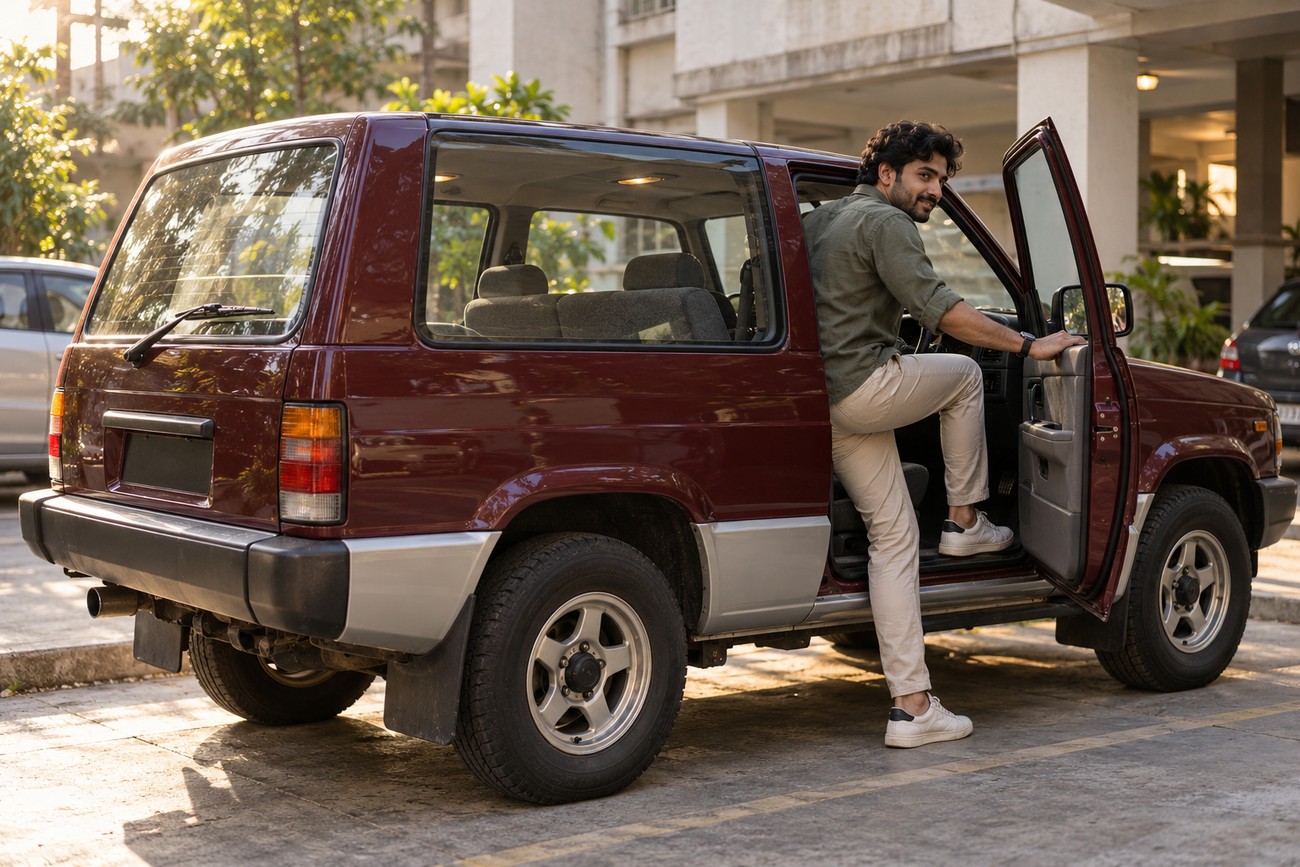
Accessing the rear seats requires working around the Sierra’s long front doors and high sills. In a wide-open parking area, that arrangement is manageable. In a narrow space, the front door may not open far enough for comfortable entry, leaving rear passengers to squeeze through a restricted gap. Families using the back seats regularly will notice this more quickly than an occasional weekend driver.
The diesel’s noise and vibration are also part of daily use. Owners report limited performance, particularly with a full load or on an incline, and period examples can feel slow by modern traffic standards. Some reports describe acceleration to highway speed as taking roughly twenty seconds, although the exact result depends on engine condition, gearing, tires, and the test method.
Rear-cabin ventilation is another weak point. The large rear glazing can make the back of the cabin hot, while air-conditioning and ventilation may struggle to distribute cool air effectively. A Sierra that feels acceptable during a short morning drive can become tiring after standing in the sun, especially when the rear seats are occupied.
Fuel consumption needs similarly careful interpretation. Some owners report around 8–9 km/l in city use, but this is anecdotal and condition-dependent rather than a controlled test result. Traffic, injector condition, tire pressure, driving style, and the vehicle’s load can all influence the number, so poor economy may indicate either a period-vehicle limitation or a mechanical problem requiring diagnosis.
Rust, Leaks and Parts: The Costs Behind the Nostalgia
Corrosion is one of the most important buying risks. Owner reports repeatedly draw attention to the frame, floor, rear body, and areas exposed to trapped moisture. Cars used near the coast or without effective anti-corrosion treatment deserve particular suspicion, although a dry inland history does not guarantee a sound structure.
Visible bubbling around a wheel arch is only the beginning of the inspection. Rust can hide beneath trim, carpeting, underseal, and previous body repairs. The rear section is especially important because corrosion there can affect both appearance and the strength of the body surrounding the tailgate and rear glazing.
Water entry may come from aging or poorly repaired Alpine-window seals, the tailgate seal, or earlier accident repairs. A musty smell, damp carpeting, discolored interior trim, or corrosion on fasteners can reveal a leak that is intermittent rather than obvious during a brief inspection. The absence of water immediately after washing the car is weak evidence if the vehicle has been stored indoors or the weather is dry.
Build quality also varies between surviving examples. Uneven panel gaps, rattles, squeaks, and limited sound insulation may reflect the original vehicle’s basic construction, later deterioration, or poor restoration work. Separating those conditions matters: a noisy old cabin is inconvenient, while a badly repaired aperture or weakened floor can become a structural and financial concern.
Model-specific body panels and Alpine glazing may be difficult to source. An apparently inexpensive Sierra can therefore become an expensive restoration once rare glass, seals, trim, fabrication, paint, and specialist labor are included. The sensible valuation begins with the cost and availability of the parts needed to make that particular car safe and weather-tight.
How to Inspect an Original Sierra Before Buying
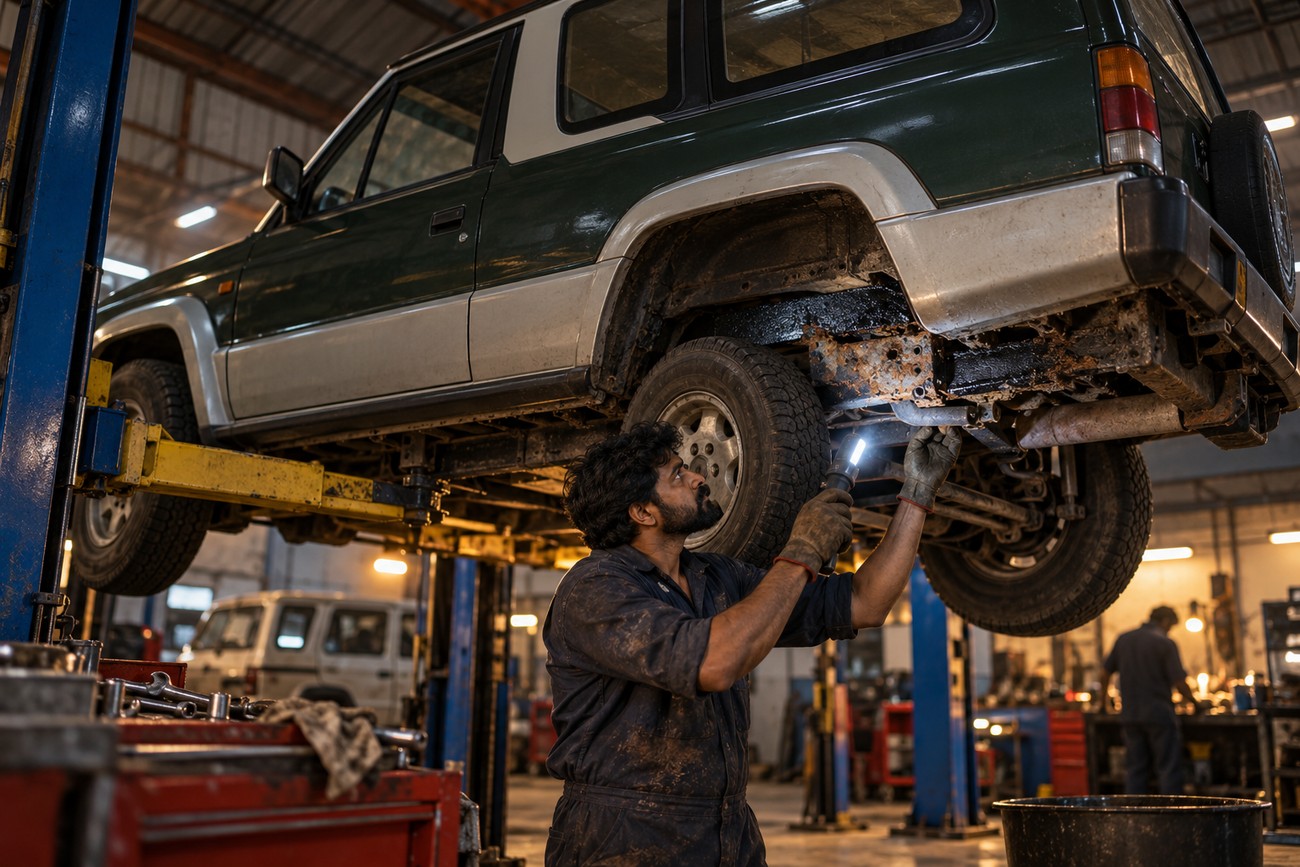
Start underneath, before being persuaded by paint or a clean interior. Inspect the ladder frame, suspension mounting areas, floor, sills, and rear structure for corrosion, distortion, fresh underseal, and evidence of welding. A recent coating can conceal repairs, so tap testing, careful probing where appropriate, and access to a lift are more useful than judging the surface finish alone.
Move inside and remove or lift trim where the seller permits it. Look around the Alpine-window apertures, rear side panels, headliner, and tailgate opening for water marks, soft metal, staining, or damp insulation. Operate the tailgate and inspect its lower edges, hinges, latch area, and seal; poor alignment can point to body movement, corrosion, or an earlier repair.
Water marks inside the trim can tell you more than the outer seal bead: trace their path to the surrounding metal before pricing a glass or seal repair.
Examine the glass itself for edge damage, hazing, chips, and uneven gaps. Check whether the seals sit consistently against the body and whether the interior trim has been cut, forced, or refitted carelessly. A replacement pane that looks acceptable from outside may still have poor adhesion, an incorrect seal profile, or corrosion hidden beneath its edge.
Only after the structure and weather sealing pass should you assess the drivetrain. Check cold starting, exhaust smoke, oil leaks, clutch engagement, gearbox behavior, steering play, braking stability, suspension noise, and temperature control during a road test. A specialist inspection is worthwhile where frame access is limited or restoration work is suspected.
Modifications need their own scrutiny. A diesel swap should be checked for engine mounts, cooling, wiring, drivetrain compatibility, brakes, and registration records. Lift kits and oversize wheels can alter suspension geometry, steering effort, braking behavior, and tire clearance; workmanship and local roadworthiness approval matter more than the visual effect.
Original Tata Sierra vs Modern Sierra: What Actually Carries Over
The newer Sierra uses the old model’s silhouette and rear-glass idea as design references, while its layout and engineering serve a different purpose.
| Feature | Original Sierra | Modern Sierra with internal-combustion engine |
|---|---|---|
| Body style | Three-door utility vehicle | Five-door crossover |
| Underlying construction | Body-on-frame, based on the Tata Telcoline pickup | Crossover construction; current specifications should be checked by market and variant |
| Typical driven wheels | Rear-wheel drive | Front-wheel drive in the described variant |
| Wheelbase | Approximately 2,400 mm | Stated as 2,730 mm; verify the current official specification |
| Rear-glass design | Original Alpine windows behind the front doors | Modern visual reference to the Alpine-window silhouette |
The comparison shows why the shared name can mislead. The modern vehicle described in the brief is a five-door, front-wheel-drive crossover, while the original is a three-door, rear-wheel-drive, body-on-frame vehicle. Current engine, transmission, dimensions, and equipment details should be verified against official information for the relevant market and variant before purchase.
Why the Old Sierra Still Matters—And What Its Name Cannot Promise
The original Sierra remains memorable because its three-door body and Alpine windows gave a practical Indian vehicle a strong visual identity. A well-preserved example can offer a distinctive driving experience and a direct connection to an important period in local automotive design. Its appeal is strongest when the buyer values condition, originality, and character together.
A ladder frame alone does not guarantee exceptional off-road ability. Typical examples use rear-wheel drive and lack modern traction or stability systems, so difficult surfaces can expose limitations that the upright shape hides. Tires, mechanical condition, ground conditions, and driver judgment are decisive.
The modern Sierra carries the visual reference into a five-door crossover format. That makes it more relevant as a contemporary family vehicle, while the historic three-door remains a specialist purchase requiring inspection and maintenance planning. Styling creates continuity; it does not create mechanical continuity between the two generations.
Frequently asked questions
How can you tell whether a Sierra’s Alpine window has been replaced?
Look for markings etched into the glass, differences in tint or surface wear between the two sides, and an edge fit that is even around the entire aperture. The seal should meet the body consistently without stretched corners, excess adhesive, lifted sections, or trim that sits higher on one side. Fresh sealant, disturbed clips, and scratches on the surrounding paint can indicate earlier removal.
Ask for repair records, photographs, or parts documentation where available. A replacement is not automatically a problem; correct glass, professional installation, and sound metal beneath the seal are what matter. If the markings are unclear, have the surrounding aperture inspected from inside before treating the window as a simple glass-only repair.
What paperwork should you request for a Sierra with a swapped diesel engine?
Request documents showing the installed engine number, the donor engine’s origin, and the registration record that identifies the current power unit. The vehicle’s modification approval, inspection records, and any required emissions or roadworthiness documentation should agree with the physical engine in the car.
Insurance records also deserve attention because an undeclared engine change can create a coverage dispute. Requirements vary by jurisdiction, so confirm the process with the relevant registration authority and insurer before completing the purchase. A mechanically neat swap with incomplete paperwork can still be difficult to register, insure, or resell.
How can you make the rear cabin more comfortable in hot weather without altering the Sierra’s appearance?
Use removable rear sunshades, a reversible interior screen, and careful parking to reduce direct solar load. Ventilate the cabin before driving, check that the air-conditioning system is working correctly, and ensure the rear vents and seals are not obstructed. These measures preserve the Alpine-window appearance more effectively than permanent exterior changes.
If window film is considered, verify local rules for visible-light transmission and approved materials first. A film that reduces heat may still be unsuitable if it is poorly installed, damages the seal, or conflicts with inspection requirements. Reversible shading is usually the lowest-risk starting point for a collectible example.
Why is the original Tata Sierra absent from current top-SUV lists?
Current SUV rankings usually assess new vehicles available for sale, using criteria such as safety equipment, efficiency, warranty support, cabin technology, and present-day usability. The original Sierra is a historic or collectible vehicle produced from 1991 to 2003, so it is evaluated under a different standard.
Its absence from a modern showroom list says little about its cultural or design significance. It does mean that buyers should not use a current ranking to judge parts support, safety systems, fuel economy, or family practicality in an old Sierra. Those questions require a vehicle-specific inspection and a clear understanding of its age.







