
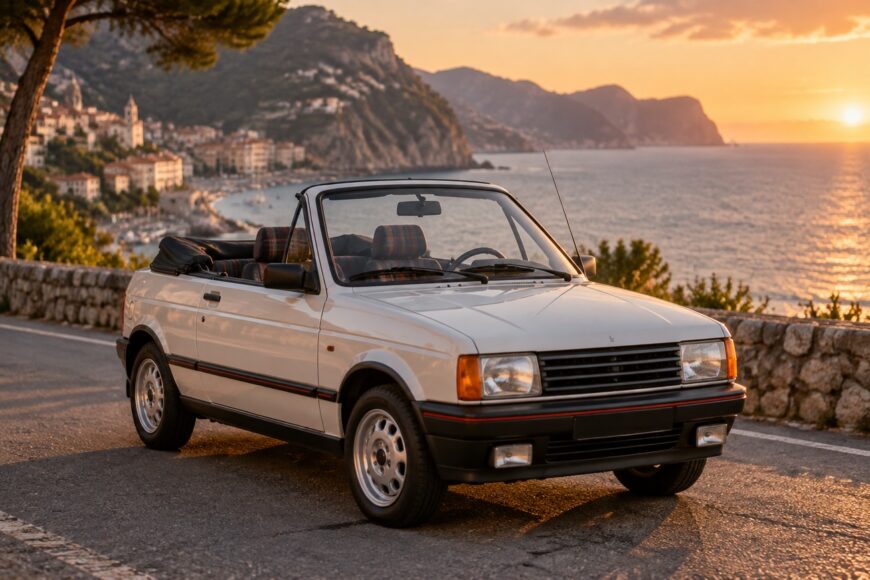
The Talbot Samba Cabriolet is a genuine Pininfarina-built factory convertible, yet it remains obscure because its charming mechanical simplicity conceals serious body, roof, and parts problems. Produced from 1983 to 1986, it combined a Peugeot 104-based chassis with Italian-designed open bodywork and the light, uncomplicated character of an early-1980s supermini.
That combination creates a clear ownership choice. A sound, usable survivor can be an engaging lightweight classic with unusual styling; a shiny shell hiding corrosion can become a restoration consuming as much money as the car itself. Production is not precisely documented, although club and registry evidence commonly converges on approximately 10,000–15,000 cars.
- What the Talbot Samba Cabriolet Actually Was
- Small-Car Hardware, Light Weight, and Modest Performance
- Why This Pininfarina Convertible Was Forgotten
- The Body, Roof, and Rust Problems Owners Actually Face
- Buying and Restoring One Without Buying a Welding Project
- The Hidden Trade-Offs: Safety, Comfort, and Usability
- Myths, Sensible Upgrades, and the Verdict
- Frequently asked questions
- What happened to Talbot-Lago?
- What did Talbot cars become?
- Which documents are most useful when restoring a Samba Cabriolet?
What the Talbot Samba Cabriolet Actually Was
The Samba Cabriolet was a factory-built two-door convertible based on the Peugeot 104. It used the front-wheel-drive platform and much of the small-car engineering already familiar within the PSA sphere, while its open body required substantial structural work. This was a production model rather than a dealer conversion carried out after an ordinary hatchback left the factory.
Pininfarina designed and produced the convertible body. The Italian firm was therefore responsible for more than assembling a Talbot styling exercise: it developed the open body structure, incorporated reinforcement into the sills and floor, and handled the specialized body production. That distinction matters because the roof, frame, mounting points, and trim have their own restoration requirements.
Talbot supplied the badge during the PSA era, when the name had passed through Simca and Chrysler Europe before Peugeot ownership. The Samba belongs to that later period and should not be confused with the earlier Talbot-Lago marque, which had a separate history and identity.
Factory provenance gives the car genuine interest among collectors. It confirms that the unusual proportions and Pininfarina details belong to an original production model, while also warning you that many convertible-specific components were made in much smaller numbers than ordinary Peugeot 104 parts.
Small-Car Hardware, Light Weight, and Modest Performance
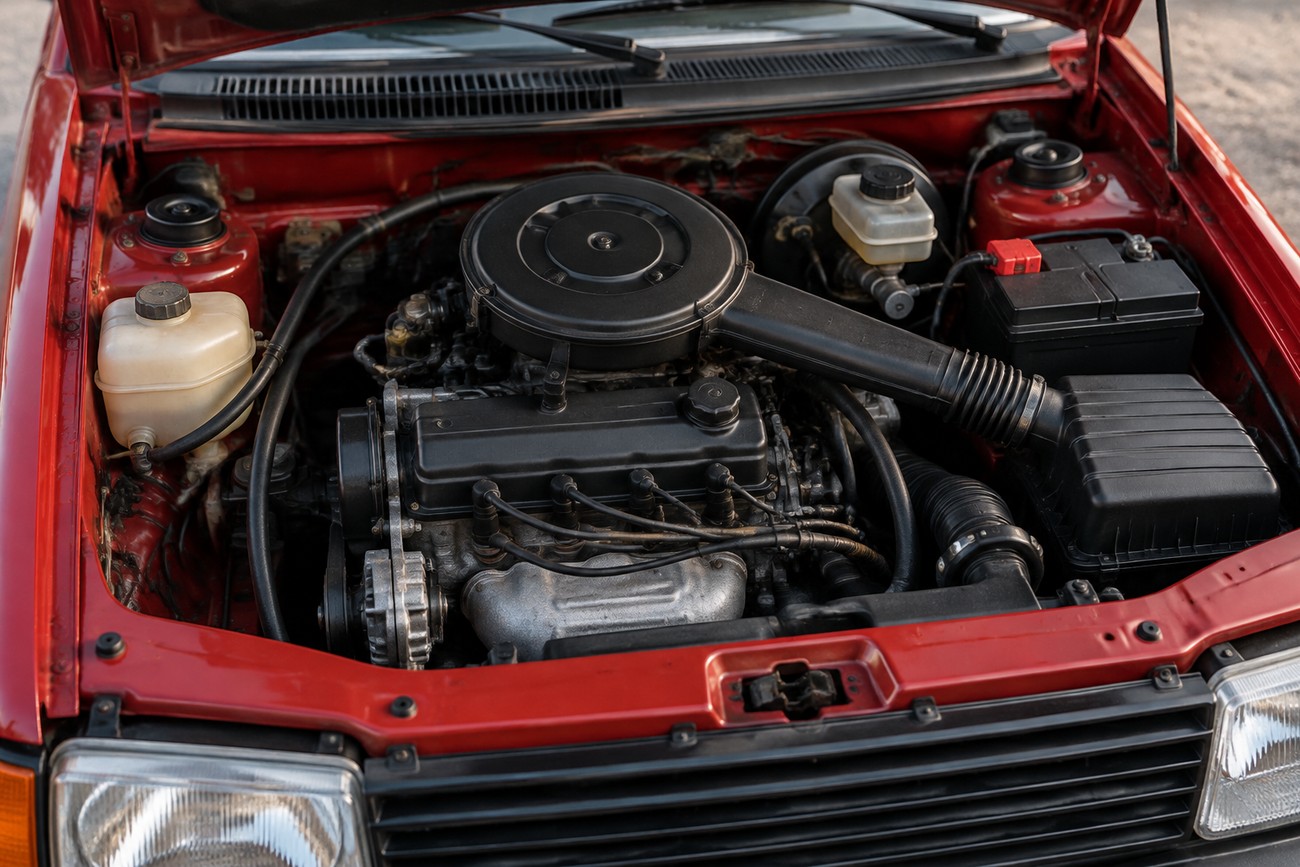
The Samba Cabriolet used front-wheel drive only, with the compact engine and transaxle arrangement typical of the Peugeot 104 family. European cars mainly received carbureted 1.3- and 1.4-liter PSA engines. Sympa and Biarritz versions produced approximately 72–80 hp, while some markets received lower-output versions producing approximately 50–60 hp.
Transmission choices were simple. A four-speed manual was typical, with a later five-speed manual option. The four-speed keeps the car mechanically straightforward, though it leaves the engine working hard on faster roads and makes the car feel especially limited with passengers, luggage, or sustained highway traffic.
The attraction is the low mass. Dry weight was approximately 800–850 kg, while owner weigh-ins are often approximately 850–900 kg depending on equipment and reinforcement. That helps the Samba feel responsive around town and on winding secondary roads, although it should not be mistaken for a sports car. Modest power, short gearing, and a fabric roof define its pace more clearly than the Pininfarina badge does.
A healthy engine and correctly adjusted carburetor make a substantial difference to drivability. Even then, a four-speed example can feel slow beside modern traffic, particularly on hills or when the roof, passengers, and additional equipment increase the load.
Why This Pininfarina Convertible Was Forgotten
The Samba Cabriolet occupied an awkward place in the market. It was more distinctive than an ordinary small hatchback, yet its performance and construction did not give it the sporting reputation attached to more powerful open cars. Its production period was also short, running from 1983 to 1986.
No definitive official production total is publicly established. Club and registry evidence commonly converges on approximately 10,000–15,000 cars, enough to make the model genuinely uncommon while leaving too few examples for a large, consistent collector market.
France, the United Kingdom, Germany, and the Benelux were the main markets. Eastern European examples were largely later imports or retro acquisitions, which helps explain why local knowledge, parts cars, and original documentation can be thin outside Western Europe.
Rarity has not guaranteed rising values. Prices remain unstable because restoration is difficult, and some cars sell slowly or cheaply when buyers discover damaged shells or missing roof components. A rare badge improves the story; it does not remove the cost of putting the car right.
The Body, Roof, and Rust Problems Owners Actually Face
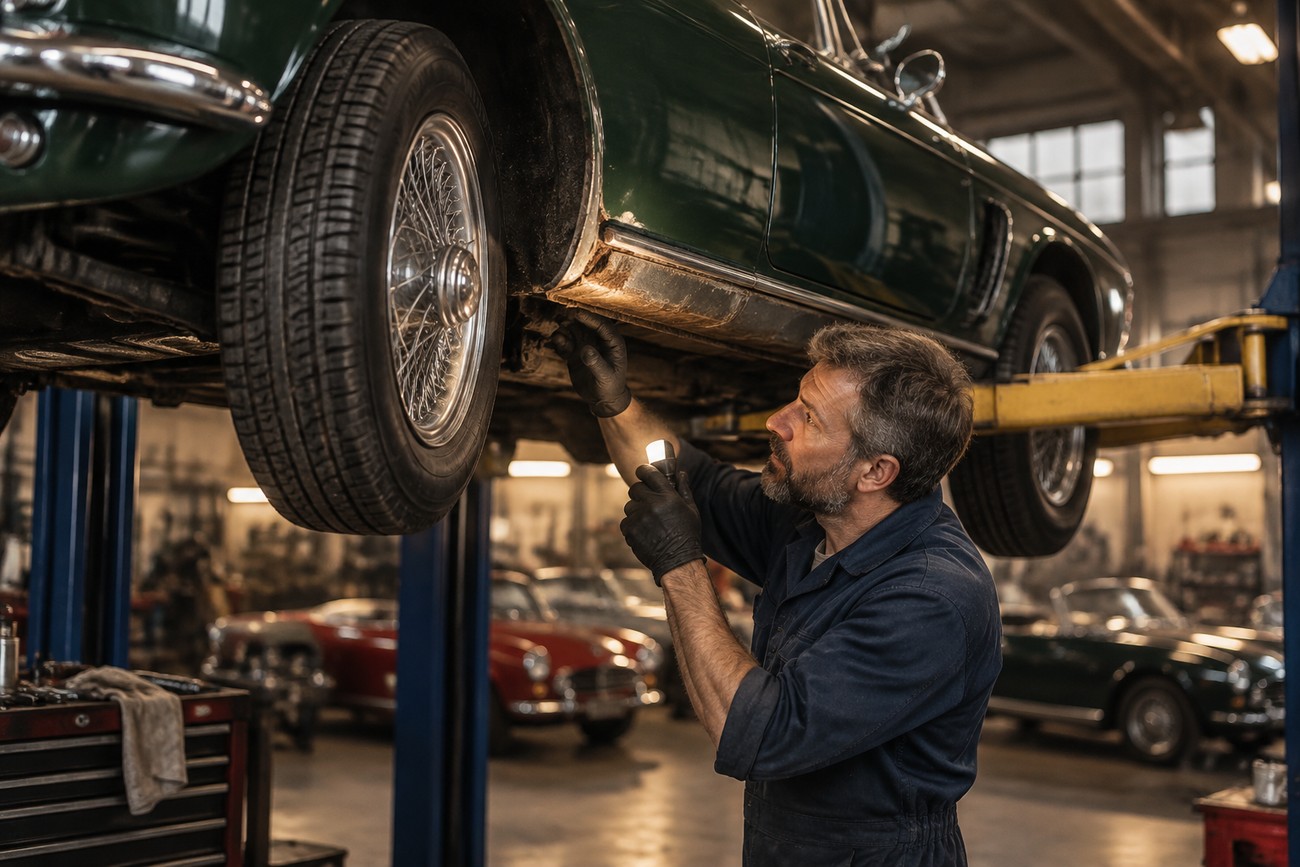
Pininfarina added factory reinforcement to the sills and floor, since removing the fixed roof reduced shell stiffness. The convertible remains less rigid than a closed Samba, and corrosion makes that weakness progressively worse. Scuttle shake, squeaks, and roof movement can therefore indicate structural deterioration rather than harmless old-car character.
Inspection should concentrate on the windscreen frame, rear arches, sills, floor, suspension towers, and roof attachment points. Water and dirt collect around the open-body structure, while damaged drainage allows moisture to remain near seams and mounting brackets. Rust in these areas can spread beyond what is visible from above and may require extensive cutting and welding.
The original fabric roof is another major liability. Tops can fade, crack, and leak, especially after years in northern climates. Door-glass seals and the seal where the roof meets the windscreen frame are frequent sources of water ingress, so a dry-looking interior on a sunny inspection proves little.
Roof-specific hinges, locks, cables, trim, and panels are difficult to source. Mechanical parts are comparatively accessible through Peugeot 104 and Talbot Horizon sharing, while the convertible hardware often requires a donor vehicle, careful repair, or custom fabrication.
A replacement top also depends on the condition of the shell. A new cover cannot correct a roof frame that has moved or rusted around its mounting points, and incorrect tension can create permanent leaks, wind noise, and difficult latching.
Buying and Restoring One Without Buying a Welding Project
Begin underneath the car, before judging paint, seats, or the seller’s description. Examine the underside, sill structure, floor, suspension towers, windscreen frame, and every roof mounting point. Open and close the roof carefully, checking alignment, latch operation, cable movement, and whether the frame loads the body evenly.
A visually attractive car can conceal welding costs comparable to the vehicle’s purchase price. Fresh paint over old corrosion is especially risky around the sills, arches, and roof supports. Look for bubbling, uneven seams, fresh underseal, mismatched textures, and repairs that stop at the edge of a visible panel.
Roof geometry must be checked before a replacement top is ordered. A new cover follows the shell it is fitted to; it cannot restore stiffness or correct mounting points that corrosion has already displaced.
Universal replacement tops are a common false economy. Poor patterns can alter the geometry, overload fasteners, and leave gaps at the windscreen or door glass. Experienced restorers sometimes adapt roofs from other small convertibles, including Peugeot 205 Cabriolet components, but such work needs accurate templates and careful attention to drainage.
Avoid fitting stiff suspension or wide wheels until the shell has been proven sound. Extra load at the suspension and body mounts can aggravate cracks or deformation in a weakened convertible structure. Mechanical components are well shared with the Peugeot 104 and Talbot Horizon, so engine, gearbox, braking, and running-gear work is usually easier than repairing the body.
Cars from the British market deserve a separate wiring inspection. Radios, auxiliary lamps, and other period additions may have altered the original circuits, creating faults that are difficult to trace using standard French wiring diagrams. Clean grounds, protected connections, and a documented harness are more valuable than a collection of unexplained accessories.
The Hidden Trade-Offs: Safety, Comfort, and Usability
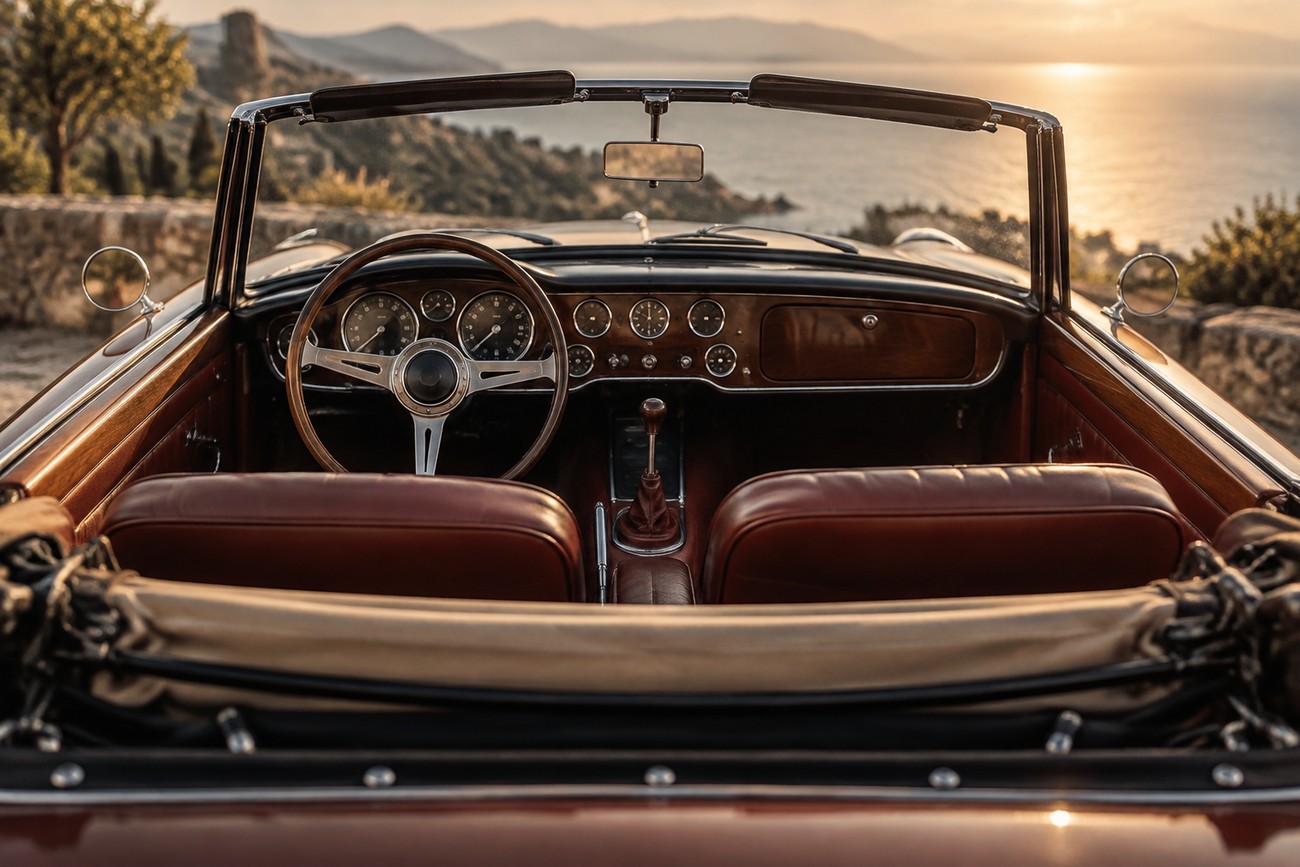
The Samba Cabriolet has very limited passive safety by modern standards. It lacks modern airbags, contemporary crash structure, and current deformation zones, so its appeal should be understood as an old-car experience rather than modern transport protection.
The fabric roof also defines the cabin’s comfort limits. Above approximately 90 km/h, persistent noise and rattling are typical, even when the roof is correctly fitted. Wind noise can mask mechanical sounds and make long highway journeys tiring, while leaks may only appear during heavy rain.
Tall drivers may struggle with headroom and steering-wheel positioning when the roof is closed. The seating and steering geometry belong to a small 1980s car, and a comfortable driving position may require compromises that are obvious only after a longer test drive.
Aging wiring, grounds, and connectors can affect the wipers, instruments, and illumination. Old or obstructed cooling systems can also cause localized overheating in hot traffic, particularly when a neglected radiator and tired electrical connections are asked to cope with slow-moving city conditions.
Returning a modified example to original specification can be expensive. Cabriolet trim and interior pieces are specific, so missing details may require donor parts or reproduction work even when the basic mechanical systems remain easy to service.
Myths, Sensible Upgrades, and the Verdict
The first myth is that Talbot developed the convertible independently and Pininfarina merely assembled it. Pininfarina designed and produced the convertible body, which is why its roof structure, reinforcements, and body details deserve separate consideration from the ordinary Samba.
The second myth is that it rusts like any ordinary 1980s hatchback. Open-body construction, drainage paths, and roof mounting areas create additional exposure, especially around the windscreen frame, sills, floor, arches, and suspension towers. Rarity also does not guarantee rising values; difficult restoration keeps the market uneven.
Parts availability requires the same distinction. Peugeot 104 and Talbot Horizon mechanical parts are comparatively serviceable, while Cabriolet-specific roof, body, and trim parts remain scarce. That combination makes a complete, documented car more valuable in practical terms than a cheaper example with attractive paint and missing hardware.
The best purchase is a car with a documented shell, sound roof geometry, and a properly fitted top. Preventive corrosion treatment is essential. A later PSA five-speed or a somewhat stronger engine can improve usability when installed carefully and reversibly, preserving the car’s visual authenticity without pretending it is a modern grand tourer.
Frequently asked questions
What happened to Talbot-Lago?
Talbot-Lago was a separate prewar and postwar marque from the later Talbot-branded PSA-era cars. Its history belongs to an earlier generation of French luxury and performance vehicles, so the name should not be treated as a direct synonym for the Talbot Samba.
The Samba-era Talbot name came through a different corporate route involving Simca, Chrysler Europe, and Peugeot. Shared branding creates historical confusion, but it does not make the later front-wheel-drive supermini a continuation of Talbot-Lago engineering.
What did Talbot cars become?
The later Talbot identity developed through Simca and Chrysler Europe before Peugeot ownership. Peugeot retained the Talbot name for selected cars during the transition, including the Samba, while the underlying engineering increasingly reflected the broader PSA group.
The Talbot name eventually disappeared from new-car production as Peugeot consolidated its model range and branding. A Samba Cabriolet therefore represents a short PSA-era chapter rather than a standalone Talbot company continuing independently.
Which documents are most useful when restoring a Samba Cabriolet?
Peugeot 104 workshop manuals are the most useful starting point for the engine, transmission, suspension, brakes, and general electrical systems. Talbot Horizon parts information can supplement them where the shared PSA hardware differs by specification or availability.
Use wiring diagrams alongside the physical car, especially on British-market examples with added radios or auxiliary lamps. Club-specific roof references, measurements, and photographs are valuable for the Cabriolet structure because ordinary 104 documentation rarely covers the roof frame, seals, cables, and trim in sufficient detail.







