
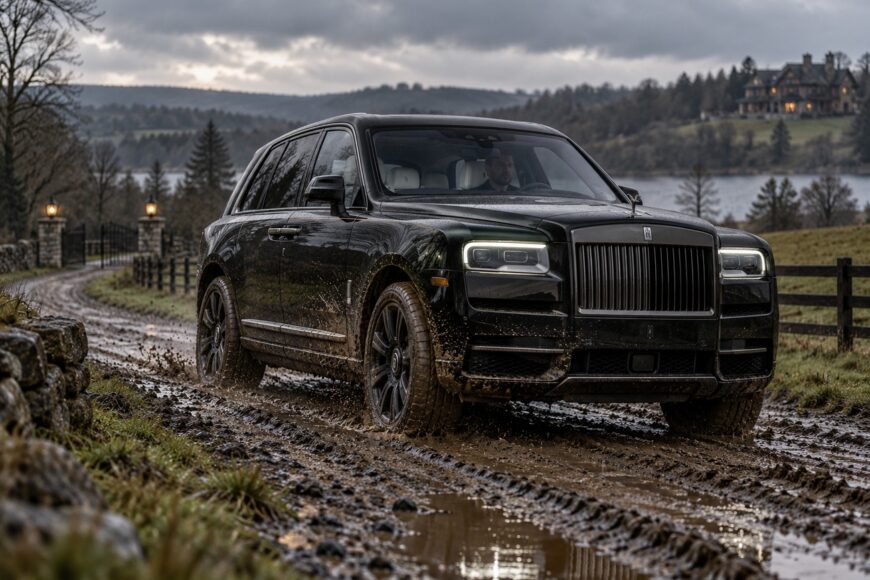
The Rolls-Royce Cullinan combines extravagant cabin luxury with hardware that genuinely allows it to leave the pavement. It has all-wheel drive, air suspension, rear-axle steering, and a claimed wading depth of approximately 540 mm. That combination makes rough access roads less intimidating than they would be in a conventional luxury sedan.
Those figures do not turn the Cullinan into an expedition vehicle. All-wheel drive and a wading specification cannot cancel the effects of its mass, width, tire choice, or expensive bodywork. The useful question is where those factors begin to matter more than drivetrain traction, and whether the route justifies the repair, cleaning, and tire risks that follow a careless off-road trip.
- What the Cullinan Is Actually Built to Do Off-Road
- The Hardware Behind Its Off-Road Ability
- Clearance, Wading, and the Limits of the Numbers
- How to Prepare and Drive a Cullinan Off-Road
- The Hidden Costs and Risks of Going Off-Road
- So, Should You Take a Cullinan Off-Road?
- Frequently asked questions
- What is considered a poor man’s Rolls-Royce?
- What car is a poor man’s Rolls-Royce?
What the Cullinan Is Actually Built to Do Off-Road
Cullinan is Rolls-Royce’s first SUV, and its off-road purpose is closely tied to the brand’s traditional priority: covering poor surfaces with minimal disturbance to the occupants. Its all-wheel drive and rear-axle steering have been fitted since launch. Together, they give the vehicle useful control on uneven access roads, wet grass, loose gravel, and snow-covered approaches to private properties or remote resorts.
The commonly cited operating surfaces include gravel, wet grass, mud, snow, and sand. That list describes a broad range of real-world conditions, though the severity of each surface matters. A firm gravel road and a deep, rutted track both qualify as gravel routes in casual conversation, yet they place very different demands on ground clearance, tire protection, and body geometry.
On moderate terrain, the Cullinan’s smooth ride can be a genuine advantage. It allows occupants to arrive in comfort where a more rigid utility vehicle would transmit every rut and corrugation into the cabin. Deep rock sections, repeated axle-crossing obstacles, and narrow wooded tracks expose its limits quickly, especially where turning space is scarce or the route leaves no room to avoid branches and embedded stones.
Expecting it to behave like a Prado or a G-Class misses the vehicle’s design brief. The Cullinan is a comfort-focused luxury SUV with off-road functions, not an expedition-oriented utility vehicle. It can reach places that would trouble an ordinary luxury car, while its size, finish, and ownership cost make deliberate abuse a poor use of its capability.
The Hardware Behind Its Off-Road Ability
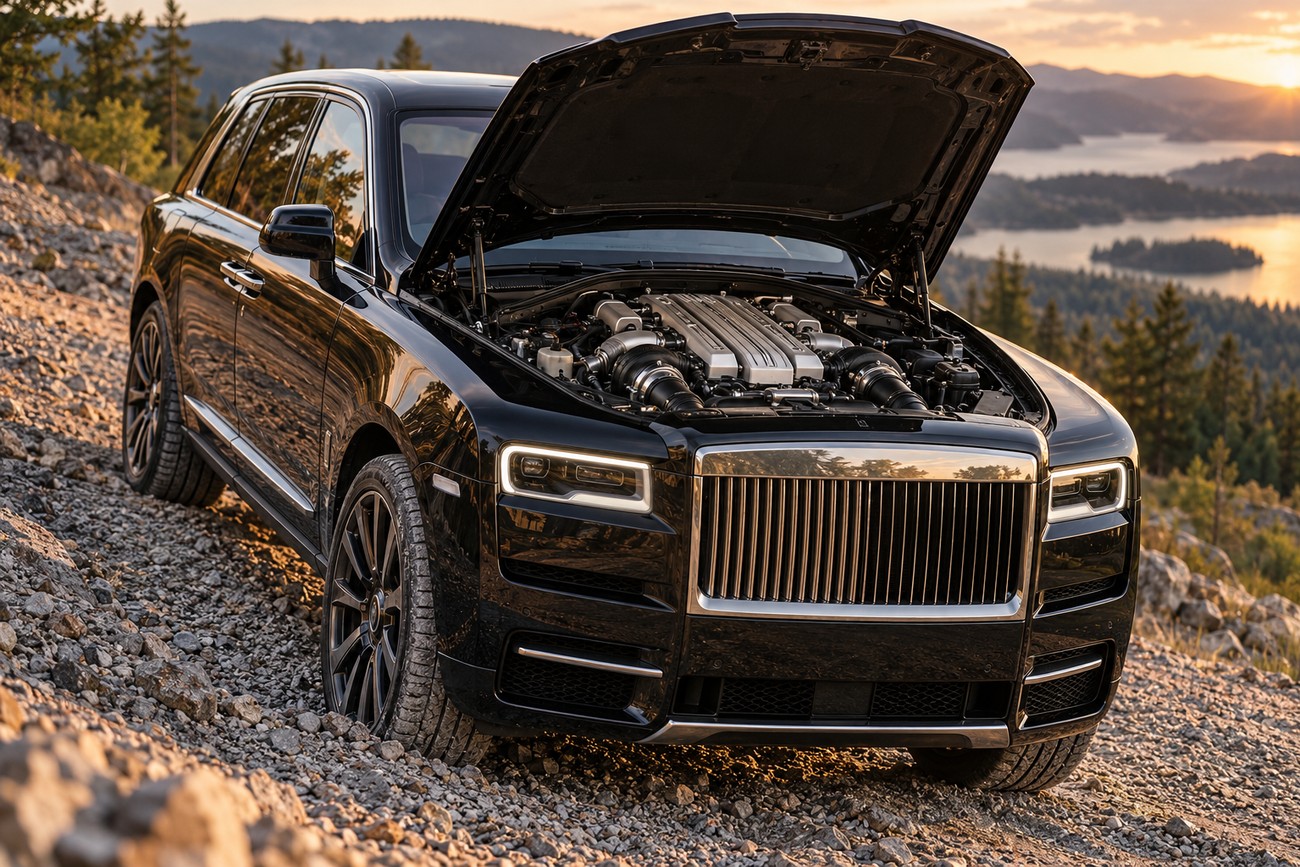
Power comes from a 6.75-liter twin-turbo V12 producing 571 hp and 850 Nm. That torque gives the Cullinan considerable reserve on climbs, loose surfaces, and steep inclines, where maintaining steady movement matters more than producing wheelspin. Series II retains the same basic 571 hp and 850 Nm figures, so the fundamental power argument remains unchanged.
An 8-speed ZF automatic transmission manages that output. For a heavy luxury SUV, a well-controlled automatic is more useful than dramatic claims about low-range-style force: it can deliver torque progressively, reduce unnecessary shock through the driveline, and keep the engine in a suitable part of its operating range. The system still depends on the driver choosing a sensible line and speed.
All-wheel drive distributes the available traction, while the air suspension provides additional body clearance when the terrain requires it. Rear-axle steering has been fitted since launch and improves maneuverability on tight tracks. Its benefit is easy to underestimate: on a narrow access road, a tighter turning path can reduce the number of corrections needed near trees, banks, or a drop-off.
None of this makes the hardware specialist expedition equipment. The V12 can provide more than enough thrust, yet excess thrust is rarely the solution to a soft rut or a sharp rock. Controlled torque, gentle steering, and a comfortable suspension are valuable when the aim is to preserve the vehicle and its occupants rather than demonstrate how much force it can apply.
Clearance, Wading, and the Limits of the Numbers
Ground-clearance figures for the Cullinan vary by source because the measurement method and suspension position are not always stated in the same way. Commonly cited figures are 150 mm standard and up to 250 mm maximum, while some catalogs publish only 250 mm. These numbers should therefore be read as a range linked to operating conditions, rather than as one permanent clearance figure.
Off Road mode raises the air suspension by approximately 4 cm. That extra height can help over a rounded ridge, a shallow rut, or a muddy approach, provided the driver selects the mode before reaching the difficult section. Loading, passengers, suspension compression, and the shape of the obstacle still determine the clearance available at the lowest point of the vehicle.
The claimed wading depth is approximately 540 mm under controlled conditions. It is a useful reference for judging a carefully assessed crossing, yet it does not authorize entry into arbitrary moving water. Current, hidden holes, submerged rocks, an uneven bed, and a sudden change in depth can turn a nominally acceptable crossing into a damaging one.
Water also introduces risks that a clearance figure cannot describe. A vehicle may have sufficient static height while its tires lose grip on a submerged slope, or while a concealed obstacle damages the underside. A cautious driver checks the entry and exit, considers the current and depth, and treats the published figure as a controlled limit rather than a promise of safe passage everywhere.
How to Prepare and Drive a Cullinan Off-Road
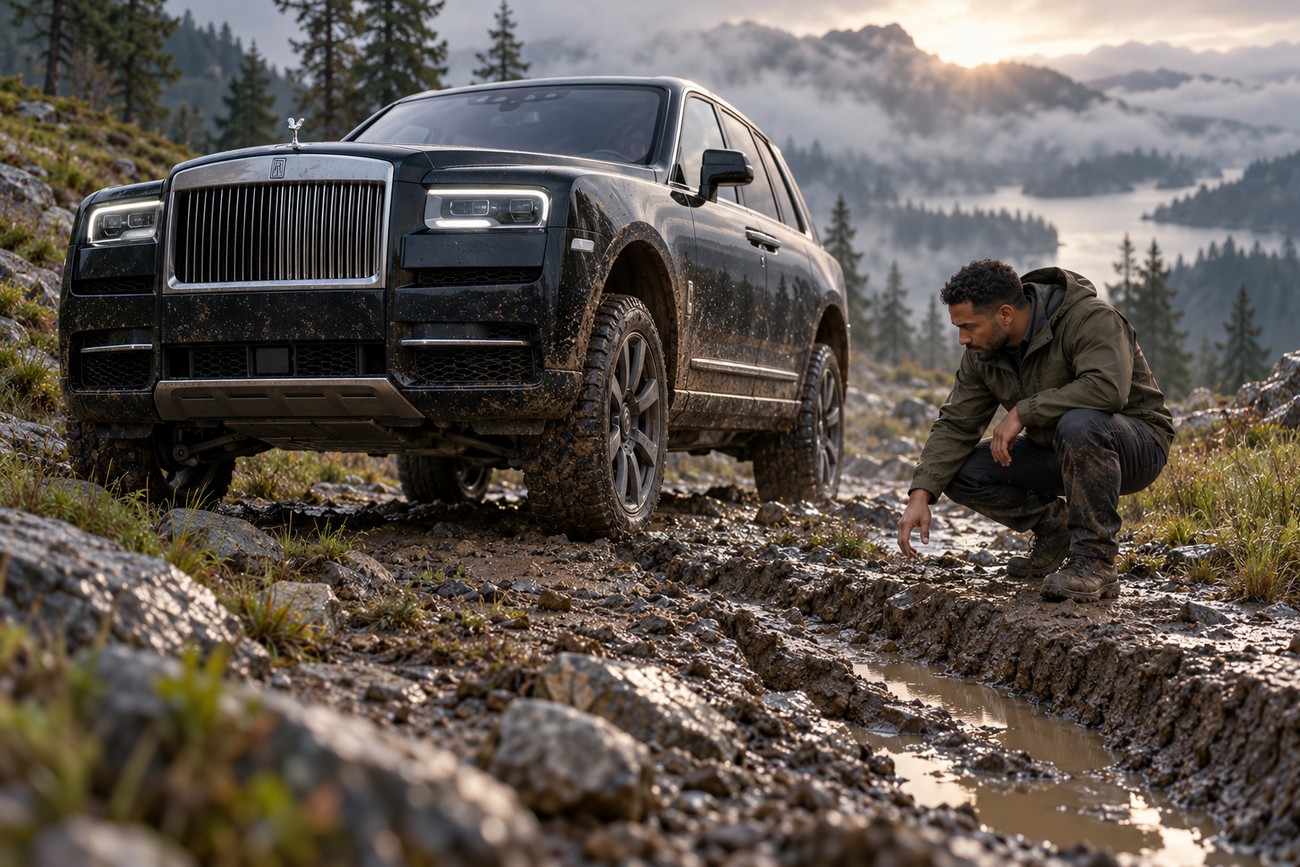
Preparation should begin before the route becomes difficult. Select Off Road mode, raise the body by approximately 4 cm, and inspect the line ahead rather than waiting until the vehicle is already in a rut. Check where the tires will run, where the underside may contact, and whether there is a usable exit if the surface becomes softer than expected.
Tire pressure and sidewall strength matter on sand, mud, rocks, and potholes. A premium road-biased tire can provide excellent road refinement while offering less protection against a sharp edge than a tire designed for harder off-road use. Pressure changes should follow appropriate vehicle and tire guidance; improvising with very low pressure can create bead, sidewall, or wheel damage.
Configure ride height and inspect the exit line before entering a rut. Electronics can help manage available traction, but they cannot create a safe route once the chassis is resting on the ground.
The Cullinan weighs approximately 2,660 kg, and that mass rewards measured inputs. Momentum may carry the vehicle farther into a bad section, yet it also increases braking distance, impact loads, and the depth of a rut. Use gentle throttle, avoid abrupt steering, and keep enough progress to prevent unnecessary stops on loose ground.
Electronics cannot overcome poor geometry, excessive width, soft ground, or an unsuitable trajectory. A recurring mistake is entering sand or a deep rut before configuring the vehicle, then expecting the off-road system to recover the situation. The better method is to stop at a safe point, assess the surface, and choose a line that keeps the tires and underside away from the worst features.
The Hidden Costs and Risks of Going Off-Road
At approximately 2,660 kg, the Cullinan places substantial loads on its tires, brakes, and suspension. That mass can increase braking demands and make the vehicle press deeply into soft ground or existing ruts. Once the surface gives way, all-wheel drive may maintain forward motion briefly while the weight continues to work against flotation.
Large wheels and low-profile premium tires are poorly matched to sharp rocks and deep potholes. Their sidewalls offer less impact protection than the taller sidewalls commonly used on utility 4x4s, and a damaged wheel can create a costly recovery problem far from a paved road. Even without visible damage, repeated impacts can turn an apparently successful trip into an expensive inspection.
Loading adds another layer of risk. Passengers and luggage compress the suspension and reduce practical clearance, especially over crests and uneven ground. The vehicle may still display the same available driving modes, while its usable margin beneath the body has become smaller than the owner expects.
There is also a human factor. Owners may hesitate at the exact moment when a firm, deliberate line is needed because a branch, stone, or muddy bank threatens an expensive exterior. That hesitation can produce more wheelspin or a worse angle. Washing, underbody cleaning, tire replacement, cosmetic repairs, and suspension checks after a dirty trip can cost substantially more than similar work on a mass-market 4×4.
So, Should You Take a Cullinan Off-Road?
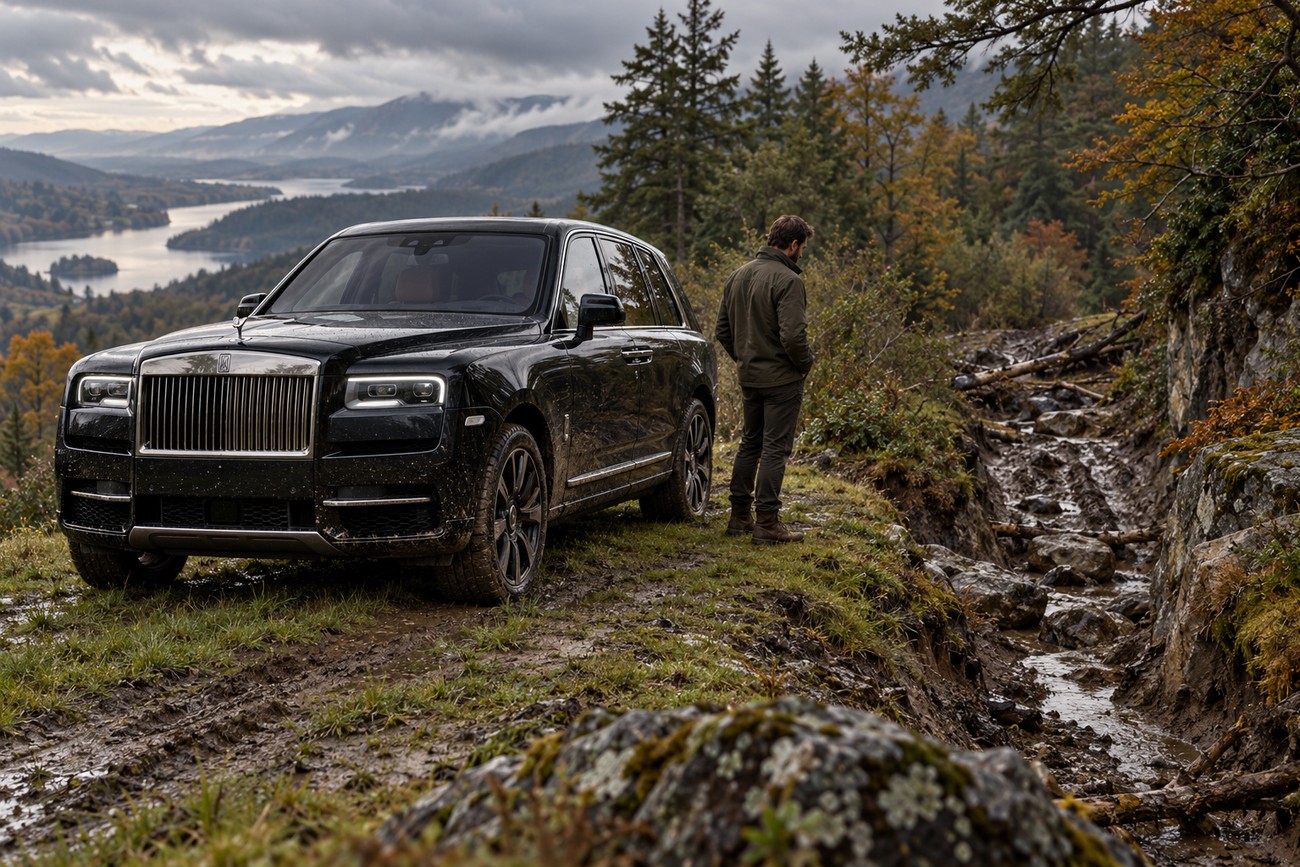
The Cullinan makes sense where the destination justifies exceptional comfort and the route is rough enough to defeat a conventional luxury car. Gravel roads, wet grass, snow, moderate mud, sand, and uneven approaches to estates, resorts, private homes, or scenic locations fit its strengths. Its suspension can preserve composure for occupants while the drivetrain handles changing traction.
The calculation changes when the route demands repeated rock strikes, narrow wooded tracks, deep ruts, or aggressive tire use. A wide luxury SUV has fewer options when branches close in or a bank leaves no room for a clean turn. Recovery work also becomes more complicated when the vehicle’s finish, weight, and replacement costs are treated as part of the risk.
It is worth separating capability from willingness to use it. The Cullinan can often travel farther off pavement than its owner is prepared to take it, especially once the route threatens wheels, paint, or the underside. That is a practical limitation rather than a mechanical failure.
The balanced verdict is straightforward: the Cullinan is a comfort-led off-road SUV, not a replacement for a dedicated utility 4×4. Used within its design envelope, it offers a rare ability to carry passengers across poor roads without turning the journey into a punishment. Used as a luxury trophy for serious trail work, its mass, tires, geometry, and damage exposure become expensive weaknesses.
Frequently asked questions
What is considered a poor man’s Rolls-Royce?
“Poor man’s Rolls-Royce” is a subjective shorthand, not a technical vehicle category. People commonly use it for a luxury SUV that offers much of the Cullinan’s comfort, road presence, and elevated driving position at a lower cost of entry and ownership.
A Bentley Bentayga or Range Rover may be suggested as a closer luxury alternative because each combines high-grade interiors with strong long-distance ability and some off-road credibility. Neither reproduces the Cullinan’s exact blend of refinement, price, cabin isolation, and visual presence, so the phrase describes a comparison in status and experience rather than an equivalent specification.
What car is a poor man’s Rolls-Royce?
For an SUV buyer, the Bentley Bentayga is often the most direct answer because it occupies a similar luxury-performance space, while the Range Rover is frequently chosen for its broader off-road identity and practical versatility. The better choice depends on whether the priority is limousine-like presentation, trail capability, or the cost of using the vehicle regularly.
Neither alternative should be selected solely because it resembles the Cullinan from a distance. Compare rear-seat comfort, wheel and tire specification, service support, ground-clearance behavior, and the type of roads the vehicle will actually cover. A less extravagant SUV can be the more sensible purchase if poor surfaces are a routine part of ownership.







