
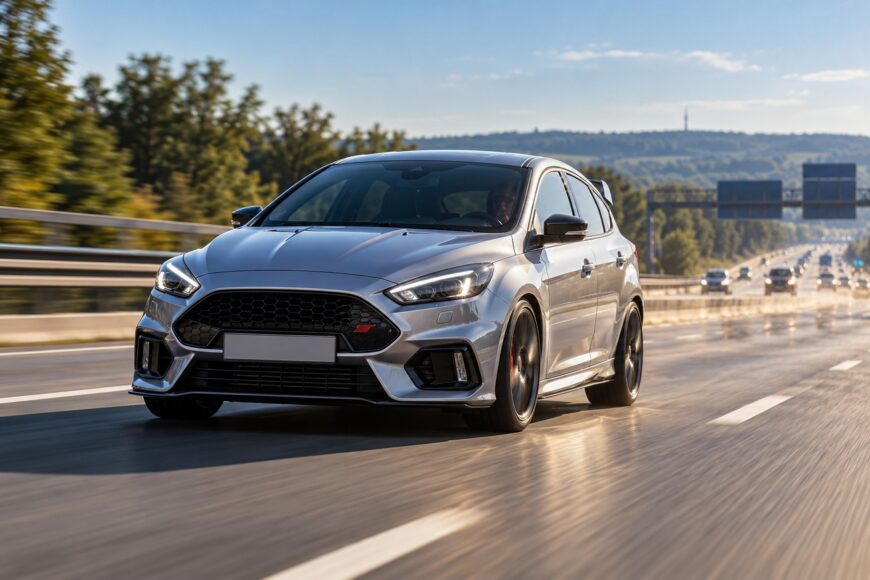
A Ford Focus ST may be quoted at around 250 km/h, often with an electronic limit. That figure describes the car’s potential top speed under specified conditions. It does not describe a speed that can be repeated or comfortably sustained on every public Autobahn.
Legal restrictions, traffic, road surface, crosswinds, tire condition, heat, and front-wheel-drive stability can become decisive before the engine reaches its limit. A Focus ST that feels composed at 180 km/h may require much more attention above 200 km/h, particularly on rutted or uneven pavement.
The useful assessment is therefore broader than the number on the speedometer. The car must retain a meaningful margin for braking, lane changes, changing weather, and slower traffic, even on an unrestricted section.
- How Fast Can a Ford Focus ST Actually Go?
- What German Autobahn Rules Really Allow
- Why Vmax Is More About Aerodynamics Than Horsepower
- Tires, Heat, and the Limits Hidden Behind the Speedometer
- The Real-World Comfort Ceiling: 220–240 km/h
- Common Mistakes When Chasing the Claimed Top Speed
- Frequently asked questions
- How fast can a Ford Focus ST go?
- Why can a Focus ST feel nervous before it reaches its quoted Vmax?
- Why is it difficult to repeat a Focus ST top-speed run on the Autobahn?
How Fast Can a Ford Focus ST Actually Go?
Recent Ford Focus ST generations are commonly electronically limited at around 250 km/h. The exact Vmax varies by market, generation, body style, gearbox, and tire specification, so there is no single universal figure that applies to every Focus ST.
An electronic limit also changes how the final part of the acceleration feels. The car may continue building speed strongly at first, then approach a point where aerodynamic resistance consumes most of the available power. Instrument readings can also differ from GPS speed, adding another reason to treat the quoted figure as a specification rather than a guaranteed road result.
A limited practical reference from owner discussions places a more comfortable real-world ceiling around 220–240 km/h, especially when wind, ruts, or imperfect pavement are present. This is a single-source practical reference, not a universal measured limit or a factory specification.
Load, tire condition, temperature, and the car’s mechanical state all affect the result. A lightly loaded car on a smooth, dry road may reach its limiter more readily than a fully loaded car facing a headwind, while neither situation proves that the same speed can be held consistently.
What German Autobahn Rules Really Allow
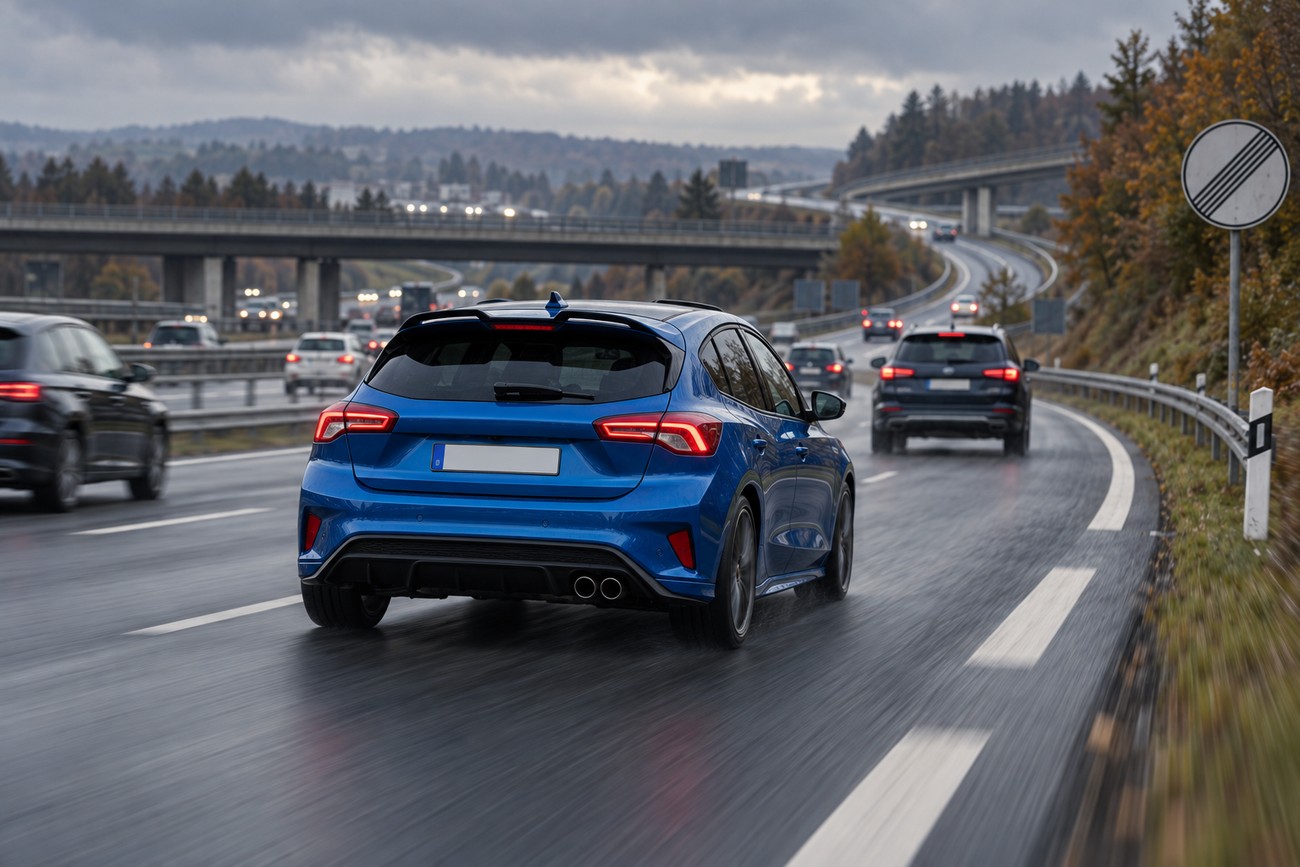
Germany has no general unlimited-speed rule for every Autobahn section. A sign numbered 274 imposes a mandatory posted speed limit, and that limit remains relevant regardless of the car’s performance or the driver’s confidence.
On an unrestricted section, the driver still has to choose a safe and reasonable speed for the situation. Traffic density, visibility, weather, road condition, lane changes, and the likely behavior of other road users all matter. An unrestricted sign does not suspend the general duty to drive safely.
That distinction is especially important at Focus ST speeds because the available stopping and reaction margin changes quickly. A clear lane several seconds ahead can become occupied by a vehicle moving out to pass, while a bend, crest, spray, or shadow can conceal conditions that were not visible during acceleration.
Legal permissibility and technical capability are separate questions. A car may be mechanically able to approach 250 km/h, yet the appropriate speed on the same road may be substantially lower because of traffic, visibility, surface quality, or a posted restriction.
Why Vmax Is More About Aerodynamics Than Horsepower
Aerodynamic resistance rises approximately with the square of speed. The power required to overcome that drag rises approximately with the cube of speed, which explains why acceleration fades sharply as a Focus ST approaches its top speed.
This relationship also explains why a small increase in speed can demand a disproportionate amount of additional engine output. At the upper end, wind direction, road gradient, vehicle load, and intake temperature can decide whether the car continues gaining speed or settles near a plateau.
Stability becomes equally important. Above roughly 200 km/h, a front-wheel-drive Focus ST can show more tramlining, steering corrections, and sensitivity to ruts or crosswinds. The driver may need frequent small inputs as the front tires follow grooves in the pavement.
Road undulations can make the effect more noticeable by changing tire loading and aerodynamic attitude. A smooth road can make the car feel secure, while a rough or wave-like surface may expose a stability margin that the engine’s power figure does not reveal.
Tires, Heat, and the Limits Hidden Behind the Speedometer
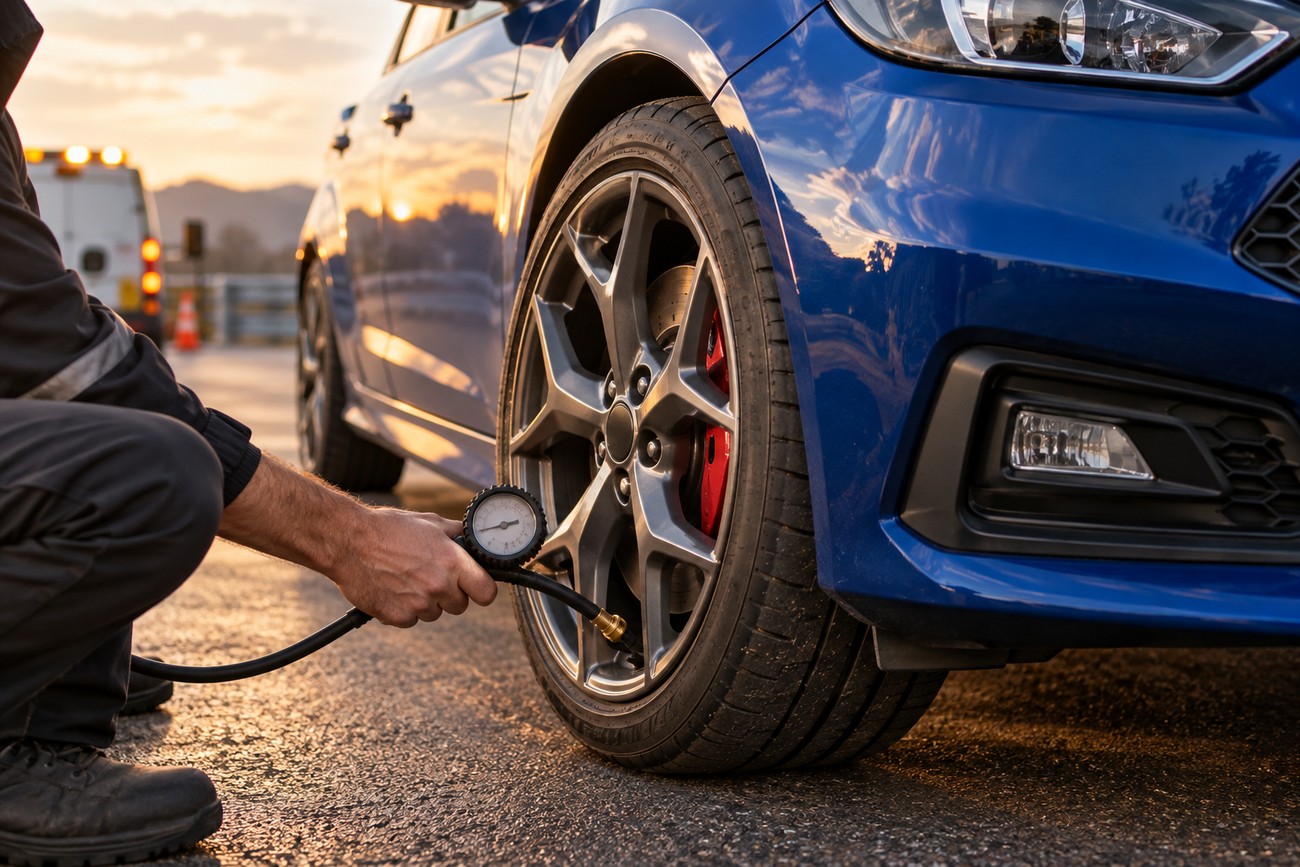
Common summer tires may carry a W rating up to 270 km/h or a Y rating up to 300 km/h under specified conditions. Those ratings describe the capability of the tire in defined circumstances; they do not guarantee stability of the complete vehicle in every condition.
Pressure, temperature, tread wear, age, and wheel balance deserve attention before any high-speed assessment. A small imbalance or uneven wear pattern may be barely noticeable at ordinary motorway speeds, then become a persistent vibration or vague steering response as speed rises.
Tire pressure changes, wheel balance, and heat-related behavior should be judged together. A car can feel stable during the first minutes of a run and become less settled as the tires warm, pressure rises, and a small imbalance becomes more prominent.
Sustained maximum-speed running can increase oil and gearbox loads and may raise intake temperatures. On turbocharged engines, hotter intake air and protective engine strategies can reduce the sense of urgency at the top end, even when there is no obvious mechanical fault.
Heat also changes the way the car feels through the steering and seat. A driver who evaluates stability only during the first acceleration may miss behavior that appears after continued high-speed running. The same applies to wheel and tire condition: a high-speed check should begin with correct pressure, a suitable speed rating, sound tires, and properly balanced wheels.
The Real-World Comfort Ceiling: 220–240 km/h
A limited practical reference from owner discussions places a practical comfort ceiling around 220–240 km/h. This is a cautious, single-source discussion point rather than a measured standard, and it varies with wind, ruts, pavement quality, load, and the condition of the individual car.
Above 200 km/h, complaints commonly center on tramlining, a lighter-feeling steering wheel, and the need for constant small corrections. Wind and tire noise can become loud enough to make normal conversation difficult, which also reduces the driver’s ability to monitor the wider traffic environment.
Fuel consumption can rise to roughly two or three times the moderate motorway rate because aerodynamic drag dominates the energy demand. The fuel gauge therefore becomes a practical constraint during sustained high-speed travel, alongside oil temperature, tire heat, and the need for more frequent opportunities to slow down.
A repeatable Vmax run is difficult on a public Autobahn. Traffic, cameras, posted limits, weather, crosswinds, and changing pavement usually interrupt the ideal conditions required to reproduce the quoted number, while a clear road can change rapidly without warning.
Common Mistakes When Chasing the Claimed Top Speed
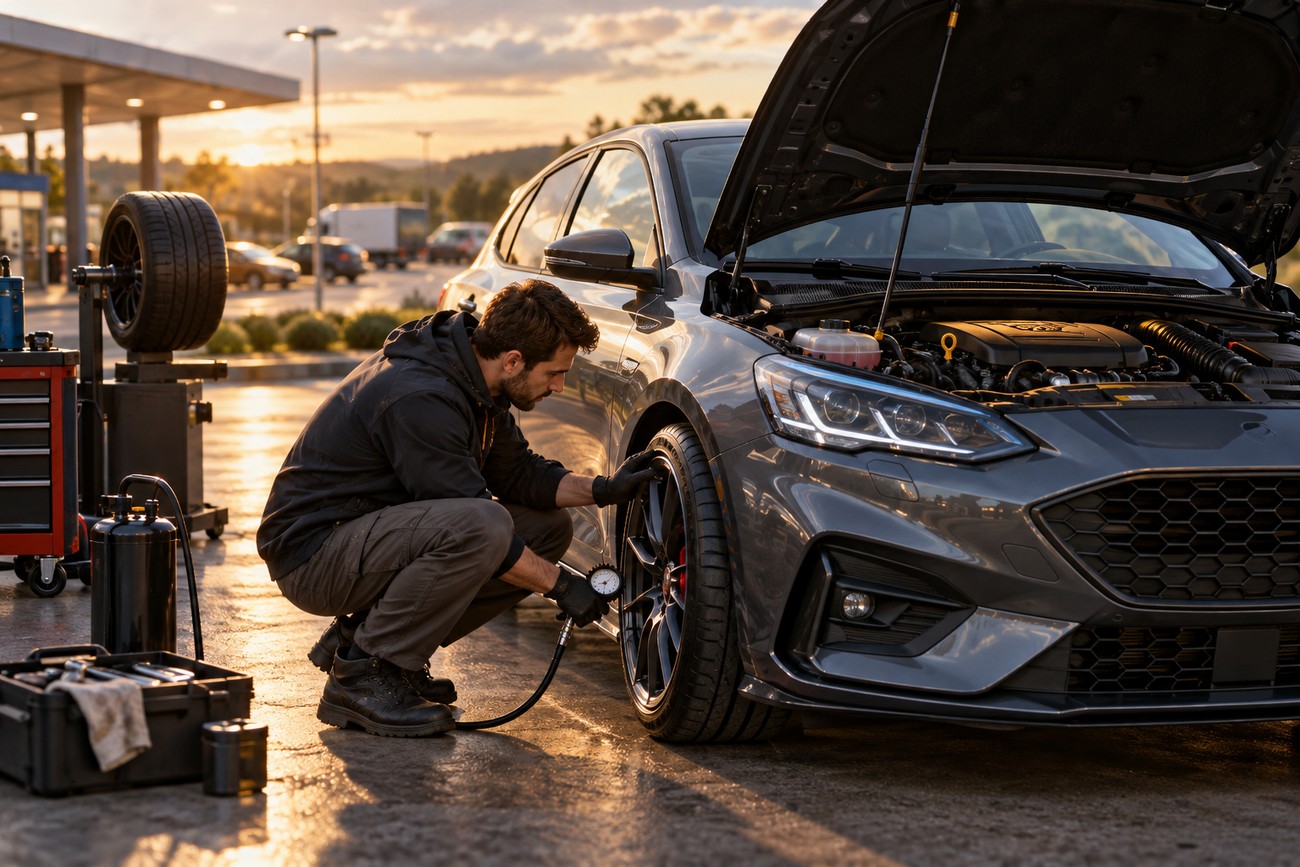
Cold tires and an insufficiently warmed drivetrain are common preparation errors. The car may feel ready after a short period of driving, while the tires, oil, gearbox, and other components have not yet reached a stable operating condition for sustained high load.
Ignoring pressure, speed rating, age, wear, or wheel balance creates another avoidable risk. Good tires cannot compensate for an incorrect pressure setting, a damaged wheel, uneven wear, or a specification that does not suit the intended speed and load.
Poor pavement, ruts, road undulations, and strong crosswinds can undermine stability even with suitable tires. A driver who continues accelerating because the road is legally unrestricted may find that the available steering and braking margin has become too small for an unexpected lane change or sudden obstruction.
The speedometer number also needs careful interpretation. A quoted capability of around 250 km/h does not mean the car can safely sustain 250 km/h for a prolonged period. At 200+ km/h, a large following-distance margin and early reading of traffic matter more than reaching the final number; a sound assessment ends with control and reserve, not with the highest displayed speed.
Frequently asked questions
How fast can a Ford Focus ST go?
A recent Ford Focus ST is commonly quoted at around 250 km/h, usually with an electronic limit. The exact value varies by generation, market, body style, gearbox, and tires, so it should not be treated as one universal specification.
A limited practical reference from owner discussions describes approximately 220–240 km/h as a more comfortable practical ceiling, especially in wind or on imperfect pavement. That range is limited practical evidence rather than a factory rating or universal test result.
Why can a Focus ST feel nervous before it reaches its quoted Vmax?
The front-wheel-drive layout can make steering sensitivity more apparent as speed rises. Tramlining, ruts, crosswinds, and changing tire loads may demand frequent corrections above roughly 200 km/h, while aerodynamic resistance continues to rise.
As a result, the chassis can become the driver’s limiting factor before the engine runs out of power. The car may still be accelerating technically, yet the available margin for a sudden correction, braking maneuver, or lane change may already feel too small.
Why is it difficult to repeat a Focus ST top-speed run on the Autobahn?
A public Autobahn rarely provides stable test conditions. Traffic, posted limits, cameras, weather, crosswinds, visibility, and changing pavement can interrupt acceleration or require an early lift-off.
Even an unrestricted section can become unsuitable within seconds as another vehicle changes lanes or the road surface deteriorates. That is why an isolated Vmax claim describes a particular set of conditions rather than a repeatable everyday road result.







