
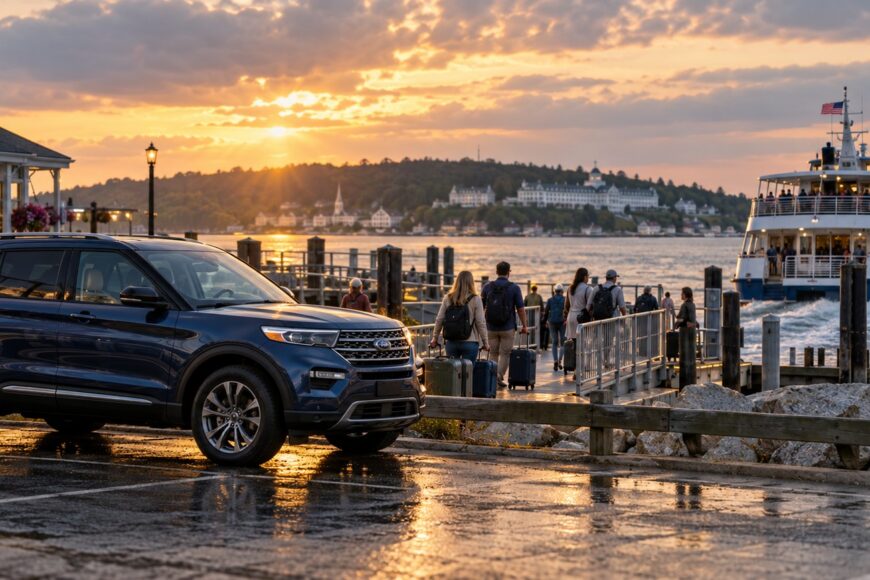
A Ford Explorer cannot travel onto Mackinac Island. The road trip ends at a mainland ferry terminal, where you leave the vehicle in paid parking before continuing by boat.
This is a legal and operational restriction, not a matter of paying a surcharge or finding the right booking option. Michigan law has prohibited motor vehicles on Mackinac Island since 1898, with limited emergency and special-use exceptions. Passenger ferries do not transport private cars such as a Ford Explorer.
The practical planning challenge is therefore on the mainland: finding suitable parking, allowing time to unload, carrying the right amount of luggage, and leaving flexibility for ferry delays caused by strong wind or storms.
- Can You Take a Ford Explorer to Mackinac Island?
- Where to Leave Your Explorer Before the Ferry
- Build Extra Time Into the Arrival Plan
- Pack for an Island Visit, Not a Car Trip
- How to Get Around After the Explorer Stays Behind
- The Road-Trip Expectation: What Online Guides Get Wrong
- Frequently asked questions
- Which ferry company is best for getting to Mackinac Island?
- What should I do if bad weather cancels my ferry?
- How should travelers with limited mobility plan a car-free visit to Mackinac Island?
Can You Take a Ford Explorer to Mackinac Island?
No. A Ford Explorer must remain on the mainland while you visit Mackinac Island. Michigan law has prohibited motor vehicles on the island since 1898, with limited emergency and special-use exceptions that do not provide a tourist option for private vehicles.
Passenger ferries carry pedestrians, bicycles, baggage, and sometimes small cargo. They do not transport private cars such as a Ford Explorer to Mackinac Island. Shepler’s and Star Line direct passengers to mainland parking rather than offering vehicle spaces to the island.
Mackinac Island is separate from Mackinac Bridge. You can drive across the bridge as part of a mainland route, then continue toward a ferry terminal in Mackinaw City or St. Ignace. Crossing the bridge does not create road access to the island, and a ferry reservation is not a vehicle reservation.
The idea that a private car can be moved across for an extra fee is a common misunderstanding. Carriers cannot solve the restriction through a premium booking, and there is no tourist SUV area or informal workaround. The island’s car-free character is protected by law and local regulation.
Where to Leave Your Explorer Before the Ferry
The Ford Explorer remains in paid mainland parking near the ferry docks for the duration of the island visit. Your choice will usually involve parking near Mackinaw City or St. Ignace, depending on your route and the ferry departure that fits your schedule.
Parking fees and availability vary by facility, date, and demand, so there is no universal rate to assume. On busy weekends and holidays, nearby lots can fill, and large-SUV owners may need to park farther from the dock. That adds walking time while carrying bags, children’s items, or outdoor equipment.
Measure the Explorer’s total height with the roof box, crossbars, or other accessories installed. An open lot is often the safer choice when a parking garage’s clearance or turning space is uncertain.
Check the specific facility’s rules before driving there. Confirm the maximum height and length, whether roof-mounted equipment is permitted, and whether overnight parking is allowed for the length of your stay. A vehicle that fits comfortably on the road can still be unsuitable for a particular parking structure.
Build Extra Time Into the Arrival Plan
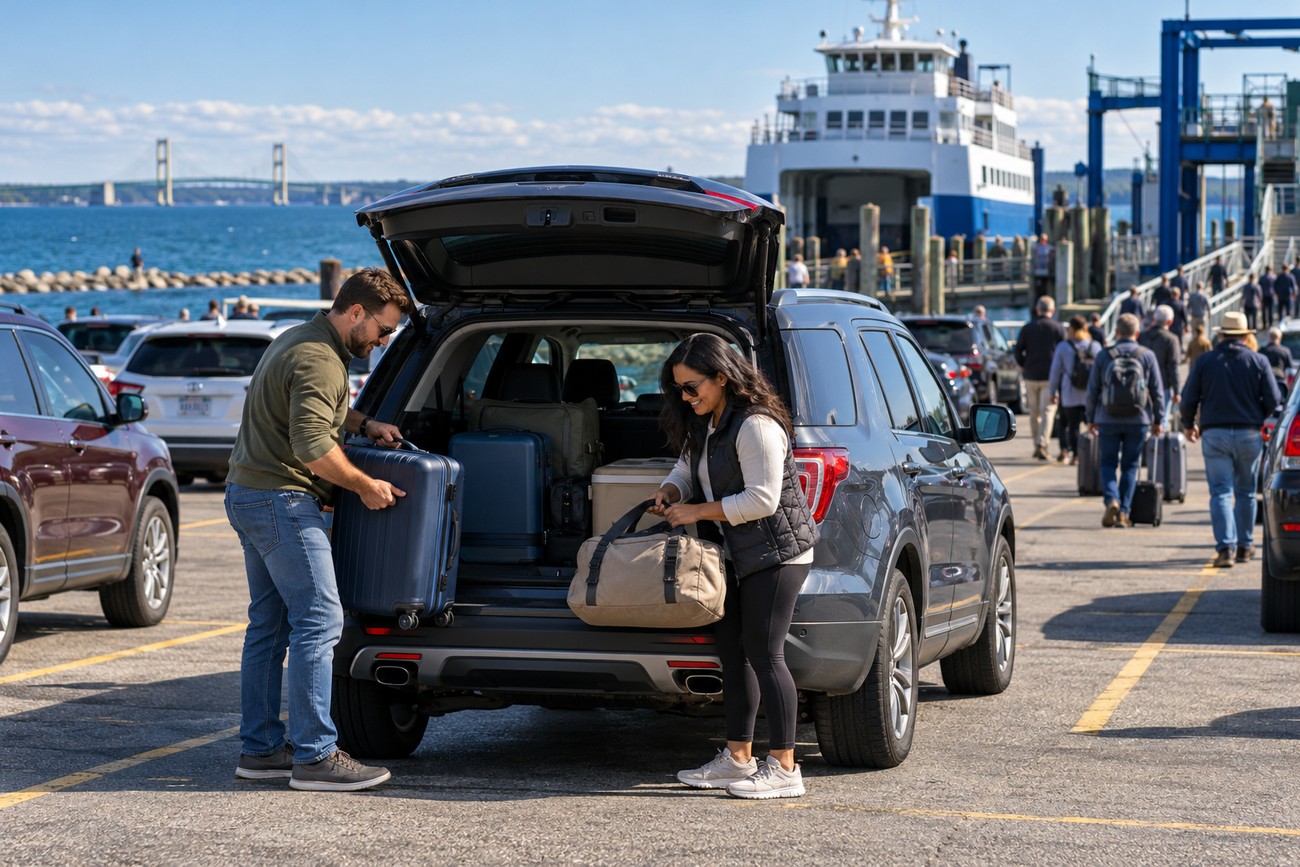
Arriving only 10–20 minutes before departure can be insufficient for a Ford Explorer. The final approach to the terminals may be congested, and parking, ticketing, unloading, and walking to the dock all take time.
Large vehicles also require more care in crowded lots. You may need to search for a suitable space, position the Explorer without blocking traffic, and unload children or luggage away from the busiest pedestrian flow. Treat the parking process as part of the ferry connection rather than as a quick stop before boarding.
The earliest morning sailing generally offers easier parking, lighter crowds, and calmer loading conditions. Advance ferry and parking planning is especially useful on busy weekends and holidays, when a convenient lot or preferred sailing may no longer fit your arrival time.
Keep the mainland drive flexible enough to absorb congestion near the terminal. If the vehicle is carrying a roof box or substantial luggage, allow additional time for final checks before leaving it parked. A missed sailing can affect hotel check-in, activities, and the timing of the return drive.
Pack for an Island Visit, Not a Car Trip
Once the Explorer is parked, you cannot return to it for forgotten supplies. Personal cars and private-car parking are unavailable on Mackinac Island, so the items normally kept in a vehicle must be selected and carried before boarding.
Use compact bags that one person can manage through the parking area, ferry process, and island arrival. Families may need to carry a stroller, food, clothing, medication, and weather protection from the mainland parking area through the terminal and onward to their accommodation or first activity.
Heavy or awkward luggage creates more difficulty than travelers often expect. A baggage plan should account for ferry handling and continued movement on foot, by bicycle, or by horse-drawn carriage. Pack for the length of the stay and the forecast instead of bringing the full contents of the Explorer.
Before leaving the vehicle, remove visible electronics and valuables, and avoid treating any parking facility as fully secure. Keep the cabin and cargo area as discreet as practical. If a roof box is used, place only appropriate travel items inside it and confirm that it will remain closed and secure during the stay.
How to Get Around After the Explorer Stays Behind
Tourist transportation on Mackinac Island centers on walking, bicycles, and horse-drawn carriages. Rental cars and ordinary private-car parking are not available to tourists, so your choice of transport should be part of the itinerary before you leave the ferry dock.
Walking works well for short distances and gives you direct control over bags, but it can be demanding with children, uneven surfaces, or changing weather. Bicycles can cover more ground, while horse-drawn carriages may suit visitors who want a guided transfer or a less active option.
Match the transport choice to the luggage you bring. A large suitcase, stroller, or mobility device can affect how easily you move between the dock, lodging, and activities. Ask your accommodation and ferry operator about handling arrangements before arrival if your equipment is bulky.
The car-free character is central to Mackinac Island’s visitor identity and is protected by local regulation. It also requires more planning for visitors with limited mobility or anyone who normally depends on a personal vehicle for supplies, rest breaks, and flexible movement.
The Road-Trip Expectation: What Online Guides Get Wrong
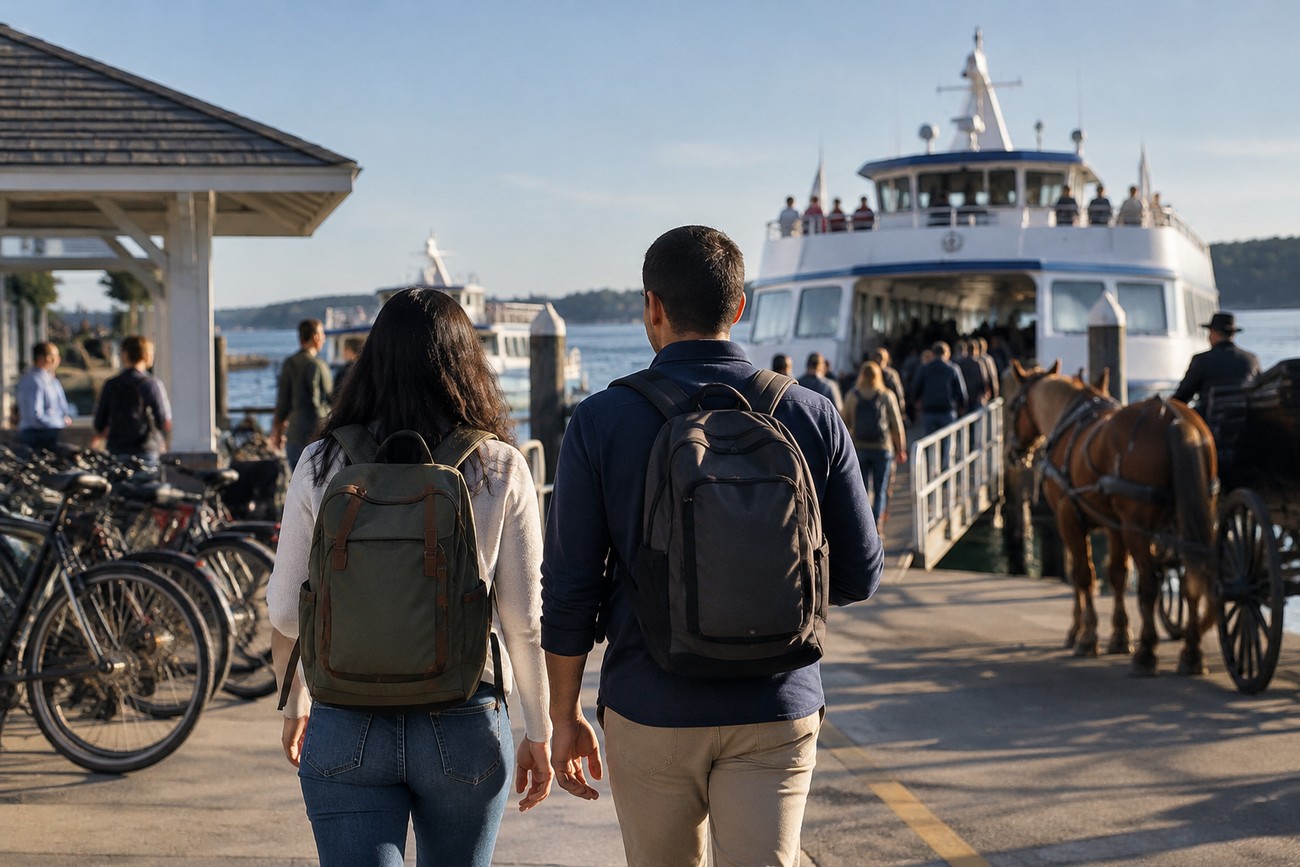
A road trip to Mackinac Island ends at the mainland ferry terminal. The actual sequence is to drive to Mackinaw City or St. Ignace, park the Explorer, board a passenger ferry, and continue on the island by walking, bicycle, or horse-drawn carriage.
Some promotional images and vague travel descriptions make the journey look like a drive onto the island. Claims that tourists can negotiate private-car transport, pay for a special exception, or use a designated SUV zone conflict with the legal and operating rules.
Weather can change the plan after you have reached the terminal. Strong wind or storms can cancel ferry service and disrupt either arrival or departure timing. Check current instructions from the ferry operator and avoid arranging a tightly timed mainland drive immediately after the planned return sailing.
The car-free rule is a real legal and local-regulatory condition, not merely a marketing slogan. Planning the trip as a ferry visit from the start prevents wasted time searching for vehicle access and leaves more attention for parking, baggage, and weather decisions.
Frequently asked questions
Plan the visit as a ferry trip from the mainland rather than as a conventional drive. Parking, baggage, weather, and island transportation all affect the connection. The right preparation depends on your ferry operator, schedule, luggage, and mobility needs.
Review current instructions before leaving for the terminal, and allow flexibility for parking and ferry delays. These steps can make the transition from the Explorer to the island easier.
Which ferry company is best for getting to Mackinac Island?
Neither Shepler’s nor Star Line is universally best; compare the departure port, sailing times, parking arrangement, baggage process, and the schedule that fits your drive. A sailing from the more convenient mainland location may be a better choice than a theoretically preferable departure time that requires a longer approach.
Review the operator’s current boarding instructions and parking information before committing. Families with bulky bags or a large SUV should give particular weight to walking distance and loading conditions, while travelers with a fixed mainland schedule should prioritize a sailing that leaves recovery time.
What should I do if bad weather cancels my ferry?
Monitor the ferry operator’s current instructions first, then protect the rest of your mainland schedule. Do not assume that the next sailing will preserve the original arrival or departure time; strong wind or storms can continue to affect service.
Keep parking, lodging, and the drive to or from the terminal flexible where possible. If you are still on the mainland, avoid committing to a tightly timed onward appointment. If you are on the island, follow the operator’s guidance and revise the mainland pickup plan rather than relying on the original sailing.
How should travelers with limited mobility plan a car-free visit to Mackinac Island?
Confirm accessible ferry boarding, baggage assistance, and suitable island transportation directly with the operator and relevant service providers before arriving at the dock. Ask about the complete transfer, including the mainland parking area, boarding process, arrival point, and movement between the dock and lodging.
Share details about mobility equipment, companions, and luggage in advance so arrangements match your needs. It is also useful to check whether planned activities and accommodation have accessible routes, since the absence of a personal vehicle makes last-minute changes more difficult.







